
PH Blog: Ecoboosted
Shameless PR stunt maybe but that 'ring lap shows why we should all be excited about Ford's Ecoboost 1.0
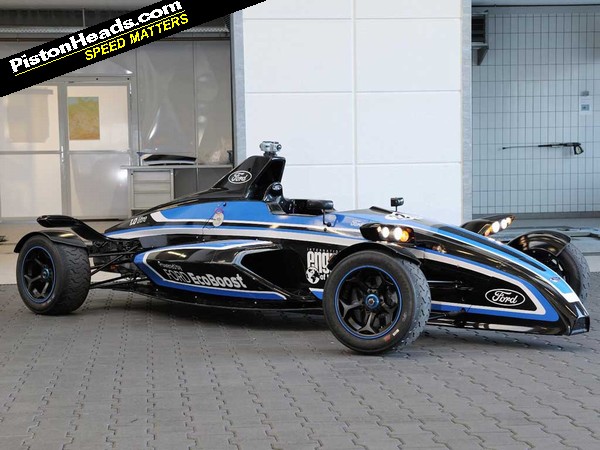

Numberplates do not necessarily a road car make
OK, claiming lap records and supercar-beating comparisons for a single-seater racing car with treaded tyres and bolted on lights is a tad spurious. But the point it demonstrates about the extra-curricular potential for a mass-produced, lightweight, turbocharged engine with a 200hp per litre specific output and cylinder block smaller than an A4 sheet of paper is the kind of thing that gets cogs whirring in our heads. This is a small engine with a big future too, Ford investing £110m in a new production line in Cologne to build it and reckoning global production could top 1.3m per year before too long.

Hot new Sevens to use forced aspiration
And the potential for the likes of BAC, Ariel, Radical and others is only too clear to see. British sports car manufacturers are famously creative when it comes to dreaming up exciting applications for mass-market engines and Ford has a history of supporting them with crate motors for just such use. Senior Ford exec Roelant de Waard, quoted in the press material released with the 'ring lap announcement, has himself raced Caterhams so, you'd hope, has a personal interest in seeing what small-scale manufacturers can do with it.
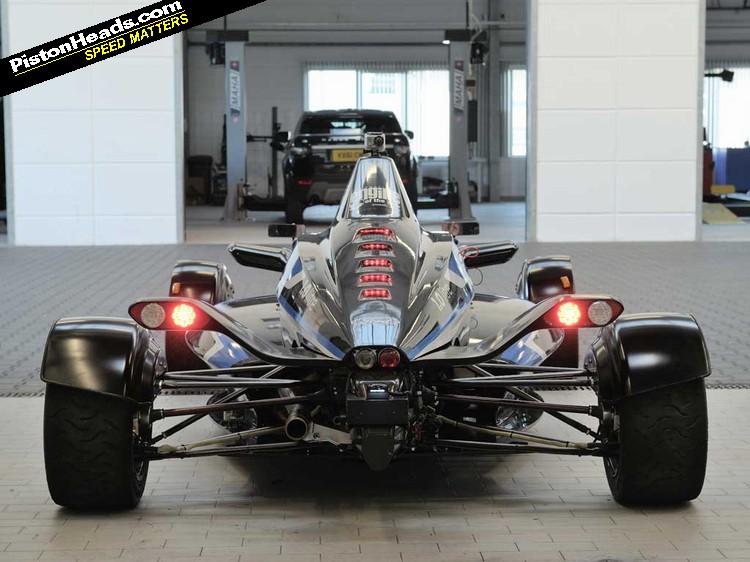
This has the potential to be a lot of fun...
Dan


If this car went into production at a sensible price I would buy one immediately.
Then the warrantly claims start and the reputation is tarnished.
Personally I think that that much power from a 1.0 with a turbo is asking for trouble, but I apprieciate its the way things are going.
Then the warrantly claims start and the reputation is tarnished.
Personally I think that that much power from a 1.0 with a turbo is asking for trouble, but I apprieciate its the way things are going.

Then the warrantly claims start and the reputation is tarnished.
Personally I think that that much power from a 1.0 with a turbo is asking for trouble, but I apprieciate its the way things are going.
There has been some progress since the specialist, high performance turbo vehicles of the 80’s and 90’s.
Then the warrantly claims start and the reputation is tarnished.
Personally I think that that much power from a 1.0 with a turbo is asking for trouble, but I apprieciate its the way things are going.
 ts
ts  )
)2) The actual scenarios needed to cause the kind of problem that we are always told would befall our precious turbos are actually pretty extreme, and as you say there was sufficient publicity around this in enthusiast circles to make it almost a non-issue (the only cases I saw in over 10 years of Evo ownership/MLR involvement were folk that really didn't know any better. Borderline idiots, basically.)
3) Of course, Tom, Dick, Harry, Sally and Patty don't actually drive like that anyway, with sufficient latent cooling being designed into the engines to account for normal use, ergo it's not really a concern
I'd also say that any of the first generations of higher output VAG/PSA/BMW diesels weren't exactly enthusiast targets, propelling as they did rep mobiles and runabouts, yet I don't see any huge issues with these engines relating to unreliability due general stress after 15+ years.
I do however recall similar talk at the time of of "70hp/litre from a diesel?! It's all witchcraft and voodoo, you know! There's no way engines can produce that much power without breaking!". I sometimes don't think we give manufacturers enough credit
http://www.youtube.com/watch?v=S4A7WkEqmwI
That’s the 260 BHP 990cc Cosworth built triple in the Aprilla cube unbelievable sound and power!!
I had one of these and it was a joy to drive although given it was designed for 5ft Japanese drivers rather than 6ft, 14 stone Scots it was a pain (literally) to get in and out of.
So if any design team is out there thinking that a GRP shelled (the Cappos would turn to rust if the weather forecast was for rain) small sports car with a sensible hood or solid roof and with this engine might have a market then they're right. I bet it would sell like hot cakes.
The price however must be right.... That means Cappuccino and not Caterham money...

I had one of these and it was a joy to drive although given it was designed for 5ft Japanese drivers rather than 6ft, 14 stone Scots it was a pain (literally) to get in and out of.
So if any design team is out there thinking that a GRP shelled (the Cappos would turn to rust if the weather forecast was for rain) small sports car with a sensible hood or solid roof and with this engine might have a market then they're right. I bet it would sell like hot cakes.
As technology moves forward so does the testing. A good example of this would the stop/start systems I am system validation engineer for (this engine being one of them). With the advent of stop/start there are new usage scenarios that didn't occur before and, as such, were not signed off against. With your stop/start enabled car you now have the scenario where wide open throttle is engaged immediately after an engine start e.g pulling away from traffic lights. The concern from the turbo manufacturer, for example, was that you might not have sufficient oil pressure by the time the turbo was being spooled up to achieve maximum boost. As such data was correleated showing how many times the most agressive driver in worst case usage might do this maneouver and then an engine was tested at varying range of temps (cold oil worst for travelling from sump to turbo/warm oil worst for bearing film thickness) to see if this cycle showed any significan extra wear.
So, yup, your average manufacturer does try to protect against most possible scenarios within the durability sign off. And the 'Fox' 1.0 was subject to the same sign off criteria as any other current powertrain
regards
Ben
t. The cars could be stupidly quick as they weigh under a ton. I have also spoken to people in Smart and they say that a new Roadster is on the cards in the next couple of years.
Gassing Station | General Gassing | Top of Page | What's New | My Stuff