
New VW Golf
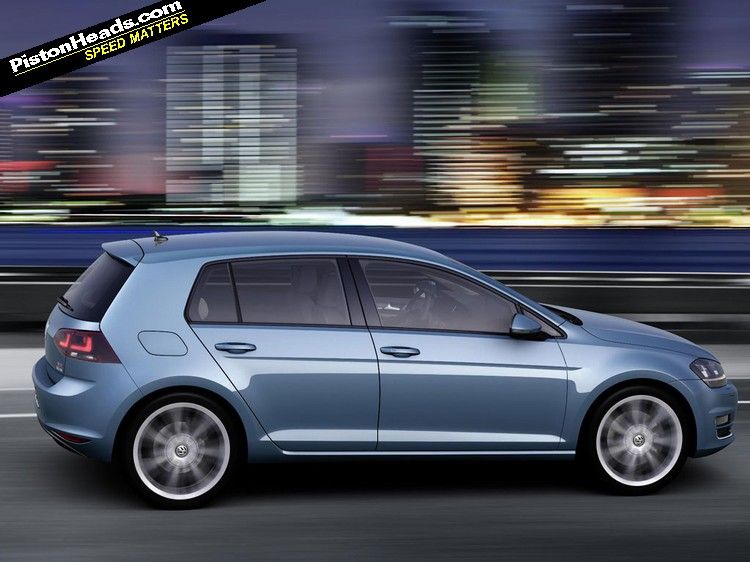
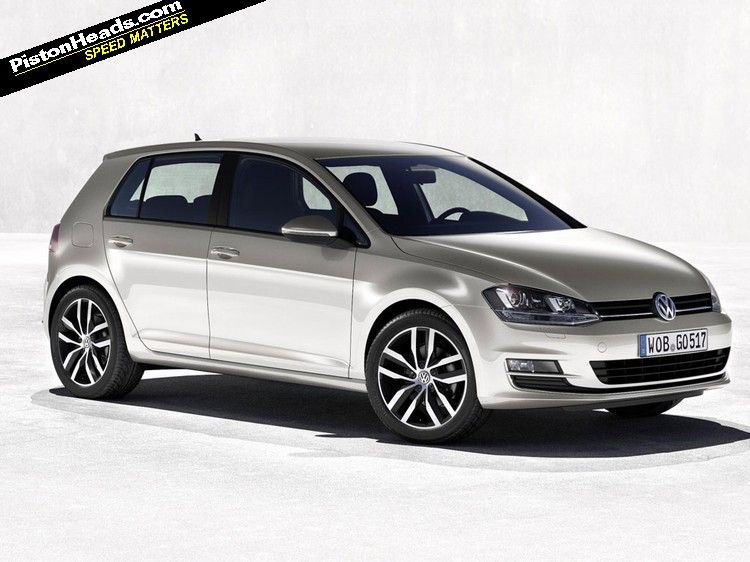
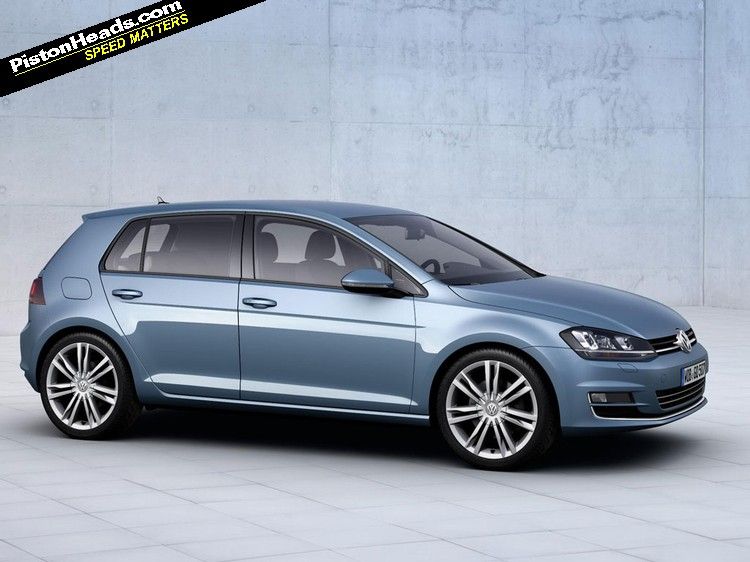
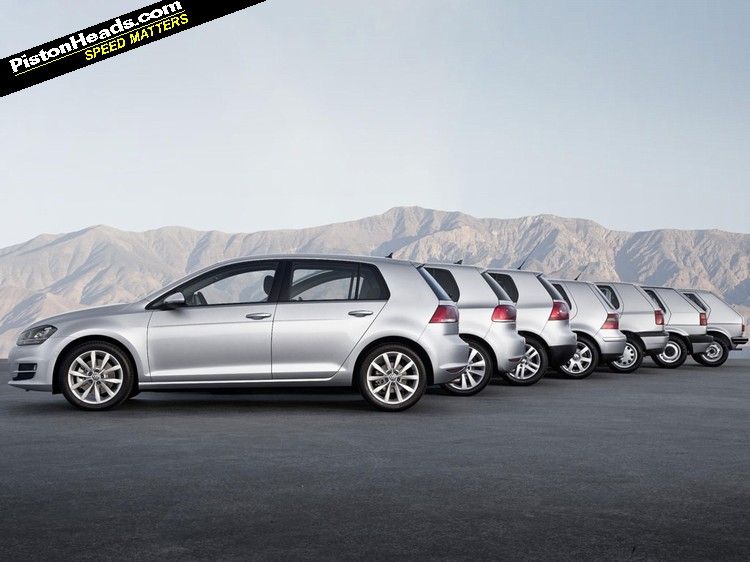
Meet the new Golf, much like the old Golf...
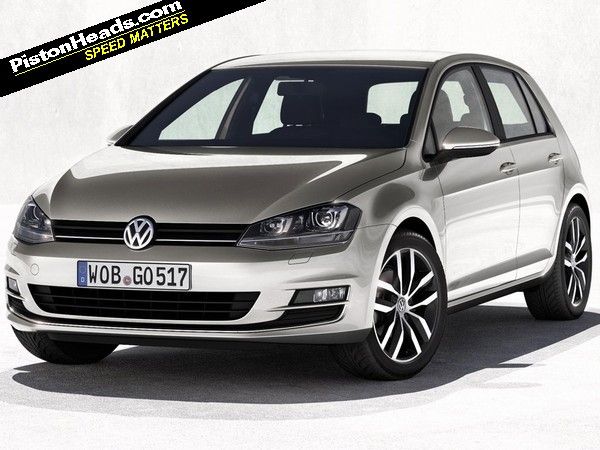
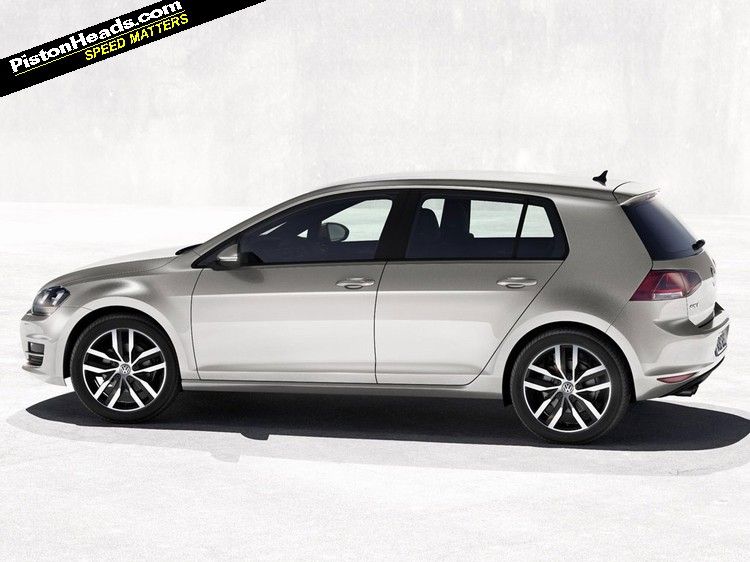
Longer and more spacious, but lighter too
More significant changes are afoot under the skin. The Mk VII Golf, like almost every new and upcoming mid-size VAG product, is underpinned by the MQB architecture. This contributes to a weight saving for the Mk VII Golf of up to 100kg over the previous model; whilst this predictably delivers efficiency gains, it should also add some agility to all Golf models, especially the GTI and R versions when they arrive.
VW is keen to press the safety features offered on the Golf Mk VII. These include Adaptive Cruise Control, a Driver Alert System to detect tiredness and City Emergency Braking to prevent accidents in traffic. Most notably amongst all this equipment is Front Safe. According to VW, this system can bring the car to a complete halt at speeds of up to 150km/h (93mph). Front Safe is a device most cars already feature of course, most of us referring to it as a 'brake pedal', but for those who struggle with such complex systems it's nice to know this is now an automated process too.
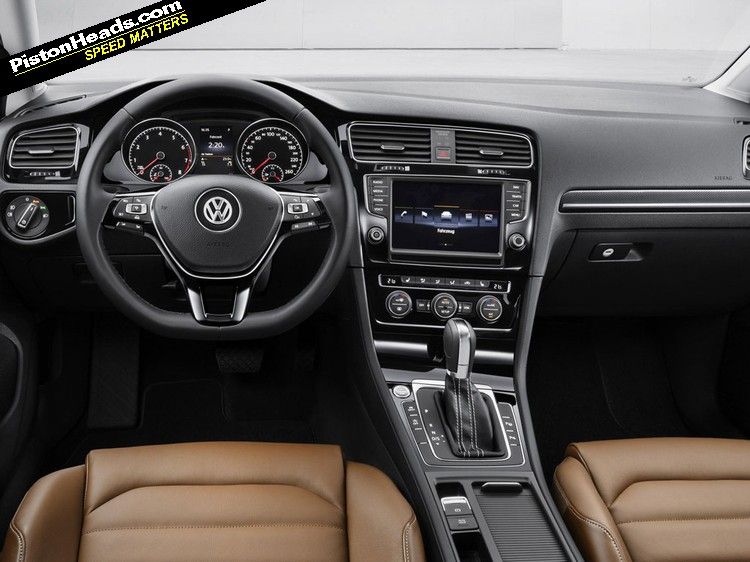
Driver-angled dashboard standard on all models
Orders will be taken for the Golf Mk VII from October, with the first cars arriving in Britain in January.
 |
 |
 |
 |
 |
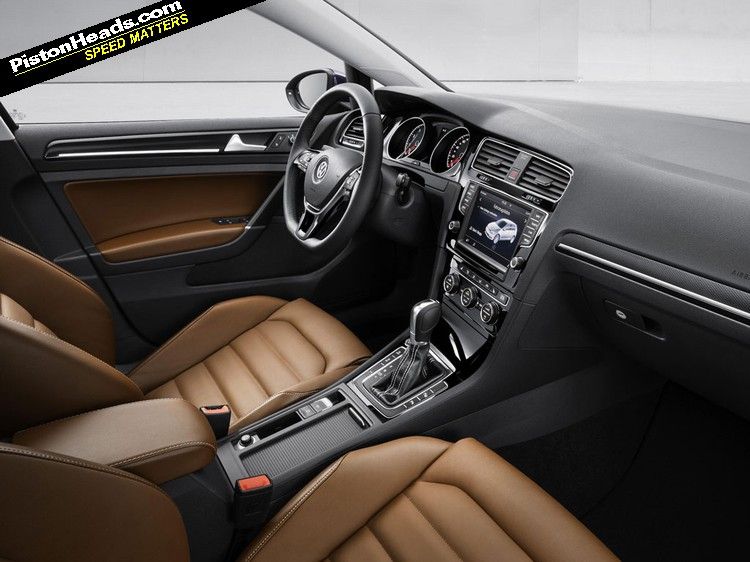 |


The interior looks pretty swanky, but the new A3's still looks better.
The design looks quite bland, but safe.
I can see from the 150hp diesels fuel consumption and emission figures they are competative with BMW's small diesel engines finally.
Any news on the prices?
And I'm impressed that the focus has finally changed to dropping weight! This can only be a good thing

Nevertheless, I'll probably consider one of the more interesting upcoming variants for my daily driver in due course.
Steve

In the eye of the beholder.
I know of half a dozen cars in that class that I find better looking on the interior.
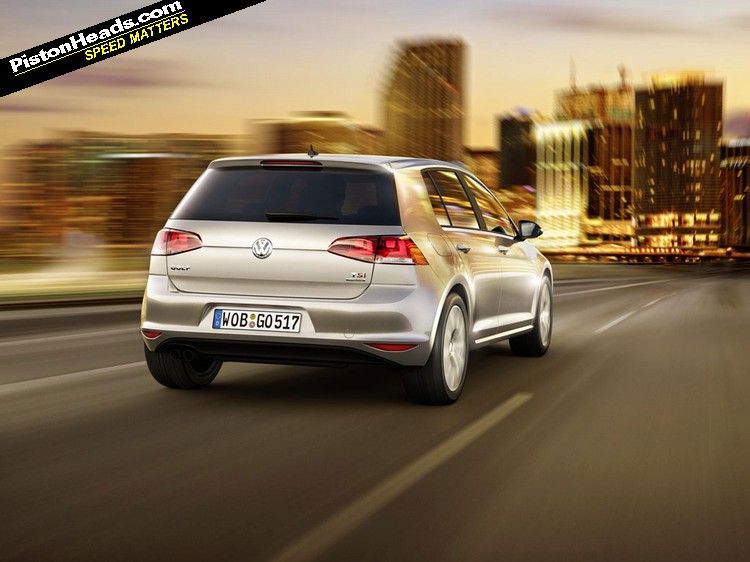
I'm not a big fan on the rear lights on this one, too "Audi" for me, doesn't suit the car imho, I like the look of the Polo ones much better.
Does VW actually has a brand that tries and design something? Audi, Porsche, VW, they all seem to build and try and improve (sometimes successfully, most of the time just trying too hard) on the existing concepts (A whatever, 911, Golf/Passat,...).
The A5 is the last that springs to mind that was actually a refreshing design, and a very good looking one at that, and that's also already 5 years ago.
Can someone explain this please?
If it decides you're going to crash, and you're doing less than 94mph, it'll hammer the brakes on, whether you ask it to or not? But if you're doing 95mph, it'll let you hit that wall?
Front Assist is based on the ordinary cruise control system. If the car in front is moving more slowly, your selected speed is reduced to match. This is achieved by automatic application of the brakes and intervention to control your car's acceleration. By selecting different time gaps, you can adjust the distance maintained. Apart from its function in Front Assist, the radar system also detects situations where the distance to the car in front is critical and helps to reduce your car's stopping distance when needed. The system also warns you of a dangerous situation with visual and sound signals and with a braking jolt.
Gassing Station | General Gassing | Top of Page | What's New | My Stuff