
RAW is like ABS
Discussion


Famous Graham said:
dcwATpr said:
Famous Graham said:
Oh, by the way, if using RAW is indicative of not being able to get the shot right in the first place, as you seem to imply, where you stand on bracketing?
what's bracketing?honestly, i've never once used it - it means by definition 2/3rds of your photos are wrong. Fact.
Can I therefore assume that you believe photography is all about taking one shot and having everything about it be perfect?
(and ffs, change your username, that "@" is a pain in the arse when quoting)
Edited by Famous Graham on Thursday 24th January 16:37
1) You are doing something that needs to be done in a hurry, eg weddings, journalism, wildlife etc. In these situations, you can't honestly say that throwing away 2/3rds of your photos is a good idea?
2) You are doing something that needs a bit more consideration, eg studio shoot, location shoot etc. In these situations you can't honestly say that it is better to bracket each photo rather than just get the exposure right and go from there?
re my username - it was fine until they changed the forum code!
Famous Graham said:
dcw@pr" Target="_blank">class="forumQuoter">dcw@pr said:
Famous Graham said:
Oh, by the way, if using RAW is indicative of not being able to get the shot right in the first place, as you seem to imply, where you stand on bracketing?
what's bracketing?honestly, i've never once used it - it means by definition 2/3rds of your photos are wrong. Fact.
Can I therefore assume that you believe photography is all about taking one shot and having everything about it be perfect?
to use the example i posted here : http://www.pistonheads.com/gassing/topic.asp?h=0&a...
this is one of about 30 photo's with differing poses ect. if i had been bracketing then there would have been a 2 in three chance the image would have been under or over exposed. and i would have missed out on the happy accident.
i've used bracketing when shooting landscapes before now tho...but then i'm shit at landscape :-)
Famous Graham said:
But you ARE dismissing other people's points of view. Not once have you acknowledged how using RAW can be beneficial, instead you almost denigrate those who do by suggesting they're not getting it right in the first place.
On the contrary. I never said everyone who is using RAW is getting it wrong, I said that if you get it right there is no need to use RAW. I.E. for those of you getting it right AND using RAW, you're wasting your time, as the quality benefit is ZERO!dcw@pr" Target="_blank">class="forumQuoter">dcw@pr said:
This is getting away from my original premise - if you get it right first time round you do not need RAW. Regardless of the theoretical benefits, no one on here could tell the difference between a pic that came from RAW and one that came from JPEG. Not even me.
I will have to bow out when it comes to scientific/medical/forensic work, although the semantics of "being right" vs "looking right" is a very grey area when you're talking about photography. I suppose you're against staining samples for microscopy then as well?
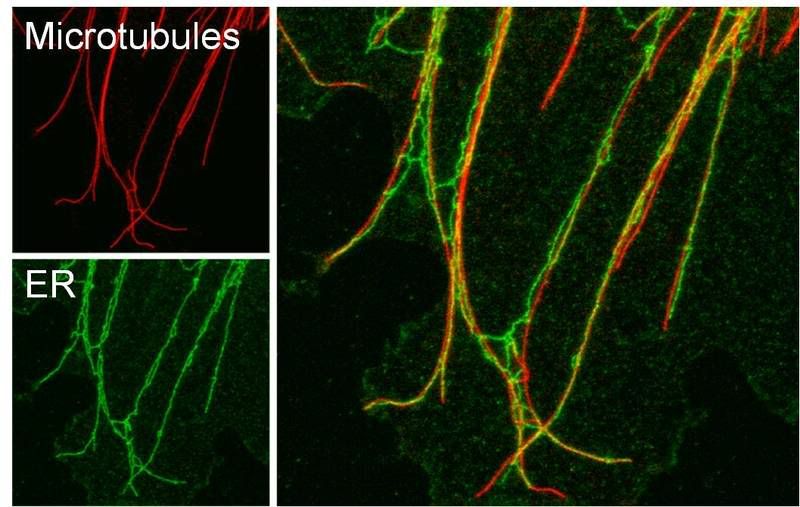
The samples I'm talking about are generally either live cells expressing fluorescently labeled proteins or they are fixed samples stained with fluorescently labeled antibodies. Either way the light given off is small enough that compression artifacts can have an impact. As you said it's pretty specialised imaging and probably not that relevant here. Even so, what I mean by "is right" rather than "looking right" is that all the available data has been collected. If point A is twice as bright as point B then I need to be able to quantify that in the knowledge that the compression software hasn't lost half the data. This fear of losing something of the image probably explains why I often shoot in RAW even when there's no need to. Then again I don't make any money out of my DSLR.I will have to bow out when it comes to scientific/medical/forensic work, although the semantics of "being right" vs "looking right" is a very grey area when you're talking about photography. I suppose you're against staining samples for microscopy then as well?
Anyway, with lots of expensive optical equipment you can make some very pretty images of cells:
MilnerR said:
The samples I'm talking about are generally either live cells expressing fluorescently labeled proteins or they are fixed samples stained with fluorescently labeled antibodies. Either way the light given off is small enough that compression artifacts can have an impact. As you said it's pretty specialised imaging and probably not that relevant here. Even so, what I mean by "is right" rather than "looking right" is that all the available data has been collected. If point A is twice as bright as point B then I need to be able to quantify that in the knowledge that the compression software hasn't lost half the data. This fear of losing something of the image probably explains why I often shoot in RAW even when there's no need to. Then again I don't make any money out of my DSLR.
that's probably a bit outside the scope of this discussion! nice pics thoughFamous Graham said:
No it isn't. As I've already explained.
Let me make my position 100% clearIf you need to make more than minor adjustments to a photo then RAW is better than JPEG. If you get the photo right, and print it at whatever size you want, you will not be able to see the difference between RAW and JPEG, therefore it is a waste of time. At 100% on a monitor there will be differences between the two images, due mainly to compression, but they will not (I would wage money on it) be detrimental to the overall quality of the picture, in any way.
What exactly do you disagree with in the above statement?
I'm still thinking about this - because to some extent I agree with the "get it right first time" argument.
Also, the distance between original input of light to the actual output of either printed material or image on a monitor has so many variables - for example the different colour spaces that are involved, the optical ability of the lens, diffraction from the aperture, et cetera, et cetera - that the RAW v. JPEG argument is almost an irrelevance.
So, IF you boil away all the other points and say quality RAW v quality JPEG is all you are comparing (and assuming you're not compressing and re-compressing the image with post-processing of JPEGs) the original assertion is a good 'un.
But accepting that does not mean that the reverse has to be true and that RAW is a waste of time/space/talent/intellect.
The point is once the camera has processed the input into anything other than its RAW state, you cannot turn the process back - and that's why many will stick to their guns and (simplifying the position) back the RAW file every (or most) time compared to seeing the in-camera JPEG or TIFF as a certain level of risk.
I've never set my camera to JPEG (or my previous one!) - and actually, I have to admit, I wouldn't know without a lot of studying manuals and playing about how to set it up to get the results I would want! Is that a terrible admission?
Also, the distance between original input of light to the actual output of either printed material or image on a monitor has so many variables - for example the different colour spaces that are involved, the optical ability of the lens, diffraction from the aperture, et cetera, et cetera - that the RAW v. JPEG argument is almost an irrelevance.
So, IF you boil away all the other points and say quality RAW v quality JPEG is all you are comparing (and assuming you're not compressing and re-compressing the image with post-processing of JPEGs) the original assertion is a good 'un.
But accepting that does not mean that the reverse has to be true and that RAW is a waste of time/space/talent/intellect.
The point is once the camera has processed the input into anything other than its RAW state, you cannot turn the process back - and that's why many will stick to their guns and (simplifying the position) back the RAW file every (or most) time compared to seeing the in-camera JPEG or TIFF as a certain level of risk.
I've never set my camera to JPEG (or my previous one!) - and actually, I have to admit, I wouldn't know without a lot of studying manuals and playing about how to set it up to get the results I would want! Is that a terrible admission?
dcw@pr" Target="_blank">class="forumQuoter">dcw@pr said:
Famous Graham said:
No it isn't. As I've already explained.
Let me make my position 100% clearIf you need to make more than minor adjustments to a photo then RAW is better than JPEG. If you get the photo right, and print it at whatever size you want, you will not be able to see the difference between RAW and JPEG, therefore it is a waste of time. At 100% on a monitor there will be differences between the two images, due mainly to compression, but they will not (I would wage money on it) be detrimental to the overall quality of the picture, in any way.
What exactly do you disagree with in the above statement?
Beano's post above me pretty much nails my position I think.
dcw@pr" Target="_blank">class="forumQuoter">dcw@pr said:
super, so we're all agreed on my OP then?
Not quite  Because I don't think the hyperbole is warranted. I would say that, were one to get the shot bang on, then jpg would be perfectly adequate and RAW would just have added time for the processing and whatnot.
But I think that misses the point of RAW to be honest, which is what I was trying to explain/justify.

One other point to consider is how you might want to use the photos in the future and would you want to be able to go back and access the RAW data. For example some software could be developed that could reprocess RAW files into a higher resolution image. I know that RAW files have different specs and some would argue that JPEG is more future proofed as it is a recognised standard.
I know it's not quite the same but is it not a bit like shooting film and throwing away the negatives and keeping the prints.
I know it's not quite the same but is it not a bit like shooting film and throwing away the negatives and keeping the prints.
nick_bbb said:
For example some software could be developed that could reprocess RAW files into a higher resolution image
maybe i'm wrong, but I don't believe RAW has an intrinsically higher resolution than JPEG, and I don't know how more colour information could be used to create a better image, unless our eyes get upgraded? But who knows what the future holds... Once you'll all finished peeping at your pixels, can someone please help!
nick_bbb said:
One other point to consider is how you might want to use the photos in the future and would you want to be able to go back and access the RAW data. For example some software could be developed that could reprocess RAW files into a higher resolution image. I know that RAW files have different specs and some would argue that JPEG is more future proofed as it is a recognised standard.
I know it's not quite the same but is it not a bit like shooting film and throwing away the negatives and keeping the prints.
I've allready gone back to a few images pp'd with PS7 and improved them now I have CS3...I know it's not quite the same but is it not a bit like shooting film and throwing away the negatives and keeping the prints.
Gassing Station | Photography & Video | Top of Page | What's New | My Stuff