
Zircotec exhaust coating
Discussion


Hi Chaps,
I am going to coat my exhaust system with a zircotec finish. What colour would you go for? The car is silver with black / carbon finishing, so I was thinking of the Sterling Silver finish. Has anyone tried a similar coating? If so how does it stand up to staining / marking?
http://www.zircotec.com/page/-_performance_colours...
Many Thanks,
Mart
I am going to coat my exhaust system with a zircotec finish. What colour would you go for? The car is silver with black / carbon finishing, so I was thinking of the Sterling Silver finish. Has anyone tried a similar coating? If so how does it stand up to staining / marking?
http://www.zircotec.com/page/-_performance_colours...
Many Thanks,
Mart
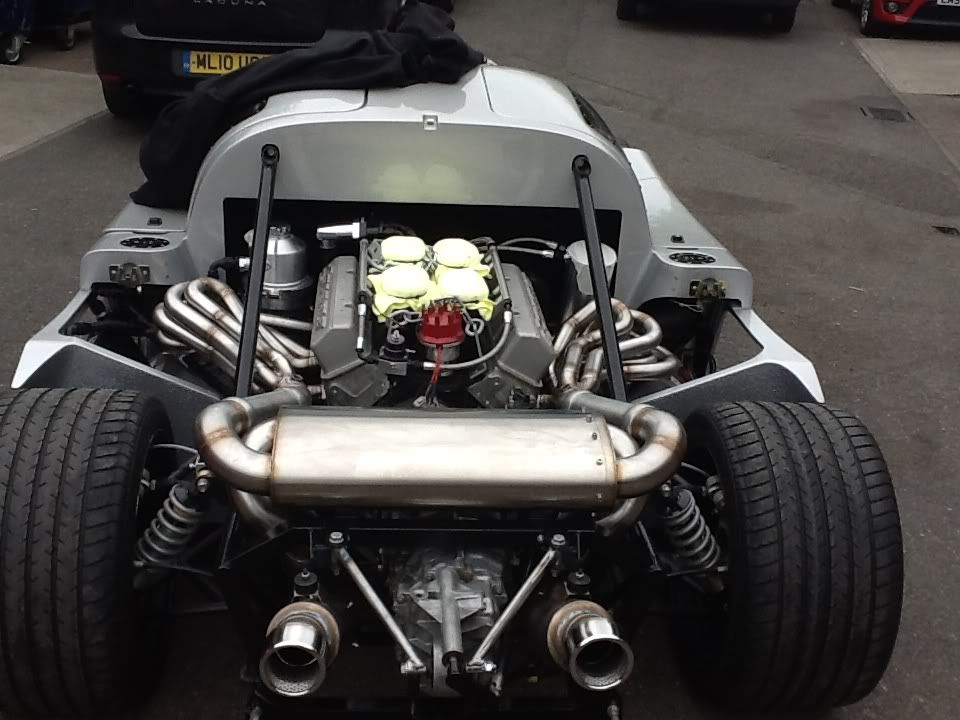
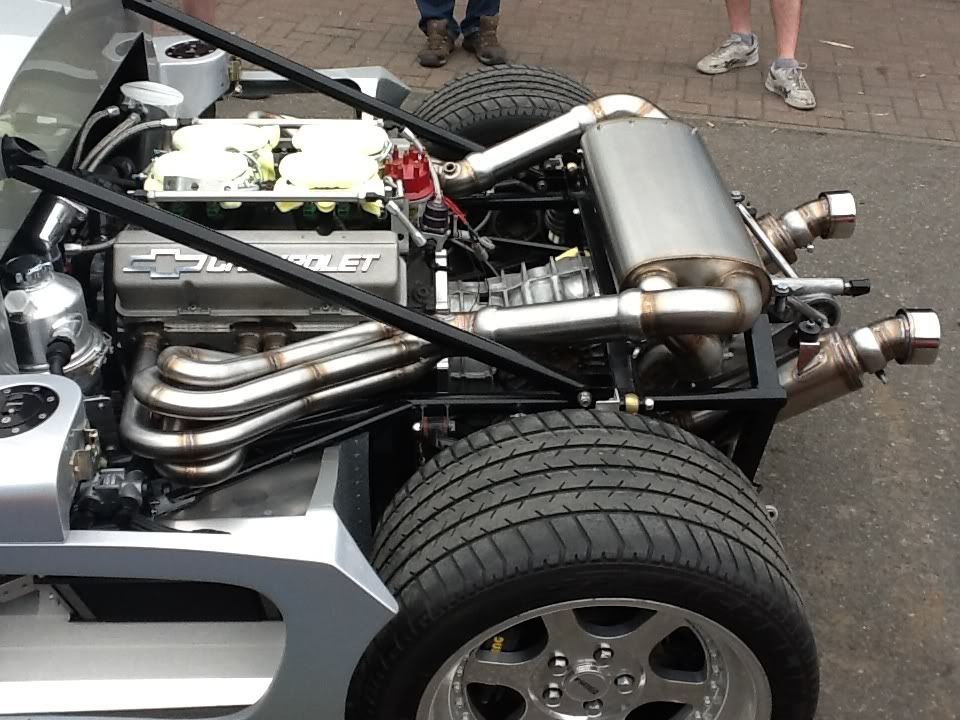


Storer said:
Mart
What engine is that? My LS7 has the exhaust ports evenly spaced!
Also, can you explain why the headers are so long? You have a lot of pipe to transfer heat to the engine bay there. Mine are matched length but only about 28" long.
God choice of colour tooo.
Paul
Hi Paul,What engine is that? My LS7 has the exhaust ports evenly spaced!
Also, can you explain why the headers are so long? You have a lot of pipe to transfer heat to the engine bay there. Mine are matched length but only about 28" long.
God choice of colour tooo.
Paul
It's a Peter Knight 434 based on a Chevy Block. It needs 36" headers hence the length. Pete has done lots of work one exhaust systems and he knows his stuff, so I hope it will run well. Think I will go with either the silver or grey colours and coat the whole system. As you say, there is a lot of exhaust system there, so I want to reduce heat as much as possible.
Cheers for the comments!
Mart
Davrianman said:
Hi Paul,
It's a Peter Knight 434 based on a Chevy Block. It needs 36" headers hence the length. Pete has done lots of work one exhaust systems and he knows his stuff, so I hope it will run well. Think I will go with either the silver or grey colours and coat the whole system. As you say, there is a lot of exhaust system there, so I want to reduce heat as much as possible.
Cheers for the comments!
Mart
You can see why they call this a BIG It's a Peter Knight 434 based on a Chevy Block. It needs 36" headers hence the length. Pete has done lots of work one exhaust systems and he knows his stuff, so I hope it will run well. Think I will go with either the silver or grey colours and coat the whole system. As you say, there is a lot of exhaust system there, so I want to reduce heat as much as possible.
Cheers for the comments!
Mart
 block
block still am going for the V10

At the risk of starting a heated discussion I would urge you guys to read all of the following link http://www.popularhotrodding.com/enginemasters/art...
Written by the legendary David Vizard.
Written by the legendary David Vizard.

I am also debating the merits of heat-shielding, especially as header temps can reach 1300 degrees.
Many use Nimbus ally shields to lessen the radiant heat to tanks etc - but I notice there are two types - single layer and twin layer.
Then again some (more expensive) heat shield material use a ceramic sandwich technique either will aluminium, or stainless as the outer layers.
I presume the latter being more effective?
Has anyone used Nimbus (single-layer) on it's own, or with say a layer of Ceramic refective heat-mat on top, or is this additional layer unnecessary?
Also I have been looking at the apparently popular zircotec coatings - but 33% reduction (they claim) in radiated heat still means a very hot header, so a shield would be necessary also? Also Zirc is incredibly expensive, even just for headers at 600 odd +, so I do wonder if it is really that cost-effective unless money is no object.
Finally, some (with stainless exhausts) use wrap, which can look pretty awful, and there are many types out there...
So what is the concensus to keep our bays and vunerable bits cool with a modicum of good-looks?
cheers
Keith
Many use Nimbus ally shields to lessen the radiant heat to tanks etc - but I notice there are two types - single layer and twin layer.
Then again some (more expensive) heat shield material use a ceramic sandwich technique either will aluminium, or stainless as the outer layers.
I presume the latter being more effective?
Has anyone used Nimbus (single-layer) on it's own, or with say a layer of Ceramic refective heat-mat on top, or is this additional layer unnecessary?
Also I have been looking at the apparently popular zircotec coatings - but 33% reduction (they claim) in radiated heat still means a very hot header, so a shield would be necessary also? Also Zirc is incredibly expensive, even just for headers at 600 odd +, so I do wonder if it is really that cost-effective unless money is no object.
Finally, some (with stainless exhausts) use wrap, which can look pretty awful, and there are many types out there...
So what is the concensus to keep our bays and vunerable bits cool with a modicum of good-looks?
cheers
Keith
3Dee said:
I am also debating the merits of heat-shielding, especially as header temps can reach 1300 degrees.
Many use Nimbus ally shields to lessen the radiant heat to tanks etc - but I notice there are two types - single layer and twin layer.
Then again some (more expensive) heat shield material use a ceramic sandwich technique either will aluminium, or stainless as the outer layers.
I presume the latter being more effective?
Has anyone used Nimbus (single-layer) on it's own, or with say a layer of Ceramic refective heat-mat on top, or is this additional layer unnecessary?
Also I have been looking at the apparently popular zircotec coatings - but 33% reduction (they claim) in radiated heat still means a very hot header, so a shield would be necessary also? Also Zirc is incredibly expensive, even just for headers at 600 odd +, so I do wonder if it is really that cost-effective unless money is no object.
Finally, some (with stainless exhausts) use wrap, which can look pretty awful, and there are many types out there...
So what is the concensus to keep our bays and vunerable bits cool with a modicum of good-looks?
cheers
Keith
In our experience you are better off doing the following:Many use Nimbus ally shields to lessen the radiant heat to tanks etc - but I notice there are two types - single layer and twin layer.
Then again some (more expensive) heat shield material use a ceramic sandwich technique either will aluminium, or stainless as the outer layers.
I presume the latter being more effective?
Has anyone used Nimbus (single-layer) on it's own, or with say a layer of Ceramic refective heat-mat on top, or is this additional layer unnecessary?
Also I have been looking at the apparently popular zircotec coatings - but 33% reduction (they claim) in radiated heat still means a very hot header, so a shield would be necessary also? Also Zirc is incredibly expensive, even just for headers at 600 odd +, so I do wonder if it is really that cost-effective unless money is no object.
Finally, some (with stainless exhausts) use wrap, which can look pretty awful, and there are many types out there...
So what is the concensus to keep our bays and vunerable bits cool with a modicum of good-looks?
cheers
Keith
1. Using the gold foil (which is incredibly effective) directly on fuel tanks/roll bars swirl pots etc that are of concern. Looks smart and easy to clean, downside is the cost for large areas
2. If necessary, using a separate heat shield material such as Nimbus (single or double layer)between the exhaust and the item of concern - normally closer to the tank etc, but ensure an air gap or minimum 5-10mm. The downside of this is it can be difficult to keep looking smart over time
3. Increase air flow through the area as much as possible
The gold foil is particularly effective, but is very expensive. All the heat shield in the world will not stop heat soak over time, so it is very important to maximise flow through (or allowing the heat to escape from) areas of concern.
At one point we wrapped our headers which worked well (you could actually touch them without severe burns!) however we found that the headers actually started to distort badly due to the heat build up. They are also a hazard should you get an oil leak or similar, as they can absorb the oil and catch fire. We have now removed them as the wrap didn't last long, was a PITA to do and ended up damaging the headers as they distorted badly.
The grill mesh is pretty restrictive to air flow so we have changed the side mesh to allow more air flow through, and removed the top and rear vents. This clearly isn't for everybody but worth considering.
andygtt said:
Like steve I went for White... had a CV joint explode spiling CV grease on them and also had a crank oil leak that spilt oil on them causing me to abandome a dyno session... yet they still look good after 6k miles and a year of hard driving.
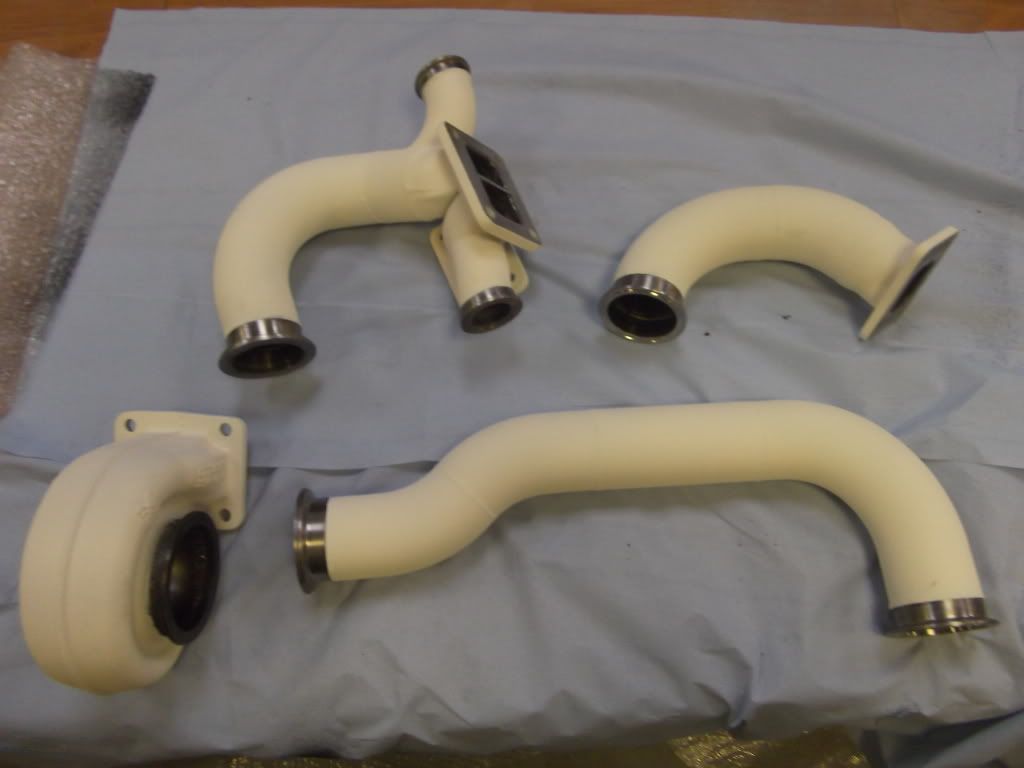
Andy I know its off topic but didnt know you finished you home built car?? whats it look like?
Dom
Gassing Station | Ultima | Top of Page | What's New | My Stuff