
PH Origins: The constant velocity joint
It's time to celebrate the invention of the humble, but vital, constant velocity joint
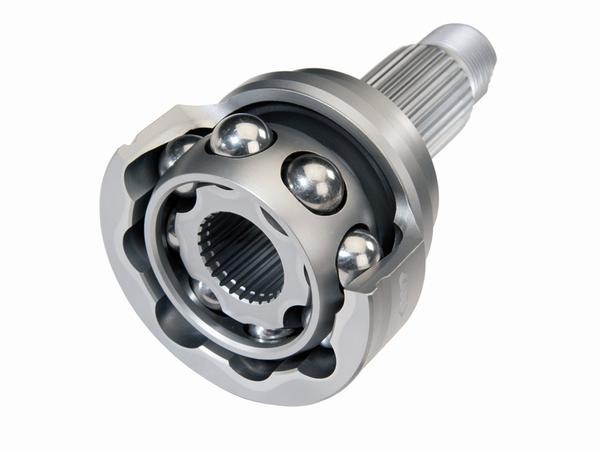
Designer Alec Issigonis, while developing what would become the Mini, found himself facing a problem in the car's compact drivetrain. The issue was one of smooth, efficient power transfer to the car's small front wheels. Preceding front-wheel-drive cars, such as the early Citroen 2CV and the Cord 810, made use of universal joints in their front axles to transmit drive from the gearbox to the wheels.
A universal joint consists effectively of a pair of hinges connected to a cross-shaped coupling called a spider. There were several issues, however, with using a universal joint. Firstly, they were often bulky and heavy. The input and output shaft velocities varied with the angle of the joint, too, so they were prone to vibration.
More prominently, as the operating angle increases - if lots of steering lock is applied, for example - a universal joint will begin to bind, making it hard to turn. In front-wheel-drive configurations, this limitation resulted in large turning circles as the wheels couldn't be steered as much as desired. Binding would also cause further unwanted vibration and frictional losses.
Fortunately, a solution to Issigonis's problem lay close to home - but its journey to the United Kingdom had been a long and convoluted one. In 1913, engineer Alfred Rzeppa had moved to the United States from Silesia, a region that straddles Poland, Germany and the Czech Republic. He had an interest in automotive engineering and ended up working for Ford, in Detroit, prior to opening his own engineering business.
Then, in 1927, Rzeppa applied for a patent on an 'improved universal joint'. The joint, which was claimed to be inexpensive, strong and compact, was designed to 'permit the driving of shafts arranged at relatively large driving angles'. It featured a socket, containing a ball race, which rode on bearings located in 'ball-receiving grooves' on an inner member. A shaft would then be attached to the socket, the other to the inner member, and drive could be transmitted. A locating cage was also detailed, which helped retain the balls within their races.
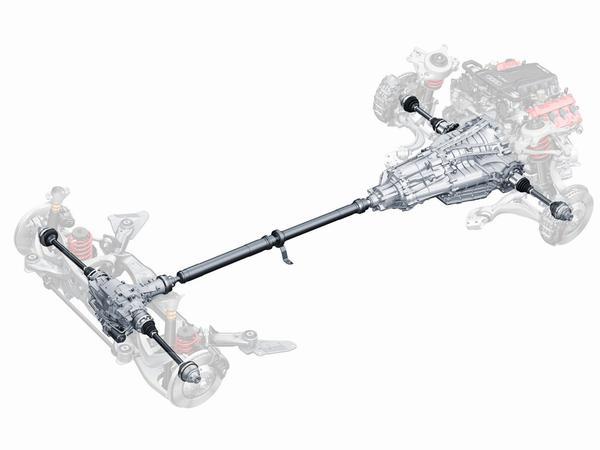
'The torque is uniformly distributed through the coupling member,' claimed Rzeppa. 'There is a minimum of friction in the relative angular changes which permit the universal movement of the connection'. This design, which was patented in 1928, was a significant improvement over a standard universal joint - being both smoother, as the shafts rotated at the same speeds, and capable of enduring a wider range of operating angles.
Rzeppa further improved on his design in 1933 and 1934. Even these joints had flaws, however. Sealing them proved problematic, and suitable grease was reportedly not available, leading to a short service life. Nevertheless, it appears a business called the Gear Grinding Machine Company in Detroit had acquired Rzeppa's designs and started production of them - as references are made to them in heavy vehicle documentation from 1932 onwards. Later, in 1959, the design for the 'Rzeppa constant velocity universal joints' was acquired from GGMC by drivetrain specialists Dana.
A new division was subsequently established at Dana, called Con-vel, to handle the production of Rzeppa joints. This type of joint, however, had long made it out of the United States. Seemingly, judging by the timeline of recorded events, Rzeppa had travelled to the United Kingdom and showcased his design to the then-new Universal Power Drives company in 1933. Rzeppa may have been a partner in the company, reputedly, and responsible for its founding - but, in any case, he returned to the US in the early '40s.
Universal Power Drives put the joint to work in heavy-duty industrial applications, including 'Unipower'-branded tractors and truck axles. What followed isn't entirely clear but, ultimately, a company called 'Unipower Rzeppa Limited' was established in Shipley. It continued developing constant velocity joints, with engineer William Cull submitting patents for improved components based on Rzeppa's designs.
Cull was no stranger to the technology. During the mid-1940s, he had designed constant velocity joints for the Scott Motors company, which was also based in Shipley. It went into voluntary liquidation in 1950, which may have been what prompted Cull's move to Unipower Rzeppa, and the firm and its tooling was sold to the Birmingham-based Aerco Jig and Tool Company.
Unipower Rzeppa was then itself bought out by Birfield Industries in 1957, which supplied parts to the British Motor Corporation and owned a plethora of companies - including Hardy Spicer and Co., Laycock Engineering and Salisbury Transmission. Cull ended up working for Birfield and continued his development of Rzeppa-style joints.
Herbert Hill, Laycock's chairman and the man responsible for incorporating Birfield, saw the potential of this joint and led renewed development. The result was the 'Birfield joint', which was put into mass production by Hardy Spicer and adopted by Issigonis to meet the design requirements of BMC's 'ADO15' compact car project.
The significance of this critical component, and the rapidly increasing market for it as the production versions of the Mini became popular, resulted in UK engineering firm GKN buying Birfield Industries outright in 1966. As front-wheel-drive cars grew even more popular in the 1970s and 1980s, CV joint production increased exponentially.
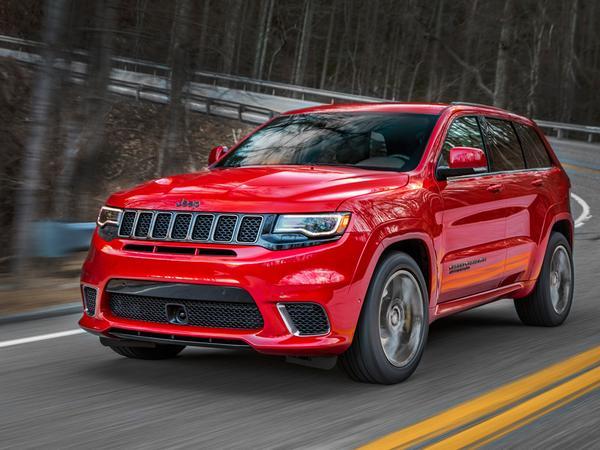
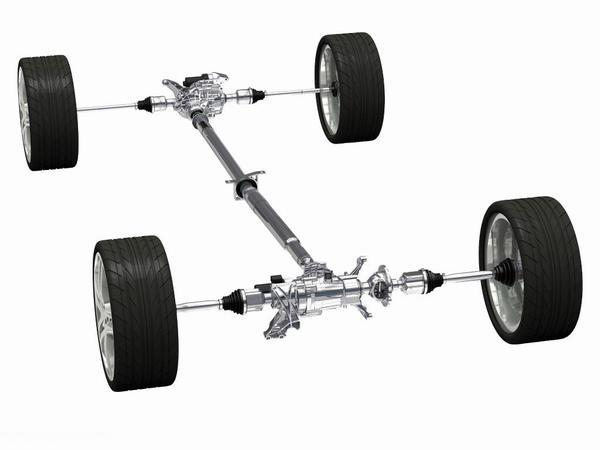
Development didn't stop, either; GKN later went on to develop new 'Countertrack' joints, which offered improved articulation and reduced friction - as well as heavy-duty CV joints that could withstand the forces imparted by, say, a 2433kg Jeep Grand Cherokee Trackhawk deploying its 645lb ft using launch control over 2000 times.
However, Rzeppa's design - knowingly or not - was, in fact, an extension of a preceding invention that had been designed by American William Whitney. In 1908 he had applied for a patent on a 'Universal Joint', which described shafts mounted in 'movable bearings'. Whitney's joint had a spherical head with several recesses, in which sat 'anti-friction balls'. A socket with 'complemental' grooves would then be held on the head with a collar, resulting in an assembly that looks just like a modern CV joint.
Interestingly, the sleeve on Whitney's CV joint also appeared to have longitudinal grooves that ran on matching grooves and bearings in the shaft itself - allowing for a plunging action that permitted a greater range of movement. 'The invention is primarily intended for use in connection with the driving means of a motor vehicle,' stated Whitney. 'But it may be utilised with any device where it is desirable to provide driving and driven elements and connect them with a flexible joint.'
Whitney's joint was presumably too complicated and expensive to manufacture, leading to it being overlooked and disappearing into the mists of time; it was only in the late 1950s that it began being mentioned in similar patents.
All that said, countless engineers contributed to the design and evolution of the constant velocity joint, as well as alternative configurations such as the Tracta joint, throughout the decades - but it was Rzeppa's design that rose to fame and Rzeppa's design that would be primarily referenced in future concepts from the likes of Borg Warner, Daimler-Benz AG, Volkswagen and Honda.
There's still work to be done, though. Now, as electric power becomes more prominent, quieter and smoother driveline components are required - and companies such as GKN are already working on further improving Rzeppa's 90-year-old design to meet these new challenges.


Incidentally, if you're not quite sure about the pronunciation of the rz in "Rzeppa", it's essentially like the French letter j in "je m'appelle".
as an aside... Strange thing about threads on PH. There's now two of them attached to this PH article. Both have two comments from readers -- and they're two different comments. One thread is visible straight away from the PH home page. The other is floating away, disappearing into the sea of "old" threads.
Maybe I need to clear my browser cache. Dunno. But not the first time I've noticed this.

The Rzeppa designs have the problem of high heat generation at larger articulation angles as the balls skid rather than rolling, and the single Hardy Spicer types have the speed variation issue (there is an American company who make a double back to back HS, but it is bulky)
Apparently the Thompson has neither of these problems.
https://youtu.be/auQ65qno2Eo
What a fascinating bit of history. Sounds like he lived a remarkable life – a shame to hear it was cut short.
Gassing Station | General Gassing | Top of Page | What's New | My Stuff