
A Blackbird is missing
Discussion


bergclimber34 said:
I am rather more impressed that France an d Britain built a passenger plane that could travel at Mach 2 while being quiet enough to talk in and pour champagne at the same time.
Yes, that's true. Unfortunately for Concorde most people preferred slow and cheap to fast and expensive.One of the planes in that image looks like a Mig-23 swing wing, but maybe too big, perhaps an original B1? or F111 prototype?
I am not decrying what Lockheed did with the 71. I think lot of ground work was done with the U2 in terms of what was needed and if Powers had not been shot down, it might have been the only method necessary before, as now satellites took over. It was a horrendously expensive thing. And oddly the U2 is still going, funny that!
And the X15 does count as it is the fastest manned plane even recorded, it was not a space ship. Yes it needed a lift but it landed however you look at it and it was reusable in a way! I think an unmanned X plane went much faster. And if you see the pictures of the early X15s that came back and how mullered they were, my word those men were heroes!!
I also think making the 117 work was a mighty achievement, as it simply should not have been able to fly!!
But again Concorde for me is the pinnacle of aerospace engineering, not because of what it could do, but how it looked, how it made you feel, and it was part British!! And believe me if Labour could have done it would have been canned like they canned pretty much everything else they could in the 60's and ruined our aerospace industry completely.
Austin Prefect said:
If it's being made airworthy at all (which I very much doubt) it will be as a testbed so no need for air to air refuelling.
Depends on the endurance* the test missions require - the plane almost never took off with full tanks, as this web article explains.https://theaviationgeekclub.com/former-sr-71-drive...
* They'll be recommissioning it for high-speed testing and/or high altitude testing. Both require a substantial amount of fuel. I think your statement is rather naive.
Leon R said:
From the article can anyone name the rest of the planes in this satellite image?
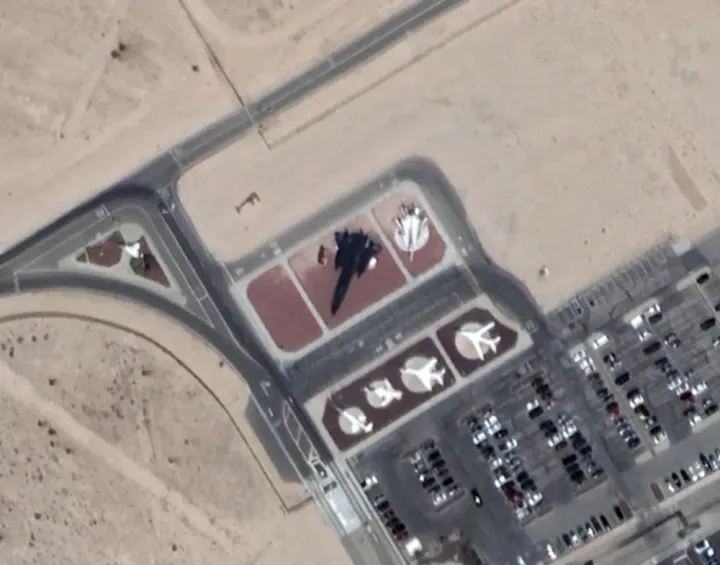
I can see the SR71 (obviously), what I believe to be the X29, the F-15 ACTIVE, and an F104.
I believe the other two are the F-8 digital fly by wire and supercritical wing testbedsI can see the SR71 (obviously), what I believe to be the X29, the F-15 ACTIVE, and an F104.
https://www.nasa.gov/image-article/where-are-they-...
https://www.nasa.gov/image-article/f-8-supercritic...
twister said:
I believe the other two are the F-8 digital fly by wire and supercritical wing testbeds
https://www.nasa.gov/image-article/where-are-they-...
https://www.nasa.gov/image-article/f-8-supercritic...
Would never have guessed the right hand one as an F8 without that article - thanks.https://www.nasa.gov/image-article/where-are-they-...
https://www.nasa.gov/image-article/f-8-supercritic...
The X-15 was indeed a "spaceship" in that it could achieve altitudes of over 300,000 feet (56 miles) and on a couple of occasions passed through the Karman Line - 100 km/62 statute miles (the recognised boundary between atmospheric flight and ballistic flight in a vacuum).
From the very beginning of the programme it was intended to achieve these "space" type altitudes and was equipped with cold gas thrusters in the nose and wingtips so that the air/spacecraft could be oriented when above the atmosphere where the conventional aerodynamic control surfaces did not work.
The X-15 was a remarkable craft and it was used for multiple experimental test flights (199 in all) carrying out all sorts of scientific research as well as testing out different technologies, heat shield materials etc, all of which fed back into future air and space projects.
The highest speed achieved by an X-15 Mach 6.7 in 1967 but the heat shielding did not hold up very well and that particular X-15 was grounded permanently after that flight due to the structural damage sustained.
As for sheer speed WITHIN the atmosphere, I would suggest that the Space Shuttle Oribiter must take some credit as it entered the atmosphere at Mach 22 and was effectively using fully aerodymanic controls (rather than its thrusters) at around Mach 10 or so - once it was low enough for its elevons, rudder etc to be effective.
Regarding why the SR-71 was removed from display, I would expect that it might be in need of a bit of maintenance and sprucing up as it sits outside 24/7 in the (very) hot sunshine of the Californian high desert.
If you watch the Nasa guy he basically says they want to get into more high speed high altitude stuff, perhaps linked to what is coming in terms of transport into space or spying, I don't know.
I don't think it's an Sr72 as some say, it could be a high altitude unmanned thing that could use weaponry I guess.
But it seemed to me the guy was just messing around, typical secret espo stuff to get people twitching.
But yes the shuttle was remarkable earth bound, very high glide angles, weighed a ton, and the 15 was probably used to give data about effects control surfaces, piloting, heat, etc. For shuttle and other programs I guess.
I had no idea the 15 flew that high, 8 pilots were given astronaut wings, the highest was 67 bloody miles, when you think 50 miles is 267k feet, that is insane really
Edited by bergclimber34 on Monday 28th September 09:33
bergclimber34 said:
If you watch the Nasa guy he basically says they want to get into more high speed high altitude stuff, perhaps linked to what is coming in terms of transport into space or spying, I don't know.
I don't think it's an Sr72 as some say, it could be a high altitude unmanned thing that could use weaponry I guess.
But it seemed to me the guy was just messing around, typical secret espo stuff to get people twitching.
But yes the shuttle was remarkable earth bound, very high glide angles, weighed a ton, and the 15 was probably used to give data about effects control surfaces, piloting, heat, etc. For shuttle and other programs I guess.
I had no idea the 15 flew that high, 8 pilots were given astronaut wings, the highest was 67 bloody miles, when you think 50 miles is 267k feet, that is insane really
The X-15 was retired in 1968, a number of years before the Shuttle programme was properly established. However, a lot of the data obtained from the X-15 programme was very useful in the Shuttle, particularly the fact that they felt confident enough with the ability to not have to fit auxialliary jet engines on the Shuttle. The X-15 had shown that hypersonic gliding and terminal area energy management (calculating glide angles and turn ratios needed to make the end of the runway) was feasibleI don't think it's an Sr72 as some say, it could be a high altitude unmanned thing that could use weaponry I guess.
But it seemed to me the guy was just messing around, typical secret espo stuff to get people twitching.
But yes the shuttle was remarkable earth bound, very high glide angles, weighed a ton, and the 15 was probably used to give data about effects control surfaces, piloting, heat, etc. For shuttle and other programs I guess.
I had no idea the 15 flew that high, 8 pilots were given astronaut wings, the highest was 67 bloody miles, when you think 50 miles is 267k feet, that is insane really
Edited by bergclimber34 on Monday 28th September 09:33
Original concepts for the Shuttle nearly all contained auxilliary jet engines which would have assisted with the approach and landing phase and possibly provided enough thrust for a go-around if the approach was not right. However, jet engines and their fuel and associated systems would have added a lot of weight to the Orbiter and this would have restricted its Payload to Orbit capability.
The X-15 data provided the confidence that jet engines weren't really needed.
Only one astronaut flew both the X-15 and the Shuttle - Joe Engle.
Its weird really because even in basic form they are nothing like each other, the 15 was more like an F104, long fuselage, stubby wings, whereas the shuttle was a delta wu4th a huge fail fin.
I do often watch the re entries, it is so eerie seeing something that huge glide in, a fabulous achievement.
Yet still for me Concorde was amazing in what it did, as were other commercials like the 707, 747,even the flawed Comet for pushing the idea.
Those planes changed all our lives, the otger stuff did in other ways, but the big commercials really did change everyone's lives
bergclimber34 said:
Its weird really because even in basic form they are nothing like each other, the 15 was more like an F104, long fuselage, stubby wings, whereas the shuttle was a delta wu4th a huge fail fin.
The Shuttle was designed to carry quite large payloads to space so that dictated its overall dimensions. Also, the Shuttle was designed to have what was described as a "cross range potential" of around 1,500 miles.
After the de-orbit burn, the Shuttle would start its re-entry process. However, the US Department of Defense stipulated that it wanted the Orbiter to be able to deviate 750 miles left or right of its original targeted re-entry corridor after the de-orbit burn had been carried out.
This was because they were looking at military/war requirements.
They envisaged a situation where they could quickly launch a Shuttle in a war scenario, place a spy satellite or weapon into orbit and de-orbit and re-enter immediately. This would have been on a launch from Vandenberg Air Force Base which implies a polar orbit. If you re-enter after just one lap of the earth on a polar orbit mission, Vandenberg will have rotated 1,500 to the east by the time you come around again to land - so you ned to be able to turn the Shuttle during its descent to the east to allow it to make the runway.
Also, if a Shuttle was in orbit during a war type scenario and its intended landing strip was taken out by a nuke, it might need to veer off to find an alternative runway or desert strip.
It was because of this cross range requirement that the Shuttle ended up with large delta wings rather than short stubby wings like on the X-15.
NASA had no such cross range requirements and their original Shuttle concepts all featured stubby X-15 style wings. Also, cross range was not something that was of any use in Cape Canaveral launches.
You can see from this 1970/71 concept that this version of the orbiter has very stubby wings -

Regarding world changing aircraft, I would always put the Douglas DC-3 up there as being pretty important.
Firstly, between 1936 and 1939 it revolutionised civil air transport. It is reputed that it was the first airliner that could generate a profit purely based on the passengers it carried rather than relying on any sort of subsidy scheme.
Secondly, it helped win World War 2 (the C-47/R4D/Dakota variants) which were built in huge numbers.
Thirdly, after World War 2 virtually every post-war airline made use of converted wartime C-47s etc to help re-establish the world's airline industry.
To somewhat muddy the waters even further, I would even suggest that this relatively unknown airliner was perhaps even more important than the DC-3 -
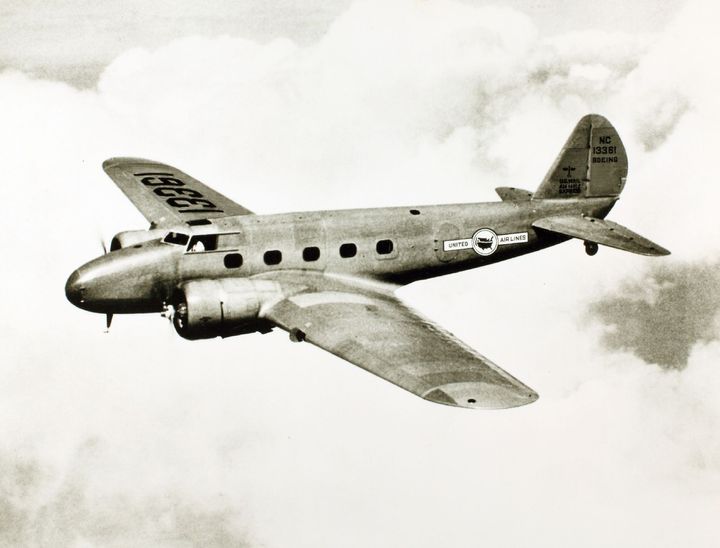
Firstly, between 1936 and 1939 it revolutionised civil air transport. It is reputed that it was the first airliner that could generate a profit purely based on the passengers it carried rather than relying on any sort of subsidy scheme.
Secondly, it helped win World War 2 (the C-47/R4D/Dakota variants) which were built in huge numbers.
Thirdly, after World War 2 virtually every post-war airline made use of converted wartime C-47s etc to help re-establish the world's airline industry.
To somewhat muddy the waters even further, I would even suggest that this relatively unknown airliner was perhaps even more important than the DC-3 -
Edited by Eric Mc on Monday 28th September 12:57
At least 13,000 plus were built - and that includes the Japanese and Soviet versions.
They don't suffer from fatigue as they were essentially overbuilt and are extremely robust The main restrictions on their usefulness now are airline safety regulations and lack of Avgas. It's because of the latter that Basler have been doing well remanufacturing C47s as the turboprop powered Basler BT-67
They don't suffer from fatigue as they were essentially overbuilt and are extremely robust The main restrictions on their usefulness now are airline safety regulations and lack of Avgas. It's because of the latter that Basler have been doing well remanufacturing C47s as the turboprop powered Basler BT-67
bergclimber34 said:
If you watch the Nasa guy he basically says they want to get into more high speed high altitude stuff, perhaps linked to what is coming in terms of transport into space or spying, I don't know.
I don't think it's an Sr72 as some say, it could be a high altitude unmanned thing that could use weaponry I guess.
But it seemed to me the guy was just messing around, typical secret espo stuff to get people twitching.
But yes the shuttle was remarkable earth bound, very high glide angles, weighed a ton, and the 15 was probably used to give data about effects control surfaces, piloting, heat, etc. For shuttle and other programs I guess.
I had no idea the 15 flew that high, 8 pilots were given astronaut wings, the highest was 67 bloody miles, when you think 50 miles is 267k feet, that is insane really
It looked at one time that Eric Brown, holder of the world record for types flown, could fly it and potentially get astronaut's wings, Neil Armstrong pushed for him to be included. Ultimately either the US didn't want a British national, or he would have been expected to take US citizenship and didn't want to.I don't think it's an Sr72 as some say, it could be a high altitude unmanned thing that could use weaponry I guess.
But it seemed to me the guy was just messing around, typical secret espo stuff to get people twitching.
But yes the shuttle was remarkable earth bound, very high glide angles, weighed a ton, and the 15 was probably used to give data about effects control surfaces, piloting, heat, etc. For shuttle and other programs I guess.
I had no idea the 15 flew that high, 8 pilots were given astronaut wings, the highest was 67 bloody miles, when you think 50 miles is 267k feet, that is insane really
Austin Prefect said:
It looked at one time that Eric Brown, holder of the world record for types flown, could fly it and potentially get astronaut's wings, Neil Armstrong pushed for him to be included. Ultimately either the US didn't want a British national, or he would have been expected to take US citizenship and didn't want to.
At that time, NASA would only recruit US citizens so Brown would have been ineligible. I am pretty sure that this restriction still applies to NASA astronauts but, of course, in the modern era, lots of other governments and private companies/agencies are allowed provide astronauts for inclusion on missions.The two British born NASA astronauts (Piers Sellars and Michael Foale) had already taken out US citizenship so were qualified to apply to join NASA.
However, there is one exception to this rule, Welsh scientist Richard Lewellyn was selected as a "scientist astronaut" by NASA in 1967. NASA had been under pressure from the scientific community to allow non test pilot types into the astronaut corps. This was in anticipation of future lunar landing missions where much more science wouyld be carried out on the lunar surface. Also, it was anticipated that scientists, doctors, engineers etc would be need on any future permanently manned space stations.
Due to pressure from the test pilot guys, who were not in favour of non test pilots or even non pilots being admitted as astronauts, NASA decided that all of these scientist (all male of course) recruits need to become proficient at handling fast jets (essentially the Northrop T-38 Talons used by the astronauts for transport and training).
Unfortunately , Llewellyn was not able to make the cut when it came to fast jet training so he was dropped. If he had made it, there is a good chance he might have made it into the Skylab or Shuttle programmes - which is where most of the remaining 1967 scientist recruits ended up.
Gassing Station | Boats, Planes & Trains | Top of Page | What's New | My Stuff