
A Blackbird is missing
Discussion


bergclimber34 said:
I did not know that either. He was one of our greatest test pilots for sure. And I am sure if the Labour government had not destroyed our aero industry to such a point it was gone in a second, he might have had the chance to fly something similar one day.
But that is another story
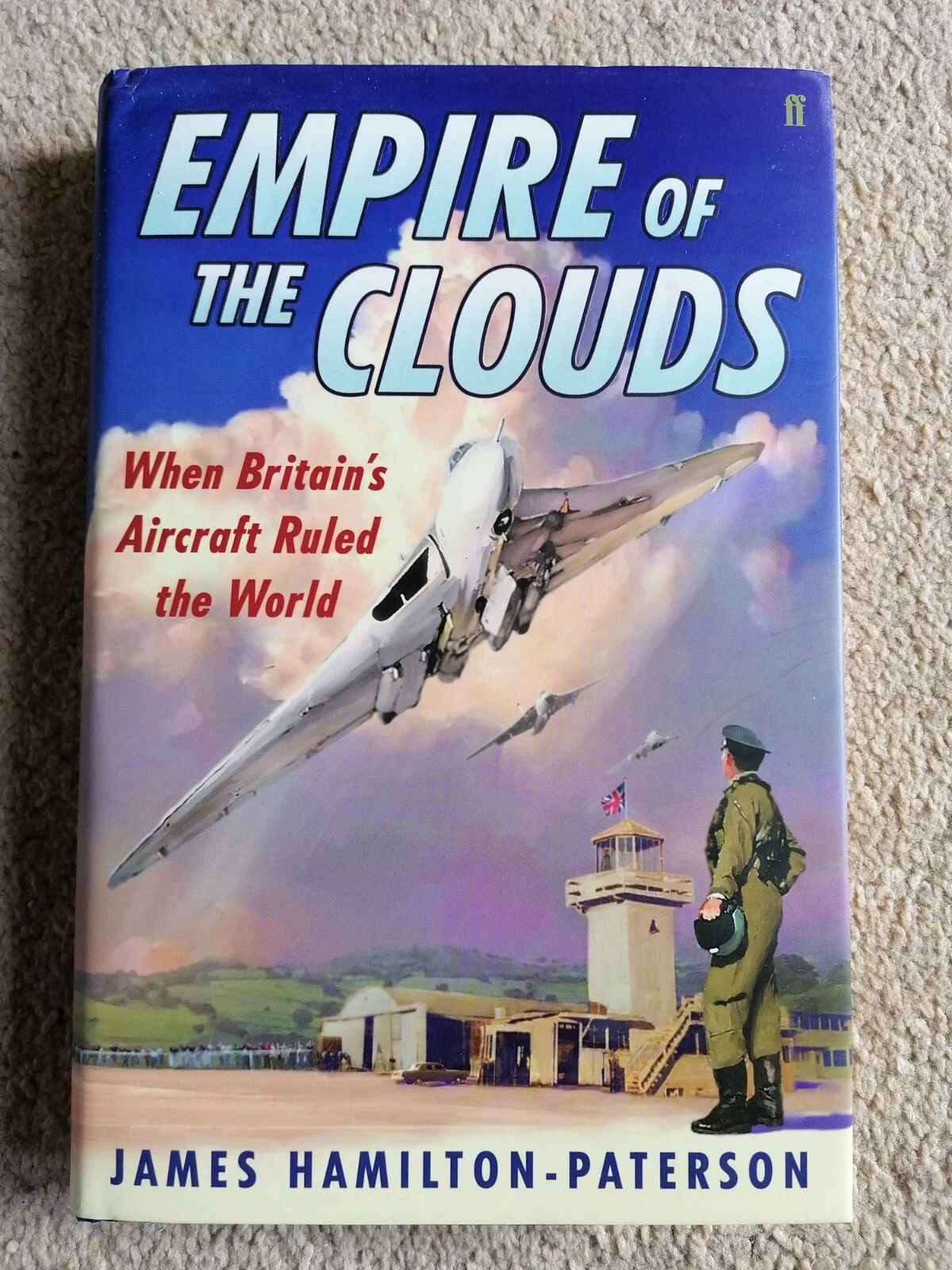
It is another story, and also very simplistic and essentially incorrect. If you are interested in the REAL reasons why the UK aerospace industry contracted and consolidated in the 1960s and 70s, read this book - But that is another story
PS - the British aerospace industry still exists and is actually doing rather well.
I do think we thought we could still conquer the world, too many companies, too many self interests, but also woefully governed by the powers that be often in favour of American stuff that was either made to fit or not quite suitable, though some we're a great success like the Herc, Chinook and sea king.
We had to rely on them for money and some decisions were made with in mind.
We had to rely on them for money and some decisions were made with in mind.

Eric Mc said:
bergclimber34 said:
I did not know that either. He was one of our greatest test pilots for sure. And I am sure if the Labour government had not destroyed our aero industry to such a point it was gone in a second, he might have had the chance to fly something similar one day.
But that is another story
It is another story, and also very simplistic and essentially incorrect. If you are interested in the REAL reasons why the UK aerospace industry contracted and consolidated in the 1960s and 70s, read this book - But that is another story
PS - the British aerospace industry still exists and is actually doing rather well.
bergclimber34 said:
I do think we thought we could still conquer the world, too many companies, too many self interests, but also woefully governed by the powers that be often in favour of American stuff that was either made to fit or not quite suitable, though some we're a great success like the Herc, Chinook and sea king.
We had to rely on them for money and some decisions were made with in mind.
Far more to it than that. In 1955 there were well over twenty airframe manufacturers and around ten aero engine manufacturers in the UK, way beyond what the domestic market could take and arguably well beyond the ability to compete in the global markets too.We had to rely on them for money and some decisions were made with in mind.
The only reason why governments were reluctant to intervene before the end of the 1950s was that they were worried about the huge increase in unemployment that would happen if they pulled the plug. Some decisions to go ahead with certain projects was purely to keep people in work - the Bristol Buckingham/Brigand being a good example.
By the end of the 1950s the government i.e. the UK taxpayer, was the main customer for most British aircraft companies and it just couldn't continue. Hard decisions had to be made. The government (Labour AND Conservatives) tried to persuade the manufacturers to rationalise and merge but they were all (naturally) reluctant to do so with their competitors.
In the end, the government got fed up and more or less forced the mergers to happen and also cut back drastically all the weird and wonderful projects that they had been essentially funding - amazing though some of these projects were.
Even though you singled out Labour for criticism, the single biggest hammer blow to British airframe manufacturing was Conservative minister Duncan Sandys' 1957 White Paper which effectively killed off nearly all teh advanced military projects that were under development.
That 1957 paper effectively sealed the fate of what became the TSR2 which eventually WAS axed by Labour - but without Sandys' White Paper there may not have been a TSR2 at all.
bergclimber34 said:
I do think we thought we could still conquer the world, too many companies, too many self interests, but also woefully governed by the powers that be often in favour of American stuff that was either made to fit or not quite suitable, though some we're a great success like the Herc, Chinook and sea king.
We had to rely on them for money and some decisions were made with in mind.
The thing about the UK aircraft industry was that it was small. We had to rely on them for money and some decisions were made with in mind.
A good thing if you want to innovate, people who didn't normally work together could discuss matters while waiting for the office kettle to boil rather than having to wait for their respective managers to get together at the next departmental meeting. (OK I exaggerate a little).
But rubbish if you want to tool up for mass production. The Nimrods like the Comets were largely hand made which caused terrible trouble with upgrades later. DH actually described their Trident plans to Boeing in the hope of getting a manufacturing agreement, but Boeing built the 727 instead, which was basically the original Trident proposal without the modifications made to suit BEA.
This is why we have this consistent pattern of apparently world beating designs without commercial success. The govt encouraged mergers to try and resolve this, but ended up with the worst of both worlds, separate and small manufacturing plants but corporate infighting.
Significantly, innovative US designs like the U2 and SR71 were designed by the 'skunk works' a small largely self contained team. When Boeing started work on the 777, relatively innovative by their standards, almost the first decision was to build a new office block specifically for that project, to get disparate experts under one roof.
Accidentalhero said:
Surely it s just in a hangar being tidied up and having any faded paintwork addressed etc? They can t really be making it flight worthy
I wouldn't put it past the current mob in charge that Trump has said send the spy plane over, Hesgeth said ok boss and the remaining sycophants in the USAF said "Sir Yes Sir"...The consolidation of the US aerospace industry is worth looking at too. How many manufacturers in (say) 1939 still exist today?
One significant change in the post war years has been the emergence of some other countries into the field, notably Embraer in Brazil - but they have had quite a bit of government support over the years too.
One significant change in the post war years has been the emergence of some other countries into the field, notably Embraer in Brazil - but they have had quite a bit of government support over the years too.
Manned aircraft as a weapon is a pretty outdated concept now - not saying there should be none, but am certainly saying that there's no technical need for a person to be in the cockpit any more, which then changes the operational parameters a lot.
This is the UK's answer to the iranian/russian drones : https://www.baesystems.com/en/product/nyan
Anyway, lots of potential to increase the amount of autonomy on these, while still maintaining "meaningful human control". The russian version runs on a raspberry pi.
This is the UK's answer to the iranian/russian drones : https://www.baesystems.com/en/product/nyan
Anyway, lots of potential to increase the amount of autonomy on these, while still maintaining "meaningful human control". The russian version runs on a raspberry pi.
That's why I said "aerospace industry" - not "aeroplane industry". The aerospace industry covers a vast array of technology related to things that operate within and outside the earth's atmosphere. Manned military vehicles is only one part of that.
Getting back to the original premise of the thread, there is no real need for a manned equivalent of an SR-71 these days - cool as they are.
Getting back to the original premise of the thread, there is no real need for a manned equivalent of an SR-71 these days - cool as they are.
Are the return to flight rumours true then?
"NASA Asked Several Former SR-71A Staffers To Help Secret Restart"
https://aviationweek.com/defense/aircraft-propulsi...
"NASA Asked Several Former SR-71A Staffers To Help Secret Restart"
https://aviationweek.com/defense/aircraft-propulsi...
Eric Mc said:
That's why I said "aerospace industry" - not "aeroplane industry". The aerospace industry covers a vast array of technology related to things that operate within and outside the earth's atmosphere. Manned military vehicles is only one part of that.
Getting back to the original premise of the thread, there is no real need for a manned equivalent of an SR-71 these days - cool as they are.
No military need, but the suggestion is that they are considering getting it airworthy it for research flights, the way they did with a TU-144 back in the 90s.Getting back to the original premise of the thread, there is no real need for a manned equivalent of an SR-71 these days - cool as they are.
The problem is the logistics of flying these things. They need a massive amount of unique supporting infrastructure -
pressure suits for the crews and all the support needed for that
special variant of jet fuel
special variant of the KC-135 (the Q version) which was specifically modified to refuel SR-71s/YF-12s etc. The small number of KC-135Qs were retired when the SR-71 retired. There might be a couple stored at Davis Monthan but they would need to be restored too.
Maybe the USAF has enough U-2 related suits that can be "loaned" to NASA if they want to fly the SR-71. The Shuttle pressure suits were related to the SR-71 suits but even they haven't been used since 2011 and would need modification and restoration to be used in an SR-71.
I've always looked on it as more of a spaceship than an aeroplane. The prep work involved in getting one ready for a mission is more like what needs to be done for a manned spaceflight than a trip in an aeroplane.
BBC covered this aspect very well when they filmed the 1984 Mildenhall Air Fete - one of the few occasions where an SR-71 flew at a UK airshow.
I was lucky to see SR-71s fly on a couple of occasions. Impressive is an understatement.
BBC covered this aspect very well when they filmed the 1984 Mildenhall Air Fete - one of the few occasions where an SR-71 flew at a UK airshow.
I was lucky to see SR-71s fly on a couple of occasions. Impressive is an understatement.
It's actually only a couple of minutes but here is some of that BBC footage from the 1984 Mildenhall Air Show. The SR-71 coverage starts at 23.35.
https://www.youtube.com/watch?v=XZdkXvdP12c
https://www.youtube.com/watch?v=XZdkXvdP12c
Eric Mc said:
The problem is the logistics of flying these things. They need a massive amount of unique supporting infrastructure -
pressure suits for the crews and all the support needed for that
special variant of jet fuel
special variant of the KC-135 (the Q version) which was specifically modified to refuel SR-71s/YF-12s etc. The small number of KC-135Qs were retired when the SR-71 retired. There might be a couple stored at Davis Monthan but they would need to be restored too.
Maybe the USAF has enough U-2 related suits that can be "loaned" to NASA if they want to fly the SR-71. The Shuttle pressure suits were related to the SR-71 suits but even they haven't been used since 2011 and would need modification and restoration to be used in an SR-71.
I think you're overselling the difficulty.pressure suits for the crews and all the support needed for that
special variant of jet fuel
special variant of the KC-135 (the Q version) which was specifically modified to refuel SR-71s/YF-12s etc. The small number of KC-135Qs were retired when the SR-71 retired. There might be a couple stored at Davis Monthan but they would need to be restored too.
Maybe the USAF has enough U-2 related suits that can be "loaned" to NASA if they want to fly the SR-71. The Shuttle pressure suits were related to the SR-71 suits but even they haven't been used since 2011 and would need modification and restoration to be used in an SR-71.
There's lots of ways of sorting out suits.
The fuel is just a cost problem, if someone wants it they can make the batches just like they have before for other later projects that used it. They only need to run one aircraft. Expensive per litre compared to when it was in full production but it's perfectly obtainable.
The refuellers still basically exist as they were converted to the T with minimal rework. They'd still work, and it's not like the scrapped specialised comms fit would be needed these days.
The TU-144 LL with a Boeing logo on it was pretty cool. IIRC they had to be careful with rotation on the take off and landings to not over rotate and clonk the engines on the ground. (The LL had engines from the TU-160 on it)
SR-71 - what a mammoth task to return to flight. Amazing if true.
SR-71 - what a mammoth task to return to flight. Amazing if true.
JoshSm said:
I think you're overselling the difficulty.
There's lots of ways of sorting out suits.
The fuel is just a cost problem, if someone wants it they can make the batches just like they have before for other later projects that used it. They only need to run one aircraft. Expensive per litre compared to when it was in full production but it's perfectly obtainable.
The refuellers still basically exist as they were converted to the T with minimal rework. They'd still work, and it's not like the scrapped specialised comms fit would be needed these days.
But Eric is, IIRC, an accountant. So through a finance lens, he's absolutely right. Bit like the concorde return to flight crowd - yes it was all technically possible, but actual costs of doing so (even ignoring design authority approval and so forth) were always going to make it impossible.There's lots of ways of sorting out suits.
The fuel is just a cost problem, if someone wants it they can make the batches just like they have before for other later projects that used it. They only need to run one aircraft. Expensive per litre compared to when it was in full production but it's perfectly obtainable.
The refuellers still basically exist as they were converted to the T with minimal rework. They'd still work, and it's not like the scrapped specialised comms fit would be needed these days.
Ultimately, if the US is prepared to pay whatever it costs to do it, it's possible.
Gassing Station | Boats, Planes & Trains | Top of Page | What's New | My Stuff