
Amazingly cool and interesting plane footage
Discussion


You'll all have seen this before but today is the 90th anniversary of the first ever Spitfire flight.
*NSFW*
https://www.youtube.com/watch?v=4iOoiEbtf2w
*NSFW*
https://www.youtube.com/watch?v=4iOoiEbtf2w
Voldemort said:
You'll all have seen this before but today is the 90th anniversary of the first ever Spitfire flight.
*NSFW*
https://www.youtube.com/watch?v=4iOoiEbtf2w
Always a pleasure to see that again. I'm glad it's now available at far higher quality than it used to be.*NSFW*
https://www.youtube.com/watch?v=4iOoiEbtf2w
havoc said:
Imagine what that could have been with some more reliable engines.
It looked amazing...especially given everything else that we were fielding at the time.
Myth about the engines. Nothing wrong with them at all. The 200 Whirlwinds or so that were built performed pretty well in service and the overall reliability of their engines was not that much different to the other mainstream Rolls Royce engines of that era such as the Merlin or the Kestrel.It looked amazing...especially given everything else that we were fielding at the time.
Where the engines did let the design down was that Rolls Royce was instructed by the Air Ministry NOT to spend any more time developing them and to concentrate on making the most of the Merlin and Griffon. The same instruction was the nail in the coffin of the Vulture as well. RR could have sorted out the Vulture given time. But they didn't have that luxury.
The main factor that killed the Whirlwind was that the production propeller seriously hampered the performance over 20,000 feet, rendering its percived role as a fighter interceptor a dead duck.However, below 20,000 feet it performed well which is why the Whirlwind was reassigned to low level ground attack.
A final factor was that the Air Ministry was not confident that Westland, being a rather small West Country company would be able to cope with large orders. They were already snowed under trying to produce Lysanders.
So, sadly in many respects, the Whirlwind never really had a chance.
havoc said:
Thanks Eric.
I wonder how long us Brits have had this "shoot ourselves in the foot" mentality?!?
I don't think that's necessarily the case here.I wonder how long us Brits have had this "shoot ourselves in the foot" mentality?!?
We concentrated our production on a limited number of things and got them made by multiple companies (many well known manufacturers in their own right were subcontractors during the war) whereas one of the German's failures was that they appeared to let every manufacturer do their own thing which therefore split expertise and resources.
From memory they had, for example, a lot of different types of truck with little or no commonality of parts which lead to shortages, big stock inventories and things being out of use while waiting for spare parts.
havoc said:
Thanks Eric.
I wonder how long us Brits have had this "shoot ourselves in the foot" mentality?!?
I think the Air Ministy's logic was pretty impeccable. I wonder how long us Brits have had this "shoot ourselves in the foot" mentality?!?
Just at the time the Whirlwind was making its first flight, the UK government was looking at ways in which they could massively increase the production capacity of the British aircraft industry. At this time, British aircraft were built in fairly small production numbers and it operated more like a cottage industry. Westland was tucked away in Somerset, well away from the industrial heartland of the midlands and the north and it was thought that they would not be able to draw upon a large pool of technically skilled workers if they needed to expand rapidly.
There was also a feeling that they needed to concentrate on some key fighter aircraft types i.e. Spitfires and Hurricanes.
One other factor that I haven't mentioned was the character of Westland's Chief Designer, Teddy Petter, who was notoriously difficult to get on with, by all accounts.
FourWheelDrift said:
And if the engine supply was a problem with production at RR concentrating on the merlin Petter designed the Welkin, the replacement for the Whirlwind with 2 merlin engines, but they only made 77 of them.
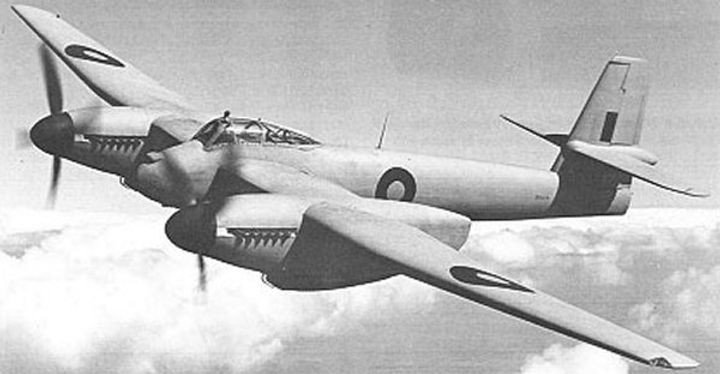
Designing another aircraft type to utilise the RR Merlin was probably not a great idea. Especially not when the Lancaster BII was being designed and produced with radial engines to guard against supply issues or faults which might interrupt production and delivery of the Merlin. Beaufighter was another aircraft whose production and service were more successful than things like Whirlwind and Welkin. Due in part to the type not being reliant upon the supply of Merlin engines. Many potentially superior aircraft designs went onto the 'Reject' pile during WW2, while effort was rightly put in to improving the performance and operational effectiveness of existing types. "Taking a gamble" on a new type may have worked out OK, but if the design used complex construction techniques, or required the mining of Unobtainium, or suffered from a flaw/flaws not recognised until it had entered Squadron service, it could have brought the whole house of cards crashing down. There are so many "what ifs" regarding military equipment production in WW2 that we can't really know whether any of the designs that fell by the wayside would have become game changing, war winning equipment, or whether they'd have ended up as white elephants, or milestones around the necks of RAF commanders.
Gassing Station | Boats, Planes & Trains | Top of Page | What's New | My Stuff