
Phrases that annoy you the most
Discussion


redrabbit29 said:
E-bmw said:
People who watch pointless. 
Pointless drives me insane as the concept is good, but the execution is bloody abysmal. The biggest gripe I have is the question is not shown on screen for more than a split second. So as a viewer, you can't play along. You get a single glimpse and then are subjected to watching the contestents talking about it or giving their answer.
redrabbit29 said:
snuffy said:
Responding with "as ready as I'll ever be" when asked "are you ready?"
I was born ready Tom8 said:
"Great answer" What? It is either right or wrong.
The few times I watched "Deal or No Deal", I kept thinking, why does Noel keep saying "great game!" or "well played!!!!" when they picked another box at random. "I think I'll choose box 9 Noel"...
"WELL PLAYED!!!!"
lornemalvo said:
redrabbit29 said:
snuffy said:
Responding with "as ready as I'll ever be" when asked "are you ready?"
I was born ready Tom8 said:
"Great answer" What? It is either right or wrong.
The few times I watched "Deal or No Deal", I kept thinking, why does Noel keep saying "great game!" or "well played!!!!" when they picked another box at random. "I think I'll choose box 9 Noel"...
"WELL PLAYED!!!!"
 te and people have lapped it up.
Referring to centuries and decades by the hundreds.
1800s, 1700s, 1600s etc.
Recent and lazy social media Americanism phenomenon.
If it's something from 1875, then it's 1870s or 19th century, not 1800s.
A lot of apologists for lazy and wrong English attempt to excuse it by referring to the passage of time. I.e. if it was that long ago then just refer to the hundreds. That doesn't work either. If you're writing a piece about, say, Scottish pottery of the 1600s then not too long ago it would have been understood as being limited to the years 1600-1609, not 1600-1699.
The below extracts from a book from the 1980s (not the 1900s) shows how people understood the concept and nomenclature of centuries (19th, 15th etc) and distinction between decades and centuries, and naturally wrote these things correctly without issue.
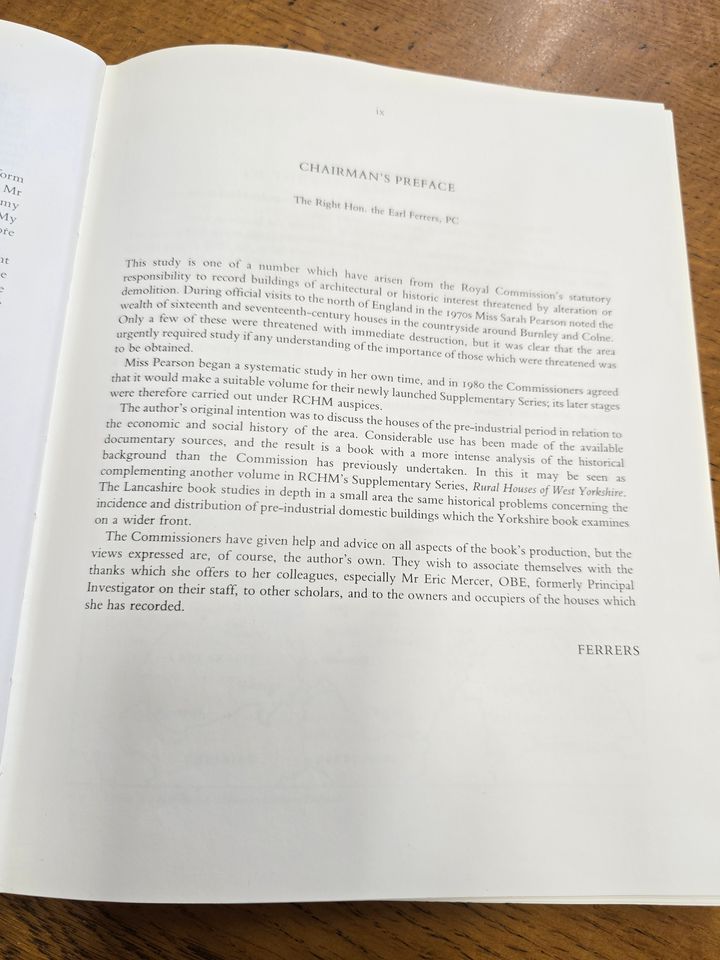
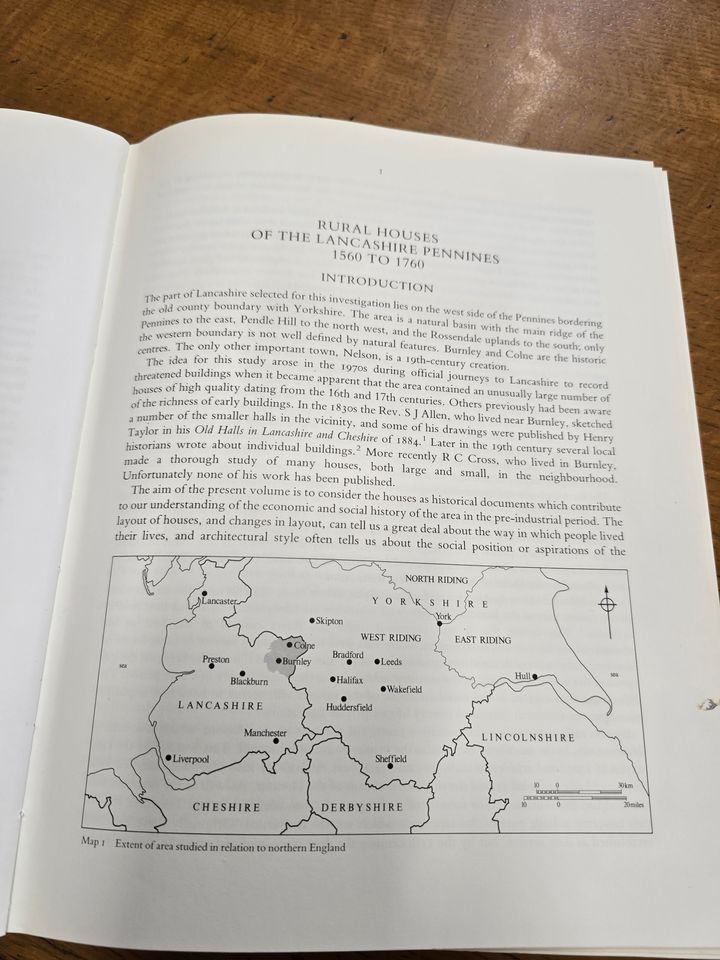
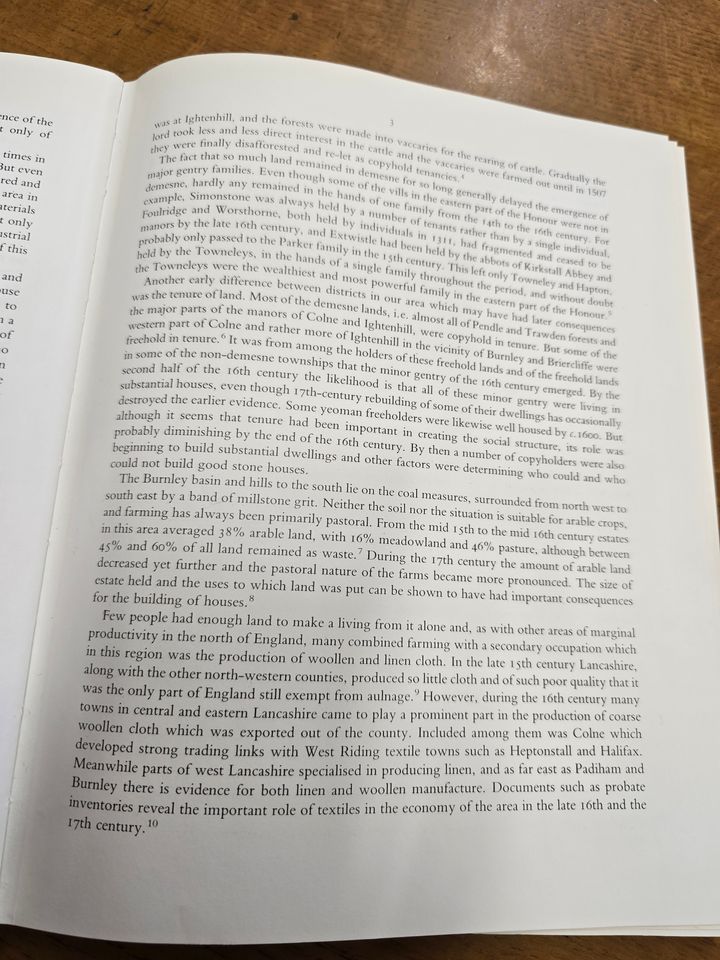
Source - Pearson, Sarah: 'Rural Houses of the Lancashire Pennines 1560 to 1760 (1985), Her Majesty's Stationery Office (HMSO)
1800s, 1700s, 1600s etc.
Recent and lazy social media Americanism phenomenon.
If it's something from 1875, then it's 1870s or 19th century, not 1800s.
A lot of apologists for lazy and wrong English attempt to excuse it by referring to the passage of time. I.e. if it was that long ago then just refer to the hundreds. That doesn't work either. If you're writing a piece about, say, Scottish pottery of the 1600s then not too long ago it would have been understood as being limited to the years 1600-1609, not 1600-1699.
The below extracts from a book from the 1980s (not the 1900s) shows how people understood the concept and nomenclature of centuries (19th, 15th etc) and distinction between decades and centuries, and naturally wrote these things correctly without issue.
Source - Pearson, Sarah: 'Rural Houses of the Lancashire Pennines 1560 to 1760 (1985), Her Majesty's Stationery Office (HMSO)
Edited by CaptainScarlet1967 on Monday 5th October 02:52
CaptainScarlet1967 said:
Referring to centuries and decades by the hundreds.
1800s, 1700s, 1600s etc.
Recent and lazy social media Americanism phenomenon.
If it's something from 1875, then it's 1870s or 19th century, not 1800s.
A lot of apologists for lazy and wrong English attempt to excuse it by referring to the passage of time. I.e. if it was that long ago then just refer to the hundreds. That doesn't work either. If you're writing a piece about, say, Scottish pottery of the 1600s then not too long ago it would have been understood as being limited to the years 1600-1609, not 1600-1699.
The below extracts from a book from the 1980s (not the 1900s) shows how people understood the concept and nomenclature of centuries (19th, 15th etc) and distinction between decades and centuries, and naturally wrote these things correctly without issue.
Rules of posting 14 and 16 refer to posting copyright material.1800s, 1700s, 1600s etc.
Recent and lazy social media Americanism phenomenon.
If it's something from 1875, then it's 1870s or 19th century, not 1800s.
A lot of apologists for lazy and wrong English attempt to excuse it by referring to the passage of time. I.e. if it was that long ago then just refer to the hundreds. That doesn't work either. If you're writing a piece about, say, Scottish pottery of the 1600s then not too long ago it would have been understood as being limited to the years 1600-1609, not 1600-1699.
The below extracts from a book from the 1980s (not the 1900s) shows how people understood the concept and nomenclature of centuries (19th, 15th etc) and distinction between decades and centuries, and naturally wrote these things correctly without issue.
You may wish to have a look.
In any case, if you're quoting copyright material, it is usual to put where it's from.
Super Sonic said:
CaptainScarlet1967 said:
Referring to centuries and decades by the hundreds.
1800s, 1700s, 1600s etc.
Recent and lazy social media Americanism phenomenon.
If it's something from 1875, then it's 1870s or 19th century, not 1800s.
A lot of apologists for lazy and wrong English attempt to excuse it by referring to the passage of time. I.e. if it was that long ago then just refer to the hundreds. That doesn't work either. If you're writing a piece about, say, Scottish pottery of the 1600s then not too long ago it would have been understood as being limited to the years 1600-1609, not 1600-1699.
The below extracts from a book from the 1980s (not the 1900s) shows how people understood the concept and nomenclature of centuries (19th, 15th etc) and distinction between decades and centuries, and naturally wrote these things correctly without issue.
Rules of posting 14 and 16 refer to posting copyright material.1800s, 1700s, 1600s etc.
Recent and lazy social media Americanism phenomenon.
If it's something from 1875, then it's 1870s or 19th century, not 1800s.
A lot of apologists for lazy and wrong English attempt to excuse it by referring to the passage of time. I.e. if it was that long ago then just refer to the hundreds. That doesn't work either. If you're writing a piece about, say, Scottish pottery of the 1600s then not too long ago it would have been understood as being limited to the years 1600-1609, not 1600-1699.
The below extracts from a book from the 1980s (not the 1900s) shows how people understood the concept and nomenclature of centuries (19th, 15th etc) and distinction between decades and centuries, and naturally wrote these things correctly without issue.
You may wish to have a look.
In any case, if you're quoting copyright material, it is usual to put where it's from.
lornemalvo said:
redrabbit29 said:
E-bmw said:
People who watch pointless.
Pointless drives me insane as the concept is good, but the execution is bloody abysmal. The biggest gripe I have is the question is not shown on screen for more than a split second. So as a viewer, you can't play along. You get a single glimpse and then are subjected to watching the contestents talking about it or giving their answer.
Palmela said:
Super Sonic said:
CaptainScarlet1967 said:
Referring to centuries and decades by the hundreds.
1800s, 1700s, 1600s etc.
Recent and lazy social media Americanism phenomenon.
If it's something from 1875, then it's 1870s or 19th century, not 1800s.
A lot of apologists for lazy and wrong English attempt to excuse it by referring to the passage of time. I.e. if it was that long ago then just refer to the hundreds. That doesn't work either. If you're writing a piece about, say, Scottish pottery of the 1600s then not too long ago it would have been understood as being limited to the years 1600-1609, not 1600-1699.
The below extracts from a book from the 1980s (not the 1900s) shows how people understood the concept and nomenclature of centuries (19th, 15th etc) and distinction between decades and centuries, and naturally wrote these things correctly without issue.
Rules of posting 14 and 16 refer to posting copyright material.1800s, 1700s, 1600s etc.
Recent and lazy social media Americanism phenomenon.
If it's something from 1875, then it's 1870s or 19th century, not 1800s.
A lot of apologists for lazy and wrong English attempt to excuse it by referring to the passage of time. I.e. if it was that long ago then just refer to the hundreds. That doesn't work either. If you're writing a piece about, say, Scottish pottery of the 1600s then not too long ago it would have been understood as being limited to the years 1600-1609, not 1600-1699.
The below extracts from a book from the 1980s (not the 1900s) shows how people understood the concept and nomenclature of centuries (19th, 15th etc) and distinction between decades and centuries, and naturally wrote these things correctly without issue.
You may wish to have a look.
In any case, if you're quoting copyright material, it is usual to put where it's from.
Ahahahahahahaha! Chortle chortle chortle.
Aren't you a big boy on the Internet?!
Edited by CaptainScarlet1967 on Monday 5th October 02:51
CaptainScarlet1967 said:
Referring to centuries and decades by the hundreds.
1800s, 1700s, 1600s etc.
Recent and lazy social media Americanism phenomenon.
If it's something from 1875, then it's 1870s or 19th century, not 1800s.
A lot of apologists for lazy and wrong English attempt to excuse it by referring to the passage of time. I.e. if it was that long ago then just refer to the hundreds. That doesn't work either. If you're writing a piece about, say, Scottish pottery of the 1600s then not too long ago it would have been understood as being limited to the years 1600-1609, not 1600-1699.
The below extracts from a book from the 1980s (not the 1900s) shows how people understood the concept and nomenclature of centuries (19th, 15th etc) and distinction between decades and centuries, and naturally wrote these things correctly without issue.
Source - Pearson, Sarah: 'Rural Houses of the Lancashire Pennines 1560 to 1760 (1985), Her Majesty's Stationery Office (HMSO)
Ooof you're a bit keen aren't you!?1800s, 1700s, 1600s etc.
Recent and lazy social media Americanism phenomenon.
If it's something from 1875, then it's 1870s or 19th century, not 1800s.
A lot of apologists for lazy and wrong English attempt to excuse it by referring to the passage of time. I.e. if it was that long ago then just refer to the hundreds. That doesn't work either. If you're writing a piece about, say, Scottish pottery of the 1600s then not too long ago it would have been understood as being limited to the years 1600-1609, not 1600-1699.
The below extracts from a book from the 1980s (not the 1900s) shows how people understood the concept and nomenclature of centuries (19th, 15th etc) and distinction between decades and centuries, and naturally wrote these things correctly without issue.
Source - Pearson, Sarah: 'Rural Houses of the Lancashire Pennines 1560 to 1760 (1985), Her Majesty's Stationery Office (HMSO)
Edited by CaptainScarlet1967 on Monday 5th October 02:52
I'll wager you're a favourite at social gatherings

borcy said:
g3org3y said:
"Blended family"
I think it's the middle class version of ' I've got step children 'But yes, blended family does seem to just mean that there is at least one step-relationship in a household.
If we're going down the route of centuries and decades, I'll add people who don't get millennia right.
The Julian Calendar has been in use for over 2,000 years. The Romans, despite their engineering prowess, were crap at maths and had no concept of zero. We continued using their number system until Fibonacci (yes, THAT Fibonacci) introduced the Arab numbering system to Europe in the 13th century. So, when 6th century Dionysius said "hey chaps, let's set our calendar in such a way that it starts when Jesus was born", there was no year zero.
So, 1st millennium ran from 1 AD to 1000 AD. 2nd millennium ran from 1001 AD to 2000 AD, and we are currently in the third millennium as of 2001 AD. Not 2000.
Fortunately it rarely comes up in 2026, but I had a couple of years where my teeth would itch frequently because of people getting that wrong.
Also, why don't we put commas in years? I've never found an explanation beyond "we just don't put thousands separators in them". It appears universal, we all agreed that these four digit numbers need no separator.
Dog Biscuit said:
Ooof you're a bit keen aren't you!?
I'll wager you're a favourite at social gatherings
Don't understand what a thread or post is about?I'll wager you're a favourite at social gatherings
Then it's best not to reply to it.
Wager however much you like and keep on wagering, but whilst I'm here and now that you've dropped that clanger, the old "you must be fun at parties/social gatherings" as some sort of pseudo-witty response is anything but.
It's become over-used social media lingo 'response of choice' for those who never had anything worthwhile to add or respond to a discussion or point to begin with.
Ted Maul said:
Probably been mentioned already but, Not all heroes wear capes. Usually seen on some rabid local Facebook page.
By far the most tiresome replies I have seen are:- Not all heroes wear capes
- Bet you're fun at parties (particularly terrible and often said by someone who thinks it's absolutely hilarious and never said before)
- Check his hard drive
- Give your head a wobble
- Split the "G"
CaptainScarlet1967 said:
Dog Biscuit said:
Ooof you're a bit keen aren't you!?
I'll wager you're a favourite at social gatherings
Don't understand what a thread or post is about?I'll wager you're a favourite at social gatherings
Then it's best not to reply to it.
Wager however much you like and keep on wagering, but whilst I'm here and now that you've dropped that clanger, the old "you must be fun at parties/social gatherings" as some sort of pseudo-witty response is anything but.
It's become over-used social media lingo 'response of choice' for those who never had anything worthwhile to add or respond to a discussion or point to begin with.
The funniest part is that while trying to demonstrate your superior wit, you’ve managed to produce exactly the sort of humourless, pompous response that makes the original joke land even harder.
But please, continue lecturing everyone on what constitutes worthwhile contribution. The lack of self-awareness is doing most of the work for you.
Gassing Station | The Lounge | Top of Page | What's New | My Stuff