
SpaceX (Vol. 2)
Discussion


JoshSm said:
On the other hand the Space part of SpaceX seems to be becoming relatively minor - it's (aiming to be) a datacentre/AI business, then a telecoms one, with the space launch bit mostly an enabler for their in-house satellites.
Financially, selling launch capacity could just end up a distraction, unless there's some dream they're selling and post-IPO they don't need to sell the old dreams.
Maybe once the AI bit pops they'll concentrate on space again.
Starlink will by far and away be their biggest revenue generator. They need to get the V3 sats (for D2D) working which can only be flown of Starship, so it's a bit of a sticking point at the moment. Meanwhile, AST Spacemobile is mopping up the global D2D market and essentially forcing SpaceX to create their own telecomms brand.Financially, selling launch capacity could just end up a distraction, unless there's some dream they're selling and post-IPO they don't need to sell the old dreams.
Maybe once the AI bit pops they'll concentrate on space again.
Interesting time ahead!
GTO-3R said:
JoshSm said:
On the other hand the Space part of SpaceX seems to be becoming relatively minor - it's (aiming to be) a datacentre/AI business, then a telecoms one, with the space launch bit mostly an enabler for their in-house satellites.
Financially, selling launch capacity could just end up a distraction, unless there's some dream they're selling and post-IPO they don't need to sell the old dreams.
Maybe once the AI bit pops they'll concentrate on space again.
Starlink will by far and away be their biggest revenue generator. They need to get the V3 sats (for D2D) working which can only be flown of Starship, so it's a bit of a sticking point at the moment. Meanwhile, AST Spacemobile is mopping up the global D2D market and essentially forcing SpaceX to create their own telecomms brand.Financially, selling launch capacity could just end up a distraction, unless there's some dream they're selling and post-IPO they don't need to sell the old dreams.
Maybe once the AI bit pops they'll concentrate on space again.
Interesting time ahead!
It was always going to be a cash cow though. The numbers made sense from the beginning. You know what a satellite and launch costs so it's easy to work out what you can sell the service for to be profitable.
JoshSm said:
On the other hand the Space part of SpaceX seems to be becoming relatively minor - it's (aiming to be) a datacentre/AI business, then a telecoms one, with the space launch bit mostly an enabler for their in-house satellites.
Financially, selling launch capacity could just end up a distraction, unless there's some dream they're selling and post-IPO they don't need to sell the old dreams.
Maybe once the AI bit pops they'll concentrate on space again.
I think once Raptor V4, recapture rapid reuse etc. is proven out, the enormous cheap payload capacity opens up 3rd party usage unlike anything ever seen before, particularly space hotels, rapid military cargo drops etc. etc. Financially, selling launch capacity could just end up a distraction, unless there's some dream they're selling and post-IPO they don't need to sell the old dreams.
Maybe once the AI bit pops they'll concentrate on space again.
98elise said:
GTO-3R said:
JoshSm said:
On the other hand the Space part of SpaceX seems to be becoming relatively minor - it's (aiming to be) a datacentre/AI business, then a telecoms one, with the space launch bit mostly an enabler for their in-house satellites.
Financially, selling launch capacity could just end up a distraction, unless there's some dream they're selling and post-IPO they don't need to sell the old dreams.
Maybe once the AI bit pops they'll concentrate on space again.
Starlink will by far and away be their biggest revenue generator. They need to get the V3 sats (for D2D) working which can only be flown of Starship, so it's a bit of a sticking point at the moment. Meanwhile, AST Spacemobile is mopping up the global D2D market and essentially forcing SpaceX to create their own telecomms brand.Financially, selling launch capacity could just end up a distraction, unless there's some dream they're selling and post-IPO they don't need to sell the old dreams.
Maybe once the AI bit pops they'll concentrate on space again.
Interesting time ahead!
It was always going to be a cash cow though. The numbers made sense from the beginning. You know what a satellite and launch costs so it's easy to work out what you can sell the service for to be profitable.
Satellite internet/mobile had bankrupted multiple companies before SpaceX turned it into a cash cow.
At the recent investor call Musk said they expect datacentre/AI revenue to exceed Starlink and Launch within a few quarters. Their long term plan is to put the AI data centres into orbit (something I did a first principles argument for a few months ago on here), however they are perfectly happy to try to win the race to build datacentres on earth first.
Talksteer said:
98elise said:
GTO-3R said:
JoshSm said:
On the other hand the Space part of SpaceX seems to be becoming relatively minor - it's (aiming to be) a datacentre/AI business, then a telecoms one, with the space launch bit mostly an enabler for their in-house satellites.
Financially, selling launch capacity could just end up a distraction, unless there's some dream they're selling and post-IPO they don't need to sell the old dreams.
Maybe once the AI bit pops they'll concentrate on space again.
Starlink will by far and away be their biggest revenue generator. They need to get the V3 sats (for D2D) working which can only be flown of Starship, so it's a bit of a sticking point at the moment. Meanwhile, AST Spacemobile is mopping up the global D2D market and essentially forcing SpaceX to create their own telecomms brand.Financially, selling launch capacity could just end up a distraction, unless there's some dream they're selling and post-IPO they don't need to sell the old dreams.
Maybe once the AI bit pops they'll concentrate on space again.
Interesting time ahead!
It was always going to be a cash cow though. The numbers made sense from the beginning. You know what a satellite and launch costs so it's easy to work out what you can sell the service for to be profitable.
Satellite internet/mobile had bankrupted multiple companies before SpaceX turned it into a cash cow.
At the recent investor call Musk said they expect datacentre/AI revenue to exceed Starlink and Launch within a few quarters. Their long term plan is to put the AI data centres into orbit (something I did a first principles argument for a few months ago on here), however they are perfectly happy to try to win the race to build datacentres on earth first.
I also did some back of the fag packet calculations around the time just working from average satellite and launch costs it was something like 2 years to cover the cost of each user. Obviously there were some holes though as I have no idea what the day to day running of the service cost
That said Musk says a lot of things, so when one proves to be right it might not have been down to his foresight

Talksteer said:
Everything is obvious in retrospect!
Satellite internet/mobile had bankrupted multiple companies before SpaceX turned it into a cash cow.
At the recent investor call Musk said they expect datacentre/AI revenue to exceed Starlink and Launch within a few quarters. Their long term plan is to put the AI data centres into orbit (something I did a first principles argument for a few months ago on here), however they are perfectly happy to try to win the race to build datacentres on earth first.
First principles still suggest that the cooling requirements of GW class data centres in space makes it a pretty bloody bizarre idea unless launching vast amount of stuff gets very significantly cheaper....Satellite internet/mobile had bankrupted multiple companies before SpaceX turned it into a cash cow.
At the recent investor call Musk said they expect datacentre/AI revenue to exceed Starlink and Launch within a few quarters. Their long term plan is to put the AI data centres into orbit (something I did a first principles argument for a few months ago on here), however they are perfectly happy to try to win the race to build datacentres on earth first.
isaldiri said:
Talksteer said:
Everything is obvious in retrospect!
Satellite internet/mobile had bankrupted multiple companies before SpaceX turned it into a cash cow.
At the recent investor call Musk said they expect datacentre/AI revenue to exceed Starlink and Launch within a few quarters. Their long term plan is to put the AI data centres into orbit (something I did a first principles argument for a few months ago on here), however they are perfectly happy to try to win the race to build datacentres on earth first.
First principles still suggest that the cooling requirements of GW class data centres in space makes it a pretty bloody bizarre idea unless launching vast amount of stuff gets very significantly cheaper....Satellite internet/mobile had bankrupted multiple companies before SpaceX turned it into a cash cow.
At the recent investor call Musk said they expect datacentre/AI revenue to exceed Starlink and Launch within a few quarters. Their long term plan is to put the AI data centres into orbit (something I did a first principles argument for a few months ago on here), however they are perfectly happy to try to win the race to build datacentres on earth first.
The key point is that every bit of the satellite is mass produced and thus gets better over time. The parts of the data centre one the ground that don't get better over time is the cost of electricity which gets worse over time as grids are miss managed, the cost of the buildings and their associated cooling and cabling and time associated with permits and planning. Eventually the super cheap space electricity and reduction of human labour associated with producing it will win out over the ground based option.
RustyMX5 said:
Talksteer said:
Nobody is going to build a GW class data centre, they are going to build a flying cabinet and laser link it to a cluster of similar units. So we might have a satellite in the 100'sKW of output that has a radiator about 10m x 10m square which could easily be folded up to a plate a few cm thick on a pancake satellite.
The key point is that every bit of the satellite is mass produced and thus gets better over time. The parts of the data centre one the ground that don't get better over time is the cost of electricity which gets worse over time as grids are miss managed, the cost of the buildings and their associated cooling and cabling and time associated with permits and planning. Eventually the super cheap space electricity and reduction of human labour associated with producing it will win out over the ground based option.
Wandering a hint off topic here but as you've obviously given this a fair amount of thought, how many data blocks do you think would need to be launched to equate to a full scale DC? And on another note, how congested would that make LoE?The key point is that every bit of the satellite is mass produced and thus gets better over time. The parts of the data centre one the ground that don't get better over time is the cost of electricity which gets worse over time as grids are miss managed, the cost of the buildings and their associated cooling and cabling and time associated with permits and planning. Eventually the super cheap space electricity and reduction of human labour associated with producing it will win out over the ground based option.
Obviously all the satellites are moving and they are crossing planes so will make near passes to each other fairly regularly and hit each other a rate measured in 0.1-10 hits per year. Deconflicting those satellites isn't possible with a manual system where conflicts are detected and then owners requested to move them. Starlink already has an automated collision avoidance system, this will get much better over time and we will end up bringing pass distanced a lot closer to allow more satellites to operate in proximity.
The point is that we are adding satellites at an incremental rate so we will likely see issues as we go and solve them before we start running out of space. Practical capacity for LEO satellites with automated collision avoidance is in the millions of objects. You only need tens of thousands to have multiple global networks where you can see dozens satellites per network at any time. Once you get to that level then you just increase bandwidth by increasing the capability of each satellite. For space data centres it's likely that you would cluster units together so that from a collision perspective a cluster of satellites counts as a single unit.
On a clear night a week or so ago, in the space of about 90 minutes I actually counted around 60 satellites - which is a bit mind blowing to be honest.
The most I had ever seen in one night before was about ten.
The viewing was very good - no moon and a lovely clear atmosphere with the sun not too far below the horizon ensuring LEO satellites remained sunlt well past midnight.
The most I had ever seen in one night before was about ten.
The viewing was very good - no moon and a lovely clear atmosphere with the sun not too far below the horizon ensuring LEO satellites remained sunlt well past midnight.
Eric Mc said:
On a clear night a week or so ago, in the space of about 90 minutes I actually counted around 60 satellites - which is a bit mind blowing to be honest.
The most I had ever seen in one night before was about ten.
The viewing was very good - no moon and a lovely clear atmosphere with the sun not too far below the horizon ensuring LEO satellites remained sunlt well past midnight.
They're incredibly easy to spot these days without even trying. Lot of shiny sats about...The most I had ever seen in one night before was about ten.
The viewing was very good - no moon and a lovely clear atmosphere with the sun not too far below the horizon ensuring LEO satellites remained sunlt well past midnight.
Talksteer said:
Nobody is going to build a GW class data centre, they are going to build a flying cabinet and laser link it to a cluster of similar units. So we might have a satellite in the 100'sKW of output that has a radiator about 10m x 10m square which could easily be folded up to a plate a few cm thick on a pancake satellite.
The key point is that every bit of the satellite is mass produced and thus gets better over time. The parts of the data centre one the ground that don't get better over time is the cost of electricity which gets worse over time as grids are miss managed, the cost of the buildings and their associated cooling and cabling and time associated with permits and planning. Eventually the super cheap space electricity and reduction of human labour associated with producing it will win out over the ground based option.
'Eventually' is doing a whole lot of heavy lifting and hinges on launch prices getting a heck of a lot cheaper, like factor of 10 probably. i grant you a 100kw, even a 150KW output satellite might fold up quite small for radiators (leaving cooling fluid lines/hinges aside) but they still need solar arrays. plus propulsion, attitude control, optical terminals, avionics and structure - the total weight and volume of one while packed isn't small let's say. The key point is that every bit of the satellite is mass produced and thus gets better over time. The parts of the data centre one the ground that don't get better over time is the cost of electricity which gets worse over time as grids are miss managed, the cost of the buildings and their associated cooling and cabling and time associated with permits and planning. Eventually the super cheap space electricity and reduction of human labour associated with producing it will win out over the ground based option.
a 'not terribly large' (probably small nowadays) datacentre is ~30-45 MW - you're launching 200-300 satellites just for one of the equivalent of one moderate terrestrial data centre. say you want to get to 1GW capacity - thats is 6500-7000 satellites, each one, i dunno perhaps low to mid 2000kg (guesswork on my part admittedly. happy to be corrected), ie 13,000+ tonnes if not more. The total launched mass in orbit currently, i believe is thought to be 16-17,000 tonnes? And that's to stand a single GW total capacity amount up initially, before any replacement cadence starts. how much capacity do you think is going to supposed to be space again in total? 100+ GW in total as been filed for iirc. that's a million plus tonnes. and then every X (take your pick, 5 perhaps) years, the whole shebang is repeated, plus you have not had the terrestrial chip upgrades that would likely have happened in the intervening time on the 'old' unit.
With silicon dominating the datacentre costs to a far greater extent than electricity - and where orbit's advantage is supposed to be on the electricity side as the chips will be the same - the use case for orbital data centres economically and operationally seems somewhat optimistic.
isaldiri said:
Talksteer said:
Nobody is going to build a GW class data centre, they are going to build a flying cabinet and laser link it to a cluster of similar units. So we might have a satellite in the 100'sKW of output that has a radiator about 10m x 10m square which could easily be folded up to a plate a few cm thick on a pancake satellite.
The key point is that every bit of the satellite is mass produced and thus gets better over time. The parts of the data centre one the ground that don't get better over time is the cost of electricity which gets worse over time as grids are miss managed, the cost of the buildings and their associated cooling and cabling and time associated with permits and planning. Eventually the super cheap space electricity and reduction of human labour associated with producing it will win out over the ground based option.
'Eventually' is doing a whole lot of heavy lifting and hinges on launch prices getting a heck of a lot cheaper, like factor of 10 probably. i grant you a 100kw, even a 150KW output satellite might fold up quite small for radiators (leaving cooling fluid lines/hinges aside) but they still need solar arrays. plus propulsion, attitude control, optical terminals, avionics and structure - the total weight and volume of one while packed isn't small let's say. The key point is that every bit of the satellite is mass produced and thus gets better over time. The parts of the data centre one the ground that don't get better over time is the cost of electricity which gets worse over time as grids are miss managed, the cost of the buildings and their associated cooling and cabling and time associated with permits and planning. Eventually the super cheap space electricity and reduction of human labour associated with producing it will win out over the ground based option.
a 'not terribly large' (probably small nowadays) datacentre is ~30-45 MW - you're launching 200-300 satellites just for one of the equivalent of one moderate terrestrial data centre. say you want to get to 1GW capacity - thats is 6500-7000 satellites, each one, i dunno perhaps low to mid 2000kg (guesswork on my part admittedly. happy to be corrected), ie 13,000+ tonnes if not more. The total launched mass in orbit currently, i believe is thought to be 16-17,000 tonnes? And that's to stand a single GW total capacity amount up initially, before any replacement cadence starts. how much capacity do you think is going to supposed to be space again in total? 100+ GW in total as been filed for iirc. that's a million plus tonnes. and then every X (take your pick, 5 perhaps) years, the whole shebang is repeated, plus you have not had the terrestrial chip upgrades that would likely have happened in the intervening time on the 'old' unit.
With silicon dominating the datacentre costs to a far greater extent than electricity - and where orbit's advantage is supposed to be on the electricity side as the chips will be the same - the use case for orbital data centres economically and operationally seems somewhat optimistic.
As Israldiri points out, the economics are way out of kilter with the practicalities, but when has that stopped anyone worshipping at the altar of EM?
I am sure there will be an AI correction which may also put a dent into the need for orbital data centres.
It's been a busy 48 hours for SpaceX:
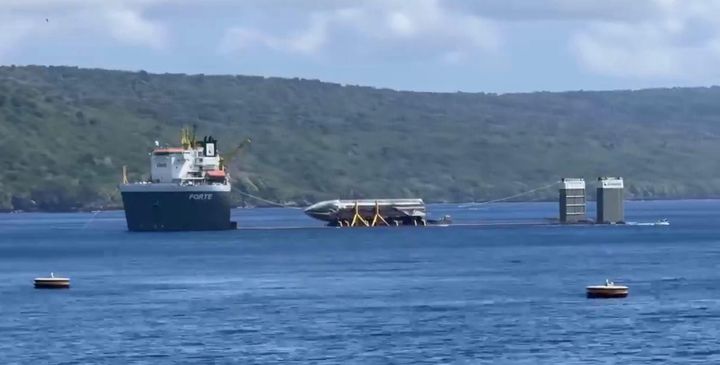
Ship 40 has been lifted out of the water at Christmas Island on a semi-submersible heavy lift vessel after 32 days and 1700km afloat. Source: https://x.com/mcrs987/status/2092496773428261285
Booster 21 has been transported to the launch tower for its final rat static fire. Ship 41 has already carried its static fire at Massey's. So Flight 14 should be a couple of weeks away now. Source: https://x.com/mcrs987/status/2092496773428261285
Falcon 9 B1067 has become the first booster to launch and land 37 times. SpaceX's VP of Launch announced afterwards that this was the final East Coast Starlink launch on F9. All future East Coast Starlink launches will be on Starship (so using the new V3 Starlink satellites that can't be carried by F9). F9 will continue to launch from the Cape for customer payloads. West Coast Starlink launches from Vandenberg will continue on F9 as well. https://x.com/TurkeyBeaver/status/2092267257179021...
SpaceX have officially announced Starbase LA in Vermillion Parish, Louisiana. A $100 billion investment to create a new manufacturing site with 5 launch pads of 2 towers each, its own airport and deep water port, and automated ship transport to keep humans way from the launch pads and maintain a high launch cadence. Construction to start in 2027 with first launches planned for 2029.
Ship 40 has been lifted out of the water at Christmas Island on a semi-submersible heavy lift vessel after 32 days and 1700km afloat. Source: https://x.com/mcrs987/status/2092496773428261285
Booster 21 has been transported to the launch tower for its final rat static fire. Ship 41 has already carried its static fire at Massey's. So Flight 14 should be a couple of weeks away now. Source: https://x.com/mcrs987/status/2092496773428261285
Falcon 9 B1067 has become the first booster to launch and land 37 times. SpaceX's VP of Launch announced afterwards that this was the final East Coast Starlink launch on F9. All future East Coast Starlink launches will be on Starship (so using the new V3 Starlink satellites that can't be carried by F9). F9 will continue to launch from the Cape for customer payloads. West Coast Starlink launches from Vandenberg will continue on F9 as well. https://x.com/TurkeyBeaver/status/2092267257179021...
SpaceX have officially announced Starbase LA in Vermillion Parish, Louisiana. A $100 billion investment to create a new manufacturing site with 5 launch pads of 2 towers each, its own airport and deep water port, and automated ship transport to keep humans way from the launch pads and maintain a high launch cadence. Construction to start in 2027 with first launches planned for 2029.
dukeboy749r said:
There is also the matter of LOX for each Starship - which will rise dramatically with this number of proposed launches.
As Israldiri points out, the economics are way out of kilter with the practicalities, but when has that stopped anyone worshipping at the altar of EM?
I am sure there will be an AI correction which may also put a dent into the need for orbital data centres.
Funnily enough, the ft has covered this today and seems to have noted some of the same things plus a few more like potential hazards of letting heaps of these things regularly go poof on re-entry being a little handwavy....As Israldiri points out, the economics are way out of kilter with the practicalities, but when has that stopped anyone worshipping at the altar of EM?
I am sure there will be an AI correction which may also put a dent into the need for orbital data centres.
https://www.ft.com/content/41e60b41-5f13-4d72-8dfc...
It's not that sticking some localised AI processing into orbit is a totally nuts idea, but hefting things like NVL72 racks is a nutty idea for half a dozen reasons.
One thing that was pointed out is that mostly if you're after 'datacenter' that's beyond rack scale (which in itself is heavy, not very hardened and power hungry enough already), you also need interlinks and that's TB/s stuff. They're well well away from that class of link.
Of course it gets worse if you're chasing what will shortly be the current normal, all the numbers get worse and it's scaling up to 600kW/rack which is serious power and cooling even on the ground.
I don't doubt they can deliver and launch *something* like they promised, the question is whether it's even vaguely sensible compared to just building sheds on the ground.
dukeboy749r said:
There is also the matter of LOX for each Starship - which will rise dramatically with this number of proposed launches.
As Israldiri points out, the economics are way out of kilter with the practicalities, but when has that stopped anyone worshipping at the altar of EM?
I am sure there will be an AI correction which may also put a dent into the need for orbital data centres.
LOX costs as little at $100/tonne so you can fill a Starship for less than a few hundred thousand $.As Israldiri points out, the economics are way out of kilter with the practicalities, but when has that stopped anyone worshipping at the altar of EM?
I am sure there will be an AI correction which may also put a dent into the need for orbital data centres.
The counter point to it is that the people behind this are the people who have produced tens of thousands of satellites at by far the lowest cost that anyone has to date. Satellites aren't made of magic materials, once you start to mass produce them they are just another class of mass market electronics knocked together on a production line with relatively few people involved.
The point at which you start working on a Space data centre isn't when it makes economic sense its when you see the cost per kg of launch and the cost per kg of satellite manufacturing going in the right direction that it will make economic sense when you are some way into initial production (or more specifically a bit before your cash runway runs out). I would suggest that the people who have made the majority of the satellites ever launched might be a good position to make this judgement.
In terms of AI corrections, there may be a bubble but its not like the direction is likely to change and that people are going to run out of things to do with AI. I think it's more the case that Elon Musk is using his current unlimited money glitch to build as much stuff as he can. Hence the 10 tower launch establishment they want to build in Louisiana.
JoshSm said:
It's not that sticking some localised AI processing into orbit is a totally nuts idea, but hefting things like NVL72 racks is a nutty idea for half a dozen reasons.
One thing that was pointed out is that mostly if you're after 'datacenter' that's beyond rack scale (which in itself is heavy, not very hardened and power hungry enough already), you also need interlinks and that's TB/s stuff. They're well well away from that class of link.
Starlink is already using laser links that operate a GB levels, my understanding is that a space laser link is basically a fibre optic link without the wire in the way. Obviously in the Starlink model where you are targeting a moving platform thousands of miles away then the laser spot is relatively large at that range. However if you are transmitting to a satellite in close formation the laser spot will be a point dot and you could run multiple lasers in parallel and get TB level speeds.One thing that was pointed out is that mostly if you're after 'datacenter' that's beyond rack scale (which in itself is heavy, not very hardened and power hungry enough already), you also need interlinks and that's TB/s stuff. They're well well away from that class of link.
JoshSm said:
Of course it gets worse if you're chasing what will shortly be the current normal, all the numbers get worse and it's scaling up to 600kW/rack which is serious power and cooling even on the ground.
I don't doubt they can deliver and launch *something* like they promised, the question is whether it's even vaguely sensible compared to just building sheds on the ground.
See previous points on who has the best information on feasibility, it's also notable that SpaceX (or X) is generally considered to be quite a competent data centre builder on earth particularly on how fast they move and how much they do in parallel. I don't doubt they can deliver and launch *something* like they promised, the question is whether it's even vaguely sensible compared to just building sheds on the ground.
They have shared some specs around the current A1 baseline version which is a 250KW peak 175KW average design and it weighs about 2-3 tonnes. That would be about 100 chips based on power usage for NVidia Blackwalls. At current prices that would be around $3 million in chips (with a massive profit margin that SpaceX will likely try to eat into by vertical integration) and but only $500k to deploy it at $200/kg on Starship. I would suspect that at high production rates the rest of the satellite will cost about another $500k.
All this assumes that Starship doesn't suddenly scale up to a 12m craft once they get the 9m variant working, at current SpaceX valuation a full re-design of a new variant of Starship is relatively cheap.
Talksteer said:
LOX costs as little at $100/tonne so you can fill a Starship for less than a few hundred thousand $.
The counter point to it is that the people behind this are the people who have produced tens of thousands of satellites at by far the lowest cost that anyone has to date. Satellites aren't made of magic materials, once you start to mass produce them they are just another class of mass market electronics knocked together on a production line with relatively few people involved.
The point at which you start working on a Space data centre isn't when it makes economic sense its when you see the cost per kg of launch and the cost per kg of satellite manufacturing going in the right direction that it will make economic sense when you are some way into initial production (or more specifically a bit before your cash runway runs out). I would suggest that the people who have made the majority of the satellites ever launched might be a good position to make this judgement.
In terms of AI corrections, there may be a bubble but its not like the direction is likely to change and that people are going to run out of things to do with AI. I think it's more the case that Elon Musk is using his current unlimited money glitch to build as much stuff as he can. Hence the 10 tower launch establishment they want to build in Louisiana.
My point wasn't abou the cost of LOX, more its current availability and predilection for going boom, if not handled correctly. His plans may be technically feasible but that assumes that no company on earth can compete at a far lower cost.The counter point to it is that the people behind this are the people who have produced tens of thousands of satellites at by far the lowest cost that anyone has to date. Satellites aren't made of magic materials, once you start to mass produce them they are just another class of mass market electronics knocked together on a production line with relatively few people involved.
The point at which you start working on a Space data centre isn't when it makes economic sense its when you see the cost per kg of launch and the cost per kg of satellite manufacturing going in the right direction that it will make economic sense when you are some way into initial production (or more specifically a bit before your cash runway runs out). I would suggest that the people who have made the majority of the satellites ever launched might be a good position to make this judgement.
In terms of AI corrections, there may be a bubble but its not like the direction is likely to change and that people are going to run out of things to do with AI. I think it's more the case that Elon Musk is using his current unlimited money glitch to build as much stuff as he can. Hence the 10 tower launch establishment they want to build in Louisiana.
And, we have the logistics of failure rates (so replacements) and cooling.
I genuinely admire that he is getting the space game moving and am equally fearful it is him doing it.
Gassing Station | Science! | Top of Page | What's New | My Stuff