
4K video, a still photographer's dream?
Discussion


I've just had half an hour in Park Cameras where I was discussing 4K video. I was show some photographs taken from 4K videos, most notably and series of images where paint is dropped on the head of a model, the idea being to catch the precise moment with some degree of certainty.
I'm not suggesting that the staff were pressure selling by exaggeration: I've found Park's advice to be quite unbiased. However, I was wondering if anyone has used this method of still photography and is it to be compared with sliced bread?
I'm not suggesting that the staff were pressure selling by exaggeration: I've found Park's advice to be quite unbiased. However, I was wondering if anyone has used this method of still photography and is it to be compared with sliced bread?
GetCarter posted a quarter of one frame from a 4k vid which is an 8mb file on the thread a few days ago to demonstrate the quality of 4K, and I have to say that it is very good compared to 1080p: http://www.pistonheads.com/gassing/topic.asp?h=0&a... but the video file sizes must be massive without some decent compression going on in the background. Link to the frame is: http://stevecarter.com/random/4416.tif
For video quality I have to say it's mighty impressive, but 8MB for one quarter of a frame seems rather excessive, and as RobDickinson summed up quite eloquently, it's much easier to shoot a 36mp still in raw than trawl through endless GB of video footage that will be clogging up your hard drive.
For video quality I have to say it's mighty impressive, but 8MB for one quarter of a frame seems rather excessive, and as RobDickinson summed up quite eloquently, it's much easier to shoot a 36mp still in raw than trawl through endless GB of video footage that will be clogging up your hard drive.
The decisive moment's days are numbered, that's for sure. There are still cameras now being actively marketed with pre-roll and frame burst so 'casual' photographers are going to look for these features. The line between a still camera and video camera is becoming more blurred anyway.
However, the person capturing the image still needs to be in the right place at roughly the right time pointing the camera in the right direction at the right subject matter with the right lighting if the final result is going to stand out from the crowd.
4k is probably more useful currently for video productions as a scene can be re-framed in HD during editing, turning a single camera shoot into something more interesting/complex.
However, the person capturing the image still needs to be in the right place at roughly the right time pointing the camera in the right direction at the right subject matter with the right lighting if the final result is going to stand out from the crowd.
4k is probably more useful currently for video productions as a scene can be re-framed in HD during editing, turning a single camera shoot into something more interesting/complex.
rich888 said:
GetCarter posted a quarter of one frame from a 4k vid which is an 8mb file on the thread a few days ago to demonstrate the quality of 4K, and I have to say that it is very good compared to 1080p: http://www.pistonheads.com/gassing/topic.asp?h=0&a... but the video file sizes must be massive without some decent compression going on in the background. Link to the frame is: http://stevecarter.com/random/4416.tif
For video quality I have to say it's mighty impressive, but 8MB for one quarter of a frame seems rather excessive, and as RobDickinson summed up quite eloquently, it's much easier to shoot a 36mp still in raw than trawl through endless GB of video footage that will be clogging up your hard drive.
Thanks for the links. Here's one of mine https://www.panasonic.com/uk/consumer/cameras-camc..., one produced by Panasonic. For video quality I have to say it's mighty impressive, but 8MB for one quarter of a frame seems rather excessive, and as RobDickinson summed up quite eloquently, it's much easier to shoot a 36mp still in raw than trawl through endless GB of video footage that will be clogging up your hard drive.
It is intriguing. I'm told a fair number of professional photographers use it, obviously those covering subjects where there is a degree of movement.
Apart from social, domestic and pleasure, I take photographs for websites and pdf books, and the number of times I have had to sod about with Photoshop because of an awkward expression or perhaps some idiot in the background taking attention.
As for 'only' 8mp, my first digital camera was 680 pix along its longest side. 8mp comes comfortably over the 35mm equivalent baseline that I used when going digital from 35mm. 20mp is great but for me it mainly means I can frame the image before publishing.
I'm in the market for a new camera and I'm also in a quandary. I've got a friend at a club with a Nikon P90 with an incredible zoom. He spends his life taking photographs of the moon, something which was great four months ago, but not every time there's a home match. If I get up there, I won't need sat nav. 83x zoom I've just read. Not for me, but the problem is that cameras are not so simple to choose between nowadays.
In my day there was an obvious step for those wanting to get a better camera. There was rangefinder, single lens reflex and up to the ultimate. Many girls would not pose in the nude for anything less than a twin lens reflex.
But now! You can buy an slr for £300 and some bridge cameras are more than twice that.
I've got a 16mp compact that I take everywhere. The image quality is superb when the circumstances are right, better that my 6x6 tlr, although not so much fun.
I'm looking for a camera with excellent (4k I suppose) video, which is easy (ie not too heavy or cumbersome) to carry, has a decent zoom range, high quality images and can take quality images in varied conditions. All for somewhere around £1000 or so. Flash and other essentials extra of course.
I thought it would be simple, but no. I had a play with a Panasonic FZ-1000 and the sales person asked what else I needed. That's when I was shown the 4k still images.
Phunk said:
Only advantage is for reframing.
That's the main reason. I'm going to do a bit of videoing of rugby matches. Quite a lot in fact. The main problem I'm having at the moment is that the game moves too fast and reframing would help no end. If one zooms in, it seems to be a signal for a long pass. If I stay out wide, then it's a ruck.
I've videod rugby matches for some years, most of it a near broadcast quality (1098), from minDV to the current digital. Nothing has moved on in years, but now we have 4k and it seems the logical choice for, to use an improper phrase, future proofing.
I've got the software (although that's no reason not to upgrade), I've got the computer for it.
I also take photographs of cars and have problems with getting the right moment when they are moving. I was at Silverstone Classic and dozens of images of moving cars were unusable because of the wrong 'instant', and the circs would never be the same again.
Although I take photographs for money, I'm not a professional photographer. I haven't money to waste so a camera must come within a budget. Getting a specific one for the role also means that I can claim for it as an expense.
Phunk said:
Why do you want 4K video?
It's a total pain to edit, takes up loads of room and there are only a few displays that can actually display the Rec2020 4K codec.
Only advantage is for reframing.
For me it's that it has legs. Sod all 4k at the moment, but in 5 years time I really don't want to look back at the 1080 footage and say: Bugger, wish I'd taken higher res!It's a total pain to edit, takes up loads of room and there are only a few displays that can actually display the Rec2020 4K codec.
Only advantage is for reframing.
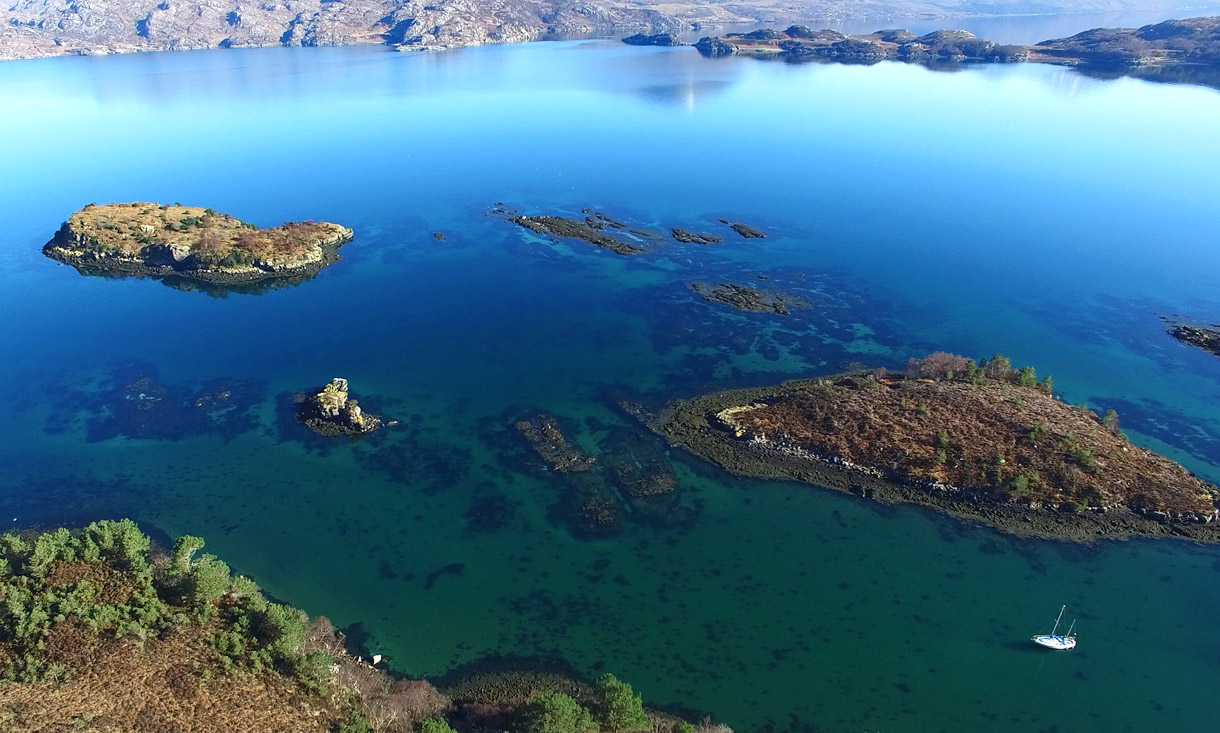
Here's a still from 4k footage I took on Thursday. knocked down to 1/8th size (and squashed)
Derek Smith said:
I'm going to do a bit of videoing of rugby matches. Quite a lot in fact. The main problem I'm having at the moment is that the game moves too fast and reframing would help no end. If one zooms in, it seems to be a signal for a long pass. If I stay out wide, then it's a ruck.
TV cameramen have been coping with this for decades, by anticipation, co-ordination and skill. Golf is particularly hard - but I know a guy who can follow the swing, pull back/pan/zoom in and find/track the ball in mid-air. Because he's good and he'd practiced. It's what they do.So it might be better to see if you can improve technique rather than throw 'tech' at the problem - because all it will mean is that you've got a b
 h of an edit to do later - on 4K with files the size of Bolivia that will probably mean you have to go and buy a new computer to cope with it. And maybe don't zoom in so much, it'll give you more space and time to anticipate and keep the action in shot. Ideally though you'd have two cameras, one close, one wide, and intercut.
Simpo Two said:
TV cameramen have been coping with this for decades, by anticipation, co-ordination and skill. Golf is particularly hard - but I know a guy who can follow the swing, pull back/pan/zoom in and find/track the ball in mid-air. Because he's good and he'd practiced. It's what they do.
So it might be better to see if you can improve technique rather than throw 'tech' at the problem - because all it will mean is that you've got a bh of an edit to do later - on 4K with files the size of Bolivia that will probably mean you have to go and buy a new computer to cope with it. And maybe don't zoom in so much, it'll give you more space and time to anticipate and keep the action in shot. Ideally though you'd have two cameras, one close, one wide, and intercut.
I've been filming rugby since 2002. The difference between then and now is remarkably large, but even following my team training, so knowing their systems, helps no end but the lads make decisions in real time and the variation is wide. I know what some players will do in certain circumstances, or at least the options, but our #9 is an irritating little bugger who will change play according to the weaknesses of the other team. So it might be better to see if you can improve technique rather than throw 'tech' at the problem - because all it will mean is that you've got a b
h of an edit to do later - on 4K with files the size of Bolivia that will probably mean you have to go and buy a new computer to cope with it. And maybe don't zoom in so much, it'll give you more space and time to anticipate and keep the action in shot. Ideally though you'd have two cameras, one close, one wide, and intercut.If I can anticipate most plays then so will the opposition, and that's bad. As you say, I could zoom out but that means losing detail when I zoom in, at least with NBQ. If I haven't cracked it after 14 years I doubt I will. I'm not being immodest when I say I am quite good.
I want to produce videos for promotional purposes for the club and don't want poor composition to be apparent.
I take the point about file size. I've got a 3tb HDD that I dedicate to video, and that's probably enough for what I want.
There's lots of RAM as well so I think the computer will be adequate for a couple of years.
4k is a bit like Janet Board. I waited too long with her and don't want to make the same mistake. In two years I might regret not taking the plunge for 4k.
At my work we occasionally get clients asking if we can film in 4k, so they can take stills from the images - we usually steer them towards having a separate photographer
Video and photography are different disciplines for different purposes.
- Framing - everything in video will be landscape for a start, and as you guys know, photography is used differently to video. Leaving space for text in magazine shoots, or framing wide to crop in for reframing in different mediums. That will be harder to do from stills from a video, as the video cameraman is going to usually be framing for 16:9 landscape. And even in 4k, there isn't a lot of resolution to start cropping away with for print.
- Video, tends to have a 180 degree shutter, or 1/50 if shooting at 25fps. Because we want natural motion blur when people move. In a lot of photography, you won't want that . So the still image the client may want, may be when someones moving and they're blurry. Will look fine in the video, but not for a still. You could shoot at a higher shutter speed for the video, but then motion blur will be reduced - great for the stills, but the video will look a bit staccato, or choppy when people move. Could shoot at a high frame rate and high shutter too, but then that lacks the cadence of film and tends to look a bit TV which isn't the look most clients are after......
- The type of shots to be used in a video, and often quite different to what is wanted for photography. We did a shoot in our studio recently to promote a sporting event - it was models having mud, and then also powder paint, thrown on them in slow motion. We could have taken stills from the 4k slow motion footage, but we ended up with a photographer doing a separate setup in the other side of the studio. Much better plan. He needed one moment in time when the powder pain or mud, looked just right. In the video, we weren't concerned with one perfect frame, instead we were more concerned with the reaction and the movement over the whole clip- so there may not be one moment in the video that would work as a still, but the clip as a whole for video may work well.
- Also, using flashes. We needed a lot of light for the slow motion video - I think 4 10k's and a couple of 5k's. But the photographer was working with flashes, much less power needed and not as expensive to hire either. I can never see high res video replacing photography for this reason - it's just much simpler to work with flashes, than the huge power requirements of constant lighting, especially for high speed stuff.
I can see the odd occasion where it can be useful to stake some nice stills from 4k video, but generally you can't have your cake and eat it- best keep photography for photography and video for video....
Interesting you motion 4k and sports - i've seen some demos of 4k and even 8k tech in development, where you would use a 4k / 8k locked off wide shot (with very sharp glass), and for replays, using a clever box of tricks, you can select a crop area, to give you close ups on parts of the action. (for broadcast in HD)
There some very clever tech in sports broadcast
There some very clever tech in sports broadcast
Simpo Two said:
Fordo said:
Video and photography are different disciplines for different purposes.
Spot on. They both use images, but differently.I purchased one of these new-fangled photo-jobbies that also does video, thinking how it would be nice to get into a bit of video stuff. Used once for a time lapse sequence - if that had been my primary trresaon . Can't get on with it - realise, my old brain can't think like that - video is so alien, like those days where you have a mental discipline and shoot (in your mind) black and white.... Or some fixed focal length.
Let's just say: "It's a different Art altogether...." Why try and conflate things a million miles apart?
Phunk said:
Why do you want 4K video?
It's a total pain to edit, takes up loads of room and there are only a few displays that can actually display the Rec2020 4K codec.
This! I went for a 2.7k camera on my Phantom 3 for this exact reason. It shoots stills at 12mp which is the same as the 4k version. Plus it was £200 cheaper!It's a total pain to edit, takes up loads of room and there are only a few displays that can actually display the Rec2020 4K codec.
Phunk said:
Why do you want 4K video?
It's a total pain to edit, takes up loads of room and there are only a few displays that can actually display the Rec2020 4K codec.
Only advantage is for reframing.
It's no pain at all when you are on a 4k monitor with a fast computer and 3 tb of fusion drive!It's a total pain to edit, takes up loads of room and there are only a few displays that can actually display the Rec2020 4K codec.
Only advantage is for reframing.
Main advantage is the quality of the result

(which in a few years everyone will see on their 4k TVs)
I do appreciate that a blindingly quick 'puter and a shed load of disk space is needed for 4k mind.
Edited by GetCarter on Thursday 24th March 06:15
GetCarter said:
Phunk said:
Why do you want 4K video?
It's a total pain to edit, takes up loads of room and there are only a few displays that can actually display the Rec2020 4K codec.
Only advantage is for reframing.
It's no pain at all when you are on a 4k monitor with a fast computer and 3 tb of fusion drive!It's a total pain to edit, takes up loads of room and there are only a few displays that can actually display the Rec2020 4K codec.
Only advantage is for reframing.
Main advantage is the quality of the result
(which in a few years everyone will see on their 4k TVs)
I do appreciate that a blindingly quick 'puter and a shed load of disk space is needed for 4k mind.
Edited by GetCarter on Thursday 24th March 06:15
As you mentioned 4K video will probably need a fast computer with lots of ram to play/edit the videos, and I dare say a decent sized SSD to keep up with the data rate, which kind of rules me out for the time being - mine can comfortably play and edit 1080p videos in realtime, but I doubt whether the USB hard drives could keep up with 4K video. Can probably pick up a SSD drive just for playing/editing the 4K videos and archive the videos onto the USB 2TB WD drive, though note that 4TB, 5TB and 6TB drives are now available from PC World, though they are USB3 so probably not fast enough.
Message Board | Photography & Video | Top of Page | What's New | My Stuff