
Help with identifying a car please.
Discussion


Thanks for the very quick replies.
Were these cars built to last? If this picture was taken mid to late thirties it's a ten to fifteen year old car.
I have only just found the photo. Its must have been in various lofts and mine for the last 7 or 8 years. It's almost as if there are a couple of tricks to it. I can't make out what is between the legs of the man in the black trousers (who I think may be my grandfather) and the chap in the jumper who I think may be his eldest son.
Also, there doesn't seem to be any drivers side window / clear space under the hood and I presume they are towels on the hood on the right.
Can you make out the number plate?
So many questions.
many thanks again
Were these cars built to last? If this picture was taken mid to late thirties it's a ten to fifteen year old car.
I have only just found the photo. Its must have been in various lofts and mine for the last 7 or 8 years. It's almost as if there are a couple of tricks to it. I can't make out what is between the legs of the man in the black trousers (who I think may be my grandfather) and the chap in the jumper who I think may be his eldest son.
Also, there doesn't seem to be any drivers side window / clear space under the hood and I presume they are towels on the hood on the right.
Can you make out the number plate?
So many questions.
many thanks again
l 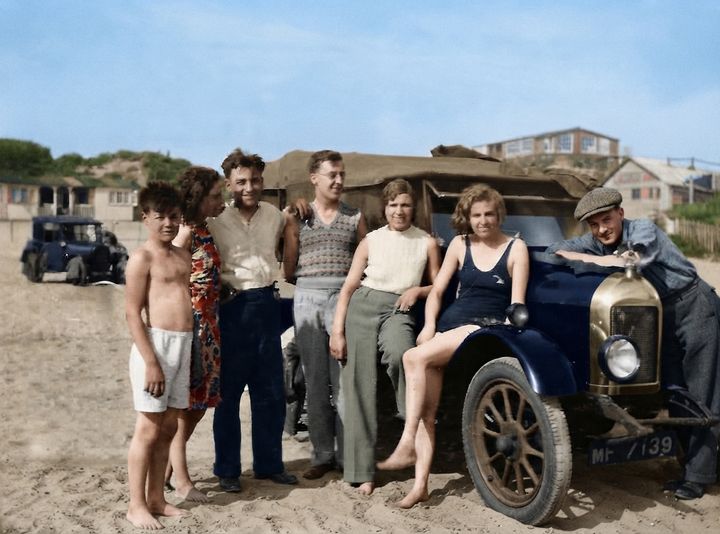
I updated the photo based on feedback.
A couple of interesting changes in the photo once color. First, the reg plate has changed. Second, the man on the right is now wearing a hat.
MF prefix, was the geographic code issued by Middlesex County Council
I updated the photo based on feedback.
A couple of interesting changes in the photo once color. First, the reg plate has changed. Second, the man on the right is now wearing a hat.
MF prefix, was the geographic code issued by Middlesex County Council
Edited by h0b0 on Tuesday 8th September 16:33
MisterNick said:
...
Also, there doesn't seem to be any drivers side window / clear space under the hood and I presume they are towels on the hood on the right.
...
Being a tourer it would have had side screens that slotted into the tops of the doors, front and rear.Also, there doesn't seem to be any drivers side window / clear space under the hood and I presume they are towels on the hood on the right.
...
While it's nice to see a bit of colour, the colourised photo demonstrates how AI should stay away from historic photographs.
RJ
Thanks for the updates. A quick Google suggests that MF was issued from about 1923 and the Morris Oxford ceased production in 1926. I think the man in glasses was born in 1909 and the lady on the front fender in the same year. I would assume that the car was purchased second hand.
It's a shame that AI makes the changes as they can become baked into the future history. It also looks like it has added a strip to the picture down the right hand side. By doing that, I would have thought another headlight should be showing on the nearside. It also doesn't answer what is over the wheels on the car behind.
I heard a lot about the cars from my dad (He's not in the picture, if I am right these are his elder step brothers and sisters) but this I the first time I have seen a picture of any of the cars.
Once again - many thanks
It's a shame that AI makes the changes as they can become baked into the future history. It also looks like it has added a strip to the picture down the right hand side. By doing that, I would have thought another headlight should be showing on the nearside. It also doesn't answer what is over the wheels on the car behind.
I heard a lot about the cars from my dad (He's not in the picture, if I am right these are his elder step brothers and sisters) but this I the first time I have seen a picture of any of the cars.
Once again - many thanks
I would agree it is a Morris Cowley
The Oxford and Cowleys had three stud wheels and all had painted headlamps. What Oxfords do have is a large radiator and added bling in the form of nickel finishers around the bonnet edges you do ne see here. The Oxfords also have Barker dipping headlamps which were larger and connected by a cross bar. Bling also extended to nickelled hub caps
Kimber's Morris Garages used the Oxfords and Cowleys as the underpinnings for their competition cars and as Chapman later added lightness
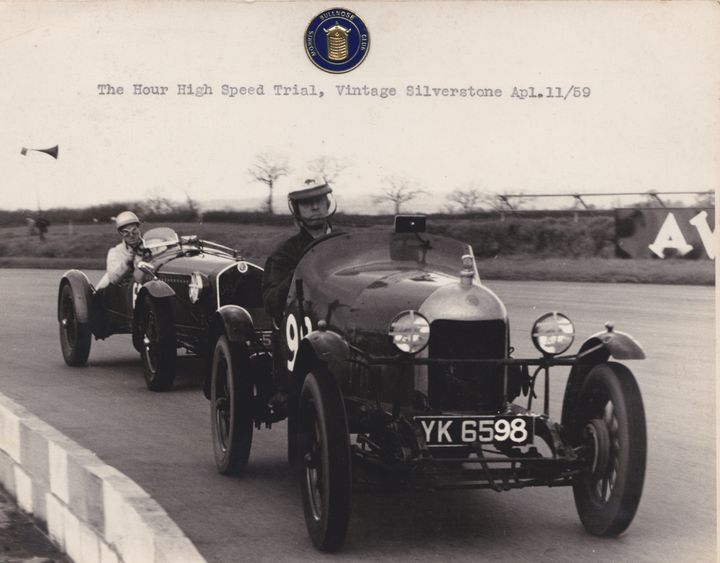
Sixty years later:
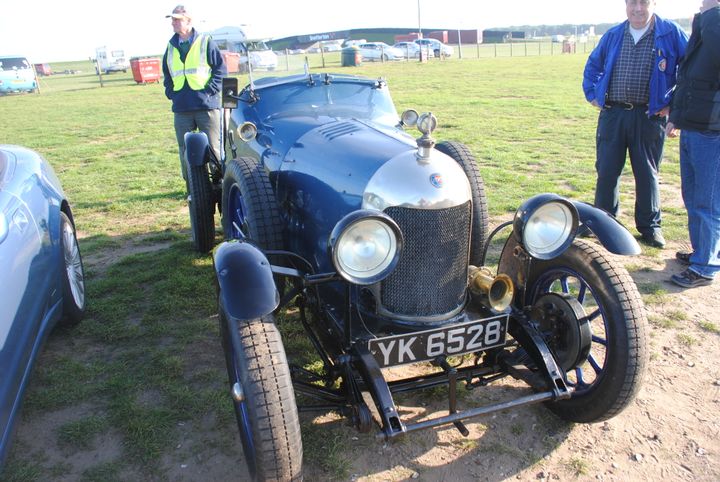
The Oxford and Cowleys had three stud wheels and all had painted headlamps. What Oxfords do have is a large radiator and added bling in the form of nickel finishers around the bonnet edges you do ne see here. The Oxfords also have Barker dipping headlamps which were larger and connected by a cross bar. Bling also extended to nickelled hub caps
Kimber's Morris Garages used the Oxfords and Cowleys as the underpinnings for their competition cars and as Chapman later added lightness
Sixty years later:
h0b0 said:
l
I updated the photo based on feedback.
A couple of interesting changes in the photo once color. First, the reg plate has changed. Second, the man on the right is now wearing a hat.
MF prefix, was the geographic code issued by Middlesex County Council
It's also 'de-bullnose-ed' the front end of the Morris. Presumably because the rounded bullnose radiator is unusual enough to not figure in the AI model's training data so all it 'knows' is arrangements of pixels that create flat radiators surrounded by square brass. I updated the photo based on feedback.
A couple of interesting changes in the photo once color. First, the reg plate has changed. Second, the man on the right is now wearing a hat.
MF prefix, was the geographic code issued by Middlesex County Council
Edited by h0b0 on Tuesday 8th September 16:33
Interestingly specific example of the pitfalls of these tools when using them on historic images.
2xChevrons said:
It's also 'de-bullnose-ed' the front end of the Morris. Presumably because the rounded bullnose radiator is unusual enough to not figure in the AI model's training data so all it 'knows' is arrangements of pixels that create flat radiators surrounded by square brass.
Interestingly specific example of the pitfalls of these tools when using them on historic images.
It is. I think it would be better if the image were deleted lest it starts to appear in the car's history.Interestingly specific example of the pitfalls of these tools when using them on historic images.
Penny Whistle said:
It is. I think it would be better if the image were deleted lest it starts to appear in the car's history.
I have always had issues with colourising B&W photos, right from when we studied this as part of my archaeology degree in the early 2000s.I never quite bought the idea that it makes the photo more 'realistic' or 'connects us with the past', and had a lot of scope for introducing errors and creating false impressions.
I could just about see the value when it was done by hand by specific experts who would individually research the most likely colours - what paints were Morris Cowley's available in? What did that paint look like when it was 15 years old? What colours were swimsuits and pullovers in that period? What shade would the sand be in that location?
The rise of AI tools has made it much easier and much less accurate. As we see here, they not only get the colours wrong (the Morris has changed from a light colour to a dark colour, and the hood was not made of drab duckcloth like an Army tent) but introduce their own fanciful details, such as adding a 'hat', changing the number plate, flattening the radiator and so on.
What always bothers me is that these AIs always produce a false image of the past as existing only in dull, turgid almost camouflage shades. Cars are always dark blue or black, people wear dark blue or grey or maroo or olive clothes. They give the impression that real colour only existed after about 1960.
Gassing Station | Classic Cars and Yesterday's Heroes | Top of Page | What's New | My Stuff