
Classic Mustang flaws - myth or reality?
Discussion


I’ve heard that classic Ford Mustangs have quite a few inherent issues.
Things like:
-flexy unibody / lack of stiffness;
-rear leaf springs causing wheel hop;
-weak brakes (especially drums);
-overheating in traffic;
-and of course rust in all the usual places;
How much of this is actually true in real ownership?
Anyone here with experience - what are they really like to live with, and what other quirks or problem should you expect?
Things like:
-flexy unibody / lack of stiffness;
-rear leaf springs causing wheel hop;
-weak brakes (especially drums);
-overheating in traffic;
-and of course rust in all the usual places;
How much of this is actually true in real ownership?
Anyone here with experience - what are they really like to live with, and what other quirks or problem should you expect?
nickolaizer said:
I ve heard that classic Ford Mustangs have quite a few inherent issues.
Things like:
-flexy unibody / lack of stiffness;
-rear leaf springs causing wheel hop;
-weak brakes (especially drums);
-overheating in traffic;
-and of course rust in all the usual places;
How much of this is actually true in real ownership?
In order...Things like:
-flexy unibody / lack of stiffness;
-rear leaf springs causing wheel hop;
-weak brakes (especially drums);
-overheating in traffic;
-and of course rust in all the usual places;
How much of this is actually true in real ownership?
Yes
Yes, but the leaf springs are not the sole reason.
Yes
Only if the cooling system is faulty or poorly maintained. Don't forget these things were designed for hot USA desert climates.
Yes if they lived a lot in the northern states or came to the UK early in their lives.
None of these are really untypical for a car that was designed 65 years ago for goodness sake.
Edited by aeropilot on Friday 3rd April 17:40
nickolaizer said:
I ve heard that classic Ford Mustangs have quite a few inherent issues.
Things like:
-flexy unibody / lack of stiffness;
-rear leaf springs causing wheel hop;
-weak brakes (especially drums);
-overheating in traffic;
-and of course rust in all the usual places;
How much of this is actually true in real ownership?
Anyone here with experience - what are they really like to live with, and what other quirks or problem should you expect?
- only if it's rustyThings like:
-flexy unibody / lack of stiffness;
-rear leaf springs causing wheel hop;
-weak brakes (especially drums);
-overheating in traffic;
-and of course rust in all the usual places;
How much of this is actually true in real ownership?
Anyone here with experience - what are they really like to live with, and what other quirks or problem should you expect?
- leaf springs don't cause wheel hop, too much throttle in the wrong conditions or situation will though.
- brakes are OK if maintained correctly.
- no more prone to overheating than any other car.
- no more prone to rust than any other sixty year old mass produced car and better than many. Mustang specific areas to check include the inner cowl panel on all and the 'torque boxes' that reinforce the floor on convertibles.
Any car can have faults, old cars are more likely to have faults than two year old cars.
It is important to clarify the difference between a characteristic and a fault. Just about any 1960's car can be be said to have "weak brakes' if your bench mark is a 21st century car for example.
Sorry to be repetitive, starting typing then went for a cup of tea and then carried on typing !
Edited by gt40steve on Friday 3rd April 18:03
I have heard many things about many cars mostly started by Journalists desperately trying to find something to write about
99% of drivers will never notice any of these issues because they drive within the speed limits
To no ones surprise they aren't a great track car as standard but they are great as a classic road car
99% of drivers will never notice any of these issues because they drive within the speed limits
To no ones surprise they aren't a great track car as standard but they are great as a classic road car
That are well put together, very stiff and with a wide track are a bit like a modern car I would say.
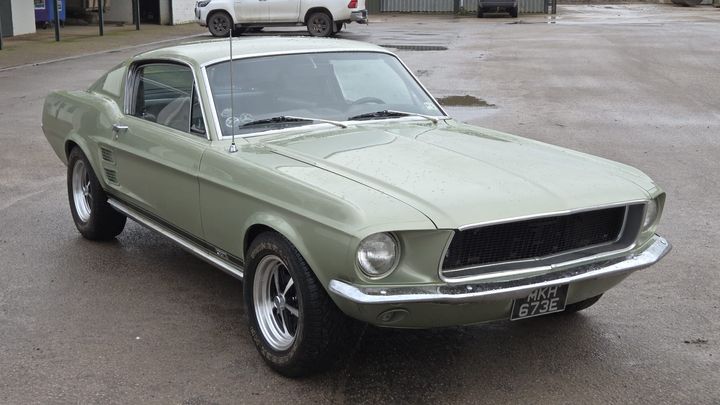
As long as they are not rusty or bent.
My 67 GT with a 289 goes like the wind.
If you really are that curios you are welcome to have a look.
As long as they are not rusty or bent.
My 67 GT with a 289 goes like the wind.
If you really are that curios you are welcome to have a look.
Edited by BuyaDuster on Friday 3rd April 19:03
They had those faults back in the day .
Many of the ones imported later from the states are pretty to look at from 30 yards but don't bear up under close scrutiny. Very poor restoration work especially underneath, covered by gloop over very poor patches. Many pattern parts are of suspect quality. That can be applied to a large percentage of classics from anywhere in the world.
Many of the ones imported later from the states are pretty to look at from 30 yards but don't bear up under close scrutiny. Very poor restoration work especially underneath, covered by gloop over very poor patches. Many pattern parts are of suspect quality. That can be applied to a large percentage of classics from anywhere in the world.

Mine is still on drums, they are fine if set up properly. Not noticed any wheel hop. It did overheat until I swapped the old clogged up US radiator for a nice shiny aluminium one and now it's fine. They are probably the most sensible classic American to own due to parts availibility and low price.
Bloody awesome fun to drive and race.

Bloody awesome fun to drive and race.
I bought this little beauty back in 2016, twas a California car so no rust [ apart from mild surface ] in a rare rose gold, engine and box had been rebuilt and re painted all in the US of A.
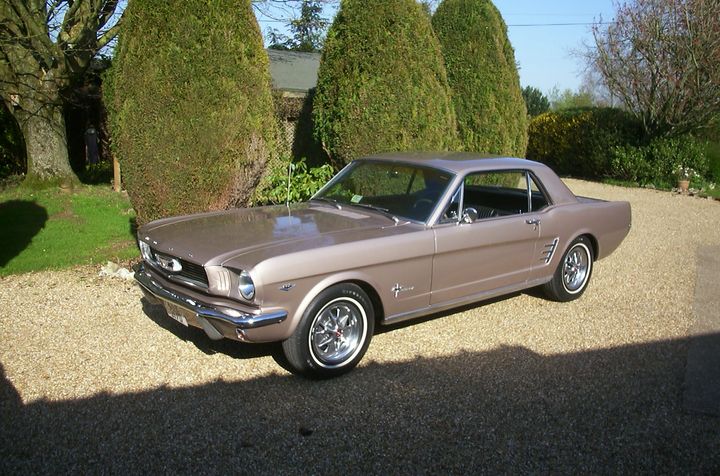
Main reason for buying it was to share with my late Father as he had a Wimbledon white over red 289 fastback way back in the mid late 60’s he owned it for 3 years which was a record for him back then and it never failed at all, not even a light bulb.
The one I bought was a lovely old thing to drive, 289 auto, drums all round, power steering, stopped well, steered well, rode nicely and can’t recall any axle hop. Don’t drive one expecting it to handle like a RS Escort etc, they don’t, but I lovely old thing to smoke along in taking your time with enough poke to keep up with modern machines.
Dad only drove it the once, so i sold it about a year later for a 3k profit
Main reason for buying it was to share with my late Father as he had a Wimbledon white over red 289 fastback way back in the mid late 60’s he owned it for 3 years which was a record for him back then and it never failed at all, not even a light bulb.
The one I bought was a lovely old thing to drive, 289 auto, drums all round, power steering, stopped well, steered well, rode nicely and can’t recall any axle hop. Don’t drive one expecting it to handle like a RS Escort etc, they don’t, but I lovely old thing to smoke along in taking your time with enough poke to keep up with modern machines.
Dad only drove it the once, so i sold it about a year later for a 3k profit
steveo3002 said:
has blah blah issues ? compared to what ? no worse than any other 60 year old car , and all the spares are available unlike some
Exactly.The only negative issue is the fact that they are still quite expensive even with the fall in prices of yanks in general in the past few years, especially in sought after fastback form (and that's not going anywhere near the prices of the really silly expensive BOSS/Shelby/Cobra Jet versions)
I've had three over the years - a '67 notchback, a '65 notchback and a '66 fastback and they're all great to own - they're not a Prius for gawdsake!
The early ones are the easiest to live with I think but there's not much between them. You'll get axle hop (ala Bullitt chase) if you drive it like a loon but can't say I ever had any.
The early ones are the easiest to live with I think but there's not much between them. You'll get axle hop (ala Bullitt chase) if you drive it like a loon but can't say I ever had any.
Dan_The_Man said:
Mine is still on drums, they are fine if set up properly. Not noticed any wheel hop. It did overheat until I swapped the old clogged up US radiator for a nice shiny aluminium one and now it's fine. They are probably the most sensible classic American to own due to parts availibility and low price.
Bloody awesome fun to drive and race.
Lovely carBloody awesome fun to drive and race.
But did you beat the Super Bee?

The best thing about classic Mustangs, like the air cooled 911s is that they appeal to the "yoof", so are quite a good bet investment wise IMHO.
https://www.youtube.com/watch?v=eORLKPmaCe0&t=...
https://www.youtube.com/watch?v=eORLKPmaCe0&t=...
From my experience (1965 Fastback)
- no
- sometimes but not too much
- yes
- no, but I have heard so ensure the radiator is sorted/guage works
- no, but try find a dry state car.
Weak headlamps, so I've upgraded mine. And I think overall just servicing intervals are (per the manual) every 6months/3k-5k miles which if you stick to can be quite a bit of effort.
- no
- sometimes but not too much
- yes
- no, but I have heard so ensure the radiator is sorted/guage works
- no, but try find a dry state car.
Weak headlamps, so I've upgraded mine. And I think overall just servicing intervals are (per the manual) every 6months/3k-5k miles which if you stick to can be quite a bit of effort.
nickolaizer said:
I ve heard that classic Ford Mustangs have quite a few inherent issues.
Things like:
-flexy unibody / lack of stiffness;
-rear leaf springs causing wheel hop;
-weak brakes (especially drums);
-overheating in traffic;
-and of course rust in all the usual places;
How much of this is actually true in real ownership?
Anyone here with experience - what are they really like to live with, and what other quirks or problem should you expect?
Things like:
-flexy unibody / lack of stiffness;
-rear leaf springs causing wheel hop;
-weak brakes (especially drums);
-overheating in traffic;
-and of course rust in all the usual places;
How much of this is actually true in real ownership?
Anyone here with experience - what are they really like to live with, and what other quirks or problem should you expect?
Forums | Classic Cars and Yesterday's Heroes | Top of Page | What's New | My Stuff