
Christmas Cake Recipes
Discussion


The Gauge said:
What s your method for feeding? Syringe, spooning over? Rum, brandy?
Also, how far in advance do you all make your cakes? I understand they keep for ages?
I think we make the mix and let it steep for a couple of weeks, then, when baked, it probably gets fed for 3-4 weeks. Usually rum, usually with a spoon from the bottle, which occasionally slips..Also, how far in advance do you all make your cakes? I understand they keep for ages?
Edited by The Gauge on Saturday 3rd October 09:14
Another Delia recipe fan here...have been using it for 30+ years. What's great about the recipe, is that instructions are provided for different sized cakes/tins/shapes of tins here. https://www.deliaonline.com/information-centre/sca...
nikaiyo2 said:
Question. Me and the missus made a start on this one over the weekend, having never made a christmas cake between us before.Recipe says to bake at 4hrs at 140, which we did. We unwrapped it (cooled) this morning and the missus is convinced it's overcooked and burnt. I'm more hopeful that time and some feeding over the next few weeks will give it some softness and moisture.
So, for those that use this recipe, should we have dialled back the temp for a fan assisted oven? If it has come out seeming a little dry, is there any way to resurrect it or are we flogging a dead horse and need to go again?
Thanks!
Baldy881 said:
Question. Me and the missus made a start on this one over the weekend, having never made a christmas cake between us before.
Recipe says to bake at 4hrs at 140, which we did. We unwrapped it (cooled) this morning and the missus is convinced it's overcooked and burnt. I'm more hopeful that time and some feeding over the next few weeks will give it some softness and moisture.
So, for those that use this recipe, should we have dialled back the temp for a fan assisted oven? If it has come out seeming a little dry, is there any way to resurrect it or are we flogging a dead horse and need to go again?
Thanks!
I'm inclined to say keep feeding it, it'll be fine.Recipe says to bake at 4hrs at 140, which we did. We unwrapped it (cooled) this morning and the missus is convinced it's overcooked and burnt. I'm more hopeful that time and some feeding over the next few weeks will give it some softness and moisture.
So, for those that use this recipe, should we have dialled back the temp for a fan assisted oven? If it has come out seeming a little dry, is there any way to resurrect it or are we flogging a dead horse and need to go again?
Thanks!
Huntsman said:
Baldy881 said:
Question. Me and the missus made a start on this one over the weekend, having never made a christmas cake between us before.
Recipe says to bake at 4hrs at 140, which we did. We unwrapped it (cooled) this morning and the missus is convinced it's overcooked and burnt. I'm more hopeful that time and some feeding over the next few weeks will give it some softness and moisture.
So, for those that use this recipe, should we have dialled back the temp for a fan assisted oven? If it has come out seeming a little dry, is there any way to resurrect it or are we flogging a dead horse and need to go again?
Thanks!
I'm inclined to say keep feeding it, it'll be fine.Recipe says to bake at 4hrs at 140, which we did. We unwrapped it (cooled) this morning and the missus is convinced it's overcooked and burnt. I'm more hopeful that time and some feeding over the next few weeks will give it some softness and moisture.
So, for those that use this recipe, should we have dialled back the temp for a fan assisted oven? If it has come out seeming a little dry, is there any way to resurrect it or are we flogging a dead horse and need to go again?
Thanks!
You can always trim the worst burnt bits off before you marizipzn it.
My wife covers her cake with a cardbord lid after 2-3 hours once the cake has a crust and it comes out looking ok.
Icing can hide many sins
Baldy881 said:
Thanks both, I'm hopeful! So, if I feed it say tonight (do you feed both sides - top & bottom?) and then every week, and just keep it wrapped and sealed? We've already stuck a cocktail stick through in numerous places on both sides...
Feed top this week. Wrap it up a leave for 2 week
Unwrap
Flip the cake
Pierce the bottom of the cake
Feed the bottom only
Wrap back up leave for 2 weeks
Unwrap
Flip the cake
Pierce the top only and feed
Leave for 2 weeks
etc
Repeat until week before christmas and then unwrap and marzipan.
Then a few days later cover in royal icing so its dry for christmas day.
My personal recipe that I spent years perfecting and now use every year.
150ml of Brandy
1kg of fruit (I use currents, raisins, dried chopped apricots, dried (not glacier) cherries and sultanas, you can just buy a bag of mixed fruit if you like)
2 tablespoon of treacle
1 tablespoon of golden syrup
250g of unsalted butter
250g of dark brown muscovado sugar
1tsp of cinnamon
1/2 tsp of ground ginger
1 1/2tsp of mixed spice
1tsp of lemon extract
1tsp of orange extract
1tsp of vanilla extract
pinch of salt
4 eggs
275g of flour
Add brandy, butter, sugar, treacle, extracts and spices into a large saucepan and put over a very low heat and stir, we're talking super low, just enough heat to combine the ingredients and melt the butter, if you are worried, take it on and off the heat regularly. Once the butter has melted and the ingredients are mixed add the fruit and stir thoroughly turn the heat off, cover with a lid and set to one side to soak, stirring regularly.
After about 30 minutes check the temperature, anything warmer than room temp is too warm and leave it another 10 minutes. Once cooled, turn out into a large mixing bowl and preheat an oven to 140c
Whisk eggs and stir through a bit at a time
Add the flour through a sieve about 1/4 at a time and fold in using a wooden spoon. Once fully combined turn into cake tin and cook in the middle of the oven for 3-4 hours until a skewer comes out clean.
Allow to cool, poke many holes in it with a skewer and spoon over some brandy. Wrap in grease proof paper and then cling film. Feed every other week alternating between the top and the bottom (fnarr fnarr).
Leave it two weeks after its last feed before decorating, personally prefer marzipan and royal icing (stick the marzipan on with some apricot jam or marmalade warmed up a little to make a sticky glaze for the marzipan to hold) however last year we had someone with a nut allergy in over Christmas so I skipped the marzipan and cant say I missed it
I use a generational family recipe, passed down my mother's (Methodist) maternal line.
We make the cake at least 9 months ahead of time, seal it, and don't open it until Christmas Eve.
I'll dig out the recipe, but the secret to the taste and moisture is that you soak the dried fruit in 'some alcohol' for 3-4 days before making the cake. My cake's fruit usually consumes 3/4 of a bottle our bourbon before baking. The moist fruit then keeps the cake beautifully moist.
The mum of my ex was from Grenada and made an incredibly memorable Xmas cake. The fruit sat in alcohol for at least 6 months. I never made it and was pronpted by this thread to ask ChatGPT what it was. This looks about right:
Traditional Caribbean Black Cake:
I think the cake you're remembering is very likely Grenadian black cake, also known as Caribbean black cake, West Indian black cake or traditional Caribbean Christmas cake.
In Grenada and across much of the English-speaking Caribbean, this cake is a Christmas tradition. It's dark, rich, moist, intensely fruity and fragrant with warm spices, rum and wine.
Unlike a typical British Christmas cake, Caribbean black cake often has fruit that has been soaking in alcohol for months. The soaked fruit is blended or finely processed into a thick mixture, which gives the finished cake its distinctive dark colour and dense texture.
After baking, some families add more rum or wine to the cake and allow it to mature before Christmas.
The detail you remember fruit soaking in alcohol for six months before Christmas is a particularly strong clue.
The recipe includes:
Raisins
Currants
Prunes
Dried cherries
Rum
Cherry brandy
Cherry or plum wine
Burnt-sugar browning
Butter, sugar, eggs and flour
Spices and vanilla
The recipe allows the fruit to soak for anything from a few days to a year. Some Caribbean families begin preparing their Christmas cake approximately six months ahead.
This is remarkably close to the tradition you described.
However, recipes differ between households, so this is a strong starting point rather than a confirmed copy of your ex's mother's recipe.
What makes traditional black cake distinctive?
The fruit is prepared months ahead
Raisins, currants, prunes, cherries and sometimes mixed citrus peel are chopped or minced and submerged in rum and wine.
Over time, the fruit softens, darkens and absorbs the alcohol. Some families blend the fruit before soaking it; others blend it just before baking.
Burnt sugar gives it the black colour
Caribbean cooks call this browning.
Sugar is heated until it becomes a very dark caramel, then carefully combined with water to make a concentrated syrup. It contributes the cake's signature colour, along with a deep caramel flavour and a slightly bitter edge.
The dark colour doesn't come from chocolate.
The fruit is almost a paste
The soaked fruit is often processed into a thick, dark mixture. This creates a cake that is dense, moist and rich, with fruit distributed throughout rather than large, separate pieces.
The cake is often fed after baking
Additional rum or wine may be brushed or spooned over the cake while it is warm and then added sparingly as it matures.
This develops the aroma and flavour. The amount of alcohol remaining in a baked cake varies, so it shouldn't be assumed that baking removes all the alcohol.
The alcohol: what might she have used?
Dark or aged rum
Rum is often the backbone of the flavour. It contributes notes of molasses, caramel, dried fruit and oak.
Grenada has its own rum-making tradition, so locally made rum would be a natural choice for some households. We can't determine which brand her mother used from the soaking tradition alone.
Cherry brandy
Cherry brandy is a common ingredient in Caribbean black cake. It adds a sweet, dark-cherry flavour and makes the fruit taste almost like a concentrated preserve.
It also appears in the Grenada-associated recipe mentioned above.
Port, sherry or other fortified wine
Different families use different wines. Some versions include cherry or plum wine, while others use port, sherry or a combination of wine and spirits.
The wine adds sweetness and depth and softens the sharpness of the rum.
My recommended starting combination is dark rum and cherry brandy, with a little fortified wine if you remember a softer, wine-rich flavour.
I wouldn't insist on one exact combination without knowing more about her cake.
The fruit mixture: a traditional-style recipe
This quantity makes enough soaked fruit for approximately two medium cakes.
Ingredients
450 g raisins
225 g dried currants
225 g pitted prunes
225 g dried or glacé cherries
100 g mixed citrus peel, optional
350 ml dark rum
250 ml cherry brandy
150 ml port or sweet red wine, optional
You may need additional liquid to keep the fruit covered, depending on how tightly you pack the container and how absorbent the fruit is.
How to prepare the fruit
Inspect and finely chop the fruit. If you wash it, dry it thoroughly before adding the alcohol.
Place the fruit in a clean, dry glass jar or another suitable food-safe container, leaving enough room to stir.
Pour in the rum, cherry brandy and optional wine.
Mix thoroughly and make sure the fruit is covered by liquid.
Seal the container and store it according to a reliable food-preservation method. Refrigeration is the more cautious option for a homemade mixture without a validated long-term storage process.
Check the mixture periodically, using clean utensils, and top up the liquid if necessary.
When ready to bake, process the fruit into a thick, coarse paste, adding some of its soaking liquid as needed.
Food safety note: A six-month soak is a traditional flavour-development practice, not a guarantee of safety. Alcohol strength, moisture, temperature and handling all matter. Discard the mixture if you see mould, bubbling or other signs of spoilage. Do not taste it to check.
The actual Grenadian-style black cake recipe
This version uses soaked fruit, burnt-sugar browning and a rich butter-and-egg batter.
The quantities below are a practical starting point for two medium round cakes, approximately 20 cm or 8 inches each. They are not claimed to be the exact historical recipe from the Grenada cookbook.
Ingredients
Prepared soaked fruit: approximately 1.5 1.7 kg, including some liquid
Unsalted butter: 450 g
Brown or white sugar: 450 g
Eggs: 8 10 large
Plain flour: 450 g
Baking powder: 2 teaspoons
Ground cinnamon: 1 teaspoon
Freshly grated nutmeg: 1 teaspoon
Vanilla essence: 2 teaspoons
Finely grated lime zest: 1 2 limes
Browning: 2 4 tablespoons, to taste
Extra rum or wine for feeding the cakes, optional
Some recipes use self-raising flour, less fruit, more browning or a different balance of eggs and butter. These differences are normal across Caribbean family recipes.
Method
Step 1: Prepare the fruit
Process the soaked fruit into a thick, coarse paste. Include enough soaking liquid to make it moist but not watery. Set aside.
Step 2: Cream the butter and sugar
Beat the butter and sugar until well combined and fluffy.
Add the eggs one at a time, mixing thoroughly after each addition. Add the vanilla and lime zest.
Step 3: Add the fruit and spices
Mix in the fruit paste.
Sift together the flour, baking powder, cinnamon and nutmeg. Fold these into the mixture.
Stir in the browning gradually until you achieve a deep mahogany colour. Too much browning can make the cake bitter.
Step 4: Bake slowly
Divide the mixture between two lined cake tins.
Bake at 150°C or 300°F for approximately 1½ 2½ hours. The actual time depends on the depth of the batter and the tins.
Cover the tops if they darken too quickly. Check that the centre is fully baked before removing the cakes from the oven.
Step 5: Feed and mature
If desired, brush the warm cakes lightly with rum or your chosen alcohol blend.
Allow them to cool completely, then wrap securely and store appropriately. Additional alcohol can be applied sparingly as the cake matures, following a reliable storage method for a rich, moist fruit cake.
The secret is the browning
If you want the nearly black colour associated with traditional Caribbean black cake, don't rely on brown sugar alone.
Browning is made by heating granulated sugar in a heavy saucepan until it becomes very dark caramel, then carefully adding hot water to form a syrup.
It can spit violently, and hot caramel can cause severe burns. Use a long-handled utensil, protect your hands and add the water cautiously. Allow the browning to cool before incorporating it into the cake.
The goal is dark and bittersweet, not acrid or burnt beyond use.
The characteristic colour comes from the combination of caramelised sugar and the dark soaked fruit.
It's traditionally served in small slices because the flavour is so concentrated.
The Grenadian-associated recipe described earlier features currants, raisins, cherries, prunes and citrus peel steeping in rum and wine. Spices can include cinnamon and nutmeg, alongside other aromatic ingredients.
There was definitely Carib rum and IIRC a lesser amount of cherry brandy, but not sure about the wine.
I won't be making it but if anyone is interested. It really is ideal for winter in UK.
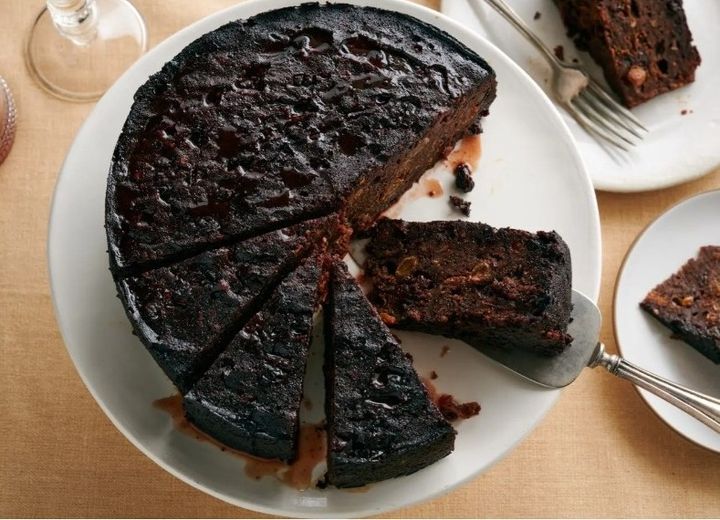
Traditional Caribbean Black Cake:
I think the cake you're remembering is very likely Grenadian black cake, also known as Caribbean black cake, West Indian black cake or traditional Caribbean Christmas cake.
In Grenada and across much of the English-speaking Caribbean, this cake is a Christmas tradition. It's dark, rich, moist, intensely fruity and fragrant with warm spices, rum and wine.
Unlike a typical British Christmas cake, Caribbean black cake often has fruit that has been soaking in alcohol for months. The soaked fruit is blended or finely processed into a thick mixture, which gives the finished cake its distinctive dark colour and dense texture.
After baking, some families add more rum or wine to the cake and allow it to mature before Christmas.
The detail you remember fruit soaking in alcohol for six months before Christmas is a particularly strong clue.
The recipe includes:
Raisins
Currants
Prunes
Dried cherries
Rum
Cherry brandy
Cherry or plum wine
Burnt-sugar browning
Butter, sugar, eggs and flour
Spices and vanilla
The recipe allows the fruit to soak for anything from a few days to a year. Some Caribbean families begin preparing their Christmas cake approximately six months ahead.
This is remarkably close to the tradition you described.
However, recipes differ between households, so this is a strong starting point rather than a confirmed copy of your ex's mother's recipe.
What makes traditional black cake distinctive?
The fruit is prepared months ahead
Raisins, currants, prunes, cherries and sometimes mixed citrus peel are chopped or minced and submerged in rum and wine.
Over time, the fruit softens, darkens and absorbs the alcohol. Some families blend the fruit before soaking it; others blend it just before baking.
Burnt sugar gives it the black colour
Caribbean cooks call this browning.
Sugar is heated until it becomes a very dark caramel, then carefully combined with water to make a concentrated syrup. It contributes the cake's signature colour, along with a deep caramel flavour and a slightly bitter edge.
The dark colour doesn't come from chocolate.
The fruit is almost a paste
The soaked fruit is often processed into a thick, dark mixture. This creates a cake that is dense, moist and rich, with fruit distributed throughout rather than large, separate pieces.
The cake is often fed after baking
Additional rum or wine may be brushed or spooned over the cake while it is warm and then added sparingly as it matures.
This develops the aroma and flavour. The amount of alcohol remaining in a baked cake varies, so it shouldn't be assumed that baking removes all the alcohol.
The alcohol: what might she have used?
Dark or aged rum
Rum is often the backbone of the flavour. It contributes notes of molasses, caramel, dried fruit and oak.
Grenada has its own rum-making tradition, so locally made rum would be a natural choice for some households. We can't determine which brand her mother used from the soaking tradition alone.
Cherry brandy
Cherry brandy is a common ingredient in Caribbean black cake. It adds a sweet, dark-cherry flavour and makes the fruit taste almost like a concentrated preserve.
It also appears in the Grenada-associated recipe mentioned above.
Port, sherry or other fortified wine
Different families use different wines. Some versions include cherry or plum wine, while others use port, sherry or a combination of wine and spirits.
The wine adds sweetness and depth and softens the sharpness of the rum.
My recommended starting combination is dark rum and cherry brandy, with a little fortified wine if you remember a softer, wine-rich flavour.
I wouldn't insist on one exact combination without knowing more about her cake.
The fruit mixture: a traditional-style recipe
This quantity makes enough soaked fruit for approximately two medium cakes.
Ingredients
450 g raisins
225 g dried currants
225 g pitted prunes
225 g dried or glacé cherries
100 g mixed citrus peel, optional
350 ml dark rum
250 ml cherry brandy
150 ml port or sweet red wine, optional
You may need additional liquid to keep the fruit covered, depending on how tightly you pack the container and how absorbent the fruit is.
How to prepare the fruit
Inspect and finely chop the fruit. If you wash it, dry it thoroughly before adding the alcohol.
Place the fruit in a clean, dry glass jar or another suitable food-safe container, leaving enough room to stir.
Pour in the rum, cherry brandy and optional wine.
Mix thoroughly and make sure the fruit is covered by liquid.
Seal the container and store it according to a reliable food-preservation method. Refrigeration is the more cautious option for a homemade mixture without a validated long-term storage process.
Check the mixture periodically, using clean utensils, and top up the liquid if necessary.
When ready to bake, process the fruit into a thick, coarse paste, adding some of its soaking liquid as needed.
Food safety note: A six-month soak is a traditional flavour-development practice, not a guarantee of safety. Alcohol strength, moisture, temperature and handling all matter. Discard the mixture if you see mould, bubbling or other signs of spoilage. Do not taste it to check.
The actual Grenadian-style black cake recipe
This version uses soaked fruit, burnt-sugar browning and a rich butter-and-egg batter.
The quantities below are a practical starting point for two medium round cakes, approximately 20 cm or 8 inches each. They are not claimed to be the exact historical recipe from the Grenada cookbook.
Ingredients
Prepared soaked fruit: approximately 1.5 1.7 kg, including some liquid
Unsalted butter: 450 g
Brown or white sugar: 450 g
Eggs: 8 10 large
Plain flour: 450 g
Baking powder: 2 teaspoons
Ground cinnamon: 1 teaspoon
Freshly grated nutmeg: 1 teaspoon
Vanilla essence: 2 teaspoons
Finely grated lime zest: 1 2 limes
Browning: 2 4 tablespoons, to taste
Extra rum or wine for feeding the cakes, optional
Some recipes use self-raising flour, less fruit, more browning or a different balance of eggs and butter. These differences are normal across Caribbean family recipes.
Method
Step 1: Prepare the fruit
Process the soaked fruit into a thick, coarse paste. Include enough soaking liquid to make it moist but not watery. Set aside.
Step 2: Cream the butter and sugar
Beat the butter and sugar until well combined and fluffy.
Add the eggs one at a time, mixing thoroughly after each addition. Add the vanilla and lime zest.
Step 3: Add the fruit and spices
Mix in the fruit paste.
Sift together the flour, baking powder, cinnamon and nutmeg. Fold these into the mixture.
Stir in the browning gradually until you achieve a deep mahogany colour. Too much browning can make the cake bitter.
Step 4: Bake slowly
Divide the mixture between two lined cake tins.
Bake at 150°C or 300°F for approximately 1½ 2½ hours. The actual time depends on the depth of the batter and the tins.
Cover the tops if they darken too quickly. Check that the centre is fully baked before removing the cakes from the oven.
Step 5: Feed and mature
If desired, brush the warm cakes lightly with rum or your chosen alcohol blend.
Allow them to cool completely, then wrap securely and store appropriately. Additional alcohol can be applied sparingly as the cake matures, following a reliable storage method for a rich, moist fruit cake.
The secret is the browning
If you want the nearly black colour associated with traditional Caribbean black cake, don't rely on brown sugar alone.
Browning is made by heating granulated sugar in a heavy saucepan until it becomes very dark caramel, then carefully adding hot water to form a syrup.
It can spit violently, and hot caramel can cause severe burns. Use a long-handled utensil, protect your hands and add the water cautiously. Allow the browning to cool before incorporating it into the cake.
The goal is dark and bittersweet, not acrid or burnt beyond use.
The characteristic colour comes from the combination of caramelised sugar and the dark soaked fruit.
It's traditionally served in small slices because the flavour is so concentrated.
The Grenadian-associated recipe described earlier features currants, raisins, cherries, prunes and citrus peel steeping in rum and wine. Spices can include cinnamon and nutmeg, alongside other aromatic ingredients.
There was definitely Carib rum and IIRC a lesser amount of cherry brandy, but not sure about the wine.
I won't be making it but if anyone is interested. It really is ideal for winter in UK.
Edited by PhilAsia on Sunday 11th October 10:59
Gassing Station | Food, Drink & Restaurants | Top of Page | What's New | My Stuff