
What s your equestrian set up?
Discussion


We were meant to be exchanging on the purchase of an equestrian property last week with 15 acres, unfortunately the lady selling got cold feet (property had been in her family for generations and when push came to shove, she couldn’t sell!).
We’ve found an alternative with a net area for equestrian use of 7 acres (excluding the house, garages, drive and garden), it’s currently not used for horses and so we would want to build a ménage, stables, hay & straw store and machine store. The wife has two horses and wants to buy some more and some Shetlands for our little one.
So basically looking for ideas on what buildings to build?Currently debating a steel frame building for machine store, with an area for straw / hay. And then building some wooden stables. Would be great to see what others have.
We’ve found an alternative with a net area for equestrian use of 7 acres (excluding the house, garages, drive and garden), it’s currently not used for horses and so we would want to build a ménage, stables, hay & straw store and machine store. The wife has two horses and wants to buy some more and some Shetlands for our little one.
So basically looking for ideas on what buildings to build?Currently debating a steel frame building for machine store, with an area for straw / hay. And then building some wooden stables. Would be great to see what others have.
I had two horses and a Shetland on five acres and it was a struggle at times. The Shetland doesn t need much grass as they can be so prone to laminitis so keeping them off grass can help with the management.
I m sure you re aware but keeping the fields clean from droppings can be key to healthy grass which becomes very important with limited space.
I split the five acres in two and each side I built a field shelter. At the house I had three timber stables and a hay store which I had a specialist company make and install on prepared bases.
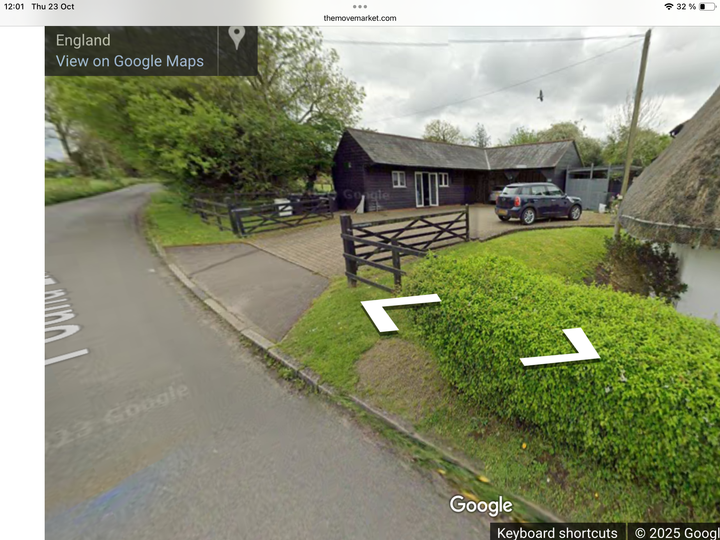
This was the building but configuration has been changed since I sold the place.
I m sure you re aware but keeping the fields clean from droppings can be key to healthy grass which becomes very important with limited space.
I split the five acres in two and each side I built a field shelter. At the house I had three timber stables and a hay store which I had a specialist company make and install on prepared bases.
This was the building but configuration has been changed since I sold the place.
Edited by Magooagain on Saturday 1st November 20:25
The BHS guideline is 1 horse per 1-1.5ac grazing, so land can get used up pretty quickly if you have larger horses. Even then you’re better off rotating a bit. So be careful your wife is being realistic when she says she wants to buy “some” more. 7ac sounds like a lot but 4 horses, with all the other stuff, and you could be done. Fill it completely at the outset and you’ll have a problem when the little one outgrows the Shetland (which you will never be allowed to sell) or one of the existing ones ends up “retired” as an expensive field ornament (still able to throw bills of alarming size with some regularity). Tbh, the 15ac would be more comfortable.
An arena isn’t the cheapest thing to build if you want to do it properly (I built an Olympic from scratch a couple of years ago). Drainage of them is everything…
Personally I don’t like the idea of storing feed/hay/straw in the same place as equipment. Not just the fire risk, but the dust (and the fact that if you’re footing the bill you should at least get some space out of it). If you can, get yourself your own workshop/machine shed and something completely separate for the animals/feed/etc.
Wooden stables/field shelters can usually be classed as temporary structures if they’re on skids. They are dead easy to build, especially if you have an extra pair of hands, which is what you’ll want to do anyway if your wife orders “kits” from the same place mine did… would have been useless to anyone who couldn’t have scratch built them in the first place! Also you will need a secure tack room: that stuff is expensive, easy to lift, and easy to sell…
We have a barn with a few “Monarch” stables in, some traditional brick divided ones, and some wooden. The brick ones are by far the best (and much cheaper than the Monarchs).
Plan for power/data/water around the place and factor machines into the cost equation. You’ll be hard pressed to get away without an ATV and/or tractor + a few accessories. Make sure you’re sitting down when you discover how much fencing costs. Protecting that fencing with.a proper mains power electric fencing setup is a sound investment.
Oh, and figure out early on who is going to get rid of the muck (and where*), sort hedges out, etc. That’s either more kit + time or paying someone to do it.
An arena isn’t the cheapest thing to build if you want to do it properly (I built an Olympic from scratch a couple of years ago). Drainage of them is everything…
Personally I don’t like the idea of storing feed/hay/straw in the same place as equipment. Not just the fire risk, but the dust (and the fact that if you’re footing the bill you should at least get some space out of it). If you can, get yourself your own workshop/machine shed and something completely separate for the animals/feed/etc.
Wooden stables/field shelters can usually be classed as temporary structures if they’re on skids. They are dead easy to build, especially if you have an extra pair of hands, which is what you’ll want to do anyway if your wife orders “kits” from the same place mine did… would have been useless to anyone who couldn’t have scratch built them in the first place! Also you will need a secure tack room: that stuff is expensive, easy to lift, and easy to sell…
We have a barn with a few “Monarch” stables in, some traditional brick divided ones, and some wooden. The brick ones are by far the best (and much cheaper than the Monarchs).
Plan for power/data/water around the place and factor machines into the cost equation. You’ll be hard pressed to get away without an ATV and/or tractor + a few accessories. Make sure you’re sitting down when you discover how much fencing costs. Protecting that fencing with.a proper mains power electric fencing setup is a sound investment.
Oh, and figure out early on who is going to get rid of the muck (and where*), sort hedges out, etc. That’s either more kit + time or paying someone to do it.
- ”spread it on the field” doesn’t work if you’re short on land.
 kin pauper
 LT’s response covers the vast majority of what you need to know to which I would add the following.
On post and rail fencing be prepared for almost constant replacement of rails and the bigger the horses’s the bigger the issue.
Anything mechanical needs to be under lock and key.
Rotation of land does indeed restrict usage.
Whatever you build try and ensure good access for lorries - delivery of bedding and such like can be a real pain otherwise.
Equally if you are using your own land for hay then again access may be important.
We bought our own place with just a field shelter in place and 2 old stables but the previous owner had installed a Martin Collins Ménage so that was a start. The land available for horses was just 2.5acres but we were able to also buy a further 7 acres.
We then had built a Warwick buildings stable yard - 3 stables , feed and tack rooms and a hay barn and more recently have added an additional fenced “ loafing arena “ off the yard given how poor clay soil can end up being.
Muck heap built ( and subsequently updated ) and a 300 ft access track also needed from our drive.
3 horses have lived happily there although all 3 now retired so rather expensive pets.
On post and rail fencing be prepared for almost constant replacement of rails and the bigger the horses’s the bigger the issue.
Anything mechanical needs to be under lock and key.
Rotation of land does indeed restrict usage.
Whatever you build try and ensure good access for lorries - delivery of bedding and such like can be a real pain otherwise.
Equally if you are using your own land for hay then again access may be important.
We bought our own place with just a field shelter in place and 2 old stables but the previous owner had installed a Martin Collins Ménage so that was a start. The land available for horses was just 2.5acres but we were able to also buy a further 7 acres.
We then had built a Warwick buildings stable yard - 3 stables , feed and tack rooms and a hay barn and more recently have added an additional fenced “ loafing arena “ off the yard given how poor clay soil can end up being.
Muck heap built ( and subsequently updated ) and a 300 ft access track also needed from our drive.
3 horses have lived happily there although all 3 now retired so rather expensive pets.

The wagon access point is a good one. Lots turns up on Hiab/Moffett equipped wagons or large trailers dragged by tractors.
alscar said:
On post and rail fencing be prepared for almost constant replacement of rails and the bigger the horses s the bigger the issue.
A bid to avoid that is why we use long electric fence insulators holding a single run of rope around all p+r fencing to keep the horses off. It’s all run from a mains powered energiser in one of the barns and makes rail replacement a much rarer event. Worth looking in the horsey horsey thread as well as you will see stuff on vehicles and implements which can be useful
We’ve been in our 15 acres for 7 years and we have learned a lot in that time but looking, listening and befriending a couple of local farmers
- you need to be able to get a lorry in as others have said
- look at the land and how it drains and work out if you need ditches / drainage
- what is the soil type ? Clay means it gets churned in winter so you might need more than 1 acre per horse (we only have 4 and it works out well
- what is the land classification? Agri? Equestrian? It does make a difference when wanting to put buildings on it
- what is the access like for bridleways locally ?
- what machinery will you need ( We have 1 big tractor, 1 compact with front loader, 1 lawn tractor for the manège and 1 for tight areas. We have a flail, muck spreader, core aerator, folding harrow, finishing mower , drag, trailer etc
- they all need a little looking after
- hedges or post and rail…. All needs maintenance
- getting planning for a manège may be tricky if it’s not equestrian (we are very lucky to have an indoor)
- hay storage, machine store, tack room, wheelbarrow store, tool shed, random sheds for rugs etc
- we also have a horse washing machine and outside toilet
At some point you will want to sell the place so can you build what is needed for someone to move in as these are specialist places with not many buyers
Hay … used to do our own. We don’t do it every year as it’s a hassle
Happy to have a call if you have questions as it’s a tough thing to get your head round
We’ve been in our 15 acres for 7 years and we have learned a lot in that time but looking, listening and befriending a couple of local farmers
- you need to be able to get a lorry in as others have said
- look at the land and how it drains and work out if you need ditches / drainage
- what is the soil type ? Clay means it gets churned in winter so you might need more than 1 acre per horse (we only have 4 and it works out well
- what is the land classification? Agri? Equestrian? It does make a difference when wanting to put buildings on it
- what is the access like for bridleways locally ?
- what machinery will you need ( We have 1 big tractor, 1 compact with front loader, 1 lawn tractor for the manège and 1 for tight areas. We have a flail, muck spreader, core aerator, folding harrow, finishing mower , drag, trailer etc
- they all need a little looking after
- hedges or post and rail…. All needs maintenance
- getting planning for a manège may be tricky if it’s not equestrian (we are very lucky to have an indoor)
- hay storage, machine store, tack room, wheelbarrow store, tool shed, random sheds for rugs etc
- we also have a horse washing machine and outside toilet
At some point you will want to sell the place so can you build what is needed for someone to move in as these are specialist places with not many buyers
Hay … used to do our own. We don’t do it every year as it’s a hassle
Happy to have a call if you have questions as it’s a tough thing to get your head round
The jiffle king said:
- what is the land classification? Agri? Equestrian? It does make a difference when wanting to put buildings on it
- getting planning for a manège may be tricky if it s not equestrian (we are very lucky to have an indoor)
- we also have a horse washing machine and outside toilet
More good points. I know quite a few barns that have gone up under Ag permitted development (there is a minimum average for this to apply) and arenas simply appear without planning permission. I don’t recall hearing of anyone having been told to remove them. Obviously mileage may vary in other parts of tne country. - getting planning for a manège may be tricky if it s not equestrian (we are very lucky to have an indoor)
- we also have a horse washing machine and outside toilet
If you have more than 5ha then it’s easier to put up Agri buildings . As others have mentioned field shelters on skids works well for many ( we don’t have any but I would like one)
Also consider how many trees you have to manage . We have over 250 and it’s pricey when one needs to come down. Horses also are not great with sycamores and you will need to fence off oaks when acorns are out (although ours seem immune and live the taste.
Security I forgot to mention , especially if you have quads or similar
Also consider how many trees you have to manage . We have over 250 and it’s pricey when one needs to come down. Horses also are not great with sycamores and you will need to fence off oaks when acorns are out (although ours seem immune and live the taste.
Security I forgot to mention , especially if you have quads or similar
The Gauge said:
I know nothing of the horse world, or the boat world for that matter but I once heard that having a boat is the equivalent of making a hole in the water and throwing all of your money in. Is there a similar analogy for owning horses?
Obviously can depend on the cost of said horses - and how many - but I would say not.I prefer to think of them as being a perfectly acceptable form of man maths for my wife not to question my car buying.
I also like seeing them out in our fields with their coats on for some odd reason.
To be fair my ex wife opened a tack business and started an equestrian free advertiser magazine which paid for most of that side of things. An awful lot of hard work by both of us was involved.
I bought a mid size Kubota tractor and a terra- vac trailer. It hoovered our fields easy and I created a small business hiring it and myself out to equestrian centres etc. I also used it at various festivals clearing the litter. V festival at Chelmsford was a regular hire.People with small children and small dogs were warned to stay well away because of the suction risk!
https://terra-vac.org.uk/product/stud/
I bought a mid size Kubota tractor and a terra- vac trailer. It hoovered our fields easy and I created a small business hiring it and myself out to equestrian centres etc. I also used it at various festivals clearing the litter. V festival at Chelmsford was a regular hire.People with small children and small dogs were warned to stay well away because of the suction risk!
https://terra-vac.org.uk/product/stud/
We moved in to an equestrian property in March and have two horses and two companion ponies on just under 3 acres of clay. It's tight but doable. The property has 7 stables which is far too many for the size of the land. They are also not in good nick so they will be coming down at some point and replaced. We've already sorted out the manege which is 40 (ish) x 20(ish) and had a crappy surface and no drainage. Spent nearly 30K on putting drainage in and a proper surface. Not looking forward to the quotes for the stables!
We've put in a mobile field shelter and mud control mats for the winter, probably going to implement a track system rather than traditional grazing.
The list of jobs is endless!
In addition to all the excellent points in the previous posts I'd add -
- think about how you are going to get water in to the fields
- we store tack in the house rather than create a secure store at the stables.
- make sure you have enough power going to the stables (its own circuit) with appropriate protection, to cover lighting and sockets
We've put in a mobile field shelter and mud control mats for the winter, probably going to implement a track system rather than traditional grazing.
The list of jobs is endless!
In addition to all the excellent points in the previous posts I'd add -
- think about how you are going to get water in to the fields
- we store tack in the house rather than create a secure store at the stables.
- make sure you have enough power going to the stables (its own circuit) with appropriate protection, to cover lighting and sockets
Forums | Homes, Gardens and DIY | Top of Page | What's New | My Stuff