
Ford's Cobra Jet 2200 blitzes quarter mile
How fast is the world's fastest electric drag car? Try a 222mph terminal speed...
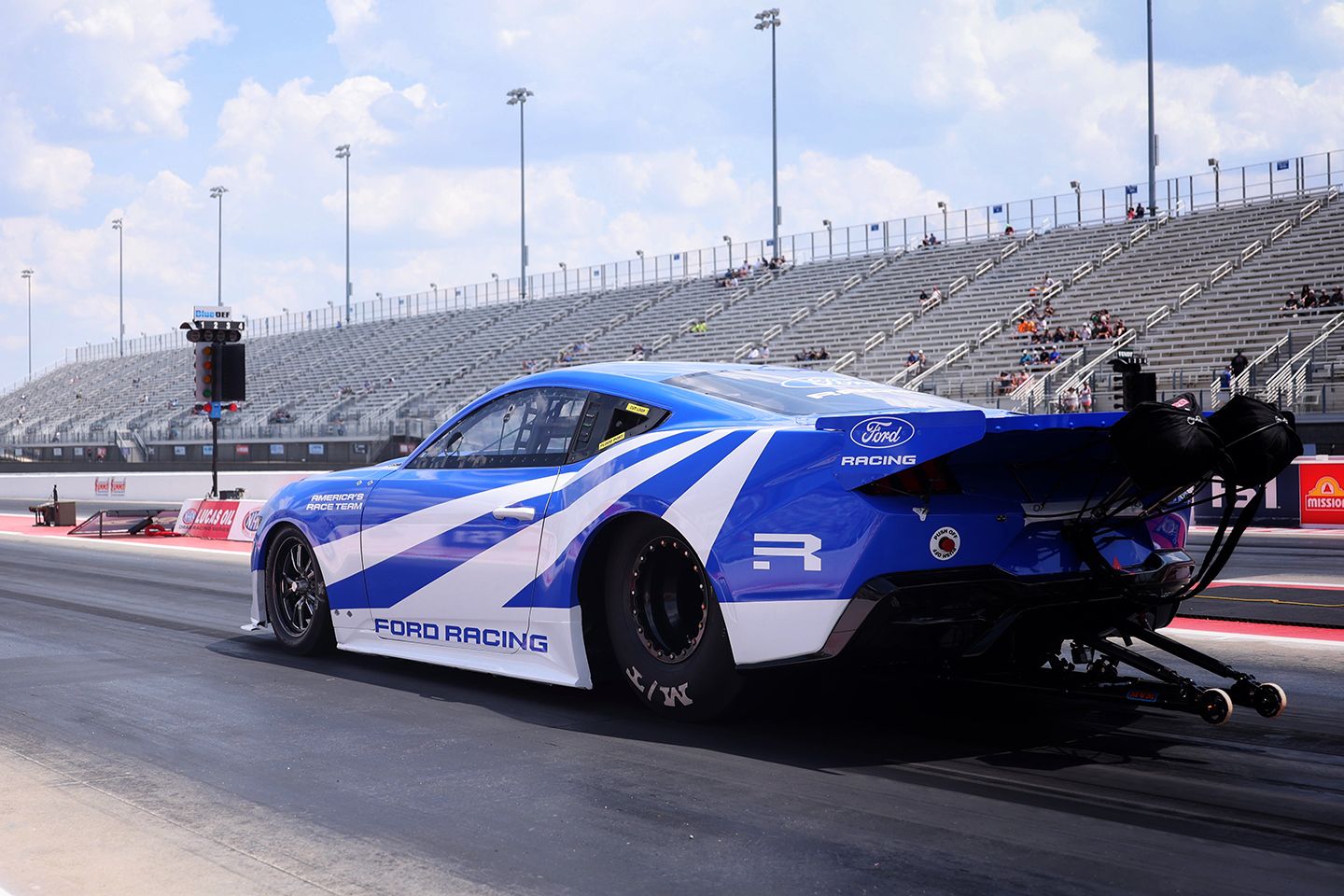
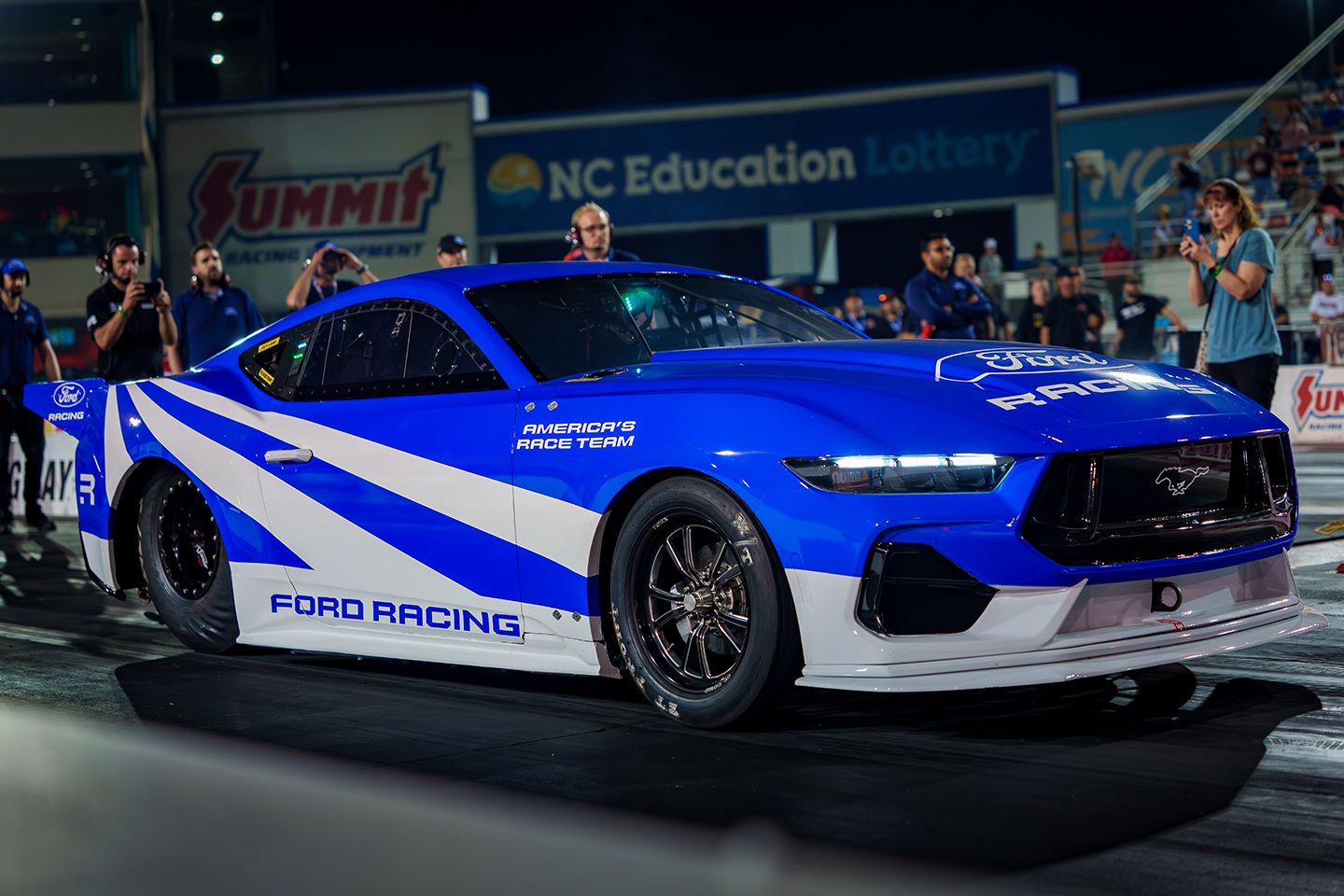
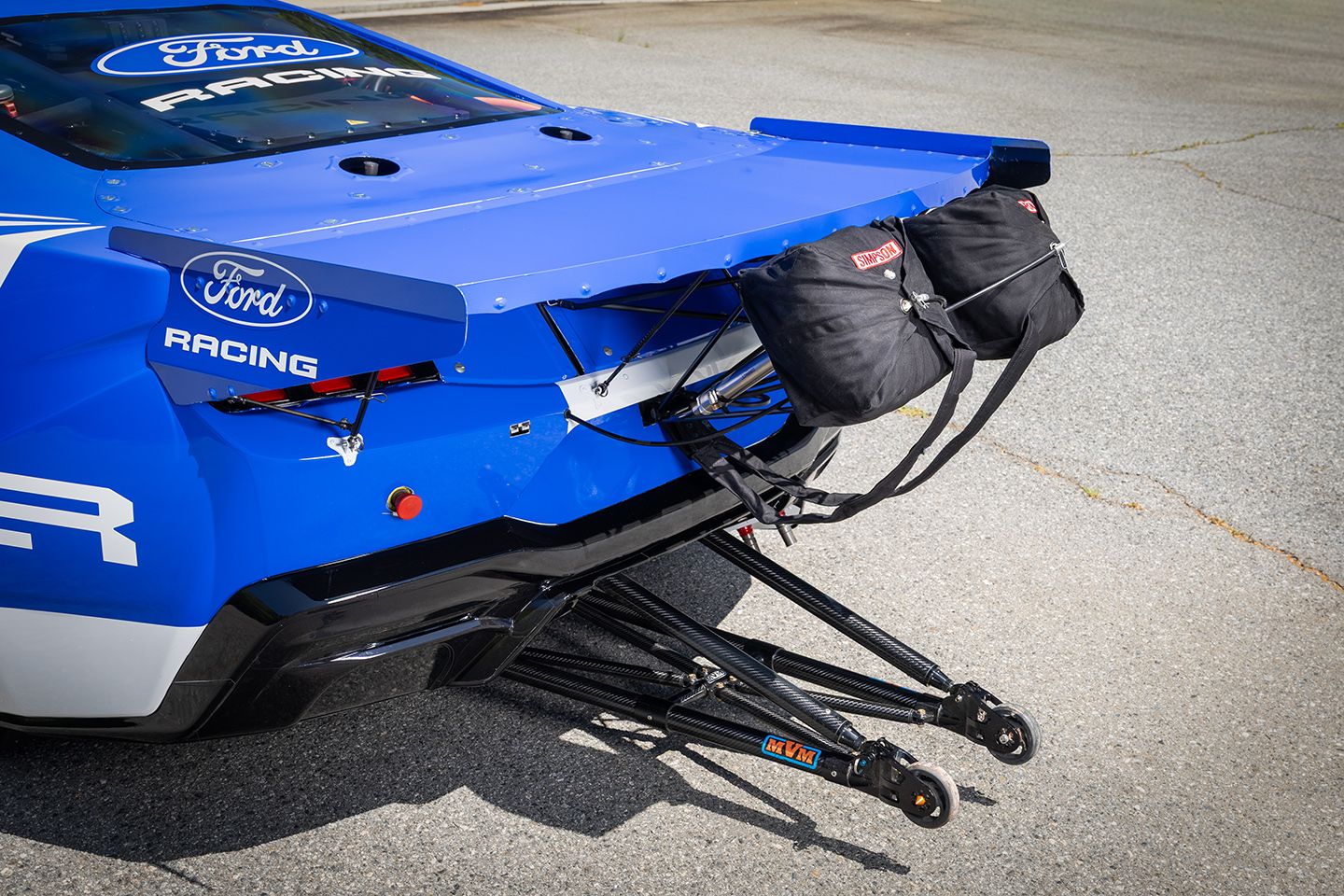
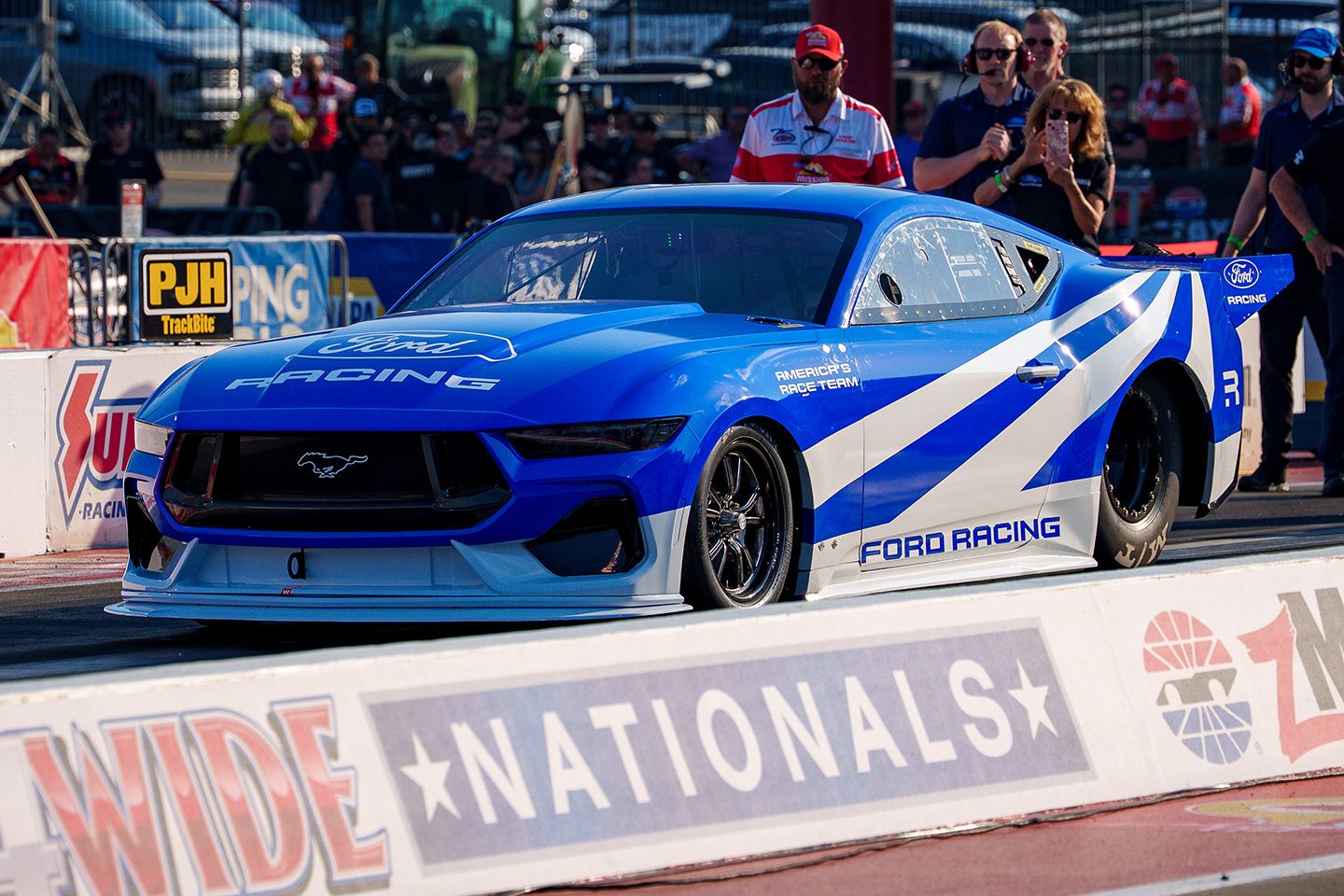
We’re all used to EVs zipping away from the lights briskly by now, but Ford has now raised the bar far beyond expectations. This new Mustang Cobra Jet 2200, an evolution of previous battery powered Mustang quarter mile stars - see the 1800 and 1400 - and claimed to be the fastest electric car over 1,320 feet on the planet. The time? A low ET of 6.76 seconds, and a top speed of 222mph. In the quarter mile. Even with series production machines getting faster and faster, that’s an astonishing time for something that still looks a bit like a car (and not a top fuel machine). It’s been achieved through the old fashioned dream team of performance improvement - more power and less weight - and is said to represent ‘proof of concept, real-world learning, and a clearer understanding of what the future of performance can look like at Ford Racing.’
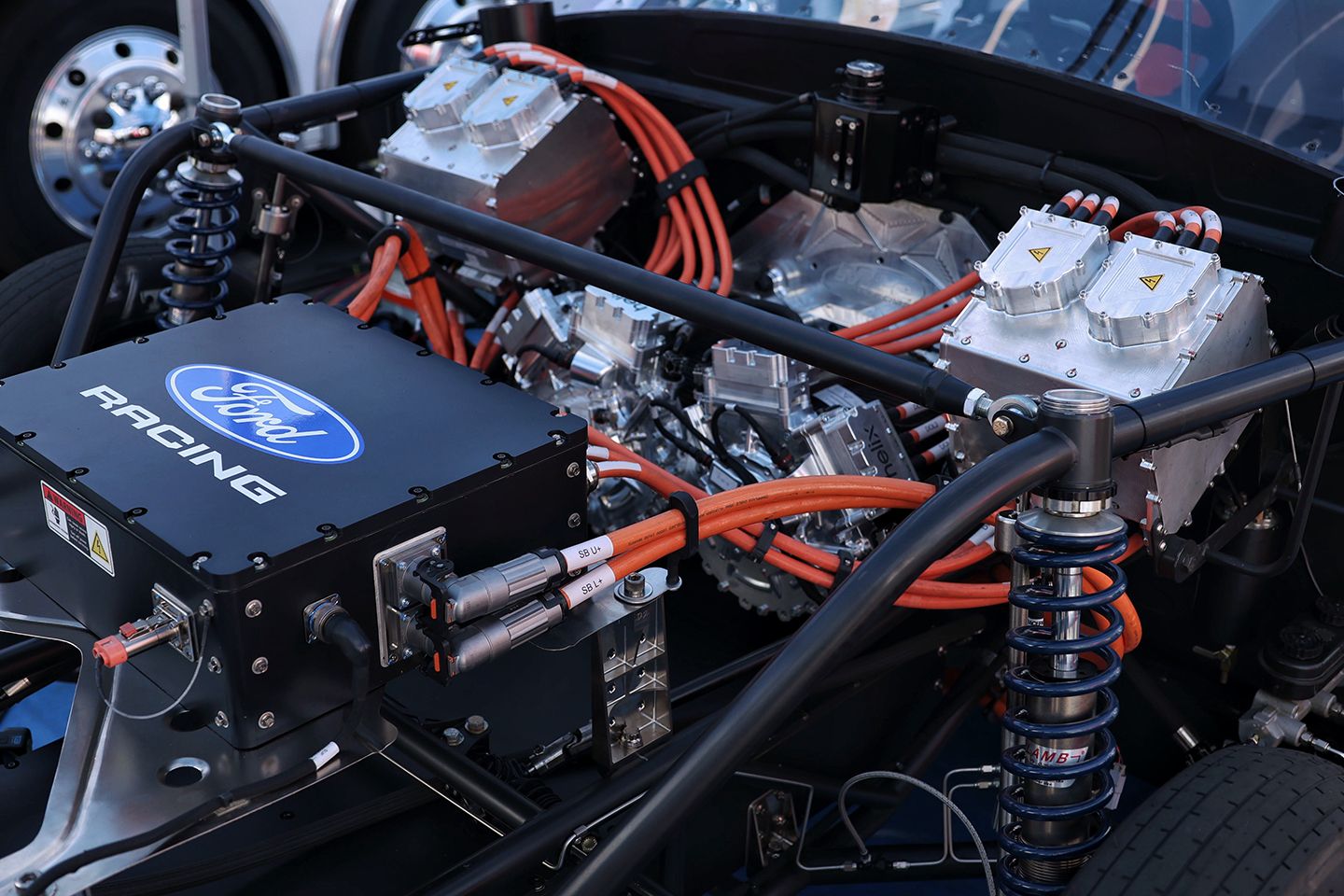
As is becoming Cobra Jet tradition, there’s another 400hp for this one over the last one. That’s how fast EV tech continues to move. But the biggest achievement, reckons Ford, is not making 2,200hp and 1,340lb ft, it’s getting all that down to the strip with as little waste as possible. So this CJ gets a Reverse Acting Centrifugal Clutch with a 5-speed clutchless transmission; this means the Mustang launches from the lights in direct direct drive then slips during shifts to get maximum torque at the wheel throughout and ‘keep the car controlled as the run develops’. Certainly the run itself - you can watch it on Instagram - is remarkably undramatic for a 2,200hp car that even Dom Toretto’s Charger couldn’t keep up with.
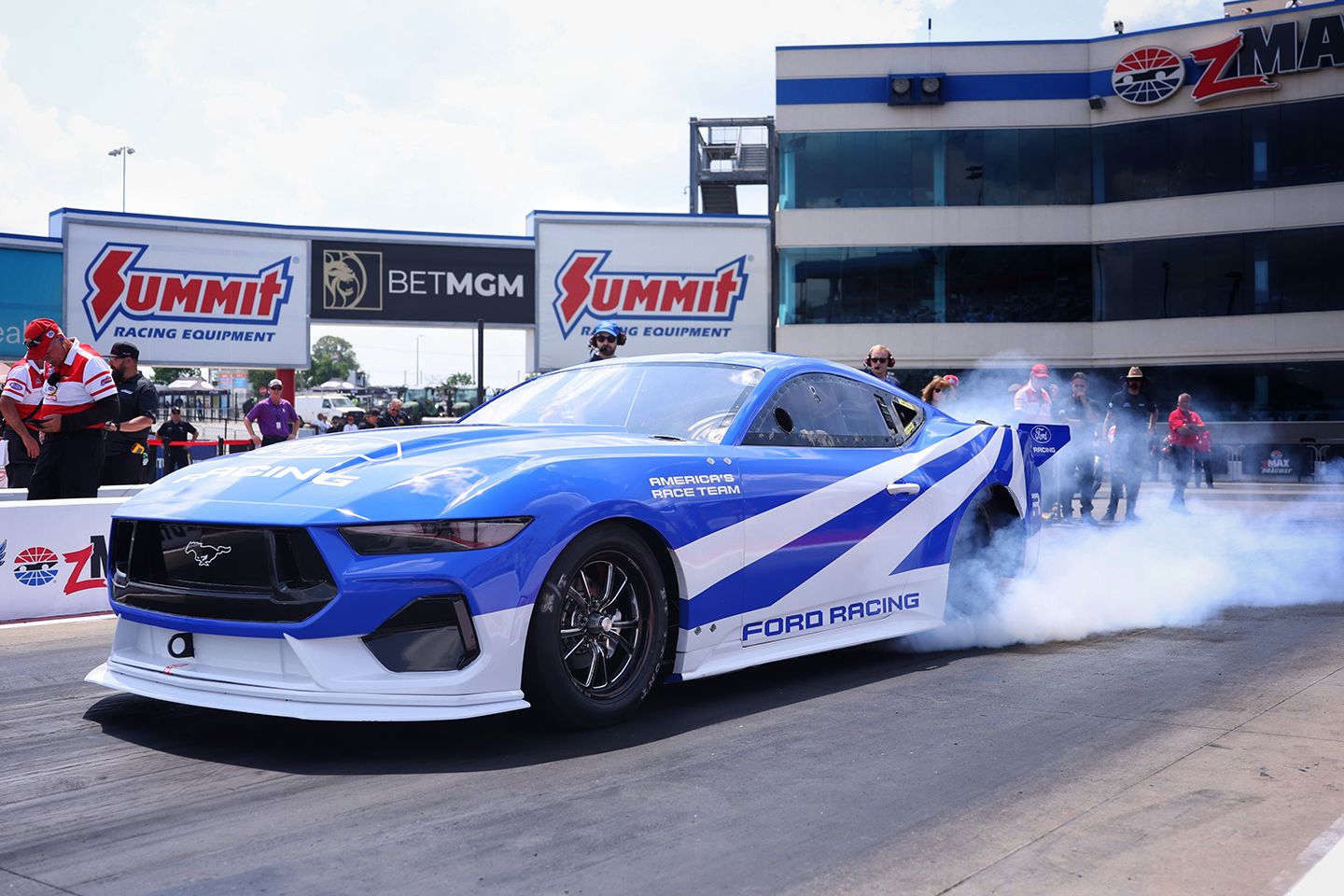
Furthermore, this Cobra Jet is a huge amount lighter than others made in this decade. Great for drag racing, but also with applicability in the real world (you’d hope), with weight still such a huge limiting factor when it comes to EV efficiency. So while saving nine kilos just in the paint wrap alone is cool, the real gains come from having ‘world-class’ power density from the motors and a carbon body. All of which means this is more than 400kg lighter than the Cobra Jet we saw in 2023, which itself was more than 450kg lighter than the Cobra Jet 1400. So that’s a literal tonne of weightsaving (or as near as makes no difference) in just six years of drag car development - impressive. But what on earth did that 2020 car weigh?
So although nobody is expecting a Demon 170-style Mustang available to buyers anytime soon - not least as SRT EVs are tanking - the Cobra Jet does demonstrate a step in the right direction for electric performance. Nick Kuhajda, Ford Racing’s Engineering Manager for EV Demonstrators, said: “This is the result of pushing for maximum output, reduced mass, and greater efficiency at the same time. Cobra Jet 2200 represents a major step forward in how much performance can be extracted from an EV package purpose-built for this environment.. Probably more efficient than ever, too. Wonder if it can be plugged into an Ionity?
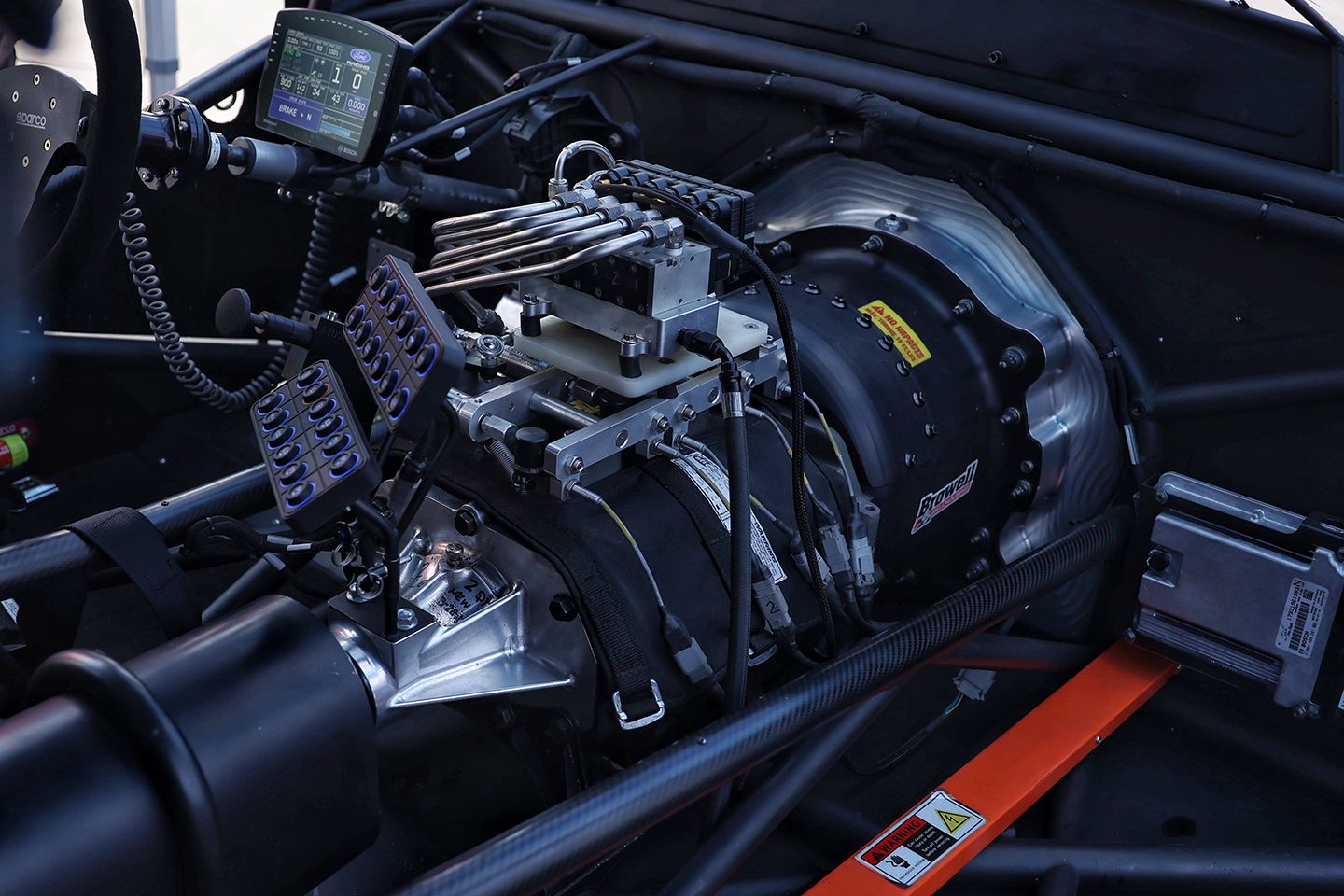


It having a normal (in terms of drag cars) gearbox is at odds with most EVs but dragsters are just different to anything else.
Did see something about "supercapacitors" maybe being the next step for electric drag cars.
It having a normal (in terms of drag cars) gearbox is at odds with most EVs but dragsters are just different to anything else.
Did see something about "supercapacitors" maybe being the next step for electric drag cars.
Modern Li-ion battery: ~250 Wh/kg
Hybrid/ultracapacitors: ~40–50 Wh/kg (best current commercial units)
Traditional supercapacitors: ~5–10 Wh/kg
they would weigh about 10x as much and need perhaps 15x as much space as the batteries. Solid state is probably the step forward they need.
It having a normal (in terms of drag cars) gearbox is at odds with most EVs but dragsters are just different to anything else.
Did see something about "supercapacitors" maybe being the next step for electric drag cars.
Modern Li-ion battery: ~250 Wh/kg
Hybrid/ultracapacitors: ~40 50 Wh/kg (best current commercial units)
Traditional supercapacitors: ~5 10 Wh/kg
they would weigh about 10x as much and need perhaps 15x as much space as the batteries. Solid state is probably the step forward they need.
I think ICE dragsters haven left much on the table as they have had so much development, countless millions of runs to hone and refine the formula, but, you can’t rule out electricity so easily.
Things don’t add up at the moment but there is so much going on, I wouldnt bet against drag records falling over time, nobody was running 4 and a bit seconds in the sixties either.
It’s like no cars get much of a shot at the TT course, I suspect nowadays with some development the bike reprints at risk, however much it upsets bikers.
It having a normal (in terms of drag cars) gearbox is at odds with most EVs but dragsters are just different to anything else.
Did see something about "supercapacitors" maybe being the next step for electric drag cars.
Modern Li-ion battery: ~250 Wh/kg
Hybrid/ultracapacitors: ~40 50 Wh/kg (best current commercial units)
Traditional supercapacitors: ~5 10 Wh/kg
they would weigh about 10x as much and need perhaps 15x as much space as the batteries. Solid state is probably the step forward they need.
It having a normal (in terms of drag cars) gearbox is at odds with most EVs but dragsters are just different to anything else.
Did see something about "supercapacitors" maybe being the next step for electric drag cars.
Modern Li-ion battery: ~250 Wh/kg
Hybrid/ultracapacitors: ~40 50 Wh/kg (best current commercial units)
Traditional supercapacitors: ~5 10 Wh/kg
they would weigh about 10x as much and need perhaps 15x as much space as the batteries. Solid state is probably the step forward they need.
I think ICE dragsters haven left much on the table as they have had so much development, countless millions of runs to hone and refine the formula, but, you can t rule out electricity so easily.
Things don t add up at the moment but there is so much going on, I wouldnt bet against drag records falling over time, nobody was running 4 and a bit seconds in the sixties either.
It s like no cars get much of a shot at the TT course, I suspect nowadays with some development the bike reprints at risk, however much it upsets bikers.
I wonder what the actual range is on it?
Most 6 second ICE drag cars can't even drive on the road without modifications. There are drag and drive cars that go this fast and drive on the road, but they're swapping fuel systems and wheels and all sorts for road driving to do it.
If you want to play that game. i'm sure ford could add a mode to this that limits power to like 200bhp or something and then just swap the wheels for low drag road tyres and you could get hundreds of miles out of it.
Gassing Station | General Gassing | Top of Page | What's New | My Stuff