
Triumph Stag | The Brave Pill
The true origin of "sixty per cent of the time, it works every time?"
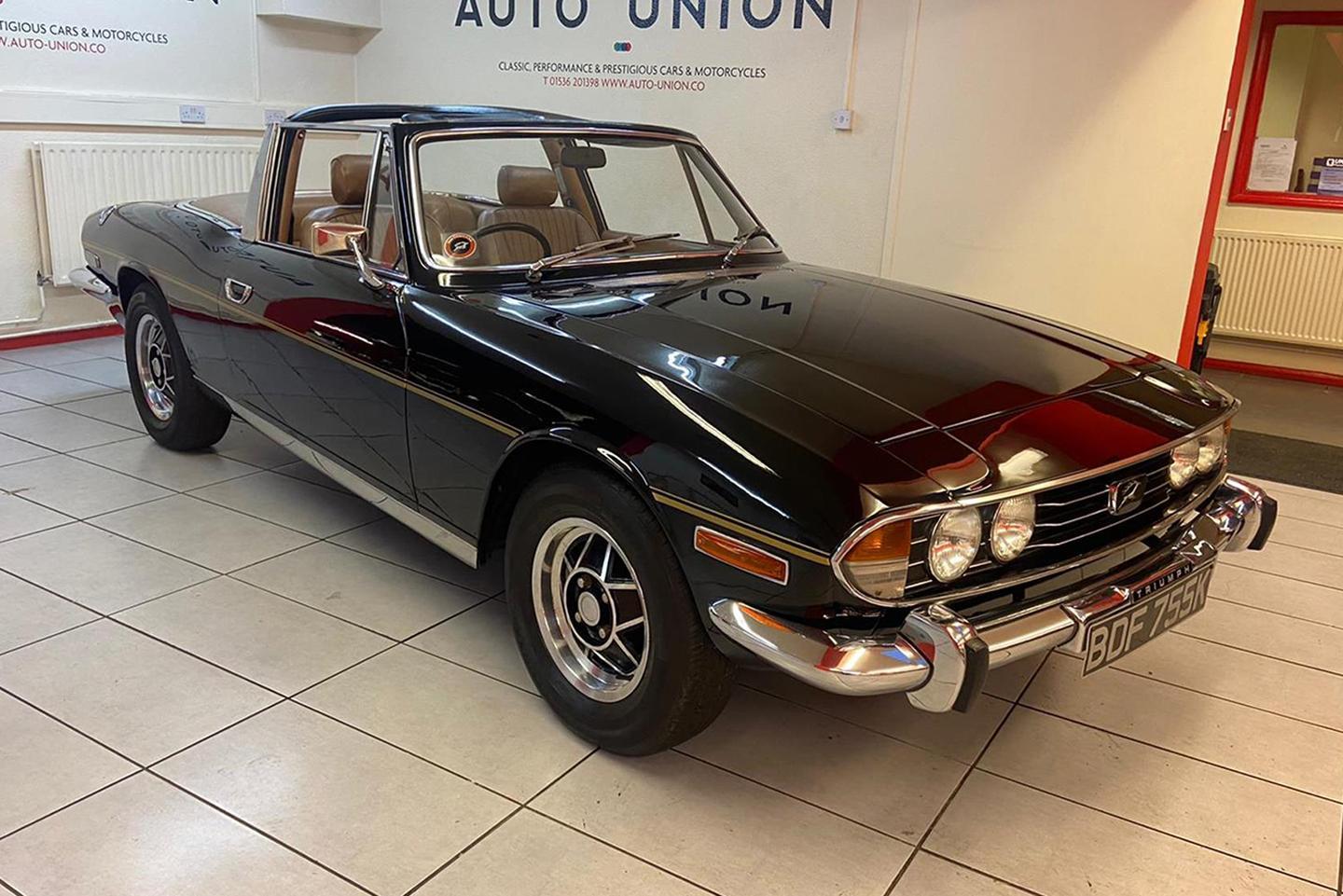
After last week’s excursion into the future with a Tesla Model S - a choice which set a new record for number of comments - Pill is heading back to the reassuring familiarity of a V8 engine and questionable reliability. Plus, as you’ll notice, legitimate use of silver on black numberplates.
The Tesla came from Pill’s future, but this 1972 Triumph Stag is definitely the Spirit of Pill Past. It’s our oldest offering since the V8 engined E-Type that ran last July, and – like the Frankenjag – one that puts ticks next to the boxes for classicality, value and, most importantly, mechanical risk.
It seems unlikely that the story of British Leyland will ever be turned into a television drama, but the saga has the ingredients to support multiple seasons. Like ‘The Crown’ there are numerous dramatic hooks that individual episodes could be built around – the strange decision to hold the dealer launch for the all-important Austin Metro with a cruise to the Isle of Man over a storm-wracked Irish Sea could make a memorable one. But the overall narrative arc would undoubtedly be of things going steadily downhill, and of defeats being snatched from the jaws of victory.

One of the greatest of these near misses is the story of the Triumph Stag. This stylish open-topped four-seater should have had the world at its feet when it launched in 1970 – a handsome, affordable, V8-powered GT. Yet it died just seven years later having acquired a reputation for mechanical maladies that stood out even by the low standards of the era, and being widely adjudged to be an abject failure. A true case of tragedy over Triumph.
Like many interesting cars, the Stag began as an unofficial project. Italian designer Giovanni Michelotti had been styling Triumphs since the 1950s, between working for his homeland’s poshest coachbuilders. In 1964 he asked Triumph if they would give him an example of the freshly launched 2000 saloon he could turn into a one-off motorshow concept to demonstrate his talents. Triumph boss Harry Webster agreed, but demanded first refusal on whatever Michelotti came up with.
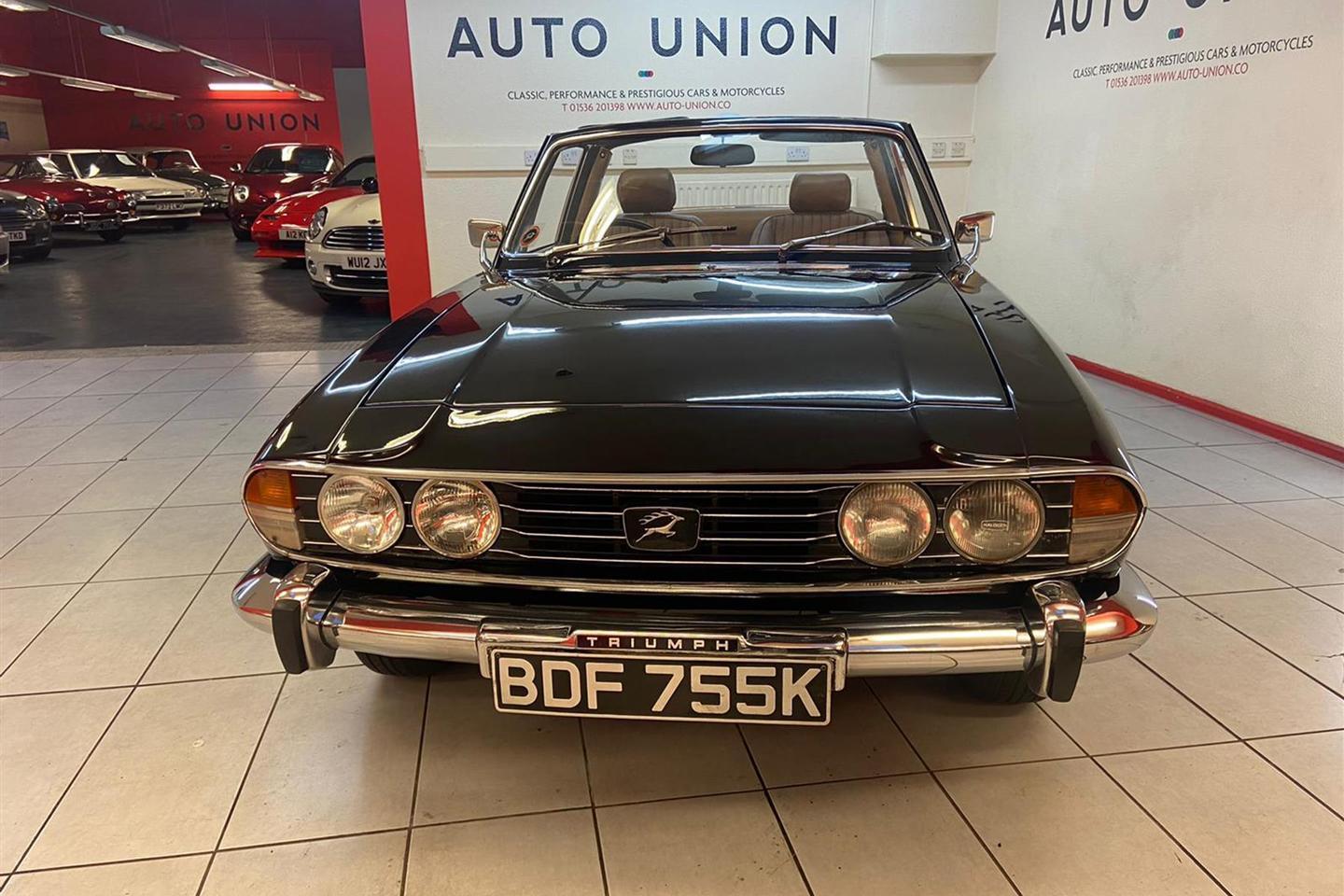
His vision turned out to be a stylish convertible sitting on a shorter wheelbase and with a new front end that sat quad headlamps within an extended radiator grille. It looked great, and as affordable four-seat drop-tops were rare at the time Triumph immediately exercised its right to take it on, thereby denying its designer the chance to show it publicly, with development work starting in 1966.
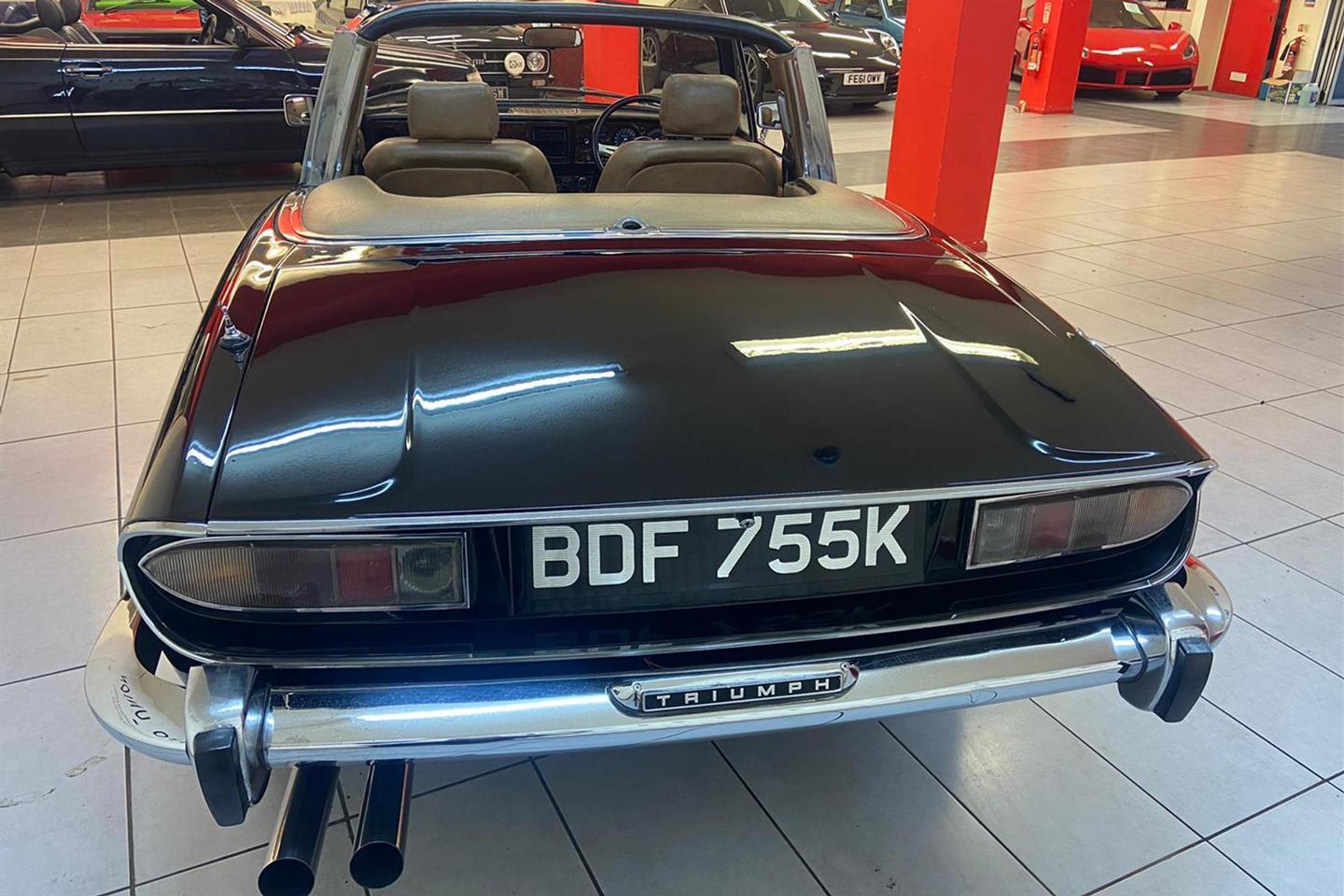
The leisurely pace at which the motor industry worked in those days meant it took another four years to bring it to market, and some fairly major changes. The most obvious of these was the fitment of an integral T-bar that connected the B-pillars and the windscreen rail. This was both to meet what was held to be ultra-tough rollover protection requirements in the ‘States, but also because without it the decapitated bodyshell had all the structural rigidity of a Boris Johnson promise.
The question of motive power was also a tricky one. Triumph was known for advanced engines at the time, and the original idea was to launch the Stag with the company’s well-proven straight six before substituting this for an all-new V8. Work on this fresh engine had already started when Leyland absorbed Rover in 1967, throwing up an immediate cost-saving opportunity to switch to the 3.5-litre ‘Buick’ V8 that Rover was already making.
Yet that was too obvious, especially given the politics and rivalry at the top of the newly formed group. Triumph engineers were keen to back their home team, and successfully argued development on their more advanced V8 was too far advanced to be stopped. The plan to make a six-cylinder Stag was also dropped at around the same time, meaning the new car would launch with an all-new engine.
If the finished V8 had proved to be a mechanical masterpiece this confidence would have been justified. But it’s wasn’t. The overhead cam engine was impressively light and sounded great. But although its output of 145hp was entirely respectable, and a higher per-litre output than the Rover V8, it wasn’t enough to make the Stag truly rapid. Even in 1970 a 10.7-second 0-60mph time was more cruiser than bruiser, and early press reaction was lukewarm.
But performance wasn’t the big issue – rather reliability was. Early Stag owners were soon encountering engine problems that were unusual even by BL’s less than stellar standards, with timing chain and head gasket failures, warping cylinder heads and catastrophic water pump check outs. Many issues were due to the engine’s still novel combination of an iron block and alloy cylinder heads, requiring antifreeze with a corrosion inhibitor. Owners and even some Triumph garages were unaware of this, leading to gunked up coolant passages and overheating problems. But there were also unarguable design faults – including the need to replace the delicate timing chains every 30,000 miles.
As the Stag aged into classicdom so these problems acquired the ball-and-chain status of ‘when’ rather than ‘if’. By the early nineties it wasn’t uncommon to find Stags receiving powerplant transplants – often, ironically, with Rover V8s – with these re-engined versions even being sold for a premium compared to original cars. Tougher parts and more understanding owners have solved many of the infamous issues, but there is still an undeniable frisson of risk to a Stag. Well inside the 21st century I arranged to borrow one from a dealer for a classic mag feature only to be called the day before the photoshoot: “you’re not going to be believe this, but the head gasket has just gone.”
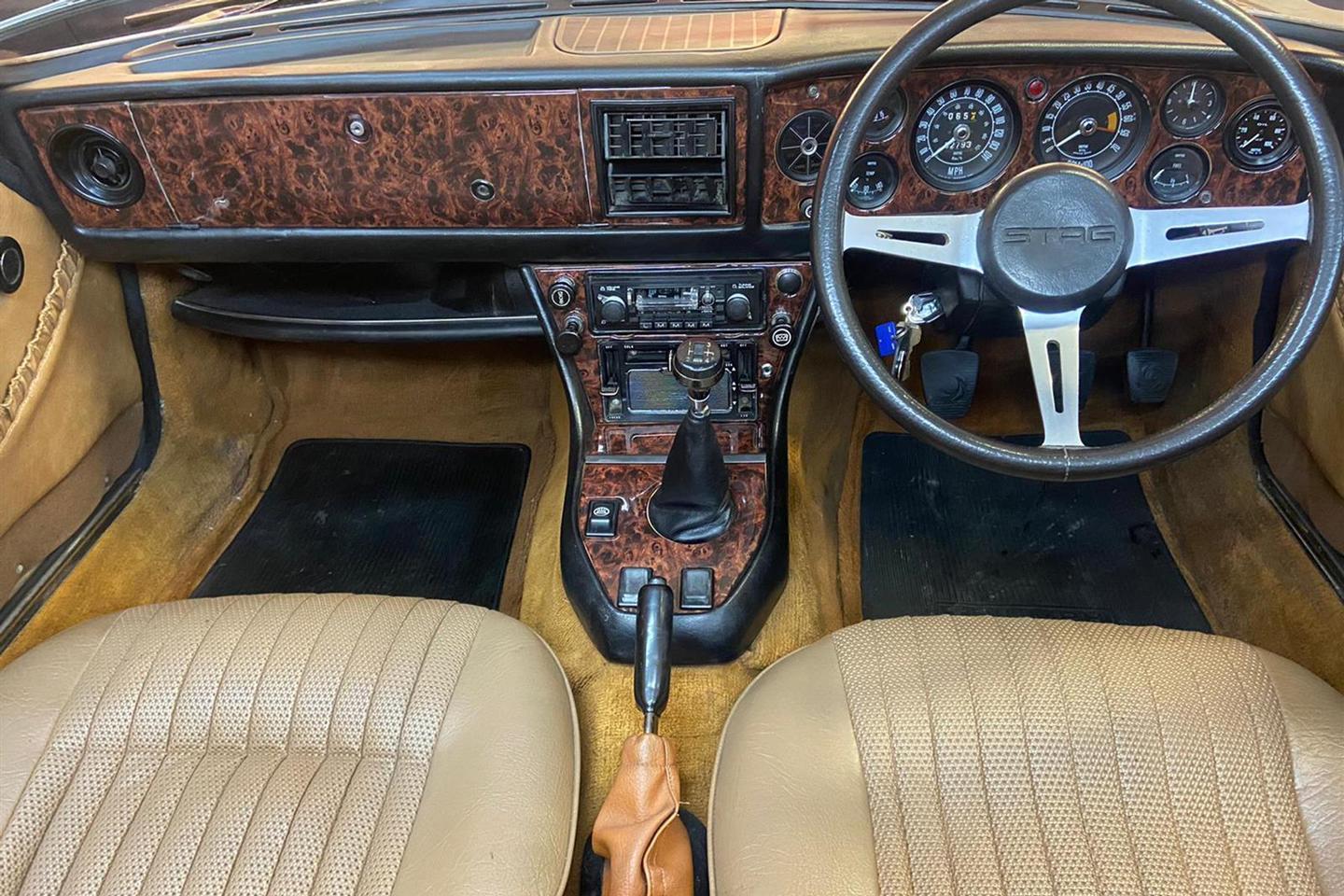
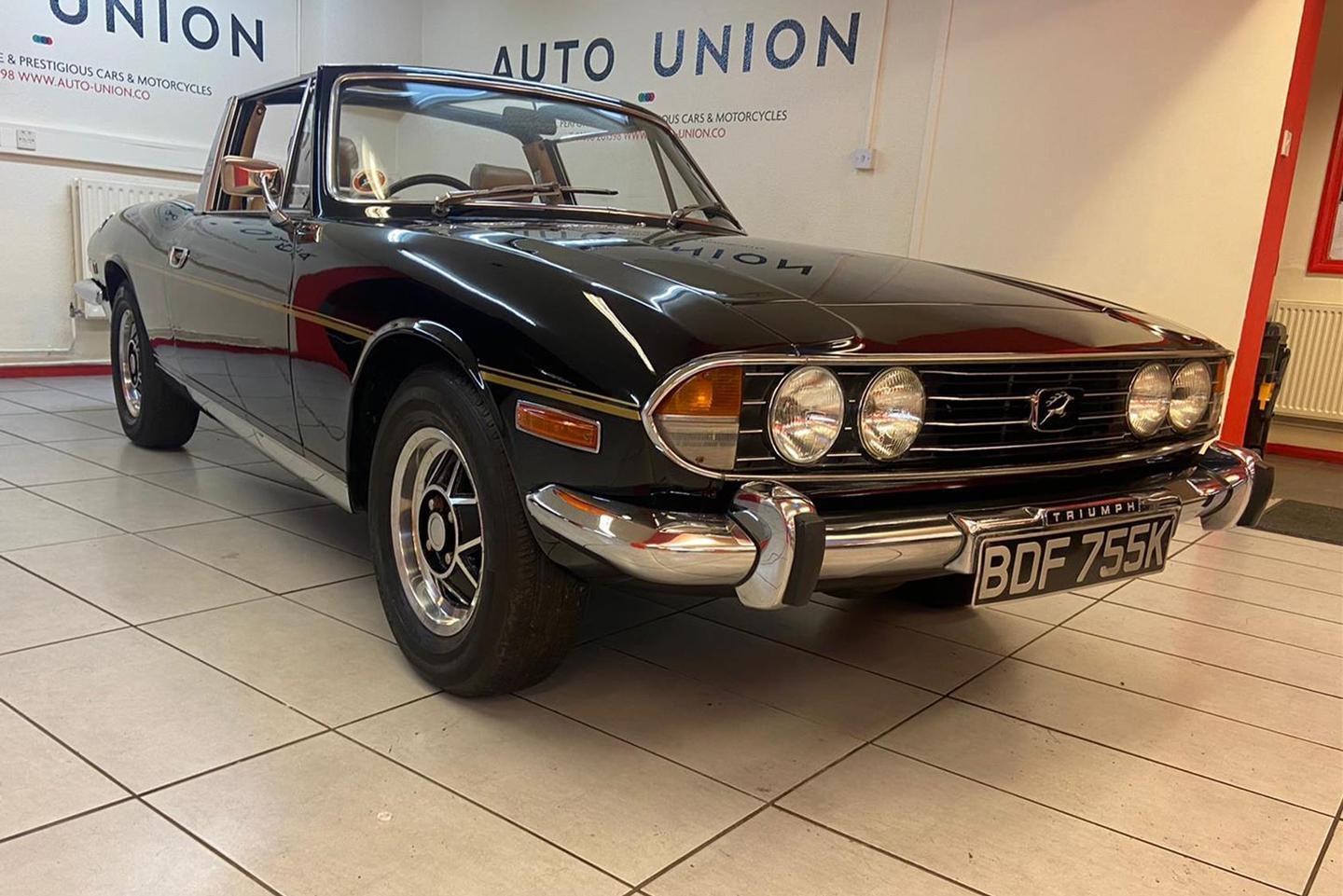
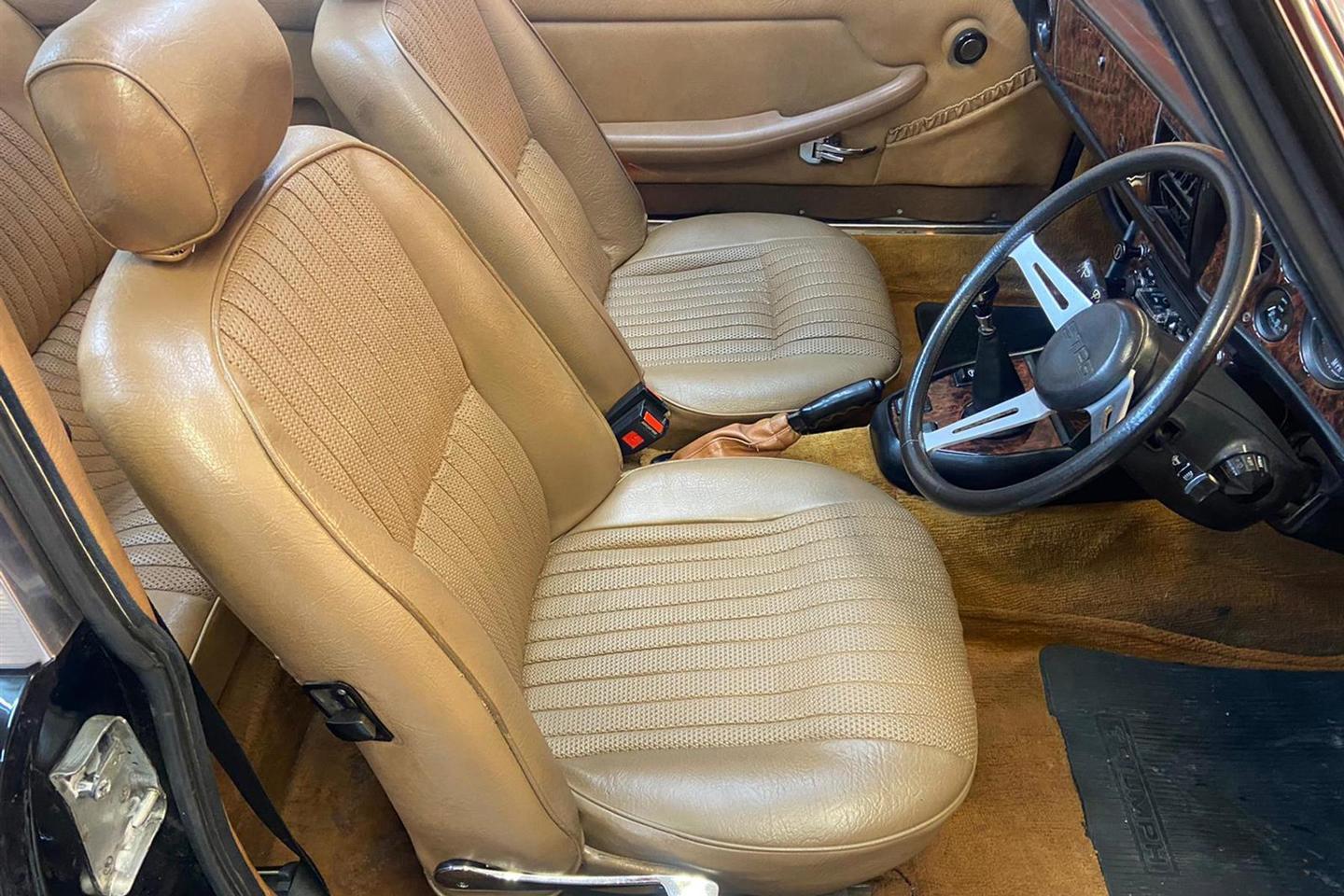
Our Pill is an attractive 1972 ‘mk1’ being sold for what looks like a very fair price compared to the wider market given the imminent arrival of warmer weather. In place of the very slushy three-speed auto that many buyers selected it has a four speed manual gearbox with the neat option of switchable overdrive through a toggle on top of the gearstick. It also comes with what would have been very generous spec by the standards of the early seventies, including electric windows, power steering and what looks on this example to be a period appropriate radio-cassette. The dashboard also contains near equal volumes of walnut wood and instrument dials. It’s as seventies as the Bee Gees breaking into the Watergate hotel on space hoppers.
Although our Pill has covered 132,800 miles from new it is smart enough to belie the fact the five-figure odometer is on its second trip around. Recent use has been very sparing. According to the MOT history the car has done just 50 miles since April 2016, and under 6,000 since 2006. There was a big fail back in 2011 for excessive corrosion and the more perplexing issue of “offside front vehicle structure has a modification which adversely affects braking or steering.” Rust is hardly unknown to BL products of the era, but it seems to have been properly sorted; the only red on the record since then is for an ineffective handbrake in 2015. Our Pill is old enough to be exempt from vehicle tax, future MOTs and even London ULEZ payments.
The Stag sold poorly in period, fewer than 26,000 being built for all markets in seven years. Yet survival rates are remarkably high, certainly in the UK. Nearly 8,000 are still on the roads, making it one of the most popular seventies classics, with a thriving owners’ scene and comprehensive aftermarket support. Meaning that it is undoubtedly less risky to own one now than it would have been when the car was new. This is certainly a remarkably tasteful way to experience the decade that taste allegedly forgot.
Click here for the original ad


 king Stag!’
There was me thinking a classic couldn’t possibly be a brave pill, they’re mechanically simple and just need some spannering and the occasional welding up...
There was me thinking a classic couldn’t possibly be a brave pill, they’re mechanically simple and just need some spannering and the occasional welding up...
There was me thinking a classic couldn’t possibly be a brave pill, they’re mechanically simple and just need some spannering and the occasional welding up...
Am I the only one expecting something of a renaissance in classics, as the ULEZ and other initiatives become more widespread? Sounds like a car with grandfather rights is just the ticket, for journeys the politicians don’t want you to make.
The performance is fine for the car- it’s a period GT and can beat a MK1 Golf Gti from the peage on a Le Mans trip (which is all that matters !)
The engine sounds wonderful - especially through stainless headers.
Many of the faults, as stated above, were as a result of some workers doing their best to put themselves out of a job. Some engine blocks didn’t have the casting sand washed out and so the waterways clogged leading to overheating - I’d get this one checked out for structural issues etc but with a decent mileage on it I would anticipate the engine is ok.
A design fault meant the water pump was at the top of the engine - hence any fluid loss meant the water pump wasn’t doing anything. Many owners have fitted header tanks to the system to ensure the water level stays above the pump.
The beauty of a classic is the lack of electronic black boxes that can die and either be unobtainable or hugely expensive to replace. Virtually every part of the stag is available. I had mine completely rebuilt a few years ago.

Didn't have head bolts but steel studs threaded into block, at an oblique angle. We had the engine on a sling bolted to each cyl head, one by one and had to hammer the studs down through the head to get a gap between head and block. We could then get a recip saw in to cut them free. FFS
Borrowed it when finished for a weekend away with the girlfriend and it bent a rod!
Every time I see a modern "classic" on the road it's usually followed my a noxious cloud of smoke that reminds me of the 70's, but not in a good way.
Can the owners club arrange a post covid run around Westminster.
Imagine the irony of the gathered Stags (that make it that far) belching out smoke so close to the seat of power....cough, cough.
https://www.stag.org.uk/
That is their appeal
They were designed in a period where there was much more freedom in design
They make a distinctive noise and have to be driven - drive like a @@@@ and you’ll end up in a hedge as there are no electronics to help you out.
I can’t think of many soft tops I don’t like - except, perhaps, a diesel.
Forums | General Gassing | Top of Page | What's New | My Stuff