
BAC plots hydrogen powertrain for Mono
A Mono FCEV? Hopefully that's the sort of future-proofing we can all get onboard with...

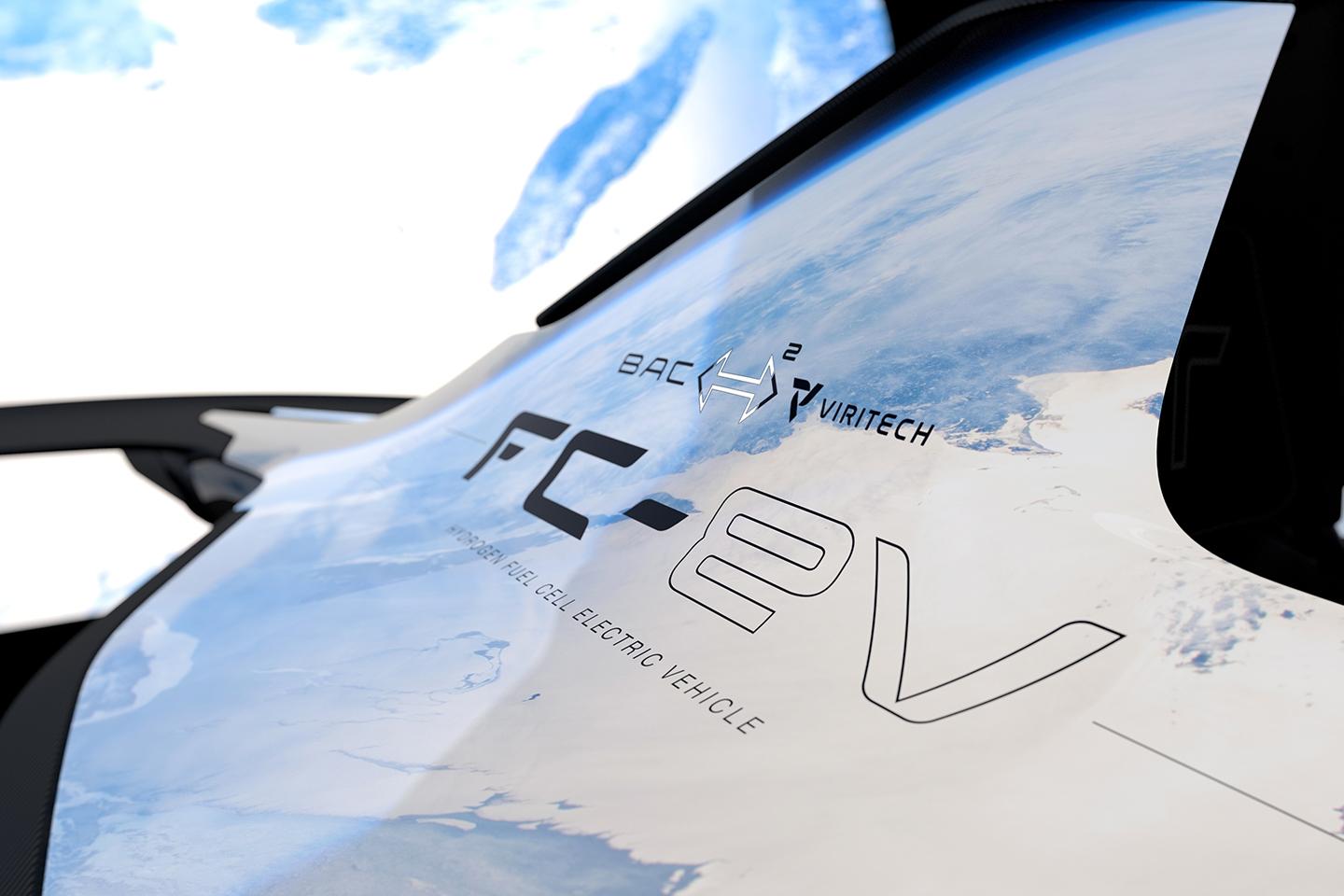
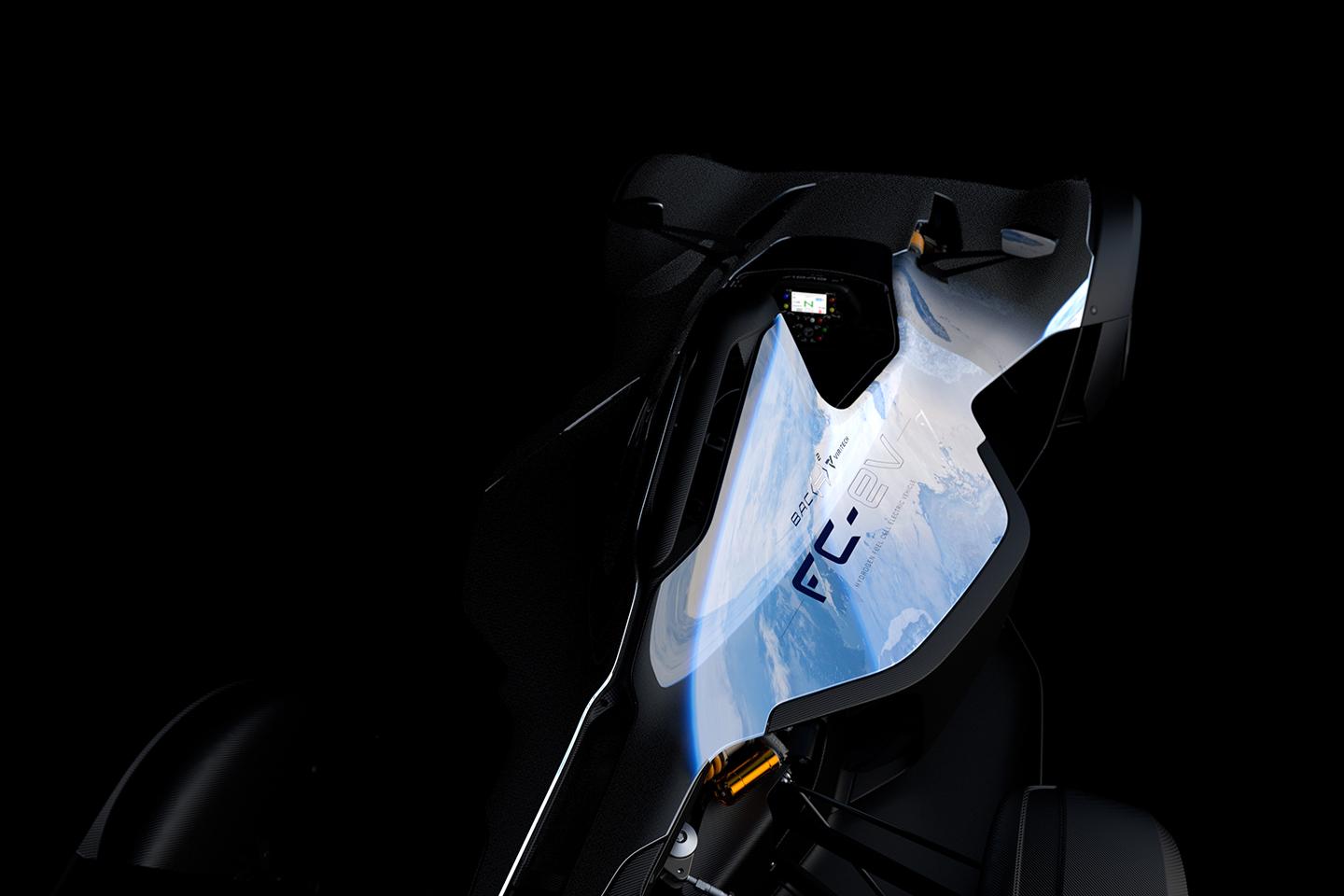
BAC has today confirmed a partnership with hydrogen powertrain engineers Viritech, with the aim of introducing a fuel cell electric vehicle powertrain to the single-seat Mono. The deal has come about thanks to Viritech's successful bid for a Niche Vehicle Network Feasibility Study Grant, funded by the Office for Zero Emission Vehicles. The money will be used to support a study into "developing a hydrogen powertrain for niche vehicle applications." Which, of course, is right up BAC's street, hence the tie-up.
The experimental powertrain will use a Mono as its base. That obviously works nicely for Viritech (because there's no sports car quite so niche as the single-seater one) and benefits BAC also, which plans to be a zero emissions company by 2030. We're told to expect a familiar experience: "The resulting Mono FCEV continues to be led by BAC's principles of uncompromising performance and driver experience", reads the press release.
Quite how a fuel cell powertrain will be incorporated into a 600kg track car which retains the visceral experience of the petrol-powered version isn't quite clear yet, but then that's what the study is designed to establish. A heavy Mono wouldn't really be a Mono. Neither would a quiet one, come to think of it.
Neill Briggs, BAC Co-Founder and Director of Product Development, said: "We are delighted to be working with Viritech and their ground-breaking approach to FCEV. Technology has always been at the forefront of our development, and we remain committed to exploring new automotive innovations within all that we do. Alternative fuels, along with lightweight construction methods, reduces vehicle emissions considerably without compromising driver engagement, something we are committed to preserving at BAC."
Certainly it's interesting times ahead for the lightweight British sports car industry. Alongside the hydrogen BAC project is Elemental's battery powered RP1; Lotus won't make a combustion-engined car after the Emira and Caterham - having just dropped a couple of Ford-engined models from its range - can't have many years left with natural aspiration.
Obviously some of that is regrettable - but the UK doesn't have a reputation as the home of innovative, lightweight sports cars for no reason. If anywhere is going to make a fair fist of low-emission fun on four wheels, it's right here. On the other hand, if the very notion of a fuel cell Mono seems like sacrilege to you, here's one for sale - it has a 2.5-litre Duratec, makes 309hp at 8,000rpm, and revs to 9,000rpm. Just don't expect it to be less than £160k any time soon...


FCEV means hydrogen tank, fuel cell and associated air pump and some sort of energy buffer, along with power electronics and electric motors.
The energy buffer needs to provide the instantaneous power to accelerate the car. You'd assume that they will also be looking to have a regen function. So the buffer will need to be sized appropriately to give the desired performance.
I've used the term energy buffer so as not to trigger anyone with the evil 'b' word.
So this is a 'silent' hybrid electric vehicle with an onboard generator.
Where is the excitement coming from?
It can only be the performance, stemming from a decent power to weight ratio.
That is going be determined by the power rating of the energy buffer, power electronics and motors.
So they will be adding weight and cost to save weight and cost and asking you to recharge from a specialised nozzle located at thinly distributed locations rather than a ubiquitous socket available on literally every corner.
What do we think is the net reduction on weight for all this extra hassle?
It's an early step in a new application of a technology. If the proof of concept works and bigger companies with immeasurably larger budgets start to develop it further, then the technology could really start to get some legs.
Audi used a similar system at the Dakar this year and despite being 150kg heavier than other cars in their class, were still supposed to be very quick. It might not generate the pleasant sound of an ICE, but an on board generator, battery and electric motors seems to have the potential to deliver performance and address range concerns.
There are three paths they can take:
1. Hydrogen ICE without regen
2. Hydrogen fuel cell with regen
3. Pure EV with regen
Path 2 seems to me to combine the worst aspects of 1&3, particularly for a lightweight visceral car.
There are three paths they can take:
1. Hydrogen ICE without regen
2. Hydrogen fuel cell with regen
3. Pure EV with regen
Path 2 seems to me to combine the worst aspects of 1&3, particularly for a lightweight visceral car.
There are three paths they can take:
1. Hydrogen ICE without regen
2. Hydrogen fuel cell with regen
3. Pure EV with regen
Path 2 seems to me to combine the worst aspects of 1&3, particularly for a lightweight visceral car.
Option 2 is the path they have chosen.
My OP was asking, why option 2 vs option 3?
I don't think even Toyota are going down path 2 for lightweight sports/track cars.
Option 2 is the path they have chosen.
My OP was asking, why option 2 vs option 3?
I don't think even Toyota are going down path 2 for lightweight sports/track cars.
There is a high probability that in 13 years time technology will be available to make option 3 both the lowest weight, most recyclable and by far the most efficient without any dependency on a currently non-existent fuel network.
Whilst pure EV currently has a high CO2 footprint to produce, so does the production and installation of a non-existent fuel network AND the non-existent extra electric generating capacity needed to power it. I'm confident that a system-level CO2 comparison is going to show that green hydrogen has a massive upfront CO2 footprint that will never pay itself back. The reason being that medium-term, EVs will have a high content of energy sourced from electricity in their production phase. So if we can make the usage phase almost entirely renewable, then the same applies to the production phase, and therefore lifecycle CO2 for future EVs will drop significantly.
Then there's recyclability. Onboard storage of hydrogen relies on specialised non-recyclable tanks. Whilst there are alternative hydrogen storage options being developed, these have yet to demonstrate that they are scalable for vehicle use. In all likelihood the hydrogen tanks will be a throwaway item, and we would need to forever produce new ones.
The risk for option 2 is that the next generation of EV will have a 'storage device' that has an energy density and manufacturing footprint that kills green hydrogen stone dead for passenger cars.
Maybe the pure EV version is also in the works, quietly in the background.

You could install the most powerful fuel cell you want, but want you can't do is ramp it up from zero to full power instantly.
This is why the buffer is needed (along with the need for somewhere to send the regen energy).
The amount of power available when you need it is almost entirely dependent on the size of the buffer, not the fuel cell.
All the fuel cell does is top up the buffer in the background.
That's the conundrum.
Batteries (sorry, energy storage devices) can only deliver lots of power if they have a high storage capacity.
So why do you need a fuel cell to top up the battery if the storage capacity is high?
The whole fuel cell and hydrogen gubbins becomes redundant.
Maybe they plan to use super-capacitors.
Regardless, trying to combine fuel cells with high performance cars shows that the are fundamentally incompatible without a f
 k-off sized battery.
High performance is bread and butter for high capacity BEVs.
I will be interested to see how it plays out, and I'll concede that there might be some clever technical solutions to get the power out of the fuel cell and to the road quickly, but I'm not holding my breath.
You could install the most powerful fuel cell you want, but want you can't do is ramp it up from zero to full power instantly.
This is why the buffer is needed (along with the need for somewhere to send the regen energy).
The amount of power available when you need it is almost entirely dependent on the size of the buffer, not the fuel cell.
All the fuel cell does is top up the buffer in the background.
That's the conundrum.
Batteries (sorry, energy storage devices) can only deliver lots of power if they have a high storage capacity.
So why do you need a fuel cell to top up the battery if the storage capacity is high?
The whole fuel cell and hydrogen gubbins becomes redundant.
Maybe they plan to use super-capacitors.
Regardless, trying to combine fuel cells with high performance cars shows that the are fundamentally incompatible without a f
k-off sized battery.High performance is bread and butter for high capacity BEVs.
I will be interested to see how it plays out, and I'll concede that there might be some clever technical solutions to get the power out of the fuel cell and to the road quickly, but I'm not holding my breath.
Fuel cells are also getting way smaller in physical size with no turbine, humidifier etc. on lots of designs and way more rapid response times than a few years ago where people were stuffing what were essentially static power generators into moving vehicles.
As a feasibility study this makes a lot of sense because if you can make it work in this then you can make it work in anything.
Perfect, i'll take two please :-)
You could install the most powerful fuel cell you want, but want you can't do is ramp it up from zero to full power instantly.
This is why the buffer is needed (along with the need for somewhere to send the regen energy).
The amount of power available when you need it is almost entirely dependent on the size of the buffer, not the fuel cell.
All the fuel cell does is top up the buffer in the background.
That's the conundrum.
Batteries (sorry, energy storage devices) can only deliver lots of power if they have a high storage capacity.
So why do you need a fuel cell to top up the battery if the storage capacity is high?
The whole fuel cell and hydrogen gubbins becomes redundant.
Maybe they plan to use super-capacitors.
Regardless, trying to combine fuel cells with high performance cars shows that the are fundamentally incompatible without a f
k-off sized battery.High performance is bread and butter for high capacity BEVs.
I will be interested to see how it plays out, and I'll concede that there might be some clever technical solutions to get the power out of the fuel cell and to the road quickly, but I'm not holding my breath.
Fuel cells are also getting way smaller in physical size with no turbine, humidifier etc. on lots of designs and way more rapid response times than a few years ago where people were stuffing what were essentially static power generators into moving vehicles.
As a feasibility study this makes a lot of sense because if you can make it work in this then you can make it work in anything.
The BAC has a high enough list price in its favour so they can afford to pursue the best technical solutions for each of the system components.
As I mentioned earlier, the real risk for them is progress on energy density rather than power density making the 'hybrid' elements redundant.
Will we also see improvements in H2 storage technology? If not, this might be what ultimately holds them back.
I remember a thread about a similar car that was proposing to integrate the carbon tanks into the chassis.
To me that throws up a whole raft of FMEA issues, especially around crash performance and vehicle longevity.
BAC get some column inches and press exposure, get to be seen to be embracing the "future tech and green solutions" bandwagon, get their engineers salaries paid for a while, have a lot of fun trying stuff, but ultimately can just say "oh well, it didn't work" and walk away
Here is Neil and I on top of Stelvio with a prototype Focus RS, rather more years ago than i care to remember now:

He's no idiot, neither am i.
:-)
Perfect, i'll take two please :-)
Think you can put this one in the "we gotta spunk this grant money so we get more next year" filing cabinet.
I agree with the general point though, it seems to be the worst of all worlds. Maybe, just maybe, it could work for a normal road car where realistically you only need an average power output over any sort of prolonged period of time of about 50bhp, but for anything aimed at track driving it's a ridiculous idea.
.
Forums | General Gassing | Top of Page | What's New | My Stuff