
Skoda Octavia vRS (Mk3) | PH Used Buying Guide
The Octavia vRS has been a fast, fuss-free family bus for more than 20 years - the Mk3 is the best of them

Key considerations
- Available for £7,000
- 2.0-litre inline four turbo or diesel, front or all-wheel drive
- Fast enough for most, irrespective of engine
- Hugely practical even in hatch format
- No major reliability nightmares
- Midway 230 model is a good choice
Search for a used Skoda Octavia vRS here
All the practicality, safety, and crash resistance that you could realistically want for your family, allied to very decent performance and the sense of satisfaction that always comes from driving under the radar, figuratively and financially.
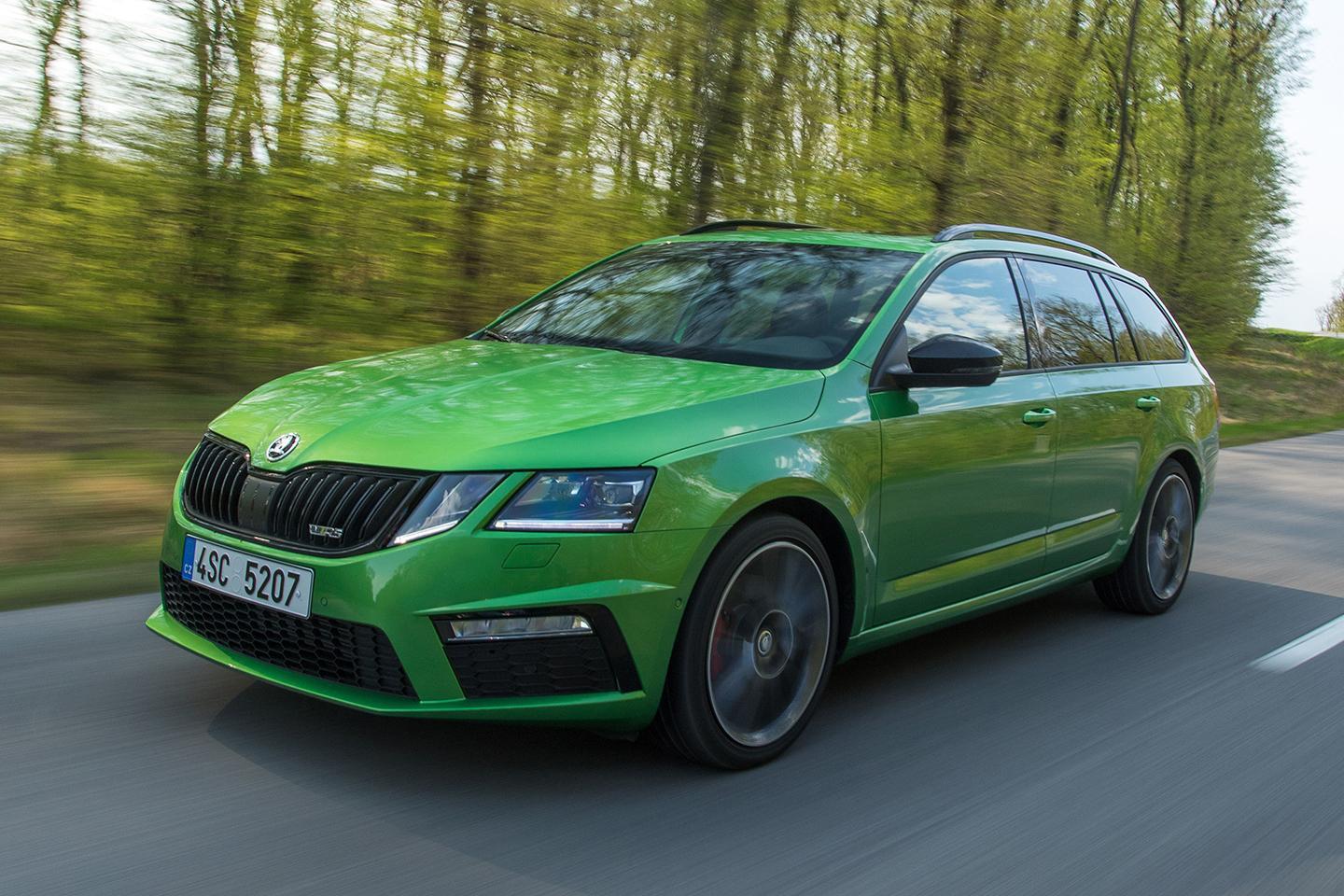
That, in a biggish nutshell, describes the Skoda Octavia vRS's 'have your cake and eat it' proposition. It's an appealing one too, because by 2017 the 2013-on gen-three Octavia vRS in either five-door hatch or estate formats accounted for one in four of all gen-three Octavia sales in the UK (and probably elsewhere).
The MQB-platformed Type 5E Octavia was a great launching point for the new vRS, not only because it was stiffer and up to 100kg lighter than the old model but also because it was roomier, being 89mm longer overall (78mm of which were between the axles) and nearly two inches wider than the gen-two. So the hikes were in both performance and practicality which meant that you were getting more vRS for your money, which was a good thing.
Performance, ye say? Oh aye. In petrol form the vRS was the fastest production Octavia ever, but if you wanted to slip along in a stealthier fashion you had the nice option of a speedy 184hp/280lb ft diesel that offered nearly as much real-world va-va-voom as the petrol but with the bonus pleasure of lower running costs.
The petrol vRS's 220hp 2.0 TSI engine was the same as the Mk7 Golf GTI's, while the diesel's 184hp 2.0 TDI was the same as the Mk7 Golf GTD's. Two years into the gen-three, in 2015, the petrol vRS 230 was launched. This featured a 10hp power lift to 230hp, a 0.1sec cut in its 0-62 time, and a 1mph increase in its top speed. It was equivalent to the Performance Pack version of the Golf GTI.

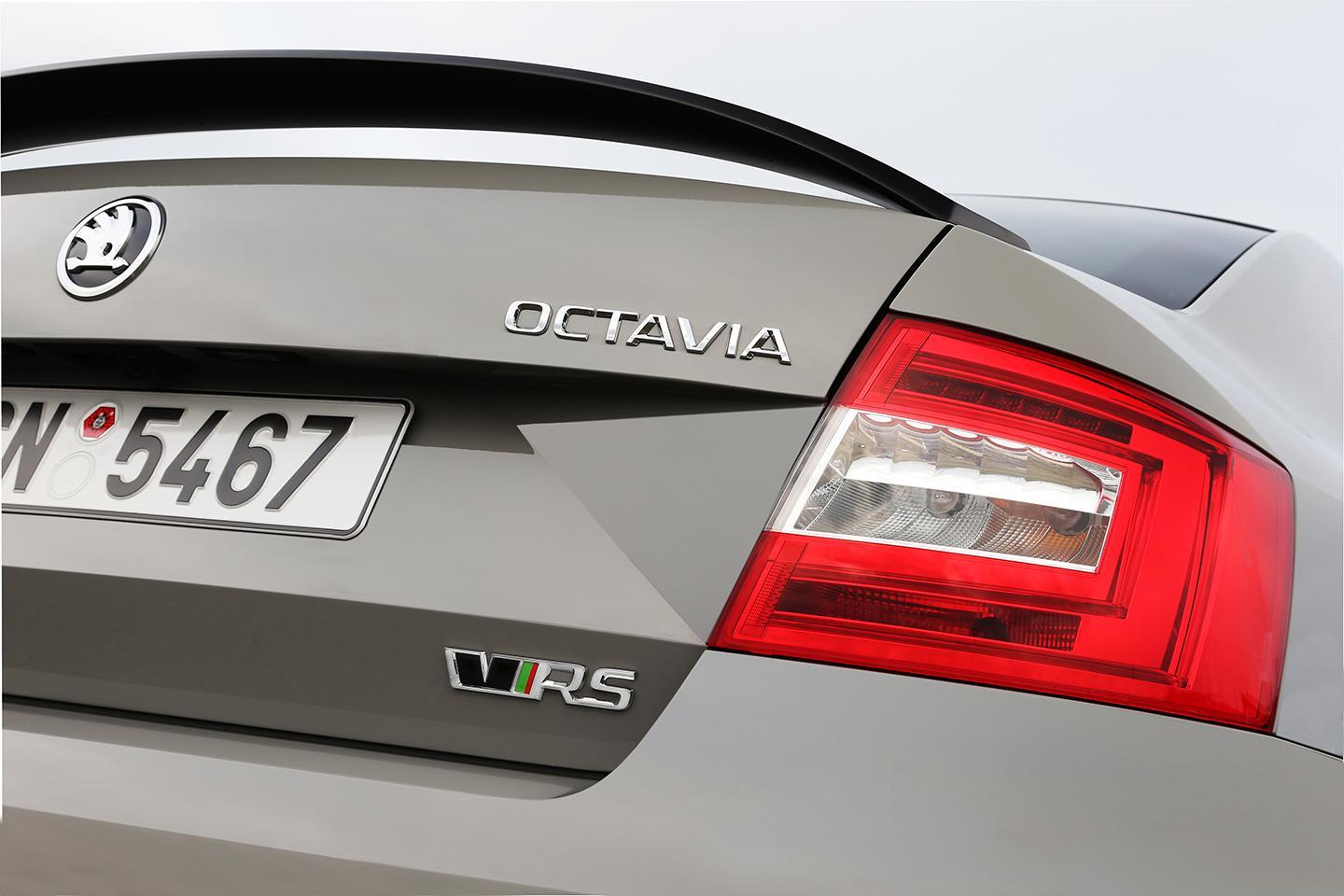
Skoda said the 230 was 10 seconds quicker around the 'ring than the old one, mainly due to the new e-diff they'd put in. The V in the badge was black in this model, which cost £26,350 as a hatch or £27,550 as an estate. That was decent value because the price hike was less than the £2,000-odd it would have cost to add the 230's standard leather, park assist and sat-nav to a regular vRS. With a six-speed DSG twin-clutch auto box the vRS 230 was still over £400 cheaper than the least expensive five-door Golf GTI.
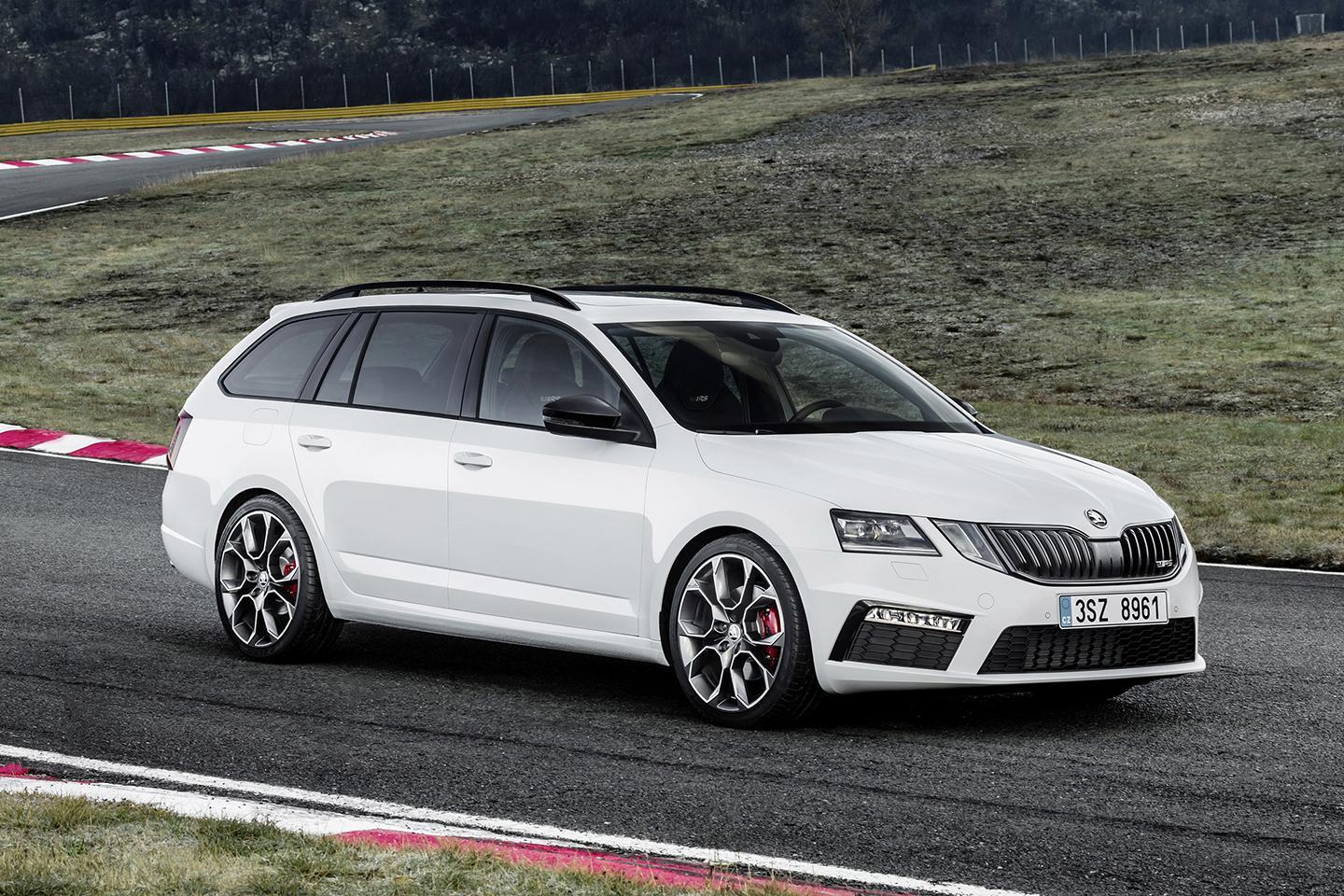
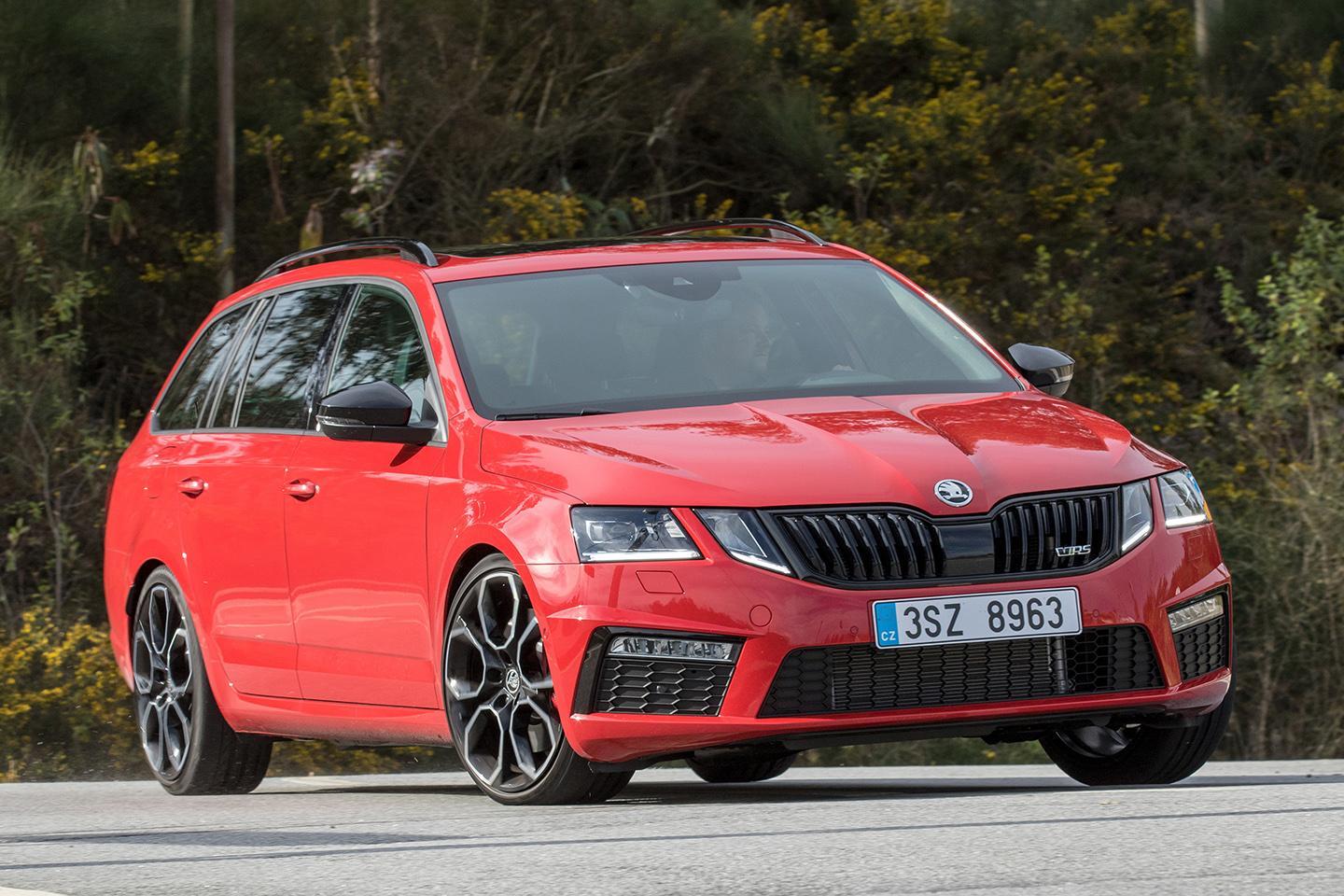
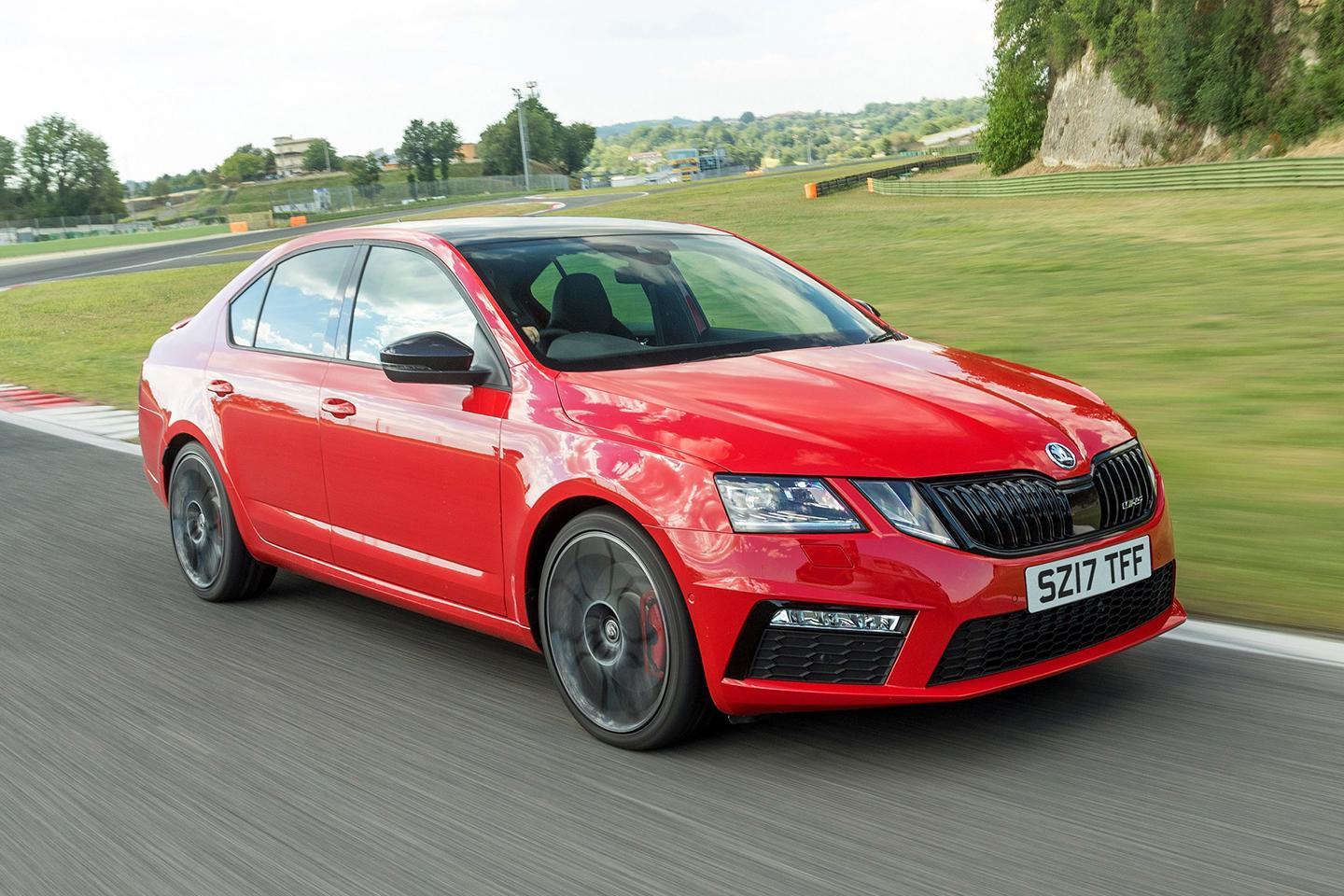
In 2017 the vRS was swept up in the Octavia range refresh which brought a new look to the front end of the car. Not everyone liked the split-headlight/DRL Octavia restyle, and that's putting it mildly, but the vRS version carried it off better than the cooking models thanks to the ensportiment (don't bother looking it up, it's not a real word) embodied by the 245hp/273lb ft petrol 245 model, which had access to VW's previously off-limits seven-speed DSG. With that box fitted the vRS 245 cost £28,995. It did the 0-62mph in 6.4sec and still returned a combined economy figure of 44.1mpg.
Diesel-wise, for various reasons too political to go into, the 15lb ft torquier 190hp unit that some Audis were getting wasn't put on Skoda's parts shelf. Nor was the Golf's seven-speed DSG box, but at least diesel vRS buyers were given the option of an all-wheel drive system which added 85kg and around half a second to the 0-62 time. AWD wasn't made available to petrol vRS buyers, or even to Golf GTD buyers.
The fourth-gen NX Octavia was announced in 2020, bringing a mild hybrid drivetrain to the vRS (1.4 TSI-based, 245hp/295lb ft) for the first time. We're fairly sure that gen-threes continued to feed through into dealerships right up until 2021. Although it had been around for eight years by that time, at no point did it feel anything other than a swift and entirely relevant blend of performance and useability.
In the mid-2010s, well into the gen-three's lifespan, it was possible to lease a vRS for £1,500 deposit and £199 a month. Eeeh, happy days. In 2022 you can pick up a gen-three Octavia vRS estate for under £7,000. Admittedly, for that money you'll have to put a piece of gaffer tape over the odometer because it will probably have nearly 200,000 miles on it, but you'll only have to add another £1,000 to get the mileage down to a more reasonable 140,000.
SPECIFICATION | SKODA OCTAVIA VRS (2013-19)
Engine: 1,984/1,968cc four-cyl turbo/diesel
Transmission: 6-speed manual or twin-clutch auto, front-wheel drive
Power (hp): 220@4,500-6,200rpm/184@3,500-4,000rpm
Torque (lb ft): 258@1,500-4,400rpm/280@1,750-3,000rpm
0-62mph (secs): 6.8/8.1
Top speed (mph): 154/144
Weight (kg): 1,425/1,470
MPG (official combined): 45.6/61.4
CO2 (g/km): 142/119
Wheels (in): 7.5 x 18
Tyres: 225/45
On sale: 2013 - 2019
Price new: from £24,885 (£25,175 diesel)
Price now: from £7,000
(Specs given are for manual hatch (petrol/diesel)
Note for reference: car weight and power data are hard to pin down with absolute certainty. For consistency, we use the same source for all our guides. We hope the data we use is right more often than it's wrong. Our advice is to treat it as relative rather than definitive.

ENGINE & GEARBOX
Between 2009 and 2012 there were quite a few issues with the petrol vRS engines. Marque specialists bemoaned the quality of engineering in this period and the worn piston rings, burnt valves and snapping timing chains that were (in their opinion) the result of it. Pre-2009 indirect injection engines were less troublesome and so were the improved post-2012 DI units that power the cars we're talking about in this guide.
To maintain some marque differentiation between the Octavia and the Golf GTI, the petrol VW was 0.3sec quicker through the 0-62mph run than the Skoda, but you'd be unlikely to notice that anywhere other than on an airfield or drag strip. Irrespective of what car it was in, what you would notice would be the verve, vitality and character of VW's CHHB EA888 TSI engine, which had a timing chain rather than the diesel's belt (though both were supposed to be replaced at the 130,000-mile mark in non-dusty countries like the UK). A remap could take the petrol engine up to over 300hp but, as with all these things, you had to choose your supplier carefully. If you couldn't be bothered with any of that, the 2015-on 230 had a new exhaust which did some mild popping on the overrun.
The CUPA EA288 diesel version had an official combined fuel consumption figure of 61.4mpg, which was impressive for a car with this level of performance. Some engines were seen to be partial to a drop of oil, however. They were particular about the type of oil used too, VW stipulating certified low-ash brews like Castrol Edge LL 5W-30 to ease the functioning of diesel particulate filters. Some owners did notice a burny sort of smell after the engine was switched off, accompanied by continued running of the fans (sometimes for quite a long time) but that was usually just the car completing a DPF regeneration that it hadn't been able to finish while you were driving it. That wasn't specific to the vRS.
You could also experience what might seem like excessive cranking before diesel start-up. That wasn't unfamiliar to owners of Golf GTDs with the same engine. Reporting it to dealers generally produced a 'they all do that every now and then, sir/madam' type of response. There was a recall on some (but not all) of these diesels to check and if necessary replace a boost sensor and associated charge pressure transmitter which, if operating incorrectly, could cause engine hesitations.
As with any quick manually-gearboxed oil-burner you were liable to be spending a lot of time working the stick to keep it in the plumptious zone between 1,700 and 3,000rpm. This was by no means unpleasant as the three-pedal car's six-speeder had a smooth and slick action which saved it from being a poor relation of the twin-clutch automatic gearbox. Having said that, some clutches could slip even on low-mileage manuals.

For a really easy life the DSG was a brilliant match for the diesel, offering fast, smooth changes, torque limiting in the first two gears to give the box some protection, and the bad memories of previous DSGs consigned to the bin of history. Not all of them though. Failing gear selector switches would throw a 'workshop!' error message.
210hp was an easy remap away for the diesel. Tuning boxes that tapped into the boost and cam sensors and fuel rail took less than half an hour to fit and typically offered switchability between three maps and three power settings to deliver up to 235hp and 370lb ft, which would make a noticeable difference on the road. in standard trim, even if you were driving a diesel with some vim you could easily get 550 miles from the 11-gallon tank.
Disappointingly, one of the two exhaust tailpipes on the diesel was purely decorative. Some disgruntled owners tried to skirt the non-functional shame by having proper bespoke exhausts made up for their cars. It was rumoured that 2019 model-year filtered petrols would be going down a similarly bogus route but we think that Skoda relented on that.
There was a three-year/60,000-mile warranty on the gen-three vRS. Servicing frequency depended on what items you were talking about. Brake fluid changes would be after three years and then every two years. Dust and pollen filters were every two years or 37,000 miles, which was the same distance point for the DSG oil and filter change. Oil and filter replacement time would come up on the display but that wouldn't be the only dash readout you'd get.
There was also an 'inspection' warning that was supposed to come up after two years or 18,000 miles and every year/18,000 miles thereafter. If you concluded, as many did, that 'inspecting' things sounded like a bit of a con, you could reset the inspection warning (i.e., make it go away) by executing a certain sequence of button presses. You could extinguish the oil change service warning in similar fashion. Some owners have reported failed water pumps.
CHASSIS
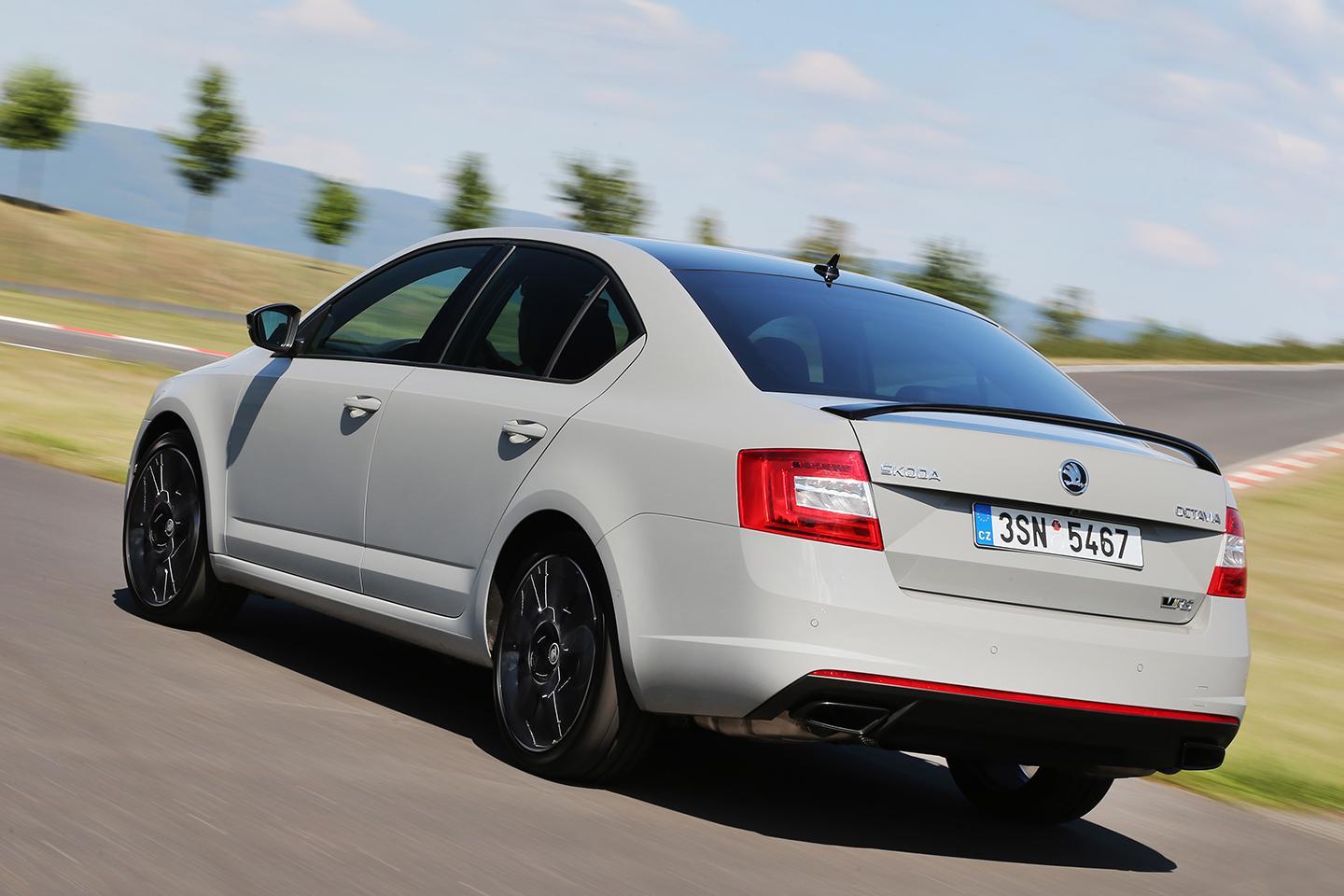
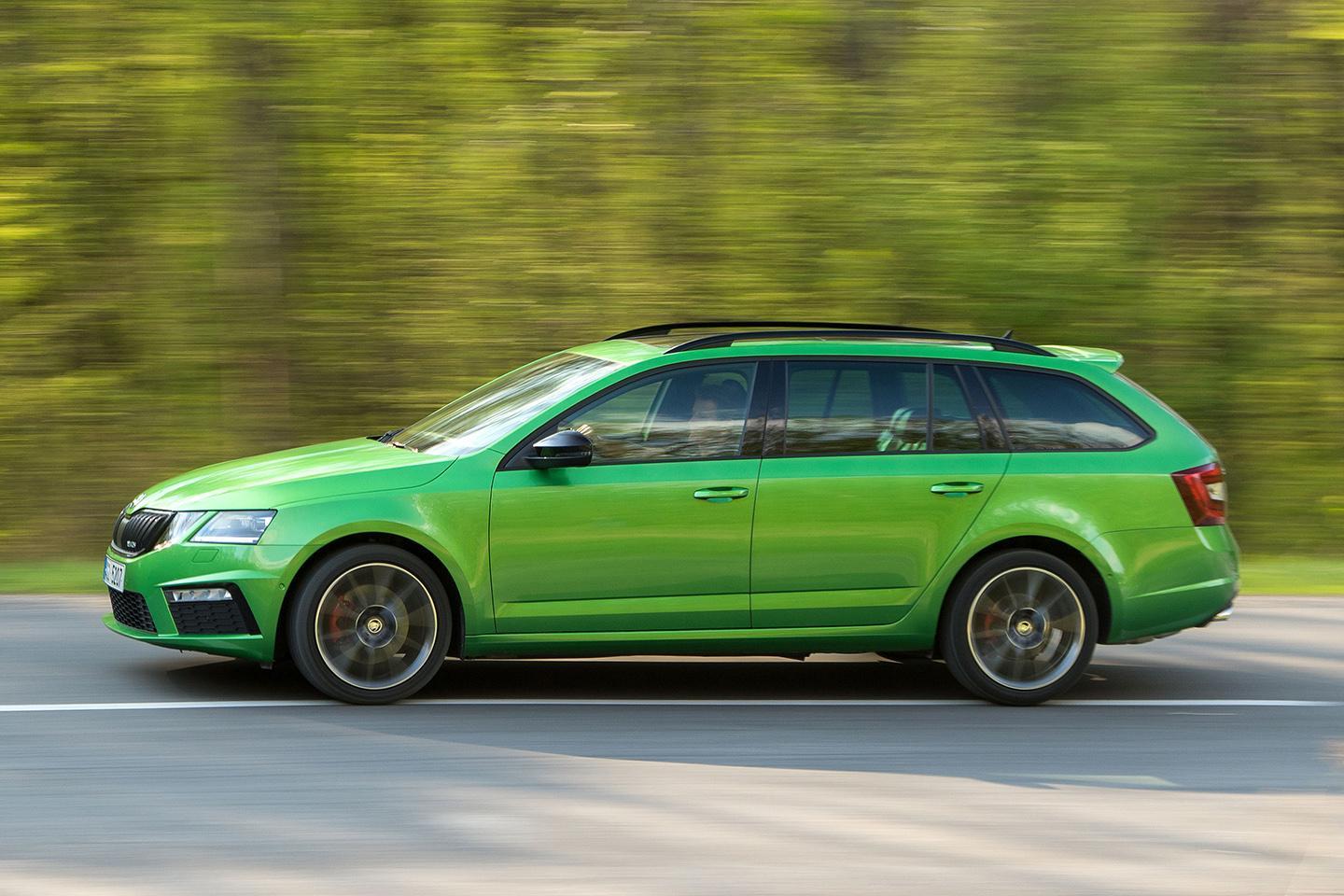
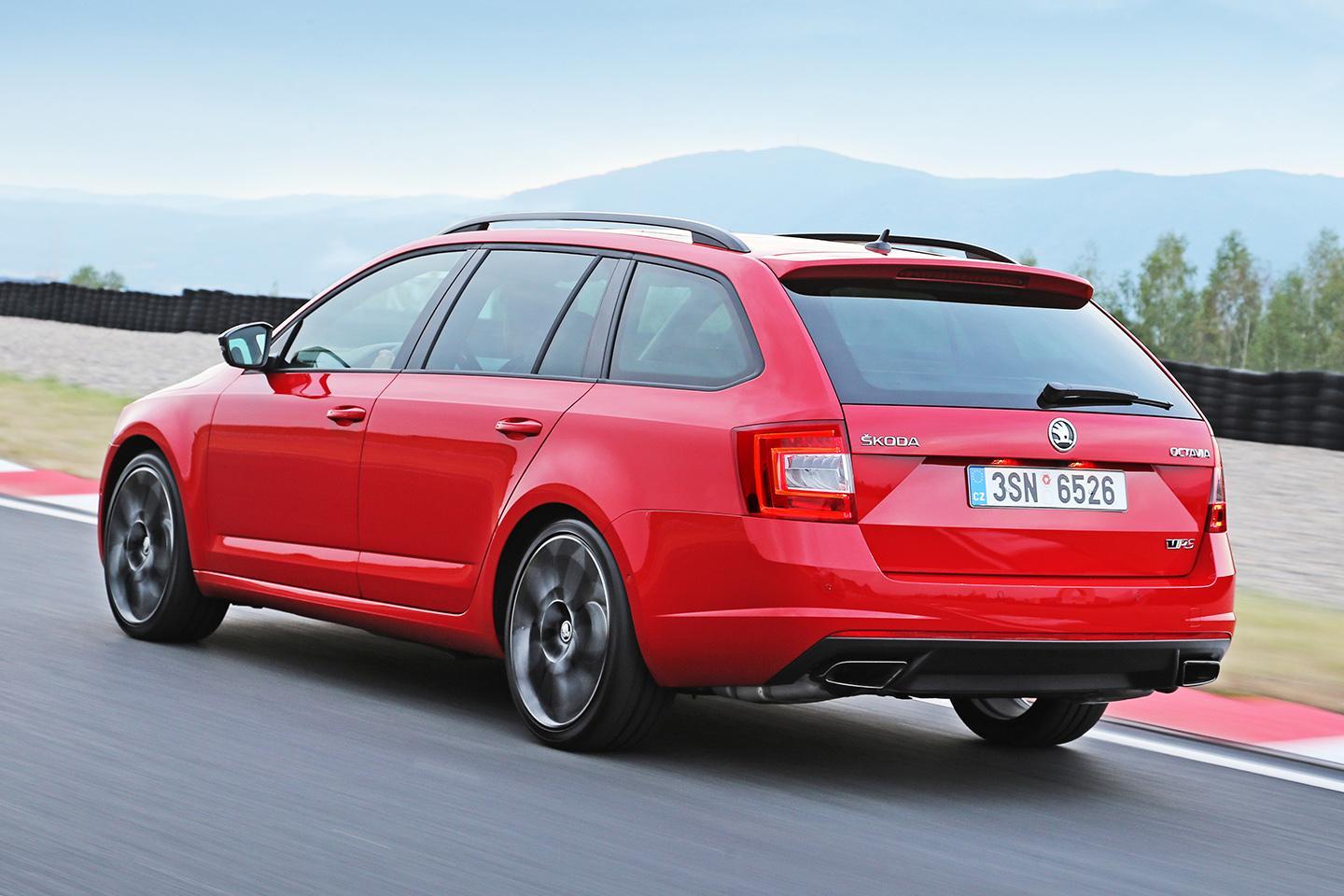
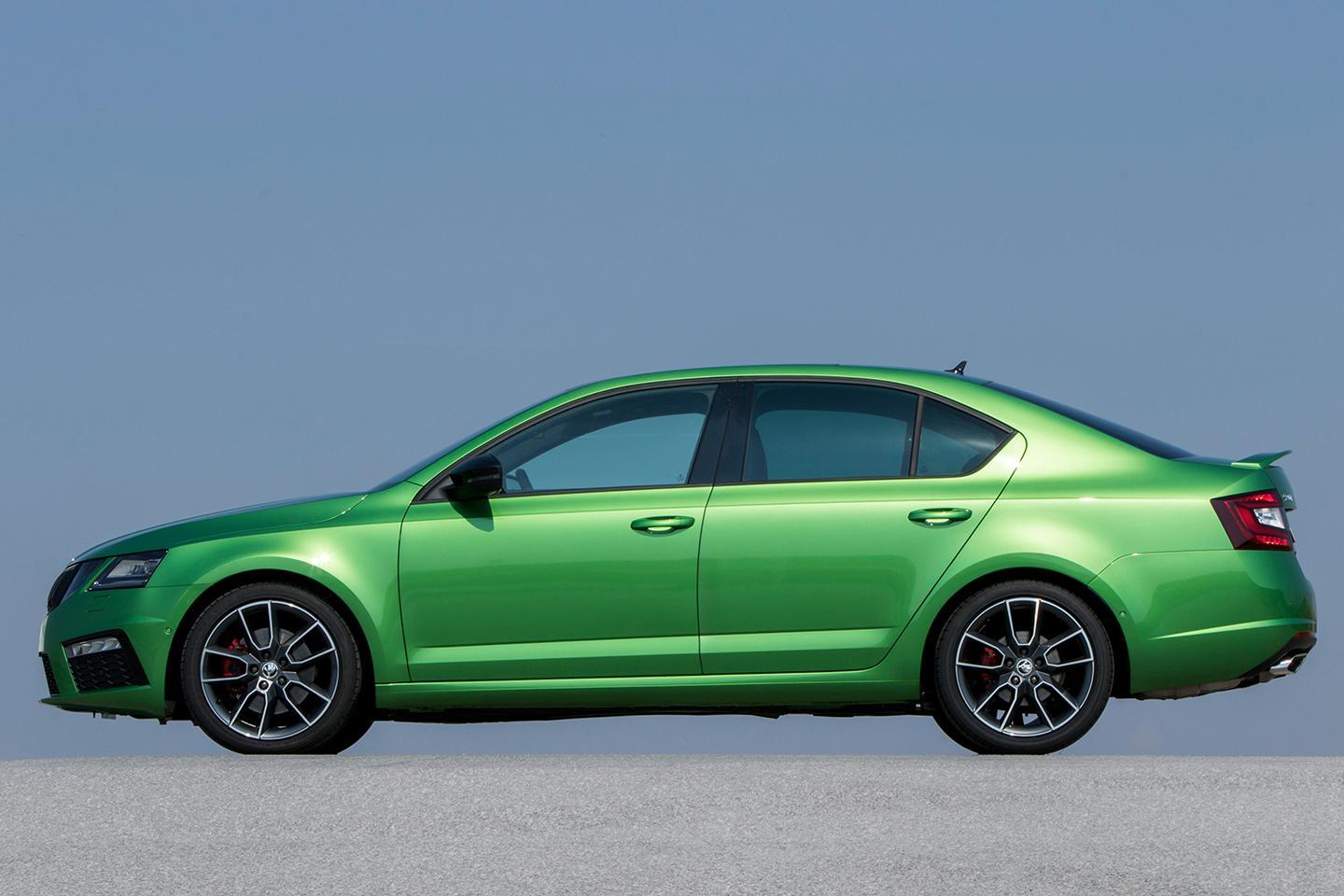
The vRS hatch sat 12mm lower than the regular Octavia. Excitingly, the estate vRS was 1mm lower still at 13mm below than the normal estate even before you put anything into the back of it. Considering that, plus the firmer suspension and the choice of standard 18-inch Gemini wheels in silver and anthracite or black 19-inch wheels, the ride was very good. Some non-UK markets actually specced silver 17-inch 'Dorado' alloys for their vRS Octavias.
You couldn't fully disable vRS traction and stability control systems, but you could reduce the level of interference. The drive was entertaining and solid, especially in the 230hp and later models which had ratio-varying power steering, 19-inch alloys and the electronically controlled XDS front diff that used inside front-wheel braking to tighten your lines. Even so, understeer was the order of the day in hard track use.
Dynamic chassis control damping became available on the 2017-on cars but it appears that only one in 20 owners opted for this £850 option, which is a pity for secondhand buyers who are trying to find a car thus equipped as it improved body control. 245s were did have a wider rear track to help with stability but most testers thought that this was achieved at the cost of agility.
One fairly significant issue on gen-three vRSes is road noise, which can get pretty bad on grainy road surfaces. Some owners have gained partial relief by changing the tyres, and making use of the double-sided boot mat (rubber on one side, textile on the other) helped too, but road noise is kind of endemic to the car so try before you buy. Wheel hubs have been known to rust, so greasing and/or painting is a good idea.
BODYWORK
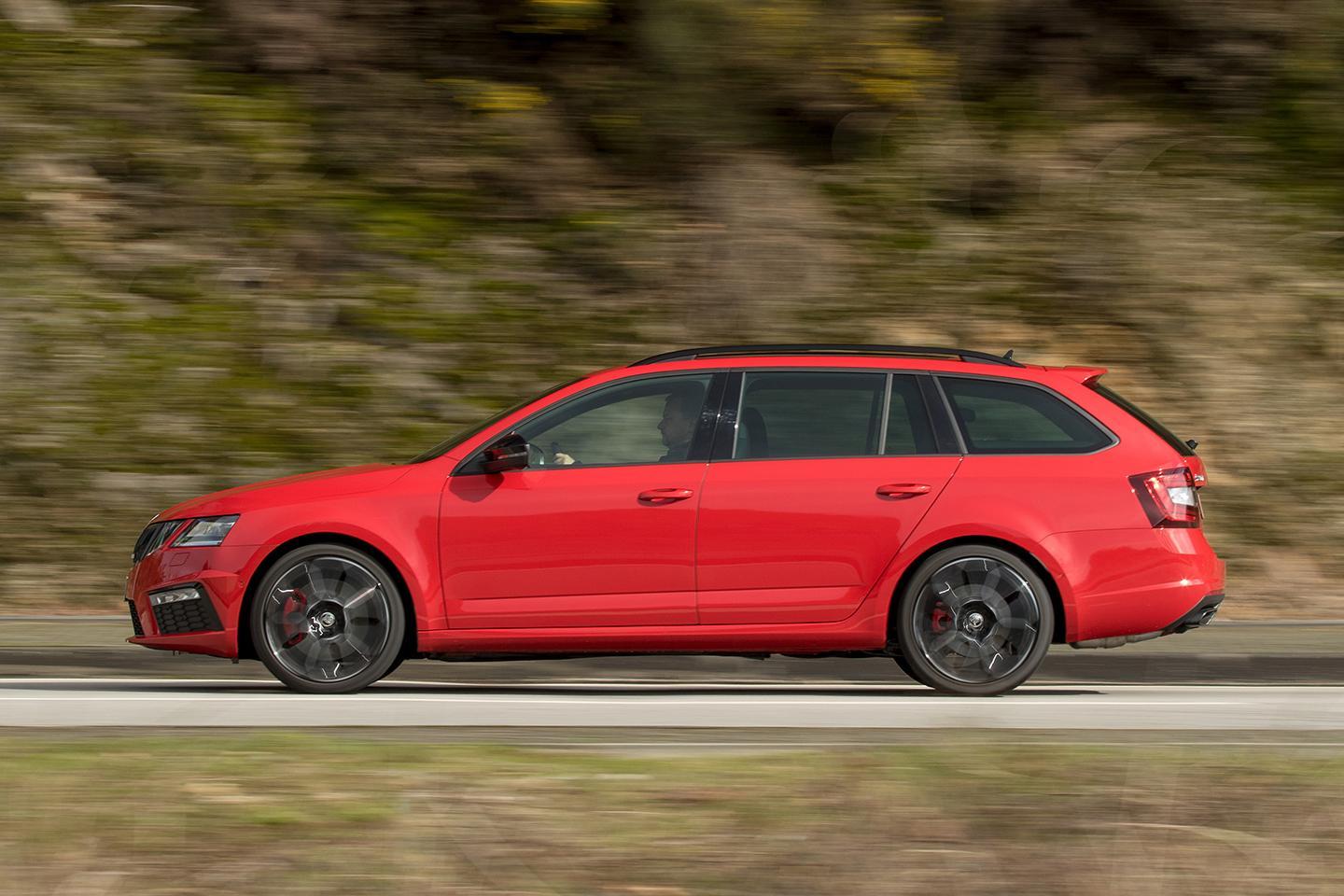
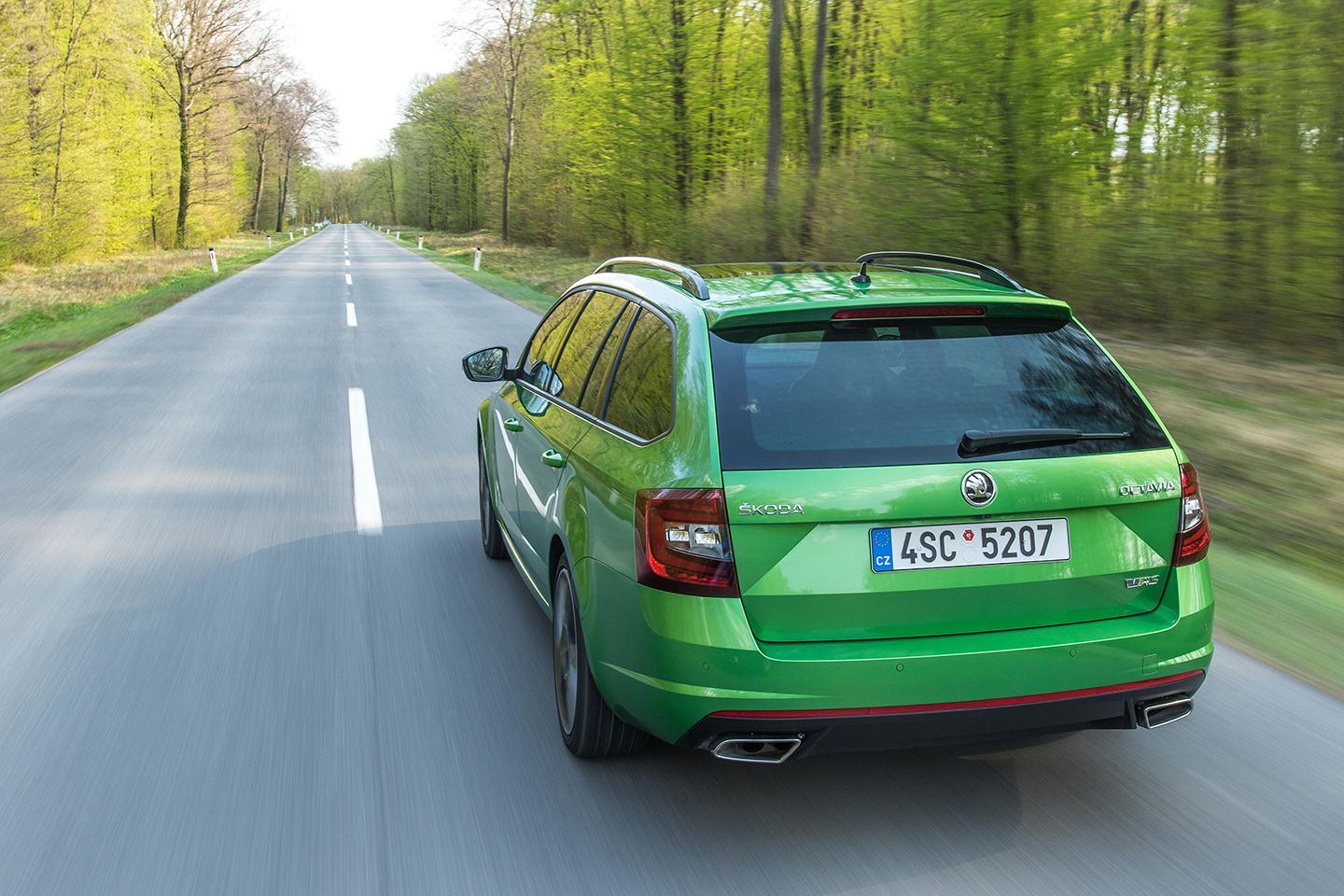
If you didn't want an estate but liked the idea of good cargo space the Octavia hatch was hard to beat, offering a large 590 litres with all five seats in place. Drop them and that went up to 1,580 litres. The equivalent numbers for the estate were 620 and a truly massive 1,740. By way of comparison the Audi A6 estate (which was one class up on the Octavia) had 1,680 litres. Skoda's figures were especially noteworthy when you factored in the extremely generous amounts of rear legroom. Normally you got one or the other - good boot space or good rear legroom - but with the Octavia you got both, and all from a Golf platform. 'Mazing.
The panoramic sunroof really lifted the gloomy-ish Octavia interior but they were not all entirely leak-free. Door seals have been known to perish on early cars too, and some owners have had trouble with blocked door drain plugs. Odd noises emanating from the B-pillar area around the top seatbelt mounting are not unknown. That's not an officially recognised problem but Skoda dealers know how to sort it through judicious placement of textile pads.
INTERIOR
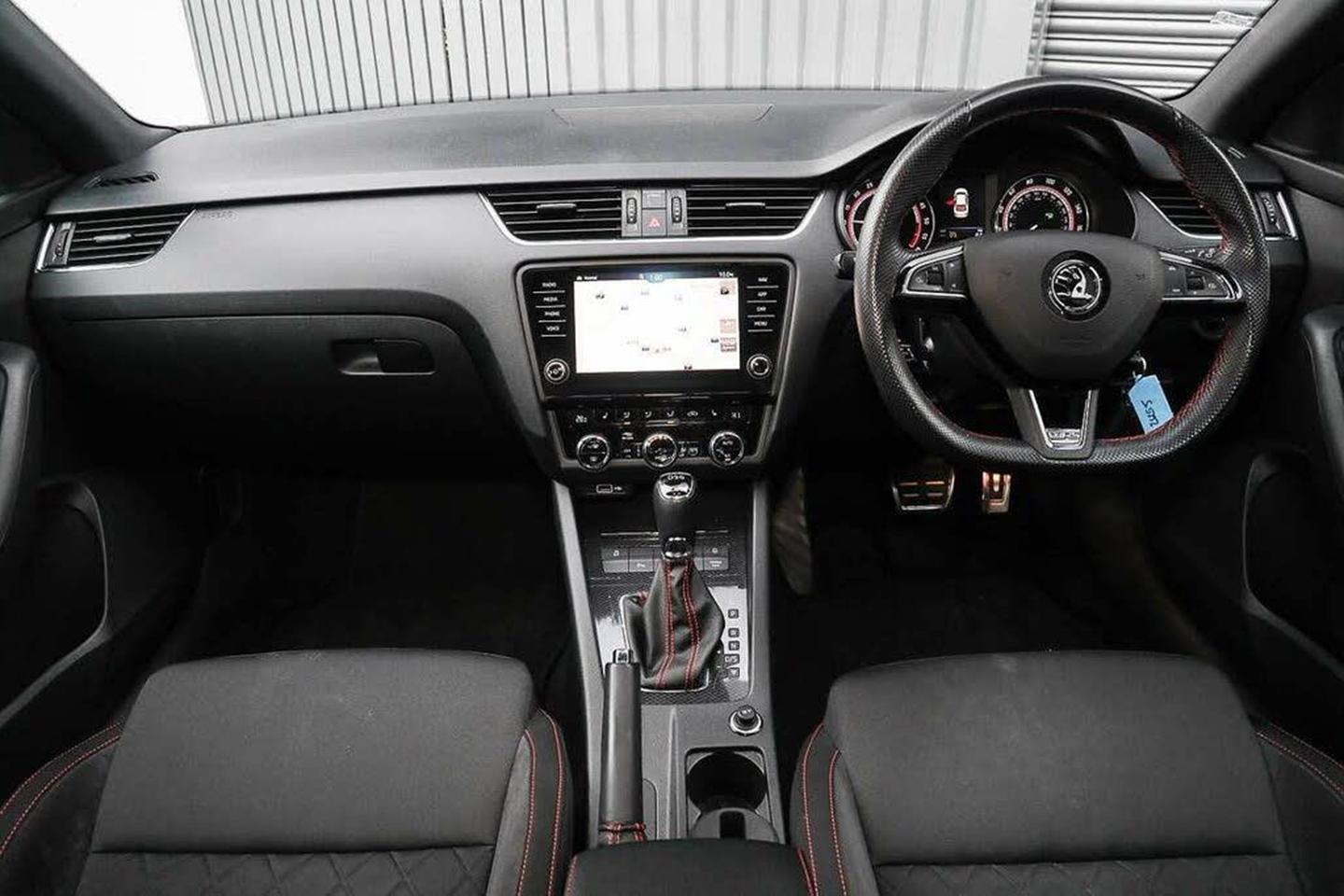
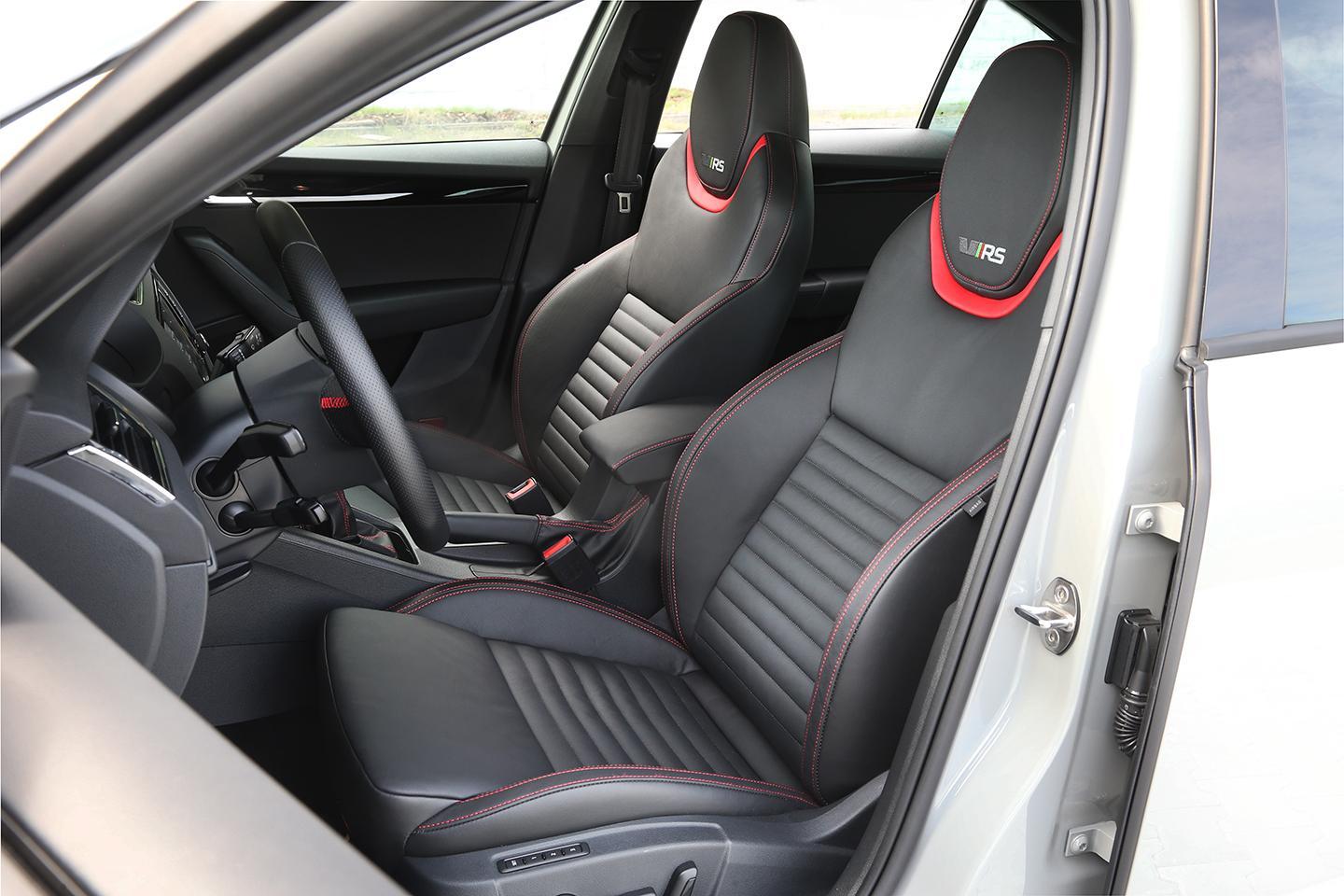
As you'd expect, the vRS feels very solidly built. The two interior features that perhaps did most to lift the vRS above the common Octavia herd, from a driving perspective at least, were the grippy sports seats and the perforated leather steering wheel, which from 2017 was heated. There was also a Performance Sound Generator in both petrol and diesel versions, which some saw as slightly weird as relatively few people have wanted to brag about the noise of their four-cylinder diesel.
Skoda acquired a reputation for adding 'clever' details that were basically what ordinary folk (rather than car designers) would probably include in their cars if they were given a chance to set the spec. On the vRS Octavia these included an ice scraper inside the fuel filler flap, a rubbish bin in the door panel, and the aforementioned double-sided boot mat. Parking sensors and the heated screen option were also very good things to have.
Leather seats were hard-wearing but there have been complaints about stitching coming away on the cloth seats even at quite low mileages. There was a 570w 'Canton' high-end audio option at £500 which included a sound equaliser, eight door speakers, a central speaker and a small boot-mounted subwoofer. Unfortunately, most if not all of the owners who specced it found it provided little or no improvement over the also decidedly average standard system, so don't be expecting much if the used vRS you end up buying has the Canton setup, and certainly don't pay extra for it if the seller tries it on.
Standard kit in the 2017-on vRS 245 included an Amundsen eight-inch sat-nav system with integrated wi-fi, heated memory-foam Alcantara seats, and a colour multifunction trip computer and lap timer.
PH VERDICT
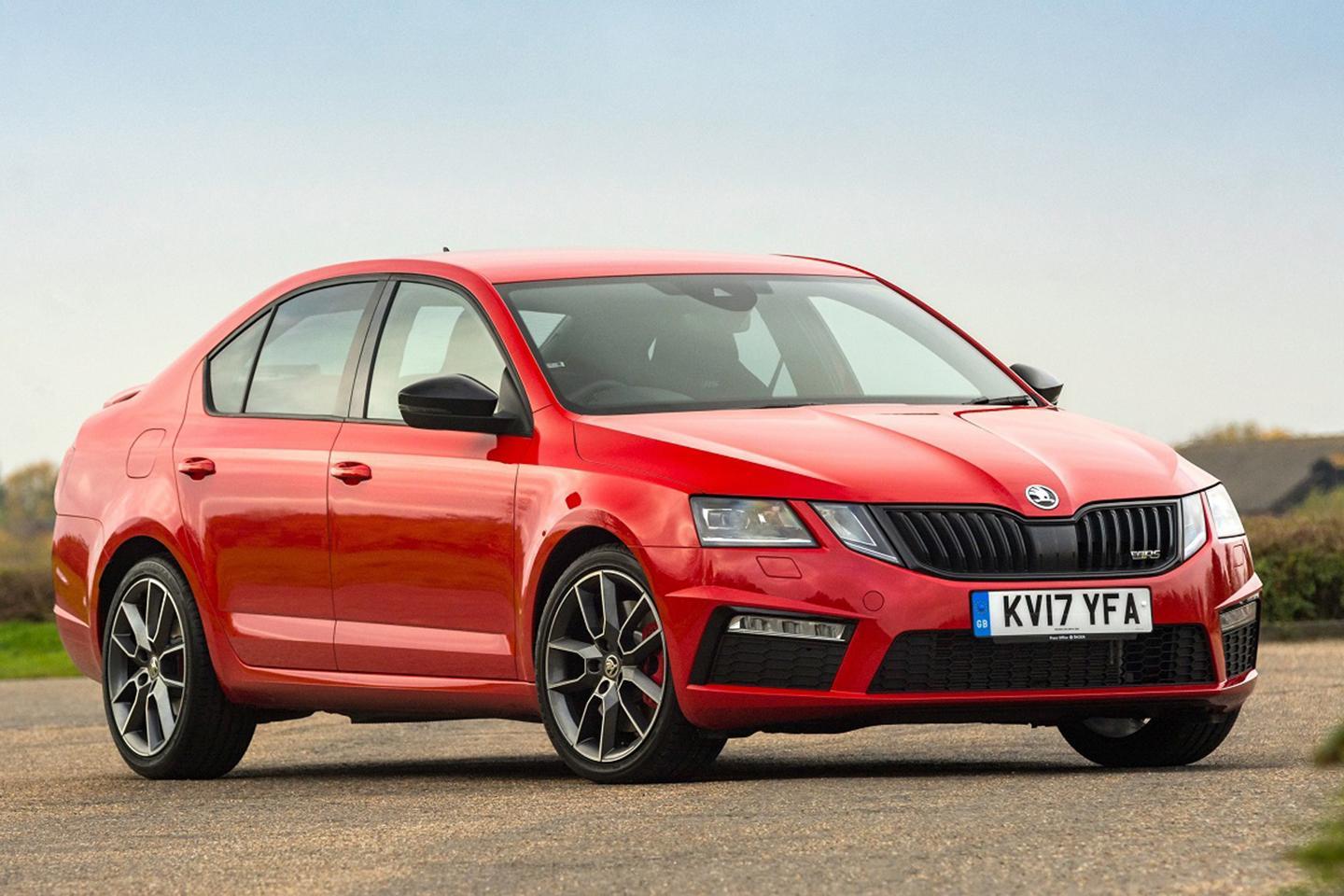
Well built, reliable, comfortable, fast, spacious, good value - really, what's not to like about the Mk3 vRS? Few would claim that the car drove as well as a GTI Performance or a Focus ST, but there wasn't that much in it for most drivers most of the time, and those who bought vRSes seemed to enjoy their big name-upsetting bovver-boy image. As recently as the mid-2010s potential buyers were listing the Subaru WRX as the vRS's main rival. That was stretching it somewhat but if nothing else it tells you how much Skoda's perception has changed in the 21st century, moving from a source of jokes to a credible sports brand. The vRS sub-brand was instrumental in effecting that change.
Not many Mk3 Octavia vRS buyers will dare to dabble at the very cheap end of the vRS market as they'll be put off by the big numbers on the odometer. Fact is though that the very high mileage (near 200k) specimens still happily running around are being advertised at strong prices - as we said in the Overview, as little as £7k. That's some sort of testament to the robustness which many view as a more recognisable Skoda characteristic.
Among the selection of over 200 gen-threes on PH classifieds the split between manuals and DSG autos seems pretty even. The lower price bracket is mainly populated by diesel estates, many of which were used by tie-wearing motorway-pounders. The lowest-priced example on PH Classifieds at the time of writing is this 2015 wagon in black with half-leather seats. Three years after it had been registered it had already done 63,000 miles. It did 22k in its fourth year and 28k in year five. After an easy (presumably Covid restricted) 2020-21 with just 10,000 more miles covered it seems to have been practically laid up since last May's near-clean MOT and now stands at 124,000 miles. Yes, it's slightly grubby, but if the service history mentioned is a full one it could be a ripe candidate for tuning fun and plenty more miles at £9,790.
The cheapest petrol vRS on PH right now is this 2014 220hp 82,000-mile hatch in a low-profile russety red at £12,249. Alternatively you could have this very nice blue 46,000-miler from the same year at £13,495.
If you consider a 2015-on 230 to be an ideal sort of vehicle, an opinion you'd be well within your rights to hold, this is the most affordable specimen on PH just now. It's a 2018 car, which means that controversial front-end look, but it's grown into itself to some extent and doesn't seem that offensive on vRSs somehow, especially if they're black. This car's relative youth means it's only done 45,000 miles, and it's under £18k. Finally, how about this 2016 manual 230 hatch. Wearing a funky set of teledial style wheels and just 22,000 miles on the clock it gets you around that facelift issue, if it is one, for £18,950.
Search for a used Skoda Octavia vRS here




Disagree with the article on the Canton sound system. It's significantly better than the below average standard system, but does need some tweaking and a decent source to get the best from it.
Earlier ones are a bit spec sensitive too, even things like nav and cruise control were optional and the standard black/white DIS between the dials ages the car. The colour DIS was a £50 option I think or Standard with the (better) Columbus nav.
Ours is an early 2017 model with 83k km on the clock now. We did 30k km in the 1st year. The only "problem" we've had with the car is that the OBC "forgot" it had memory seats fitted, so a new memory setting couldn't be stored. The dealer sorted that in 15 minutes. Other than that, routine servicing and oil changes.
Being in Luxembourg, labour charges are high, so last year's service was about €500 and this year's will be more as there will be a brake fluid change again. I expect it'll be somewhere in the €750 range. That's still far, far less than my E39 530dA servicing was back in the day. I didn't see change from €800-1,000 / year then.
Here’s mine after an uncharacteristic clean. The poor thing gets rather neglected in comparison to my fun cars.

I can see me keeping it for a good number of years.
Great size rear boot & good long distance cruiser. Harsh ride was only reat drawback.
What I liked:
The space, balance between power and fuel economy and fairly effortless when overtaking.
But it was let down by a few things - Timing belt tensioner went at about 30k but was replaced under warranty, the Pilot Sports fitted to it were rubbish on anything but dry tarmac, the stereo speakers gave me chronic headaches (my old boy's Octavia Scout is exactly the same though - very trebly and harsh sounding even when EQ'd right down.) The seats were not comfortable - after 2 hours I'd be sore. The touch screen would stop working on cold mornings and needed a hard reset to work again and it too had the 'long crank' problem when starting that was never resolved.
Traded it in after 11 months or so. Can't say I would buy one again.
It's a satisfying car to own. The biggest advantage for me of having a fast and pleasant do-it-all estate that if you travel far from home on a family trip and you fancy a drive by yourself you have the car with you! If you have a nice Cayman 200 miles away in your garage while you're sat around in a more mundane family estate surrounded by nice scenery, you won't have as much fun if you head off sightseeing by yourself for a bit. Photographers will say that the best camera to use is the camera you have with you; cars are much the same if you find nice driving roads while on a longer trip.
Niggles? I've needed to fix a broken water pump, and had a surprisingly expensive (£700) headlamp fix for a "smart headlamp" motor control module breaking.
I've replaced two windscreens that broke in quick succession- one from a stone thrown up by a car overtaking a shade too close/too fast for my comfort, the other on an extremely cold night which I presume was a manufacturing flaw. The driver-assist systems would have made them each over £1000 to replace if I weren't insured, so I'd urge anyone with similarly required cars to make sure you have windscreen cover on your insurance.
Would I buy a Mark 4? My user case will vary now compared to when I bought my current car but the MK4 is no longer as compelling compared to rivals as the MK3 was. Watching Elk Tests on YouTube was illuminating, which is not a compliment to the Skoda. It's also getting a bit too big, and while I've not tried a MK4 the electronic and infotainment on the sister Golf and Leon cars drives me crazy because of its difficulty in use. I imagine I'd buy a Peugeot 508 instead. (As an aside, I've been similarly disappointed poking around ID3s which seem to be flimsy to my untrained eye. I wonder if post-Dieselgate cars are built as much on the cheap as possible?)
Am I happy I bought the MK3? I no longer need as big a car; it makes sense to replace it but it'll take me a while to find a replacement I'll like as much, which is a measure of how much I like the MK3.
Things I liked.
Performance. 184bhp on paper doesn't sound too credible but it was usable power and the in gear acceleration was great. To give some perspective the VRS was sandwiched between a 430d and 530e and it didn't feel wanting in the real world.
MPG - I averaged late 40's over 2 years. On a steady run it would do 60mpg.
Space - Huge boot and massive rear leg room made it very practice.
Handling - Gripped well on the turn in. Very controllable chassis and nimble around the B roads. Enough feel to make it fun.
Infotainment - Excellent to use compared to iDrives and even the similar Audi / VW Stuff
Dislikes.
Interior - Didn't wear that well. Faux leather and door plastics looked tired after 2 years of family abuse.
Exterior. Plastic trim came loose. Wheels needed spacers as the car looked like it was sucking in its cheeks.
Overall a really good car with zero problems and that's difficult not to recommend. But not exciting enough to have another although I would have the Superb 2.0tsi 4x4
Was looking for a petrol estate when I was getting my ST but thin on the ground and the dealer salesman said the ST was a "better car", though he would say that given he was trying to sell the Focus(!) I love my ST and don't feel short changed but wouldn't mind the space of the vRS offers as well as the more grown-up image - everyone tailgates an ST and never lets them out of junctions, I've found

Forums | General Gassing | Top of Page | What's New | My Stuff