
Ford unveils new E-Transit Courier
The Transit already has an EV option - time for baby brother to follow suit
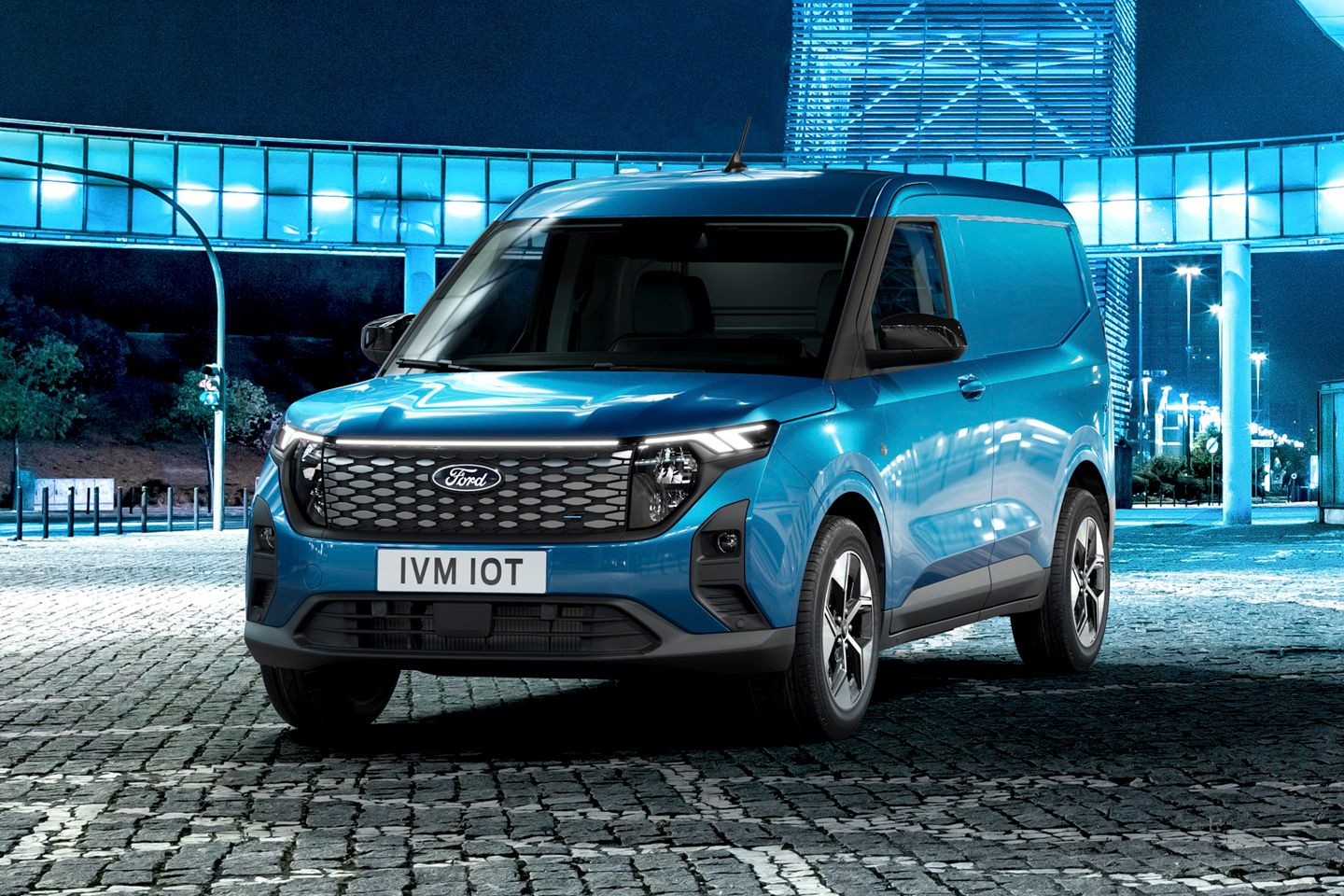
Though there remain some hurdles to overcome (cost highest among those concerns), there’s a lot to recommend an all-electric van. Ditching diesel for instant torque makes city driving quieter, quicker and less stressful, predominantly urban use mitigates some range concerns, and being based on something so large and heavy means there's space to package batteries and motors. It should be little wonder that there’s everything from eSprinter to a Vivaro-e out there.
Small EV vans abound, too, so now Ford has the E-Transit Courier to vie for buyers’ attention with Vauxhall-Toyota-Peugeot-Citroen quadrumvirate of compact electric loud haulers (the Combo-e, Proace City Electric, e-Partner and e-Berlingo - told you there were a lot). An all-new, group-up design (where many vans adapt ICE architecture), Ford is promising ‘no-compromise EV performance, a significantly larger and more flexible load area, and full backing from Ford Pro’s connected services deliver unmatched productivity’.
Ford hasn’t said yet how big the battery is in an E-Transit Courier, but it will be able to charge at up to 100kW. A best-case scenario is 10 minutes for 54 miles, and 10-80 per cent in less than 30 minutes. Buyers are going to get a year’s free access to the BlueOval Charge Network, which will apparently have 500,000 public chargers by 2024. There’s a targeted 5.7 hours full juice for an 11kW charger at home, with Ford Pro Charging able to schedule the charge for when cheaper electric is on offer.
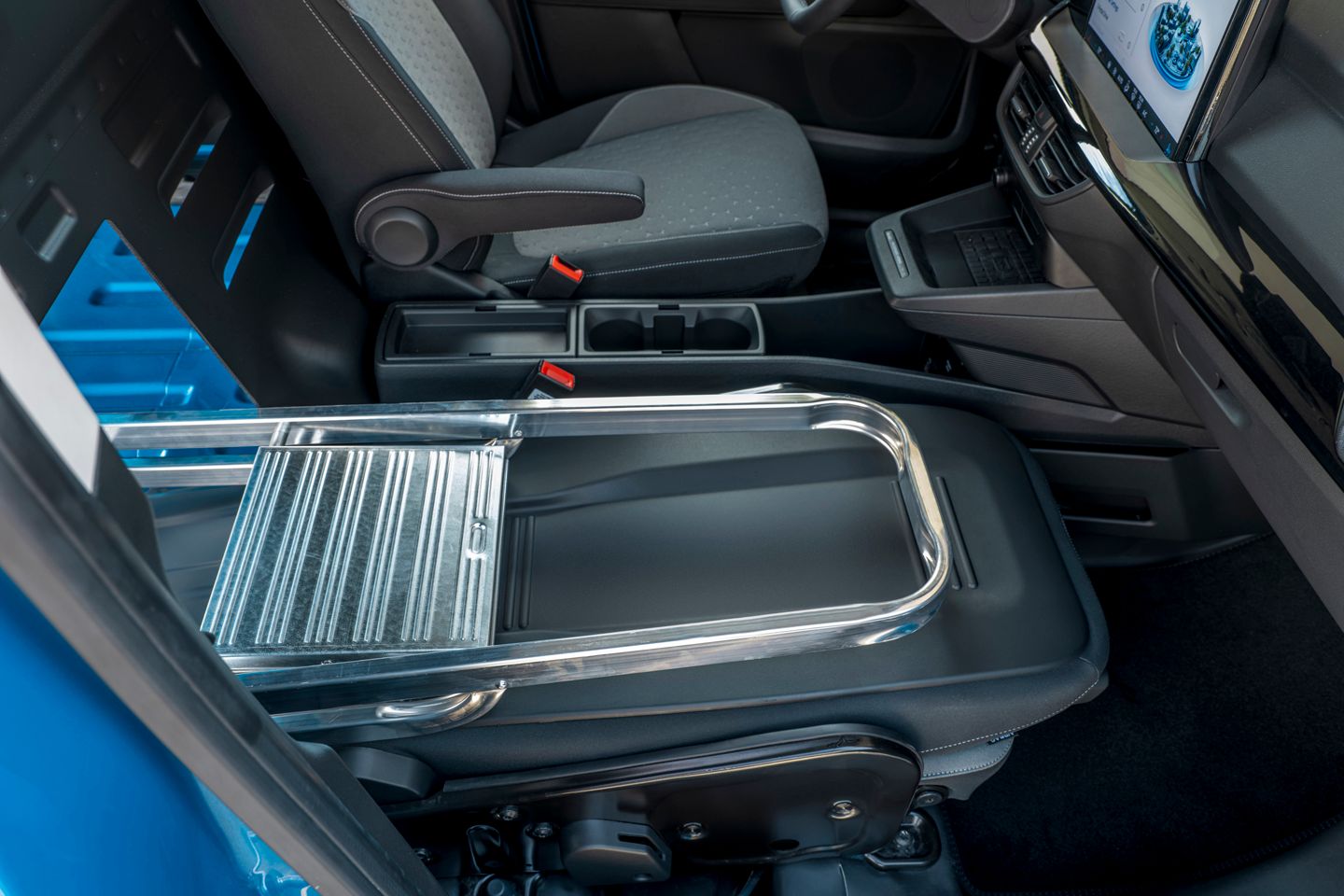
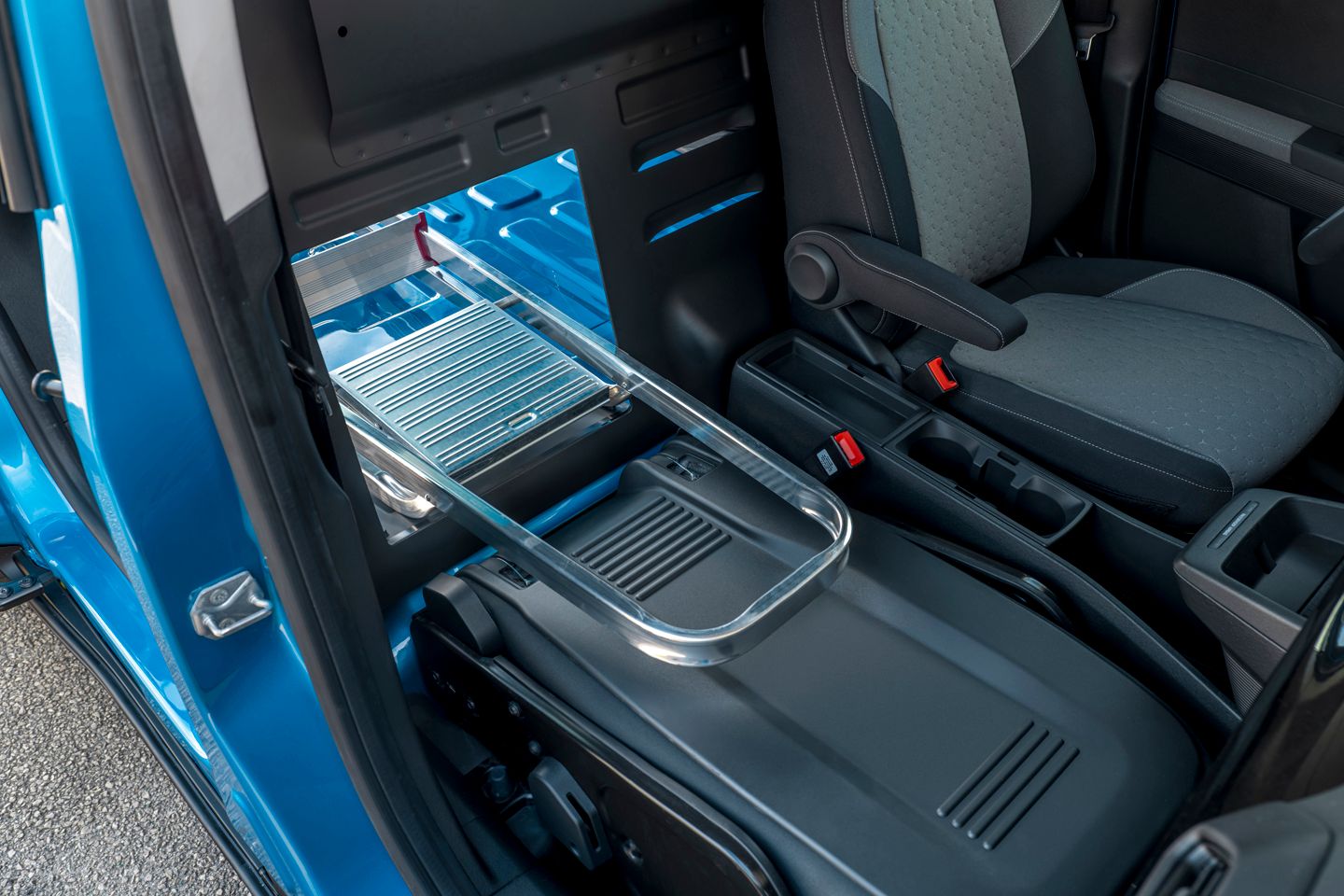
Of just as much use to van drivers will be the carrying capacities of the E-Transit Courier. Thanks to a larger gap between the rear arches, two Euro pallets can fit in the back for the first time, a 2.9 cubic metre space representing a 26 per cent increase on the previous van. There’s even a load-through bulkhead feature, so anything up to 2.6m can be carried. Ford says planks or pipes, for example, or maybe banner flags for a Sunday Service. Quite some achievement in a van this small. Payload is 700kg, and max towing weight is 750kg, though there’s no word yet on what carrying hundreds of kilos will do for range. That probably should be a commercial vehicle test on the WLTP figures. Ford says an officially homologated driving range ‘will be published closer to on-sale date’. For reference, a Combo-e has a 171-mile WLTP rating.
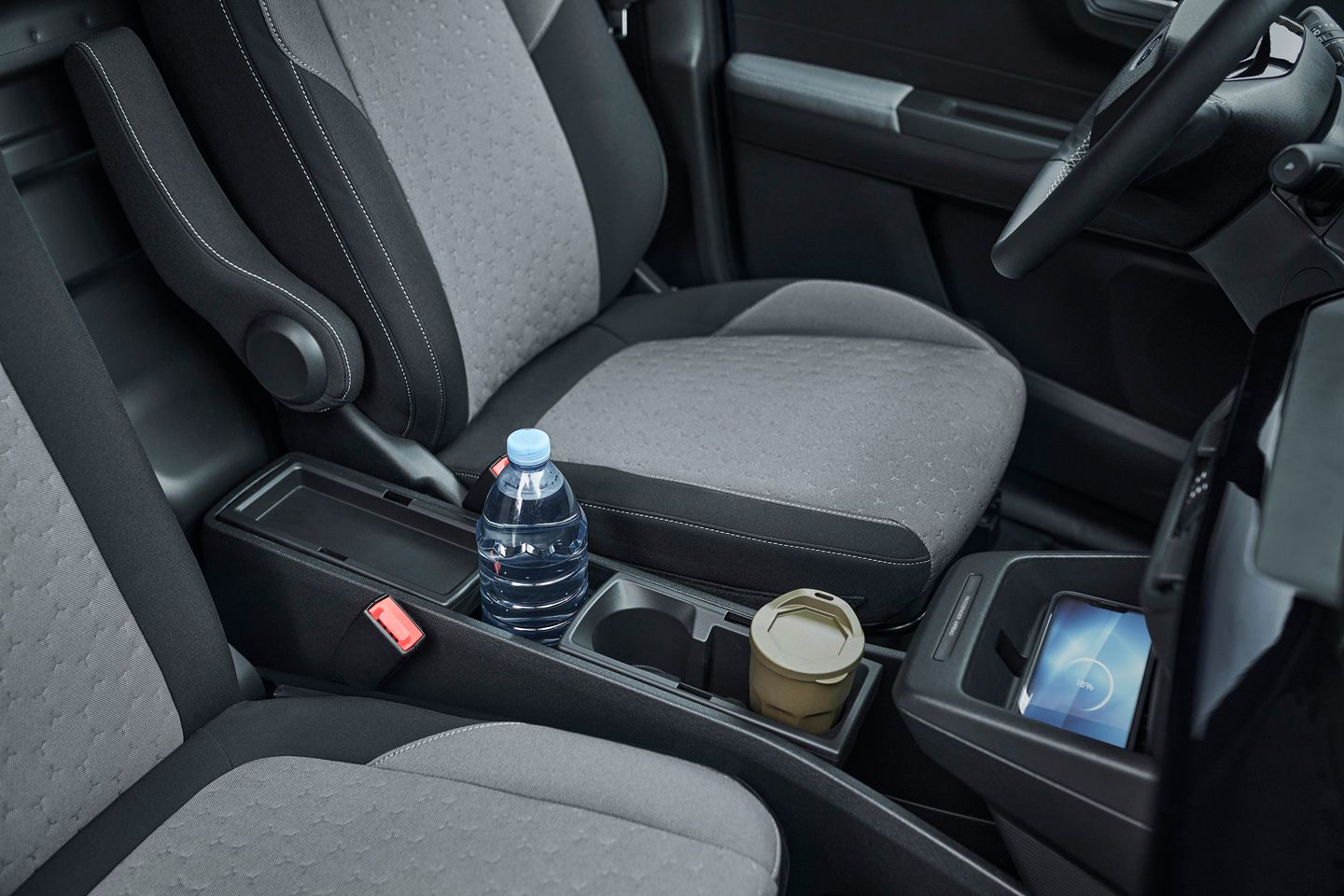
Inside the Courier, buyers will get a pair of 12-inch screens, Ford Sync4 infotainment, and a ‘squircle’ steering wheel to benefit leg room. An Office Pack brings a flat work surface for using a laptop, filing paperwork, or whatever people with proper jobs that aren’t flouncing about in new cars need it for. Ford is promising ‘a very comprehensive standard equipment specification’ for the new van. Security is taken care of with packs including secondary hook locks to prevent against peel and steal pinching, plus an auto-locking slide door.
Those who want to see the electric Courier up close can have a look at the Commercial Vehicle show at the NEC in a couple of weeks. It’s due to go into production late next year, with petrol and diesel versions of the new van launching this summer. But it might be hard to go back to the old ways after driving an electric van, assuming you don’t have to go too far…





This does look a lot better in every way though, although I'd wait until they say what the battery capacity is first. Looks good, we'd have picked this over the Pug if the price was similar!
10 hours at home for a full charge would also be just fine.
5.7hours @ 11kW = 62.7kWh
10-80% on 100kW in less than 30 mins.
70% of 62.7 = 43.9kWh
43.9/100 = 0.44 hours = 26 mins
In other words, the battery is about 62kWh and will charge 10-80% in 26 minutes.
Add to that: "10mins for 54 miles", so 26 mins means 140 miles is 70% of the battery and a total 200 mile range.
200 mile theoretical from 62.7kWh is around 3.2 miles/kWh, which is the same as our Leaf manages in winter. So I'd suggest fully loaded, in winter, the van will be sub-150.
5.7hours @ 11kW = 62.7kWh
10-80% on 100kW in less than 30 mins.
70% of 62.7 = 43.9kWh
43.9/100 = 0.44 hours = 26 mins
In other words, the battery is about 62kWh and will charge 10-80% in 26 minutes.
Add to that: "10mins for 54 miles", so 26 mins means 140 miles is 70% of the battery and a total 200 mile range.
I can drive fully laden with 900kg 250 miles to Cornwall and back so 500 miles on a full tank in 11 hours. In an equivalent sized leccy van it would take me 2 full days.
The government seems to think that in 7 years time they can ban diesel vans upto 3500kg they are so misinformed. How many White Mercedes Sprinters do you see pounding up and down our motorways. If the government ban new ones nothing will get delivered unless you want to wait twice as long and pay much more for deliveries.
Baz
Chosen because it felt like the most pleasant and car like of all the small vans tested to drive.

The larger transit custom version actually looks like after all these years of inadequate offerings they're actually going to make a ev van suitable for the urban focussed tradesman like myself. Hopefully being ev they can make it rwd too rather than the lousy fwd we have now?
Chosen because it felt like the most pleasant and car like of all the small vans tested to drive.
Reason is, when you need a van you need a van. I do up houses when I can be bothered and make a point of doing it locally. I leave all my tools in the van so my workshop is nice and accessible should I need it and use the van when I need to.
Forums | General Gassing | Top of Page | What's New | My Stuff