
‘Knowing’ FWD from RWD - BMW 218i
Discussion


I recall numerous debates on PH about whether ‘you can really tell’ whether a car is FWD or RWD from driving feel alone… Some posters arguing yes, immediately. Some arguing yes when you push on a bit. Some saying no. Often the threads involve BMW and discussion around the 1 series and its migration to FWD.
I’ve always scoffed at people who said no, you cannot tell… and I’ve always felt able to tell immediately - I mean before even getting to the car park exit it’s been apparent from the steering feel and suspension response to gentle acceleration, even at low speed (obviously, in a car park).
But yesterday I had the use of a current BMW 218i for a day… I think maybe it’s called a ‘grand coupe’. I couldn’t bloody tell if it was FWD or RWD! It wasn’t until really pushing on (fling round a (safe) 90 degree left) that I was certain it was FWD. (also, I googled it after that).
The car had an incredibly weedy engine (3 cylinder thing - I thought it was a diesel when i started it up first time) and so flooring it with some steering angle on didn’t reveal any torque steer. In fact the steering didn’t reveal much of anything, it was utterly lifeless. From the chassis POV I found it interesting that I couldn’t tell at “normal” speeds/cornering conditions.
I cannot make my mind up whether BMW have done a good job ‘hiding’ the FWD and at least having a chassis where the rear end is doing something, or a s t job because one of the main ways they did it was though making the steering feel like a console game controller one that’s not connected to anything.
I’ve always scoffed at people who said no, you cannot tell… and I’ve always felt able to tell immediately - I mean before even getting to the car park exit it’s been apparent from the steering feel and suspension response to gentle acceleration, even at low speed (obviously, in a car park).
But yesterday I had the use of a current BMW 218i for a day… I think maybe it’s called a ‘grand coupe’. I couldn’t bloody tell if it was FWD or RWD! It wasn’t until really pushing on (fling round a (safe) 90 degree left) that I was certain it was FWD. (also, I googled it after that).
The car had an incredibly weedy engine (3 cylinder thing - I thought it was a diesel when i started it up first time) and so flooring it with some steering angle on didn’t reveal any torque steer. In fact the steering didn’t reveal much of anything, it was utterly lifeless. From the chassis POV I found it interesting that I couldn’t tell at “normal” speeds/cornering conditions.
I cannot make my mind up whether BMW have done a good job ‘hiding’ the FWD and at least having a chassis where the rear end is doing something, or a s
t job because one of the main ways they did it was though making the steering feel like a console game controller one that’s not connected to anything.For years now, mass market RWD cars have been engineered to respond more like FWD cars, even understeering in the same situations as FWD cars unless actively provoked into oversteer. Reason being that someone who gets caught out hoofing it round a wet corner is more likely to panic lift than execute a sweet drift. Manufacturers don't want to earn an (unjust) reputation for deathtraps when Dave from Accounting stacks his 3-series due to an unforeseen puddle.
For me, the biggest clue is often the turning circle: RWD cars often have an exceptionally tight turning radius when compared with a similarly sized FWD car - not sure if that's down to limitations of CV joints or the FWD suspension needing to account for one more force.
For me, the biggest clue is often the turning circle: RWD cars often have an exceptionally tight turning radius when compared with a similarly sized FWD car - not sure if that's down to limitations of CV joints or the FWD suspension needing to account for one more force.
I didn't really care about the difference as I had only ever driven FWD cars and assumed RWD was over-rated and not as safe.
Changed my mind when I hired a LWB Transit. The first I had was FWD and was a pig to drive. Any more then half way to steering lock and the engine would stall at 1500rpm when doing manuevers and it felt like I had to constantly adjust the steering to keep it going where I wanted. The second one I hired was RWD and it was like driving a completely different vehicle. All the issues the FWD model had were gone and it was so much nicer to drive.
I have yet to drive a RWD car, only driven FWD and AWD now but I wouldn't rule one out.
Changed my mind when I hired a LWB Transit. The first I had was FWD and was a pig to drive. Any more then half way to steering lock and the engine would stall at 1500rpm when doing manuevers and it felt like I had to constantly adjust the steering to keep it going where I wanted. The second one I hired was RWD and it was like driving a completely different vehicle. All the issues the FWD model had were gone and it was so much nicer to drive.
I have yet to drive a RWD car, only driven FWD and AWD now but I wouldn't rule one out.
Older cars, probably can tell quite well. Modern cars with over light steering, probably not and probably don't care.
An example of this is something like a Fiat 500. The steering and the car is so light that you just turn and go. There is nothing telling me what wheels are being driven (even if I did know) because there is not enough feel in my hands or my bum to tell me specifically. Likewise, in modern RWD cars which aren't performance versions, I doubt I'd really be able to tell without it being less than optimum road conditions.
An example of this is something like a Fiat 500. The steering and the car is so light that you just turn and go. There is nothing telling me what wheels are being driven (even if I did know) because there is not enough feel in my hands or my bum to tell me specifically. Likewise, in modern RWD cars which aren't performance versions, I doubt I'd really be able to tell without it being less than optimum road conditions.
It probably depends very much on the car and the kind of power it's got as well.
I had owned/driven mostly FWD hot hatches until I was 31, then moved into Merc saloons with a CLS63 and for daily use an E320cdi. Certainly if you were putting your foot down, you could feel the rear wheel drive (more so after a map). But for day to day driving you'd not really have noticed.
By comparison now, I have a Saa 9-3 diesel, it's mapped to 225bhp/350lbs-ft and FWD, my CL500 which has more power and torque doesn't have that same feel although admittedly is heavier and has wider tyres.
As said, I would imagine many modern cars are set up to be as safe and neutral as possible and in reality, where people think they're drift kings because they own a RWD car, it's really likely it drives pretty closely to FWD anyway.
I would imagine, if you strip away all the driving aids and put a FWD and RWD back to back, you'd notice a difference.
I had owned/driven mostly FWD hot hatches until I was 31, then moved into Merc saloons with a CLS63 and for daily use an E320cdi. Certainly if you were putting your foot down, you could feel the rear wheel drive (more so after a map). But for day to day driving you'd not really have noticed.
By comparison now, I have a Saa 9-3 diesel, it's mapped to 225bhp/350lbs-ft and FWD, my CL500 which has more power and torque doesn't have that same feel although admittedly is heavier and has wider tyres.
As said, I would imagine many modern cars are set up to be as safe and neutral as possible and in reality, where people think they're drift kings because they own a RWD car, it's really likely it drives pretty closely to FWD anyway.
I would imagine, if you strip away all the driving aids and put a FWD and RWD back to back, you'd notice a difference.
Many / most people couldn't give a monkeys either way but usually find out when one day they suddenly get close to the limits of the grip / handling.
Back in the day, this could simply happen at 20mph going around a roundabout in the rain, with direct feeback easily felt through all the controls.
In said BMW / Mini, most people will rarely explore those outer limits in daily driving and when they do, the controls are so numb and detached from the mechanics that it's not surprising people still have no clue about which wheels are driving. Or actually what to do next except back off a bit.
Back in the day, this could simply happen at 20mph going around a roundabout in the rain, with direct feeback easily felt through all the controls.
In said BMW / Mini, most people will rarely explore those outer limits in daily driving and when they do, the controls are so numb and detached from the mechanics that it's not surprising people still have no clue about which wheels are driving. Or actually what to do next except back off a bit.
donkmeister said:
For years now, mass market RWD cars have been engineered to respond more like FWD cars, even understeering in the same situations as FWD cars unless actively provoked into oversteer. Reason being that someone who gets caught out hoofing it round a wet corner is more likely to panic lift than execute a sweet drift. Manufacturers don't want to earn an (unjust) reputation for deathtraps when Dave from Accounting stacks his 3-series due to an unforeseen puddle.
For me, the biggest clue is often the turning circle: RWD cars often have an exceptionally tight turning radius when compared with a similarly sized FWD car - not sure if that's down to limitations of CV joints or the FWD suspension needing to account for one more force.
The turning circle thing is often because a longitudinal engine allows the wheel arches to be deeper and hence more steering lock.For me, the biggest clue is often the turning circle: RWD cars often have an exceptionally tight turning radius when compared with a similarly sized FWD car - not sure if that's down to limitations of CV joints or the FWD suspension needing to account for one more force.
RSstuff said:
Can drivers of cars equipped with Haldex AWD, tell when the car switches from FWD to AWD?
If you've got some steering going on, yes, instantly, even in my knackered old Mk1 TT. I find it much less obvious in a straight line, where you might feel the front end come down a bit, but it's hard to tell the difference from it just hooking up the traction normally. In terms of the OP's question, I think the less power you have, the harder it is to tell in normal driving - of course if you nail it and spin the wheels it's a lot more obvious and the most obvious difference is when the back end tries to squirm. My perception is that FWD cars tend to lift the nose more noticeably when taking off, but if you've got no power or you drive like Miss Daisy you'd probably not notice that.
Put another way, I think it would be possible to drive any car in such a way that a passenger couldn't tell.
the-norseman said:
You'll soon know if the road is wet and you plant it to get out of a junction.
I've always been a bit odd and I've never enjoyed the feeling of the front wheels spinning(it feels a bit crude and unnatural to me), whereas I absolutely love it when the rear wheels are spinning though in comparison. Part of the OP’s issue will have been the steering - in modern BMW’s horrible. I had a G20 (current 3 series) fir a week and the steering was unbelievably light and totally devoid of anything that resembled feel. You felt completely detached from the front end of the car. It certainly made me appreciate the hydraulic system in my car a lot more.
Lots of people can’t tell - I worked with a bloke who was adamant that his A4 was RWD.
Lots of people can’t tell - I worked with a bloke who was adamant that his A4 was RWD.
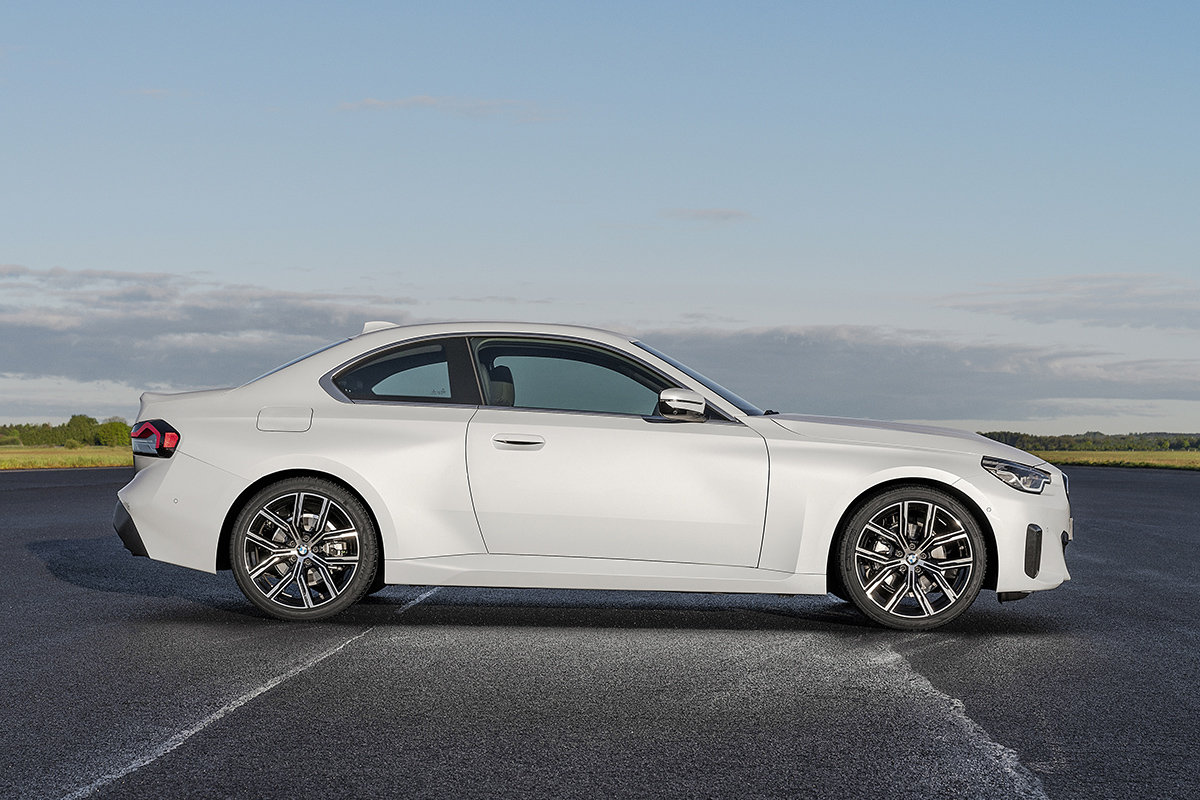
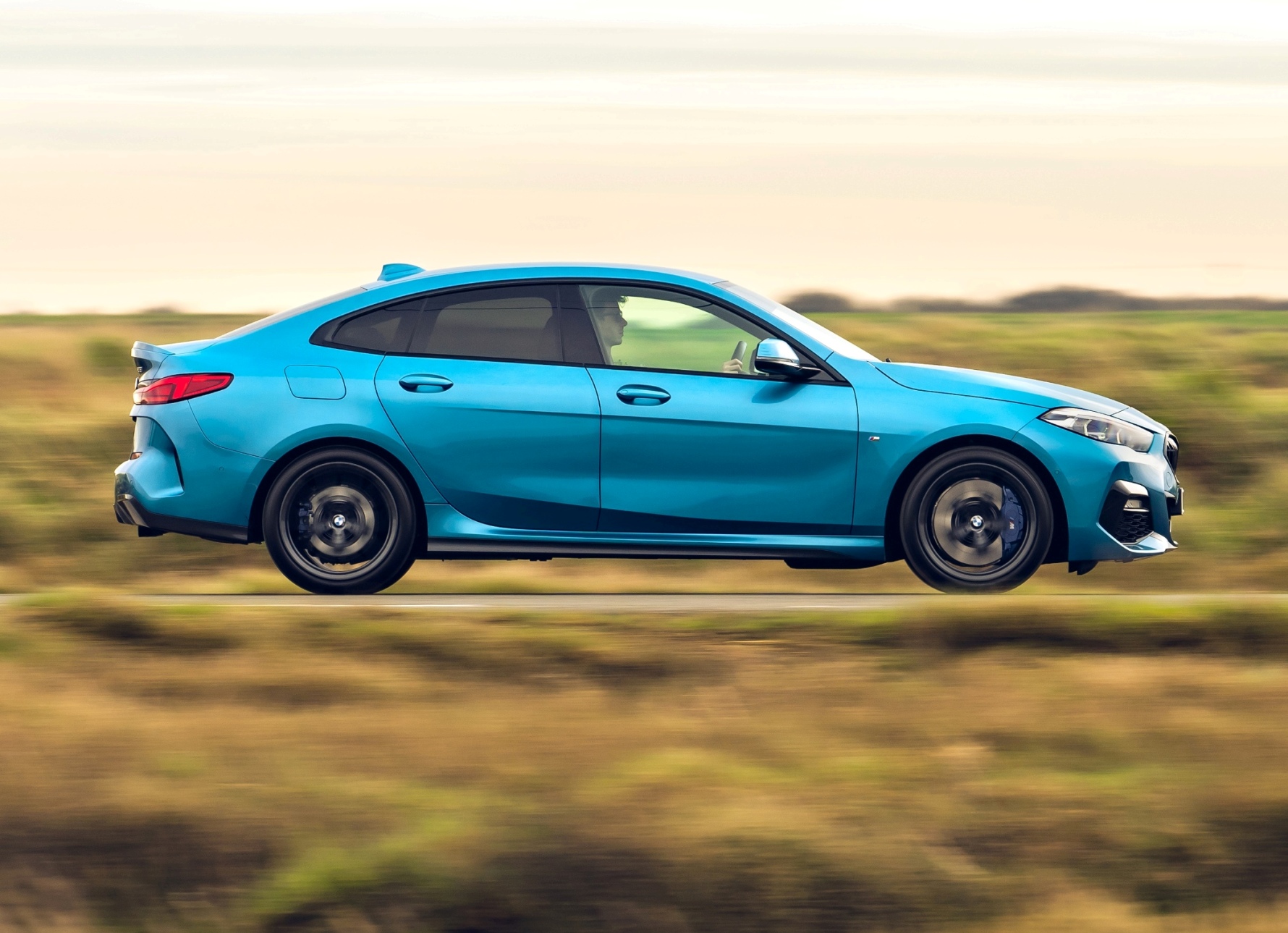
You can usually tell the position of the front wheels from the start of the doors (and also front overhang) as long as it has a front-mounted engine! Since the engine is always stacked against the bulk head for weight distribution/handling. (mid and rear engined cars all have short noses with the front wheels all the way back)
RWD 2-series
FWD 2-series
RWD 2-series
FWD 2-series
The last RWD car I drove was a Cortina in about 1984. Apart from a Sierra XR4x4 (4WD) from 1989 to 1992 every car since has been FWD. Although I did have a Seat Born as a loan car a few months ago - I assume that was RWD.
Always preferred FWD for the extra traction in slippery conditions, but otherwise no preferance. It's just that the cars I have choose to own have been FWD - such as BX, Primera, A4, Accord, Civic, Octavia, Leon.
Always preferred FWD for the extra traction in slippery conditions, but otherwise no preferance. It's just that the cars I have choose to own have been FWD - such as BX, Primera, A4, Accord, Civic, Octavia, Leon.
Forums | General Gassing | Top of Page | What's New | My Stuff