
Aston Martin V8 Vantage Prodrive | Spotted
Aston's V8 sports car launched to rave reviews in 2005 - then Prodrive made it even better
If you want a job done properly, get Prodrive to do it. When Subaru STIs were served exclusively to the Japanese market in the 1990s, the Banbury-based motorsport masters gave us the superb Impreza RB5 and P1, while the P25 served as the road-going version of the WRC car in a way that the 22B couldn’t. Then there are the cars that just needed a good sorting out. Alfa Romeo, for instance, called on Prodrive to un-rubbish the Brera’s chassis, which it duly did with the vastly superior Brera S. Not to mention the countless championship-winning rally and GT cars the outfit has churned out over the decades. If a car’s wearing a Prodrive badge, it’s worth your attention.
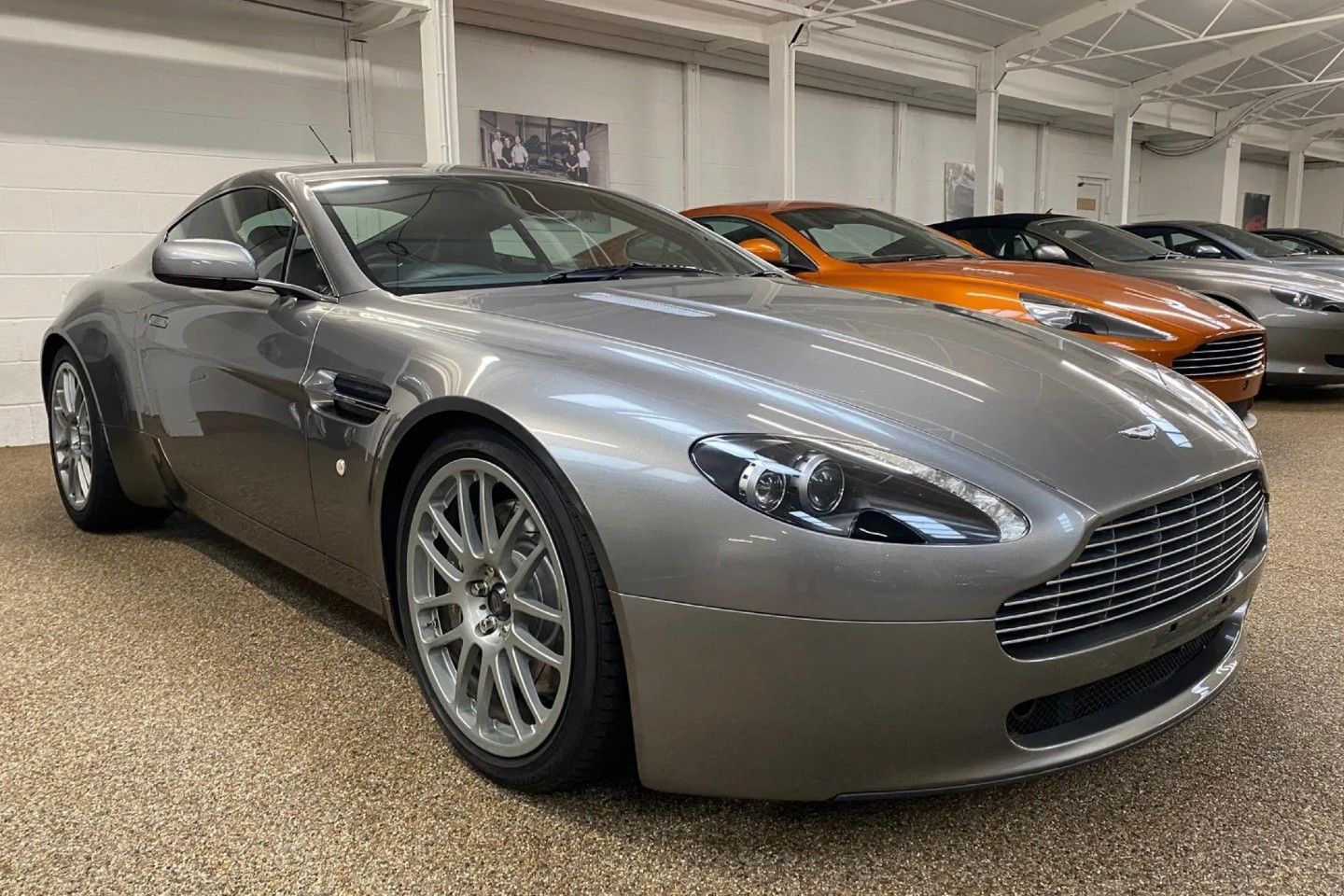
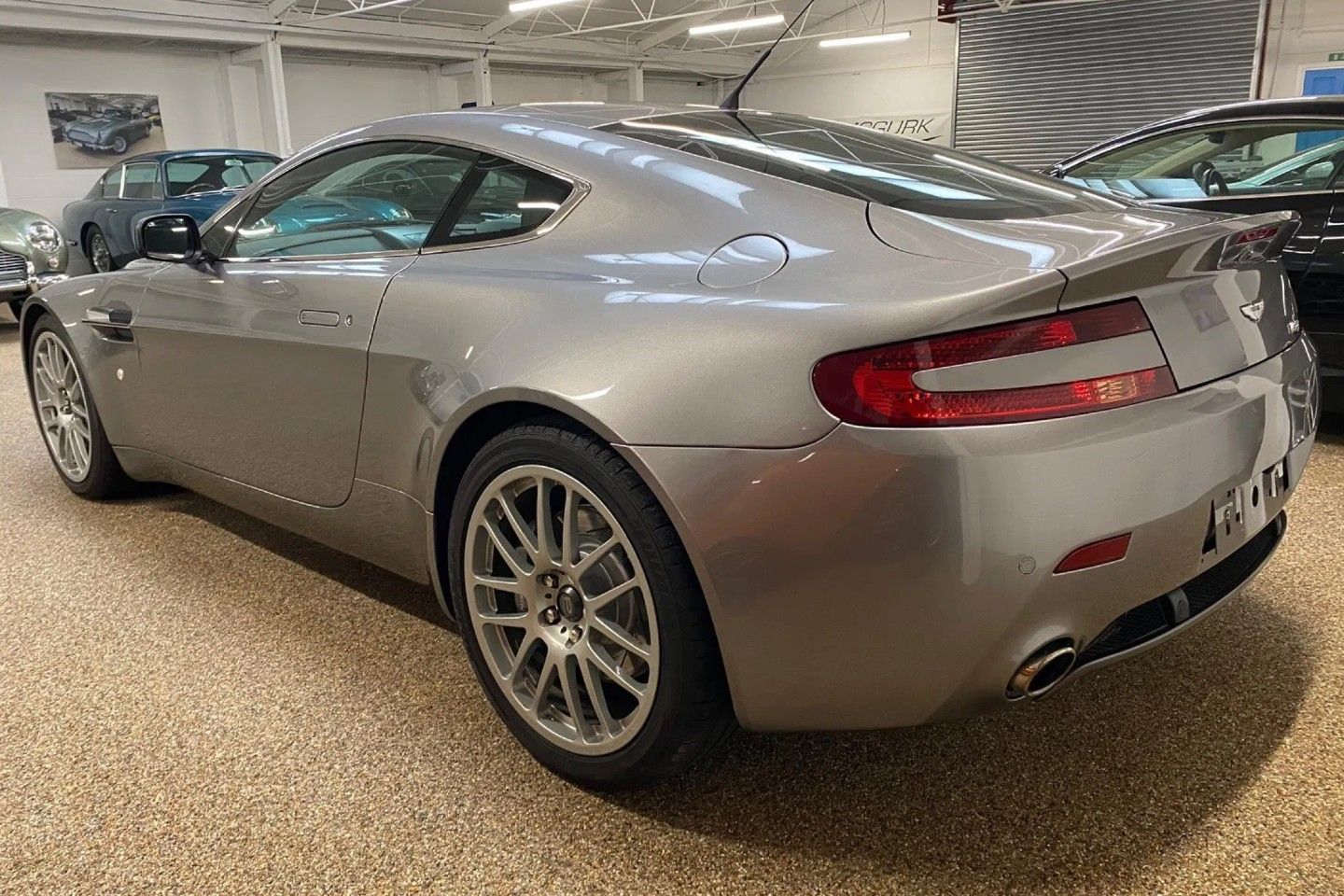
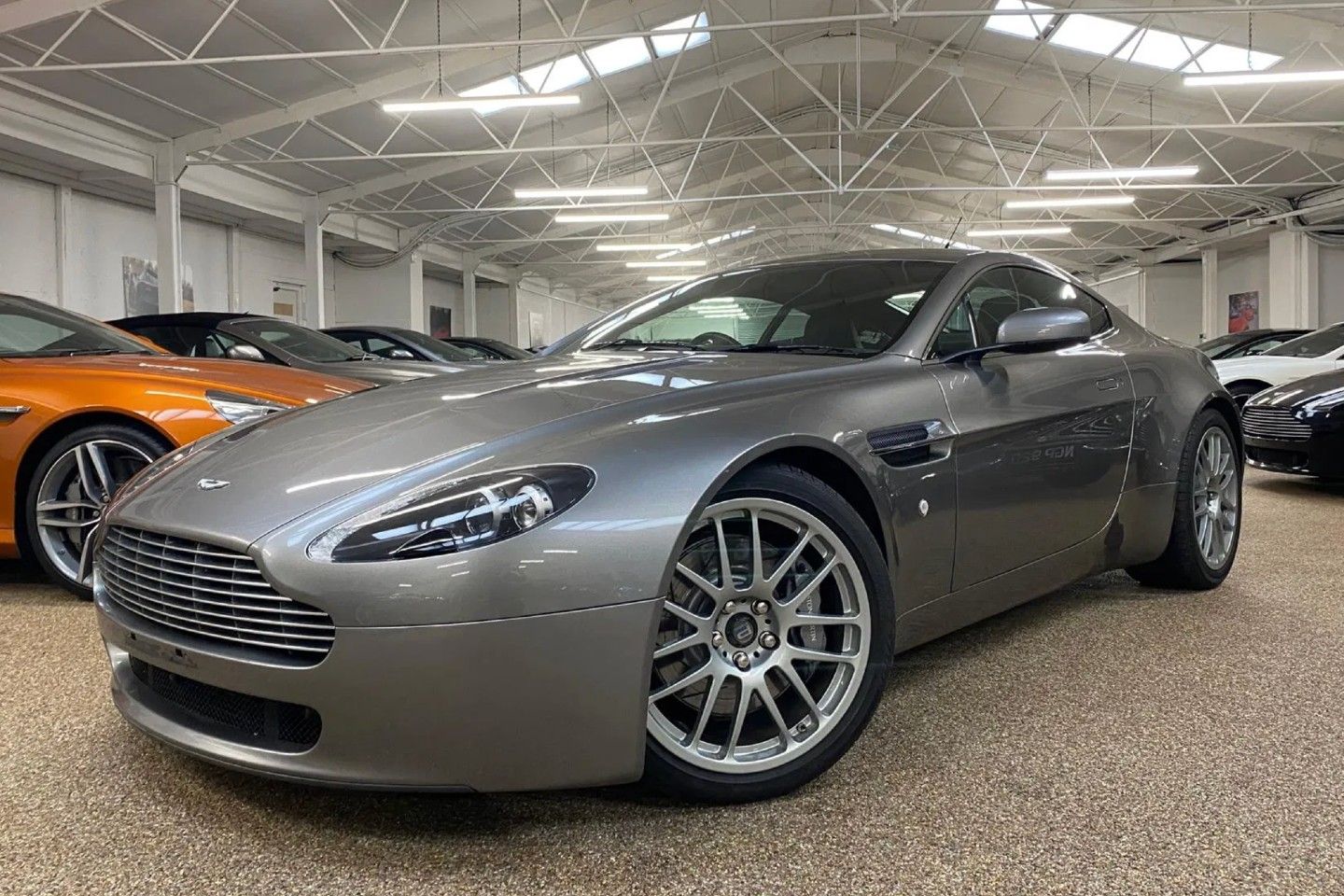
As is this Aston Martin V8 Vantage, which has been given a once-over by the boffins in Banbury. To be fair, it’s not like the Vantage needed much doing to it: the handling was superb, the engine visceral, and it was all wrapped up in a design so timeless that it still gives the new car a run for its money. Aside from any reliability gremlins (and there are a few on early cars), the 4.3-litre V8 did need to be revved out to get the most of its 385hp and 302lb ft of torque, while the steering could seem a bit on the numb side.
‘A brilliant base, but room for improvement’, read the Vantage’s report card at the time. Prodrive, then in charge of Aston Martin’s factory GT team and the mastermind behind the DBR9, took it upon itself to iron out some of the sports car’s creases. Namely, a hefty power injection courtesy of a remap that calibrated the ECU to work better with 99 octane fuel, while the rev limit was bumped up by 300rpm. Factor in a freer-flowing sports exhaust and you get a 45hp and 23lb ft of torque increase over the standard car, bringing peak power and torque up to 425hp and 325lb ft respectively.
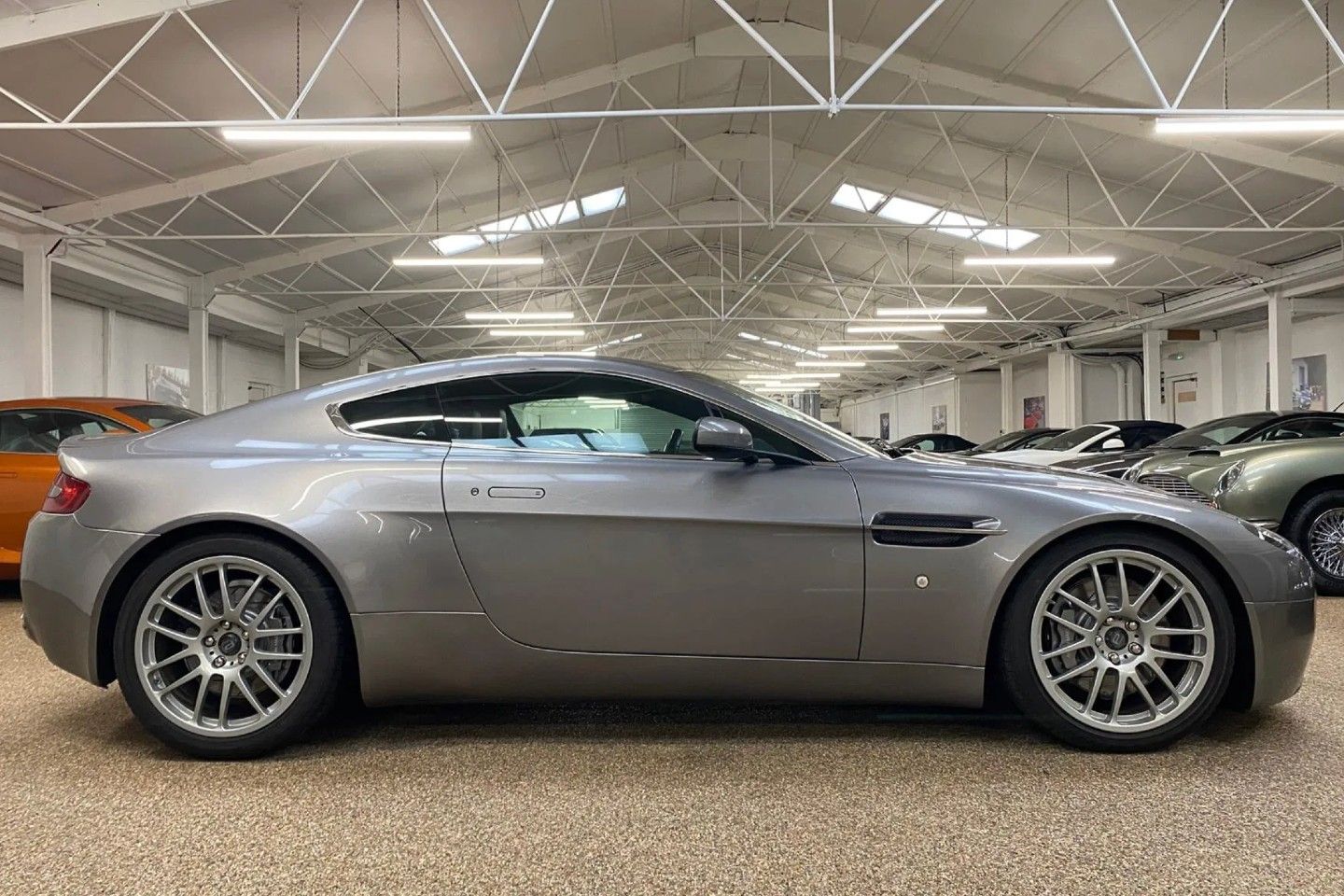
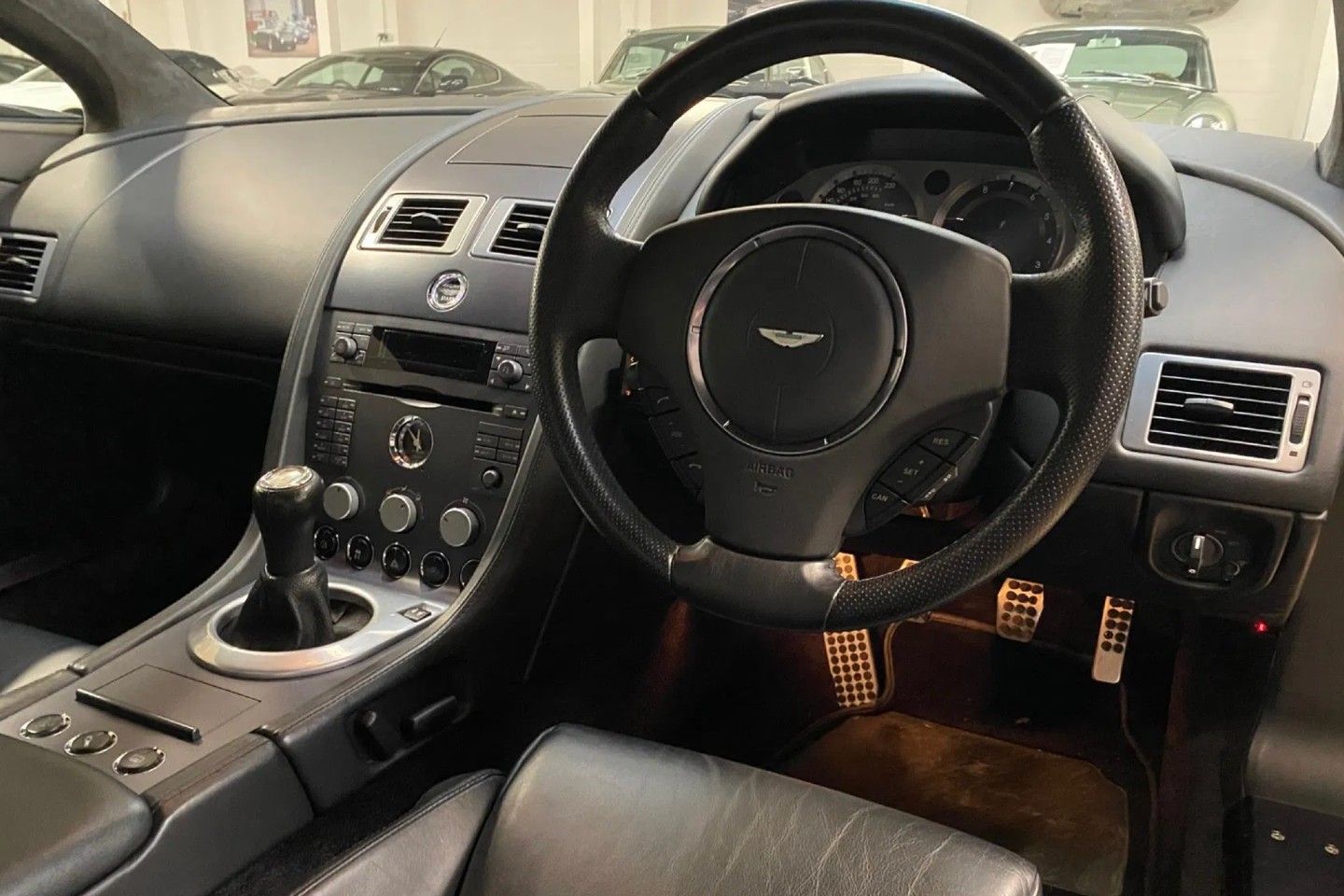
On the chassis side, Prodrive paired Eibach springs with two-way adjustable Bilstein dampers, allowing you to switch between normal and sport modes from inside the car. Flicking the car into the latter setting is said to transform the handling by dialling out the standard car’s body roll. Meanwhile, Prodrive Japan developed a new forged alloy wheel design inspired by the design of the ultra-cool DBR9 GT1 machines, saving 10kg over the standard rims.
Interestingly, these were offered as a set of four Prodrive Performance Packages: the ECU tweak, suspension upgrade, the forged rims and an aero pack featuring a carbon composite splitter and spoiler to help reduce lift at high speeds. The car we have here has three of those packs fitted (minus the aero upgrade) totalling nearly £16,000 worth of options. Given that this wasn’t technically a special edition, there aren’t any official production numbers to go off, and the fact that customers could pick and choose their upgrades makes them almost impossible to track. But this being the only one for sale on PH suggests they’re relatively few and far between.
Understandably, the price tag comes with the usual Prodrive premium. You’ll need to part ways with £38,850 to get hold of the keys, which is a good chunk more than the cheapest V8 Vantages on sale but not miles ahead of other low-mile examples. It’s not the most expensive Prodrive Aston currently for sale, either. There’s a one-of-nine V8 Vantage GT2 that once raced at Le Mans, and a screaming V12 DBR9 that scored a class win at the 12 Hours of Sebring. Either one would surely complement the car we have here perfectly as a weekend track toy…
SPECIFICATION | ASTON MARTIN V8 VANTAGE PRODRIVE
Engine: 4,280cc V8
Transmission: six-speed manual, rear-wheel drive
Power (hp): 425@7,500rpm
Torque (lb ft): 325@5,400rpm
MPG: N/A
CO2: N/A
Year registered: 2006
Recorded mileage: 34,000
Price new: £85,000 (plus £15,831 with Prodrive packs)
Yours for: £38,850
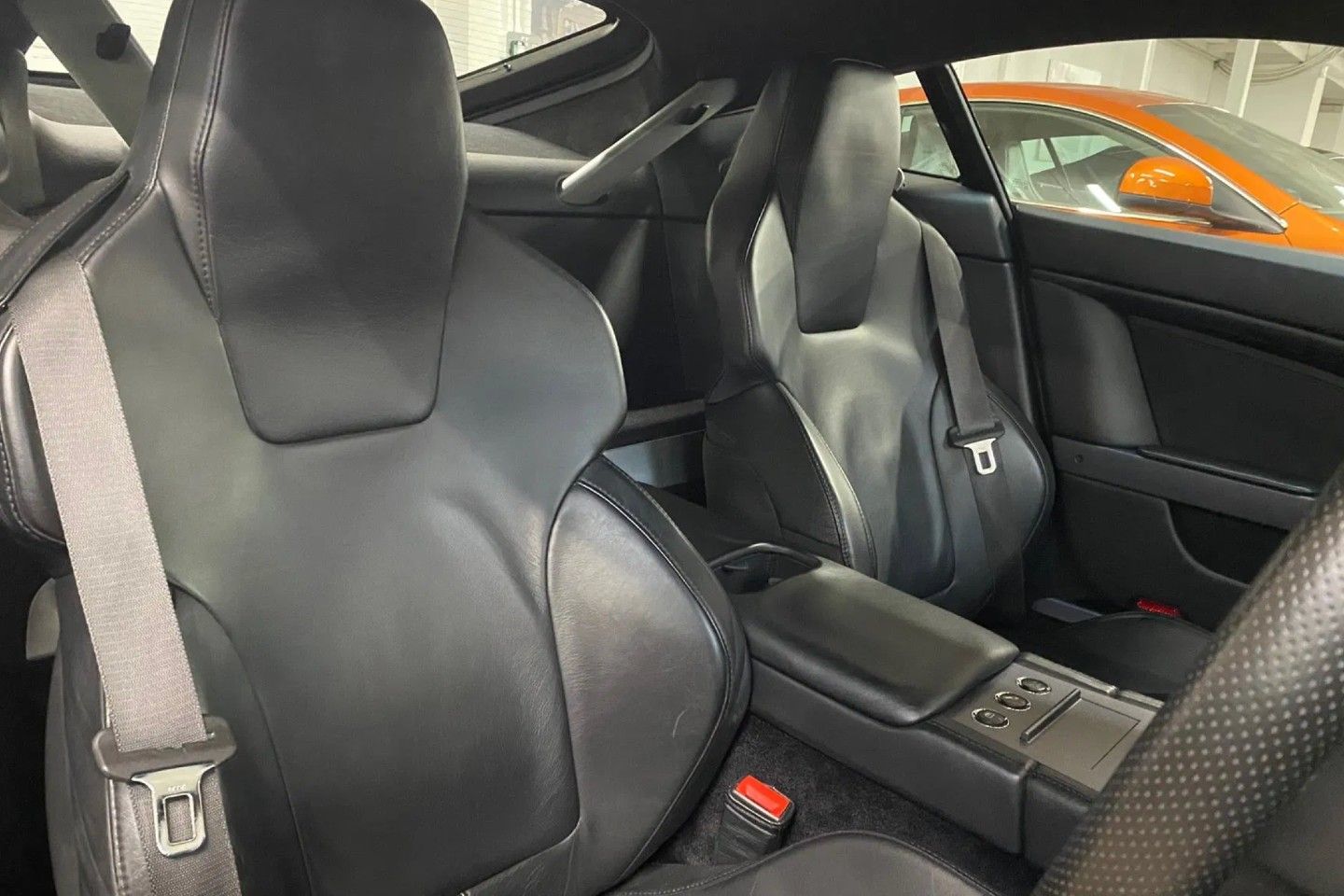


That being said, low mileage V8, manual box and almost super car cool for less than £40k… Not too bad!

There's a good Readers Cars thread on one of these here https://www.pistonheads.com/gassing/topic.asp?h=0&... with some extra detail.


Worst criticism I had of my 4.3 was that the wonderful, revvy engine and darty nose were mached badly with suspension that felt a little lazy on the rebound. This car would likely solve that issue quite nicely.
And yes, it sounded epic. Lovely, lovely engine. And that was on the standard exhaust.
Reliability, mind. That's another story. It was pretty poor - and a lot of it was electrical/electronic issues. Its a reason that if I have another, it'll be a 4.7, which was rather better in this regard, I'm told.
I think about 40 cars eventually had the engine pack fitted, so not a big seller, and not helped by the 2008 financial crash meaning the sales of the cheaper Astons also nose dived because the sort of person who was buying a V8V was actually often stretching up from something like an M3, or low spec 911, and so a tightening of the purse strings had a major affect on this segment
It's probably far enough away in time for me to be able to say that actually i'm afraid the Prodive engine pack never really made the power claims. but not because of the pack, but because of the base engine! Aston claimed 380 bhp for the 4.3, but in reality everyone i saw made around 360 to 365 bhp. The engine was designed to rev to 7,800 and hence had big cams and ports, but during the final durability program, a move to Lead Free bearings resulted in multiple engines failing their high speed durab tests. As a result, AML brought the production cars rev limit down to 7,100 (iirc) rpm, which robbed a fair chunk of power. On the std engine, power is still climbing when it hits it's limiter.
Because of this, and Prodrive quite sensibly not wanting to tread on Astons feet so to speak, it was decided to take the power increase from the Prodrive mods, which really is about 40 bhp, and apply that to the claimed production figure. Ime, a well run-in Prodrive car is going to make about 408 to 412 bhp, and a tight new one, about 400 bhp.
The High flow cats really openned up the engine at high rpm, and change the exhaust note considerably, both because the lower cell density cat does not act as a damper as much as the OE part, but also because the lower pre catalyst back pressure results in a higher effective expansion ratio as the gas leaves the exhaust ports, which changes the manifold tuning, and hence the timbre of the note.
That significantly lower back pressure and higher expansion also means the knock limit at peak torque is much more favourable, and the component protection enrichment can be backed off, enleaning the engine close to LBT. Add in a 300 rpm higher rev limit and that where the extra power comes from. The Higher limit was chosen as a compromise, understanding that the actual durability tests that hold the engine at peak power for 180 hours continuously (7.5 days!) was really a bit over the top for such a car (it was a ford test, sensible on a 100bhp fiesta that gets spanked everywhere at WOT, but not so sensible for a much more powerful car). We ran the Rally GT Vantages with a 600 rpm extended limit, and despite the best attempts of their drivers to kill things, never saw failures or excessive wear. In hind sight, given i don't know of a single prodrive car engine issue, we probably could have given the road kit the same full 600 rpm extension, rather than the more conserative one chosen.
https://www.evo.co.uk/aston-martin/v12-vantage/649...
Forums | General Gassing | Top of Page | What's New | My Stuff