
Renault and Geely saddle up for Horse Powertrain
Worried about the future of engines? Announcements from Japan - and now Europe and China - suggest you needn't be
It’s been a significant week for internal combustion. It has seemed for a while like its fate had been sealed, only for legislation to be variously rolled back amid discontented murmurings about the timescales and a proportional lack of EV demand. In addition to news that some firms were delaying progress on additional electric advancements, some have gone even further: in just the past few days, five global manufacturers have underlined their commitment to the future of suck-squeeze-bang-blow in one form or another.
Earlier in the week Toyota, Subaru and Mazda came together to state that as part of a combined decarbonisation push - and driven ‘by a deep understanding of their customers’ diverse lifestyles’ - all three will continue to develop ‘signature engines’. Which essentially guarantees the development of a new generation of the Mazda rotary, the Subaru boxer and Toyota's inline-four. The newcomers will be much more efficient and smaller than we’re used to, boosted by the integration of electric drive units. But reduced cubic capacity means a lower bonnet, opening up new design possibilities as well as better aero performance.
Moreover, all the new units will be designed to run on e-fuel, biofuel and hydrogen. Toyota in particular has been keen to push the latter in motorsport of late, even if its adoption into the mainstream seems no closer to fruition. CEO Koji Sato noted: "In order to provide our customers with diverse options to achieve carbon neutrality, it is necessary to take on the challenge of evolving engines that are in tune with the energy environment of the future.”
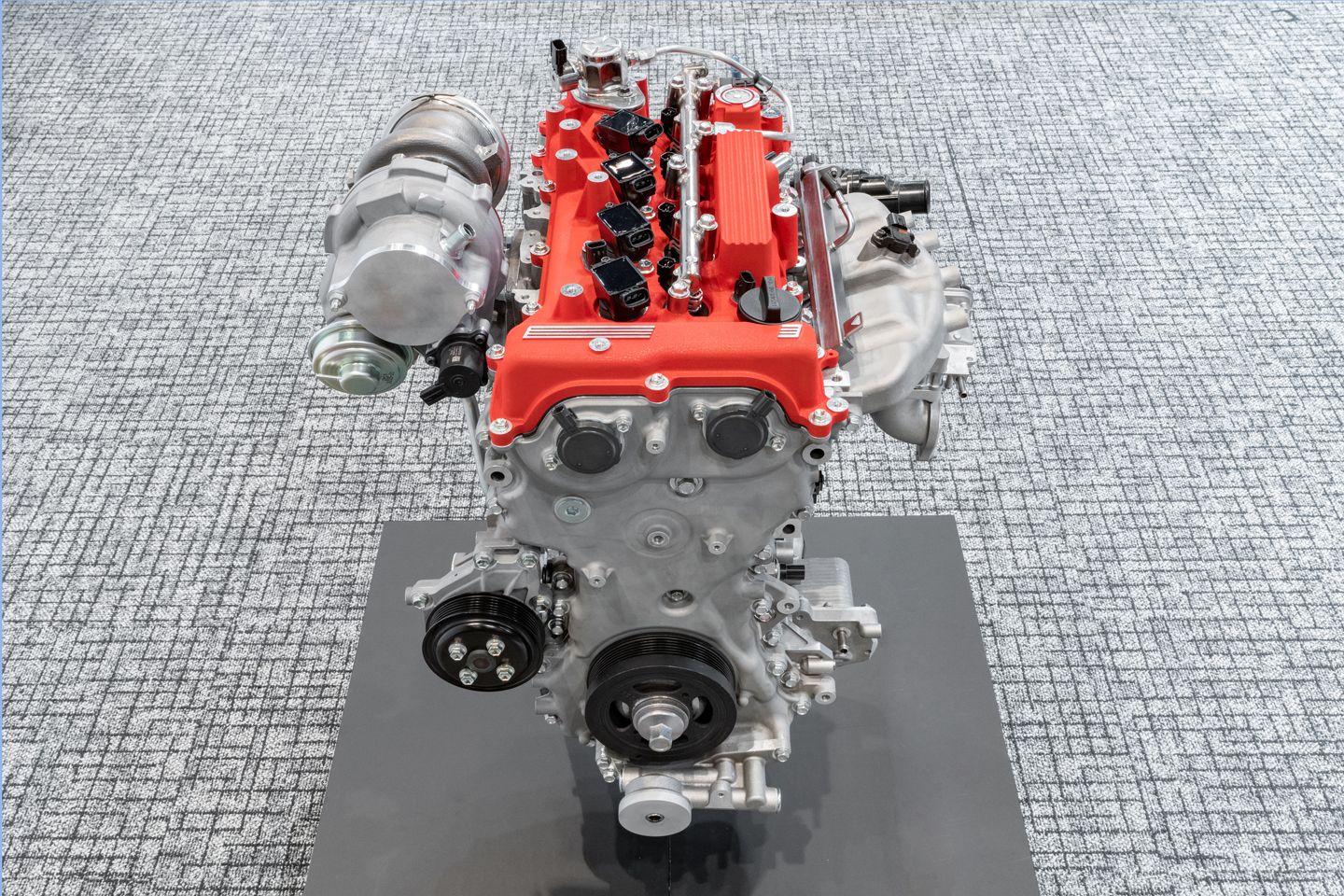
For some, however, the future is too far away and statements like that too conservative. As of today, Horse Powertrain is to produce a ‘complete portfolio of state-of-the-art powertrain technologies for global partners including hybrid systems, internal combustion engines, transmissions, and battery solutions.’ Horse Powertrain (it’s meant to be written HORSE, but there’s no way we’ll be trotting that one out) is a joint venture between Renault Group and Geely, with each holding a 50 per cent share. The HQ will be in London, but more broadly (and because it assimilates existing resources) there are going to be in the region of 19,000 employees with the logic mirroring that of the Japanese trio: ‘Renault Group and Geely believe that a combination of various powertrain technologies is necessary, including highly efficient internal combustion engines (ICE), lower carbon e-fuels, and hydrogen, to achieve a successful decarbonization in a world where more than half of vehicles produced are expected to still rely on combustion engines by 2040.’
Horse Powertrain is galloping into the challenge at full tilt, with agreements already in place to supply Volvo, Nissan, Proton and Mitsubishi. To assert its position as a ‘worldwide leader in hybrid and combustion powertrain solutions from Day One’, the Horse Powertrain stable will include 17 global plants, five R&D centres plus nine customers from the get-go. Its expected €15bn of yearly revenues and five million or so powertrains will include engines that can be powered on ethanol, methanol, hydrogen, LPG, compressed natural gas and hydrogen, plus hybrids and PHEVs. Comprehensive, then.
At the reins will be Matias Gianni as CEO, who brings powertrain experience from Vitesco Technologies. The six-person board features senior bods from both Renault and Geely, including the former’s Chief Technology Officer Gilles Le Borgne, CEO of Geely Auto Group Jerry Gan and Dacia CEO Denis Le Vot. A huge undertaking? Yes.
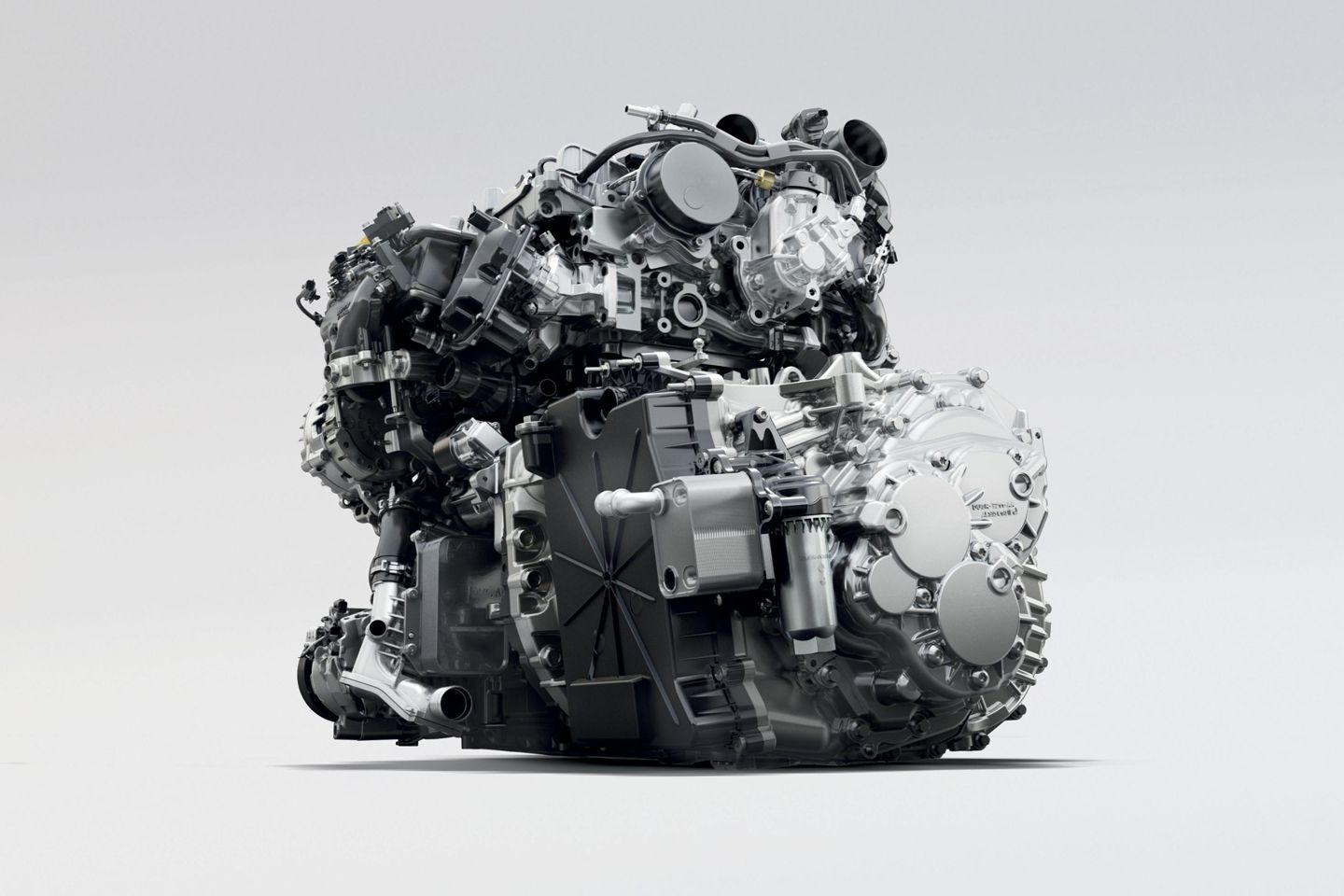
We can expect the results to be similar: smaller and more efficient engines that reduce emissions still further while retaining the convenience (and perhaps enjoyment - you never know) of internal combustion. Anyone else wishing to join the party better move fast, because Horse Powertrain has big ambitions straight out of the gate; Renault Group CEO Luca de Meo says HP can help its parent company “achieve worldwide leadership and scale in a sector representing more than 80 per cent of its [Renault’s] business.” Geely Holding Chairman Eric Li suggested that it’s “crucial” for expertise to be shared and multiple technologies explored for the industry to reach net zero. He added: Horse Powertrain Limited will have the portfolio, scale and capacity to offer the low-emission solutions the automotive industry of tomorrow demands. Today’s launch marks a new chapter in sustainable mobility, and we at Geely are proud to play a part.”
For the moment, an exact date hasn’t been given for when the first Horse Powertrain engine will be complete and in a car. But the project has been racing along at quite a canter - an agreement was signed by Renault and Geely last July, and already Horse has the stamp of approval from authorities - so it seems unlikely we’ll be waiting furlong.


Long may this continue.
In terms of this news, I think it's fantastic. I cannot see a world where 90%+ of people have EV's, it just doesn't work for everyone. Hybrid drivetrains with smaller more efficient engines is obviously the way forward. Surprised it's taken so long to get to this decision. Huzzah for common sense.

In terms of this news, I think it's fantastic. I cannot see a world where 90%+ of people have EV's, it just doesn't work for everyone. Hybrid drivetrains with smaller more efficient engines is obviously the way forward. Surprised it's taken so long to get to this decision. Huzzah for common sense.
Small batteries with some sort of supplementary combustion engine appears to be a really good solution and it's quite annoying that previous tax legislation pushed us very quickly down a path of large battery EV vehicles which were always questionable with respect to affordability and scarce resource allocation.
The average UK car does around 30 miles per day, if you sized a battery around a 50 mile range then had a range extender combustion engine you're looking at a daily charge and on the occasions you need more range you go on petrol
I saw it as basically a 'bad bank' to hive off legacy factories, employees etc into so that when the world goes fully electric and Renault has no need of them, they don't have to pay out redundancies, brownfield site clean-up etc

However the 'interim' state looks likely to continue for longer than expected 12 months ago, deferring Horse's appointment at the glue factory.
It seems to me to just demonstrate ignorance to label a propulsion system as 'woke' (and anything you haven't taken up/tried/understood).
Also wise to keep research going never know what the next big thing will be…
.So it's hard to understand the fella above getting all excited about this announcement.
Also wise to keep research going never know what the next big thing will be…
Plus anyone who can afford a car has electricity at their house, not sure why you think electric infrastructure is miles behind?
Intercity trucks and coaches sure - but even there it’s mostly train and flights for passengers. Distances are long, and roads poor, so most people don’t drive cross country. Most cars are urban use - suits electric.
It seems to me to just demonstrate ignorance to label a propulsion system as 'woke' (and anything you haven't taken up/tried/understood).
Having driven various EVs I personally find them tediously boring and soulless regardless of performance levels but there is no way anyone can refute the fact that, on paper at least, they are objectively better and make far more sense as a means of propulsion than ICE.
It seems to me to just demonstrate ignorance to label a propulsion system as 'woke' (and anything you haven't taken up/tried/understood).
Our stable has:
- A Seat Alhambra diesel for carrying 3 kids and 2 dogs to holidays
- A Tesla Y standard for everyday and weekend expeditions. It does the most miles, and my wife will have a hard time getting back to an i/c car for her everyday use.
- A Golf mk5 Edition 30 which is my airport car / short distances when wife uses her Tesla.
- A Street Triple 765RS for blowing the cobwebs, trackdays and taking 14 y.o daughter on a sunday morning brunch when weather allows it.
They all work great in their own way for their own purpose.
EVs essentially make cars white goods with no USP - why spend £100k on an EV Porsche when a £40k BYD offers similar performance?
Forums | General Gassing | Top of Page | What's New | My Stuff