
UK-built Toyota Hilux FCEV begins testing
Ten hydrogen-powered Hiluxes are helping Toyota keep the fuel cell dream alive
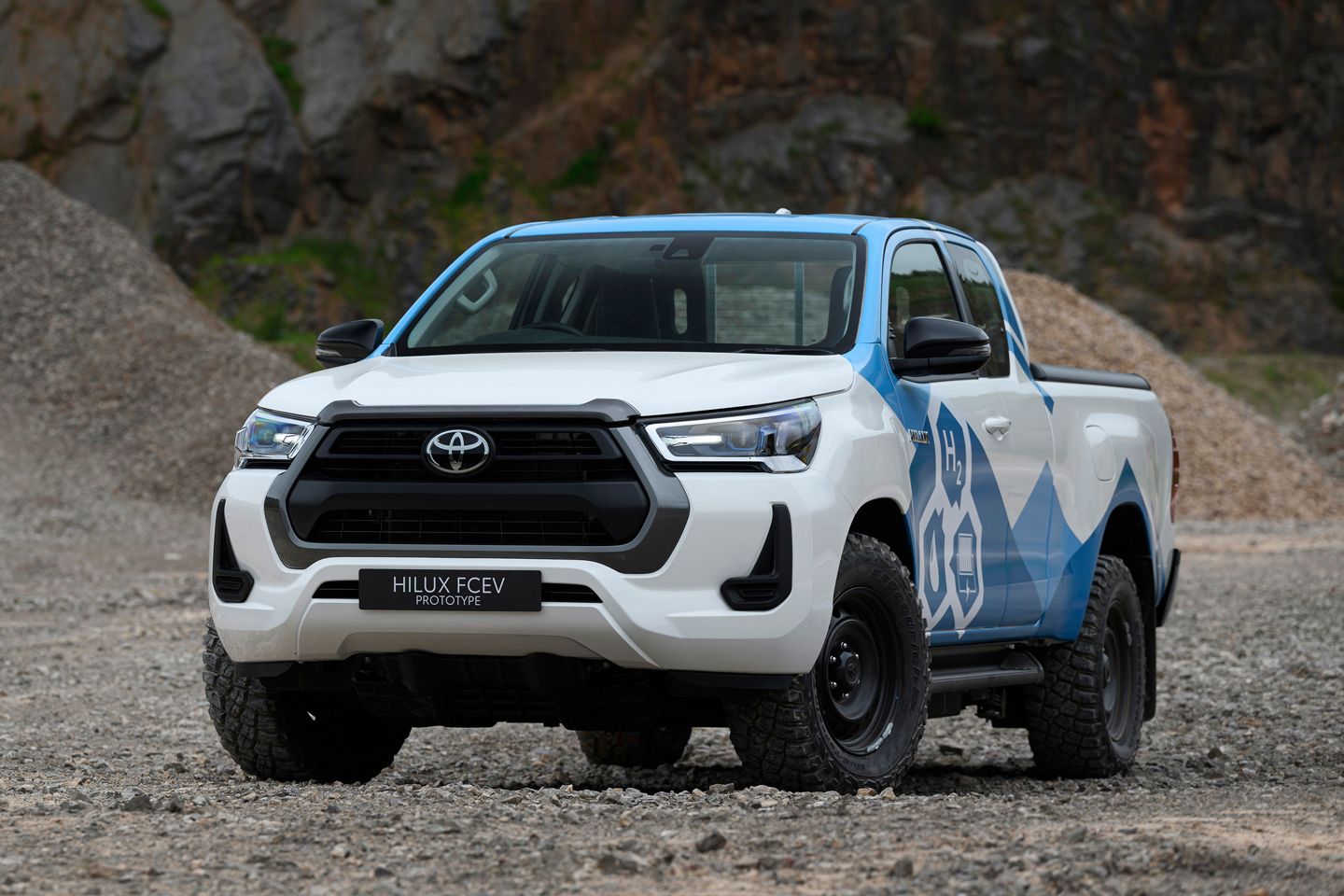
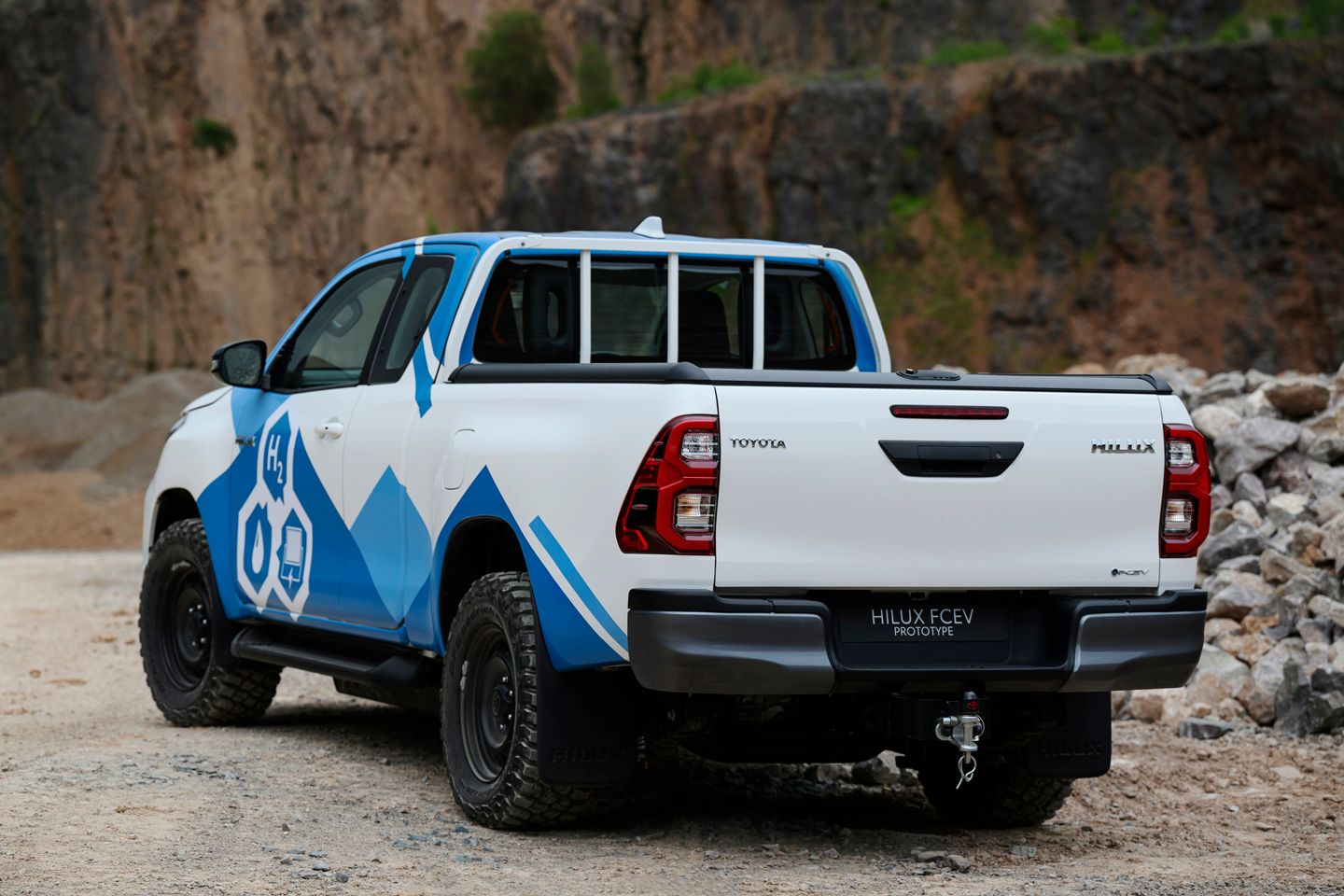
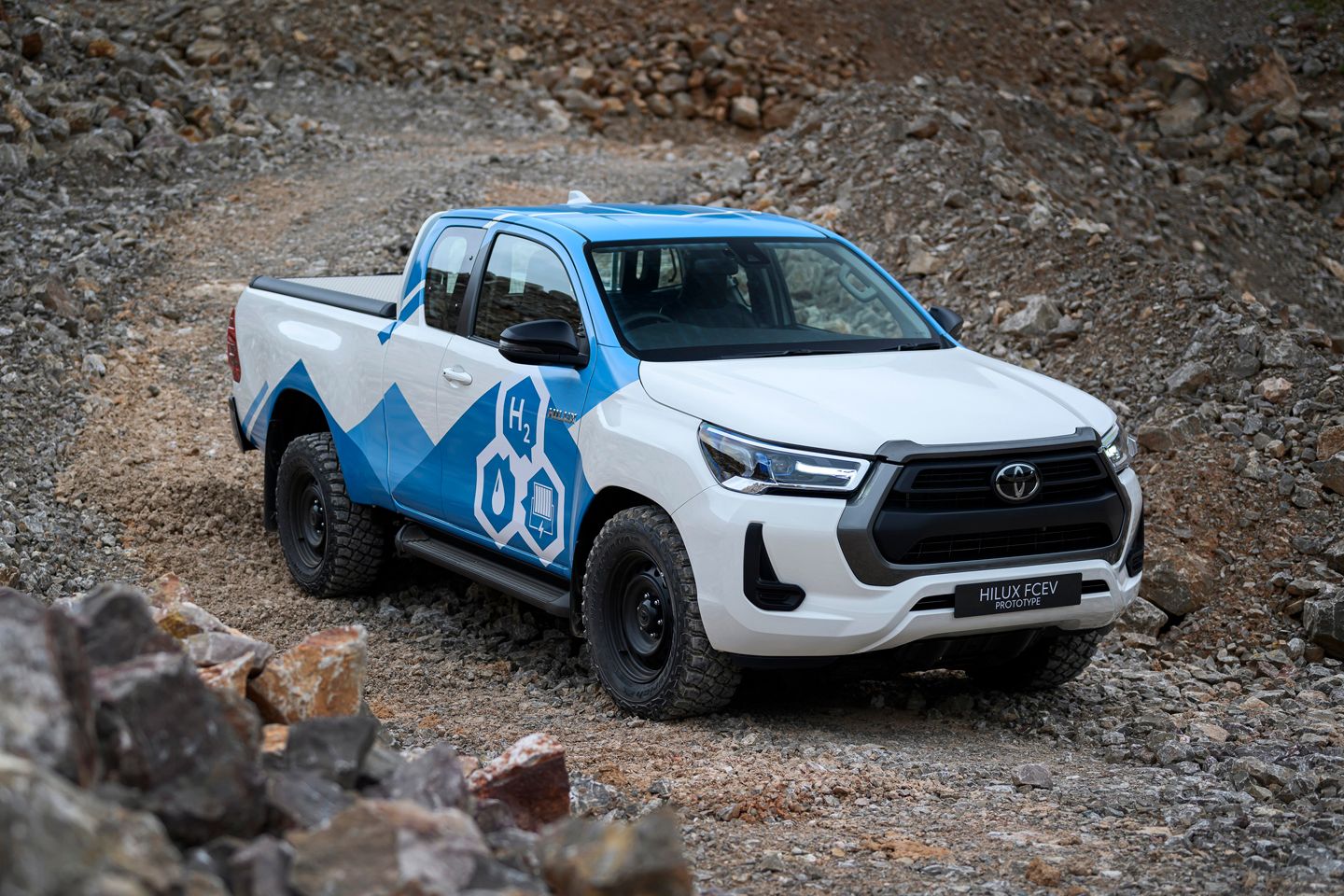
Credit where it’s due to Toyota, it doesn’t tend to follow the crowd when it comes to trends. When nobody was too interested in rally-inspired road cars any longer, it made the GR Yaris - and flipped the hot hatch market on its head. With sports cars also not on many agendas, it made the GR86 and reminded everyone why the genre is so important. And now, with the commercial vehicle sector undergoing its own battery-powered electrification, Toyota has again floated a different option by building 10 hydrogen-powered Hiluxes.
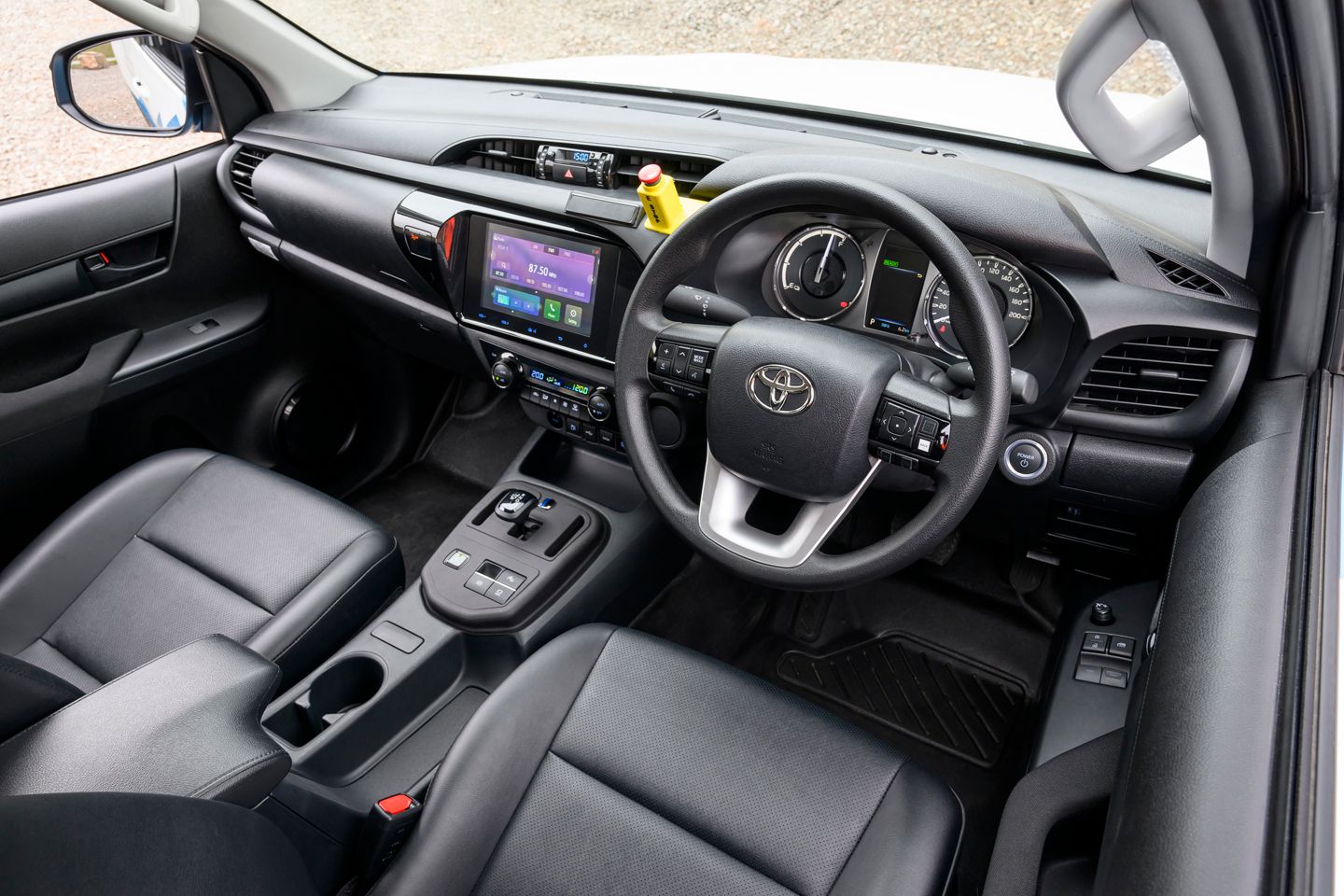
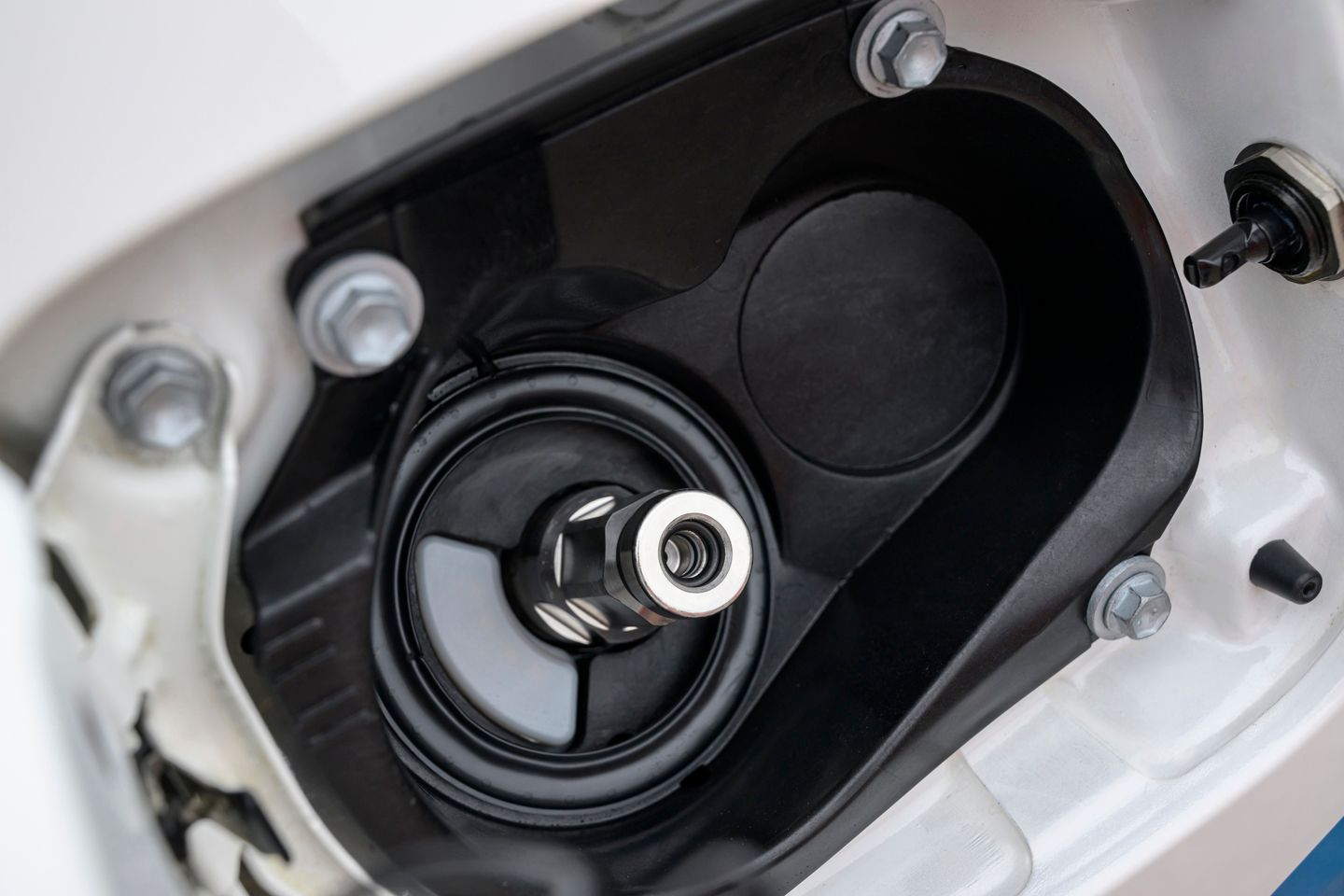
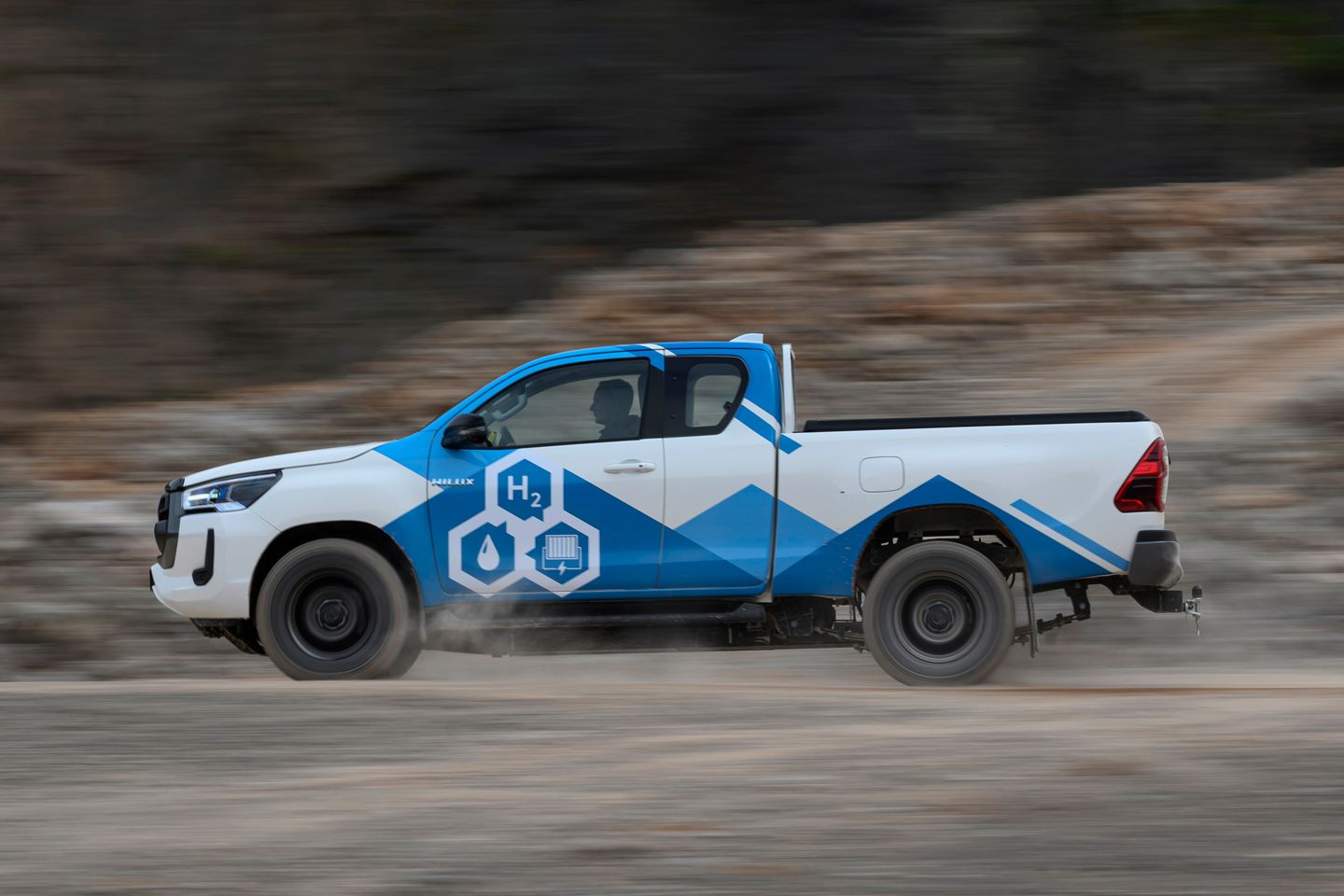
That’s right, no one-off, toe-in-the-water prototype test. Toyota Motor Manufacturing UK in Derby, following the debut of a car last September, has built 10 fully functional Hilux Fuel Cell Electric Vehicles. Livery aside, there’s nothing to mark the Hilux out as any different to a diesel-powered version: its dimensions (5,235mm long by 1,855mm wide and 1,810mm tall) are identical, plus both payload and towing weight are increased because hydrogen is so light. The gas is stored in three 2.6kg fuel tanks mounted in the ladder frame chassis, with the battery above them in the rear deck; the 330-cell fuel cell that creates the electricity is above the front axle. Toyota says cabin space isn’t impacted, though presumably the load bay suffers a tad (there’s not a pic available).
Power is rated at 182hp and torque at 221lb ft, which can’t quite compete with the 2.8-litre diesel’s 204hp and 369lb ft, though ought to be enough for the required duties of the rear-wheel drive truck. And just water vapour leaves the back, of course. As for zero emissions alternatives, Toyota reckons that 600km (373 miles) is possible on a tank, which is more than a comparable battery-powered truck. And hydrogen takes less time to replenish (if you can find a station).
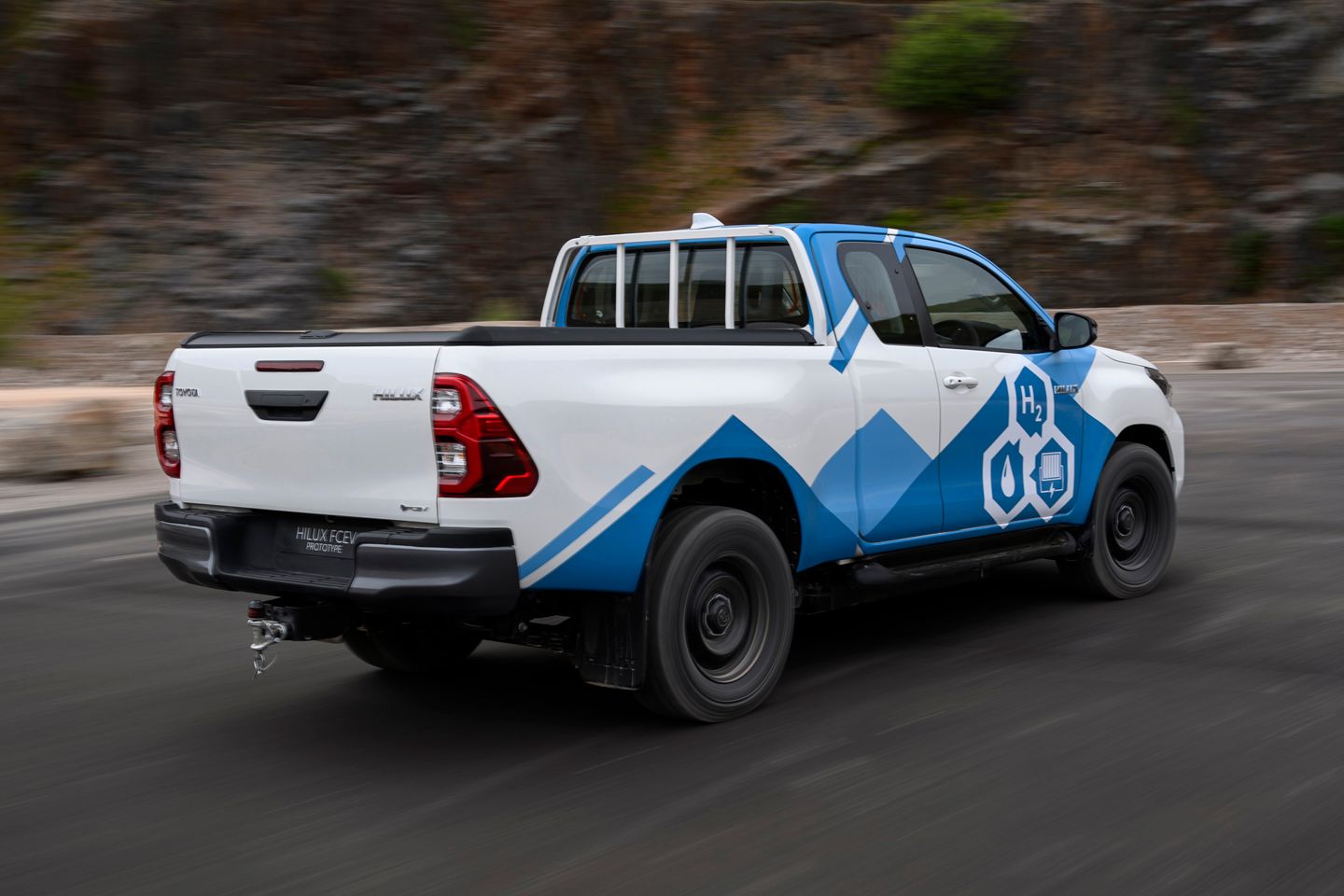
Toyota assembles its fuel cell modules in Belgium, and the Hydrogen Factory Europe is working on a third generation that ought to be on sale by 2027, further increasing the range and power of cars like the Mirai. The manufacturer reckons that technology and increased volumes can help reduce costs ‘by more than a third’, which of course has to be factored in when considering the adoption of lower-emissions drivetrains. Making a Mirai work with your life would be tricky enough already, before thinking about the £65k asking price.
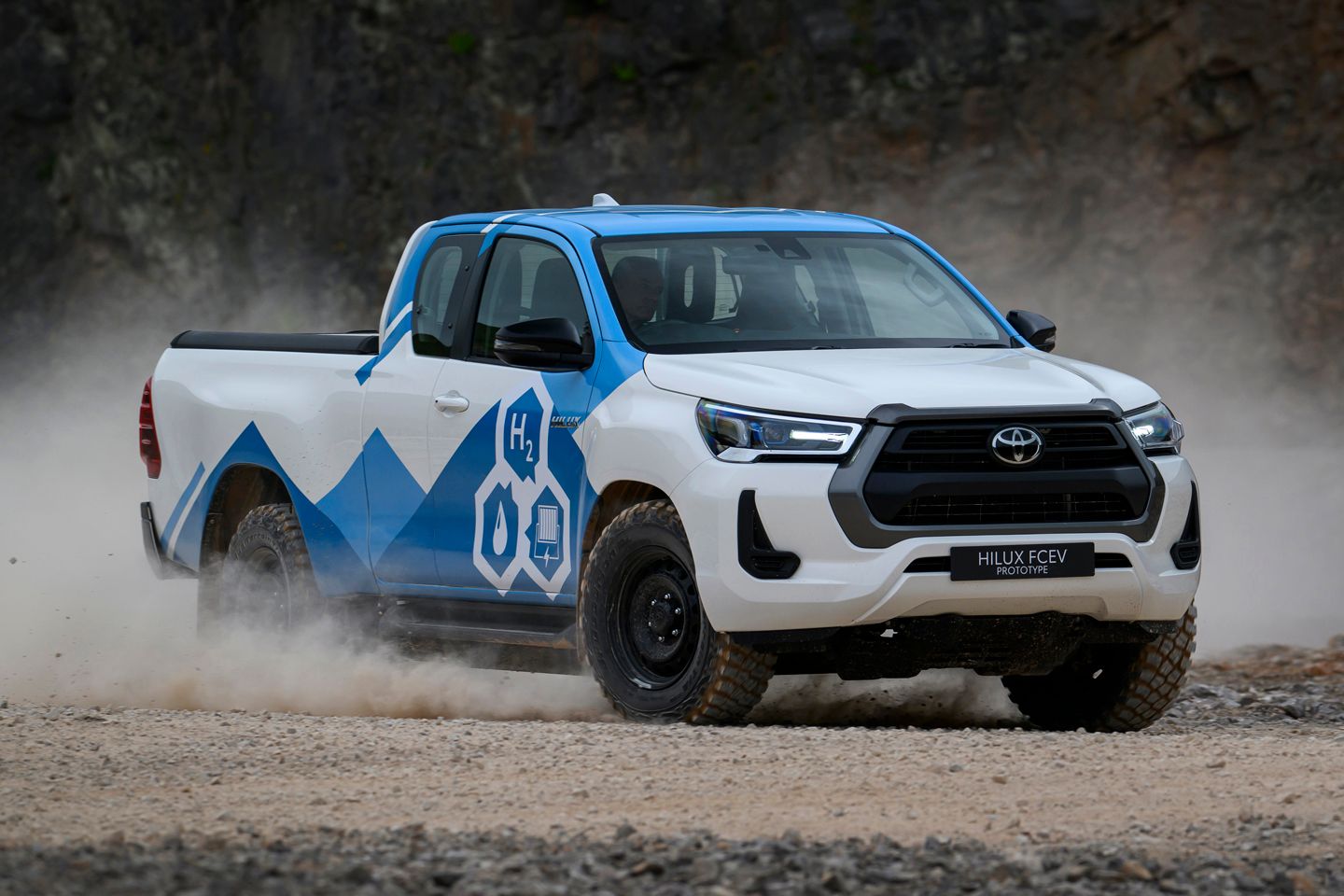
A hydrogen Hilux has a little way to go then, but this new fleet is an encouraging development given that the first truck was shown as recently as September. Half of them will undergo ‘rigorous field testing to assess safety, performance, functionality, and durability, generating test drive data in real-world situations’, while the other five are doing media demos that will also include going to the Olympics. Toyota says that its experience will be combined with its 30-plus years of hydrogen cars to help the next generation of FCEVs. That’s over here, too, with Europe set to be ‘one of the largest’ hydrogen markets come 2030.
There aren’t any numbers attached to that claim, because right now it feels like hydrogen will remain a bit-part player in the push to carbon neutrality. But never has the automotive industry felt like it’s changing at such a pace, so who really knows? Toyota is keeping its options open, for cars and commercial vehicles, and that looks like a sensible strategy versus all eggs in one basket. It’s hoping for the Hiluxes to ‘further develop hydrogen technology and stimulate a wider roll-out of hydrogen eco-systems and infrastructure across Europe’. Given everything Toyota’s iconic truck has achieved since the 1960s, from conquering the North Pole to winning Dakar, that’ll be a breeze.


They’re not planning on, only hoping to stimulate, the buildout of a Green Hydrogen infrastructure to go with it. So it’s just an expensive and inefficient ICE fueled (grey hydrogen) boondoggle.
If hydrogen was viable, it would have happened decades ago. If it only wasn’t because of that pesky thing called physics.
The vehicle featured in this article is a hybrid EV, its electrically-powered with a battery and a fuel cell.
The carbon intensity of a UK-charged EV is currently under 40 g/km for the usage phase, trending to zero over a few decades.
These things are so easy to check, I have no idea what anyone hopes to achieve by making such bold claims as 'the biggest lie of our time'.
Unless it's about being a messiah of some sort.
All present day UK hydrogen is fossil-fuel sourced with a very high carbon intensity, and will remain as such for the next decade at least.
It also remains to be seen if blue hydrogen can actual reduce the carbon intensity, given the real and obvious risk of fugitive methane and hydrogen, both potent greenhouse gases.
Green hydrogen is way too expensive for mass personal consumption, and there is nothing on the horizon that changes the fundamentally high energy demand that makes it so.
Synthetic fuel just turns things up to 11, given the huge multiples of increased electricity (and the infrastructure to generate and convert it) required.
The only way you get to the point where you come to the conclusion you have is by using a broken calculator.
That's how all the gubbins fit, all 184hp of them, it's not an extended cab (well, it is on the ICE variant) - it's another bonnet. Having seen pictures of the rolling chassis, that render isn't quite right, the centre tank, using the transmission tunnel, is wider/longer than the wing tanks.
The Hilux seems a good proposition because there is quite a bit volume between the chassis rails, the sort of dead space that simply doesn't exist in regular, unibody designs.
This is something that doesn't get into a regular heat of the hydrogen/BE arguments; where EV drivetrains have mass issues, H2 drivetrains have volume and fixed-shape issues. Hence the Mirai being a bit of a "3-Series in 5-Series footprint" reverse tardis.
The vehicle featured in this article is a hybrid EV, its electrically-powered with a battery and a fuel cell.
The carbon intensity of a UK-charged EV is currently under 40 g/km for the usage phase, trending to zero over a few decades.
These things are so easy to check, I have no idea what anyone hopes to achieve by making such bold claims as 'the biggest lie of our time'.
Unless it's about being a messiah of some sort.
All present day UK hydrogen is fossil-fuel sourced with a very high carbon intensity, and will remain as such for the next decade at least.
It also remains to be seen if blue hydrogen can actual reduce the carbon intensity, given the real and obvious risk of fugitive methane and hydrogen, both potent greenhouse gases.
Green hydrogen is way too expensive for mass personal consumption, and there is nothing on the horizon that changes the fundamentally high energy demand that makes it so.
Synthetic fuel just turns things up to 11, given the huge multiples of increased electricity (and the infrastructure to generate and convert it) required.
The only way you get to the point where you come to the conclusion you have is by using a broken calculator.
Well over 100 kg for 3 of them.
The entire mass of the tanks are sourced from fossil-fuels, and are not typically recyclable, being high grade carbon fibre composite.
The hydrogen is also sourced from methane.
Fuel cell cars are for when you absolutely have no alternative choice.
The are rarely, if ever, first choice.
How can they be when there is nothing sustainable and renewable about them?
All attempts to date to make them renewable have failed miserably.
Is it any wonder that there are no large organisations anywhere in the world forecasting more than a tiny % of hydrogen-powered cars.
BP reckon about 2% for cars and 20% for trucks, regardless of the rate of decarbonisation.
There are several other sources saying between 0-4% market share for H2 cars.
The point being, hydrogen will never be the main contributor to the decarbonisation of ground transportation.
I know you think we should keep an open mind, a bit of pragmatism would go amiss though.
Bearing in mind we got through about 45-50 billion litres of petrol and diesel each year, how do you square up something like this against such an impossibly large number?
I'm asking what sort of timeframe you feel we could reasonably expect to see a product on a forecourt being dispensed in hundreds of millions of litres each month.
And even that might not scratch the surface...
Well over 100 kg for 3 of them.
The entire mass of the tanks are sourced from fossil-fuels, and are not typically recyclable, being high grade carbon fibre composite.
The hydrogen is also sourced from methane.
Fuel cell cars are for when you absolutely have no alternative choice.
The are rarely, if ever, first choice.
How can they be when there is nothing sustainable and renewable about them?
All attempts to date to make them renewable have failed miserably.
Is it any wonder that there are no large organisations anywhere in the world forecasting more than a tiny % of hydrogen-powered cars.
BP reckon about 2% for cars and 20% for trucks, regardless of the rate of decarbonisation.
There are several other sources saying between 0-4% market share for H2 cars.
The point being, hydrogen will never be the main contributor to the decarbonisation of ground transportation.
https://en.wikipedia.org/wiki/Caterpillar_Inc.
Forums | General Gassing | Top of Page | What's New | My Stuff