
New Audi e-tron GT RS performance gets up to 925hp
Updated e-tron flagship 'is the most powerful production car that Audi has ever built'
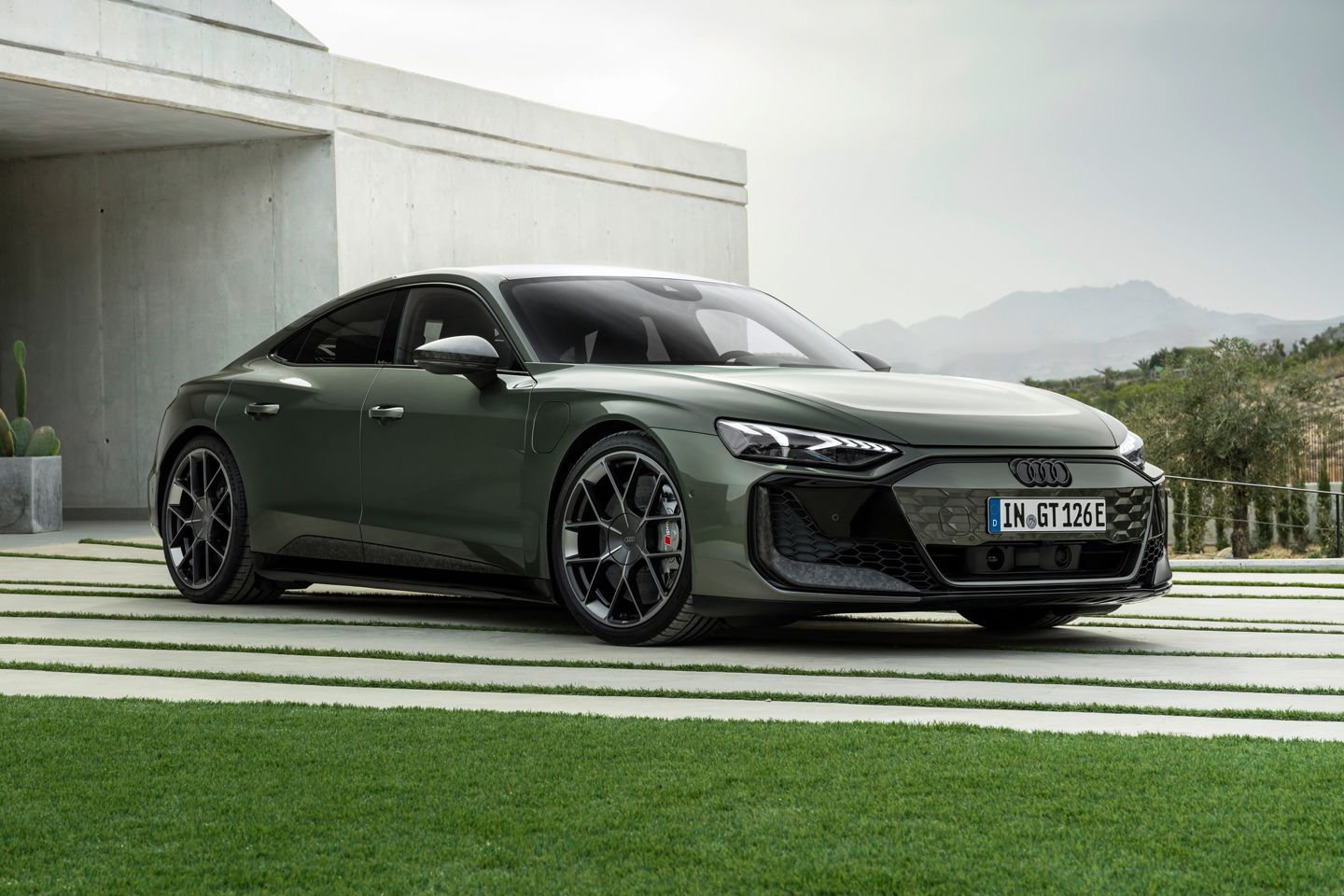
It’s fairly unusual for a very good-looking Audi to be passed over for another model as frequently as we must assume the old e-tron GT was - but that’s what happens when you’re playing second fiddle to a heavily marketed and very popular Porsche. The recent update to the Taycan means that Audi’s four-door Gran Turismo inevitably follows suit. As you might expect, many if not most of the modifications are shared, but, as it did before the e-tron does come with a number of its own quirks. So let’s dive in.
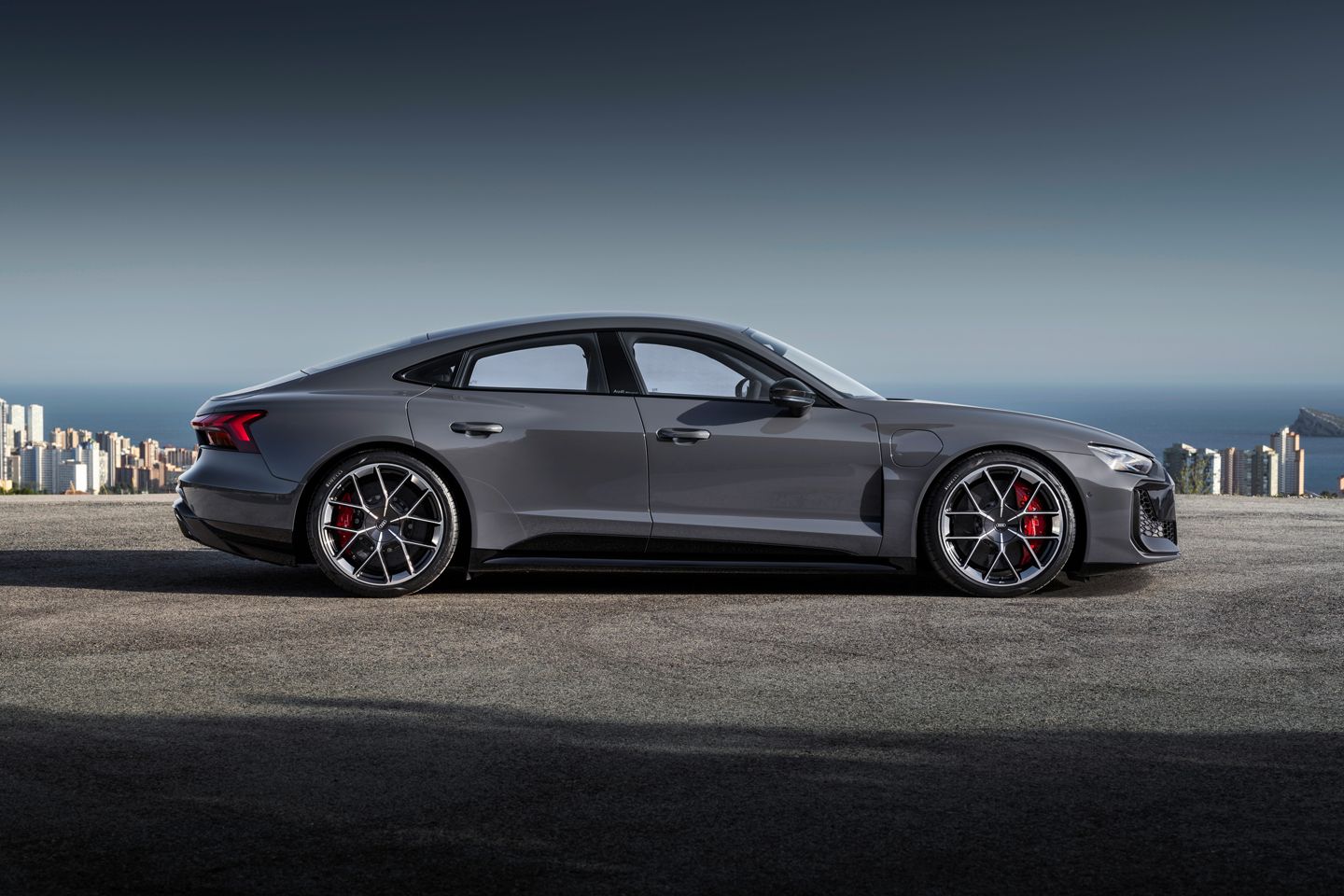
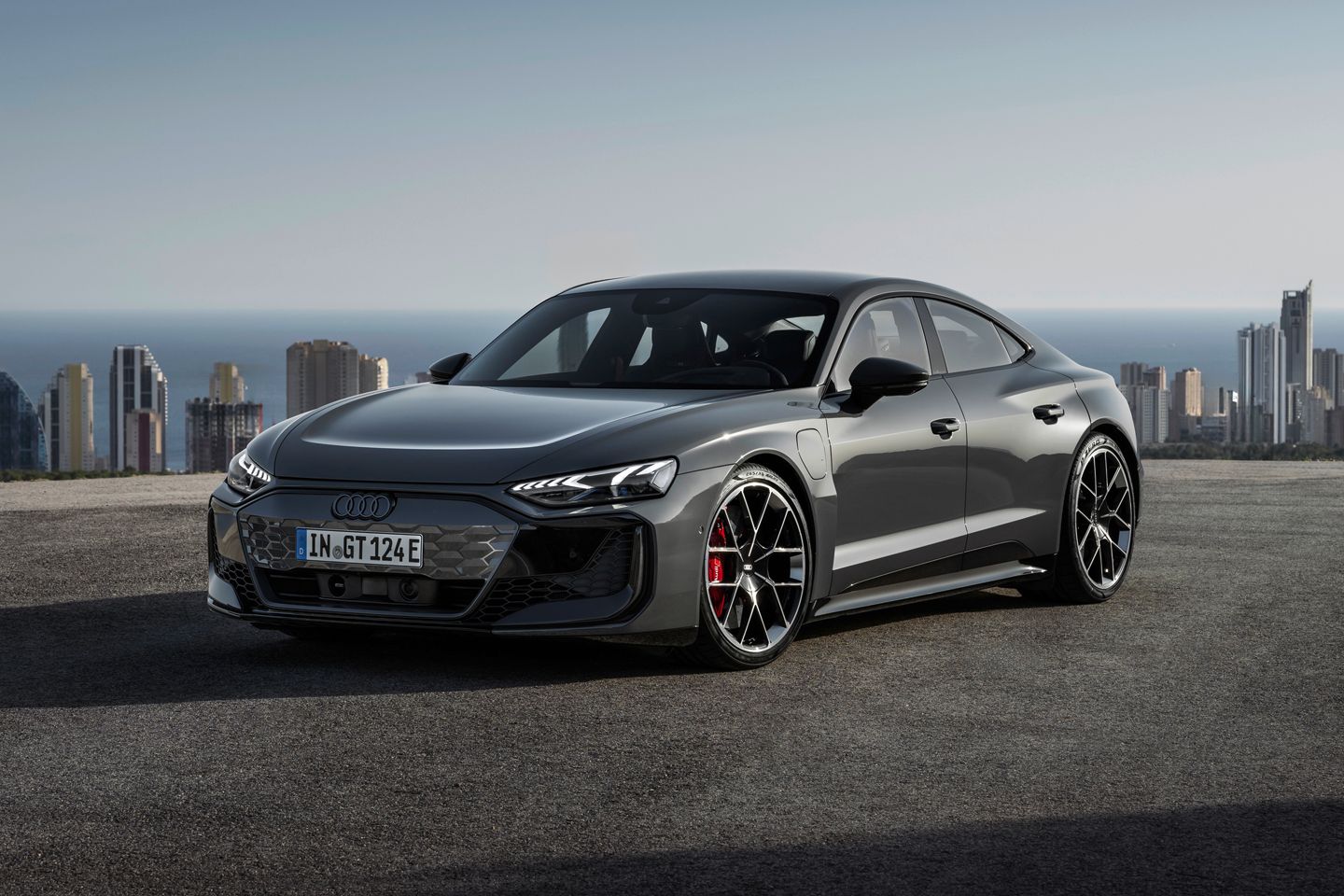
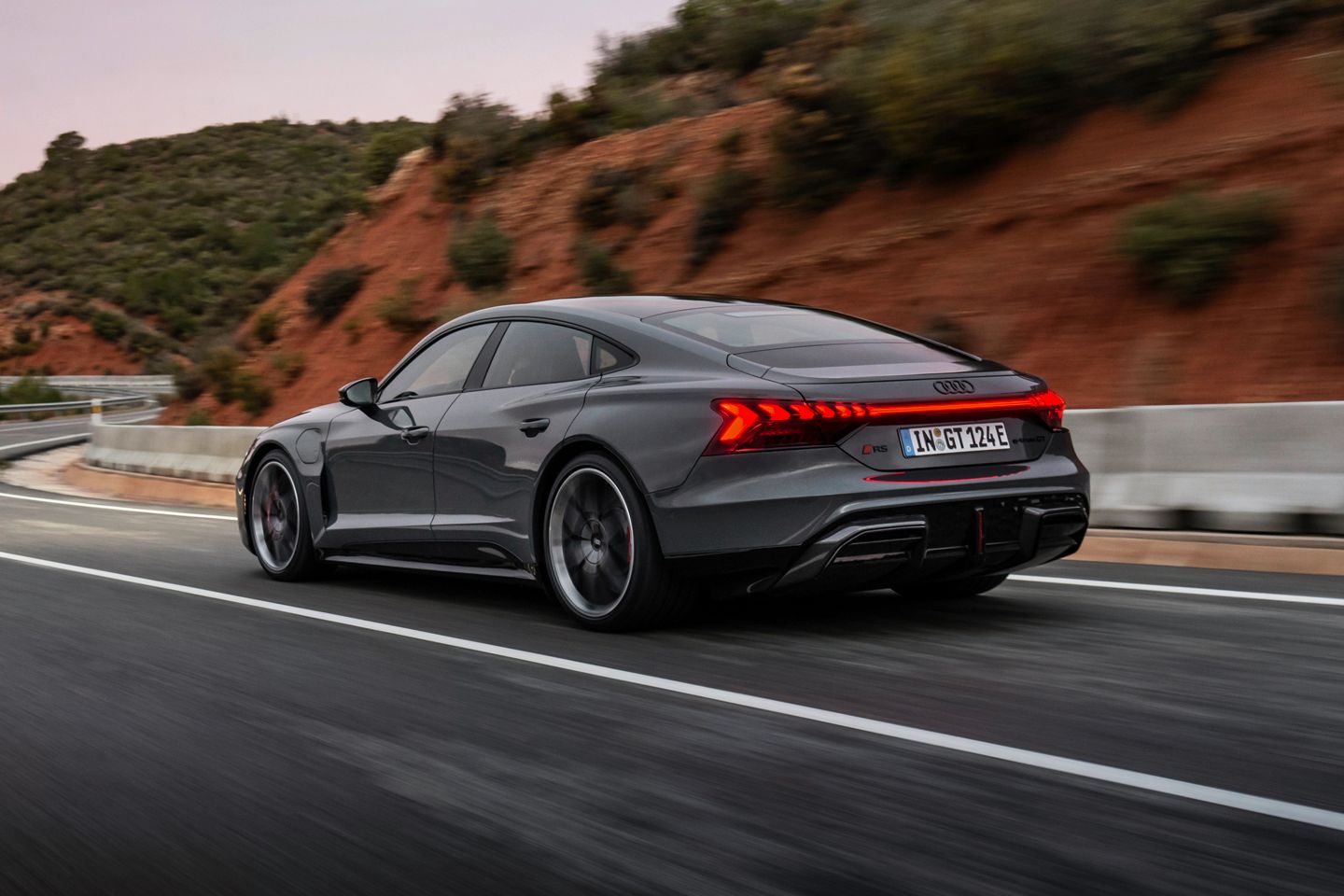
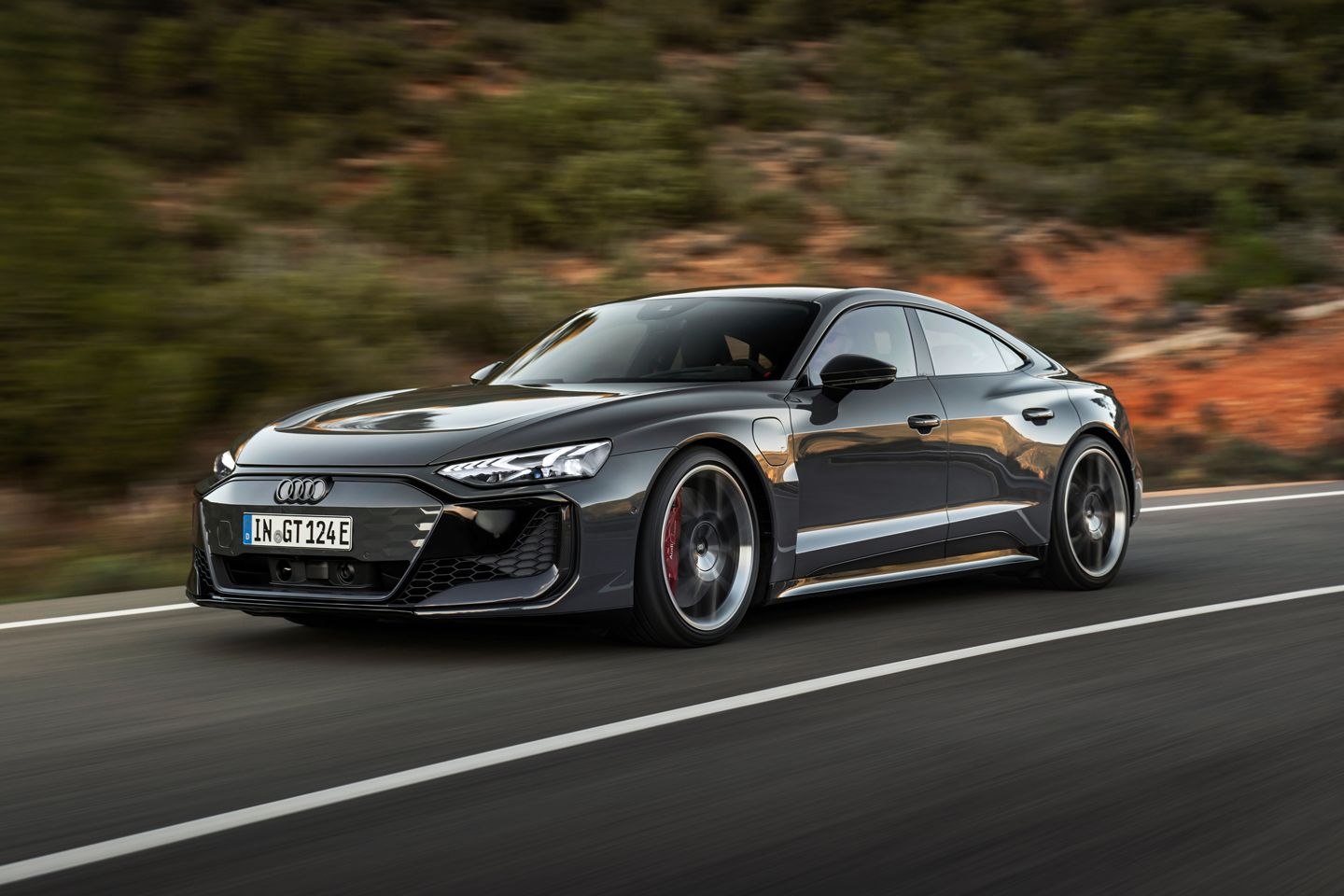
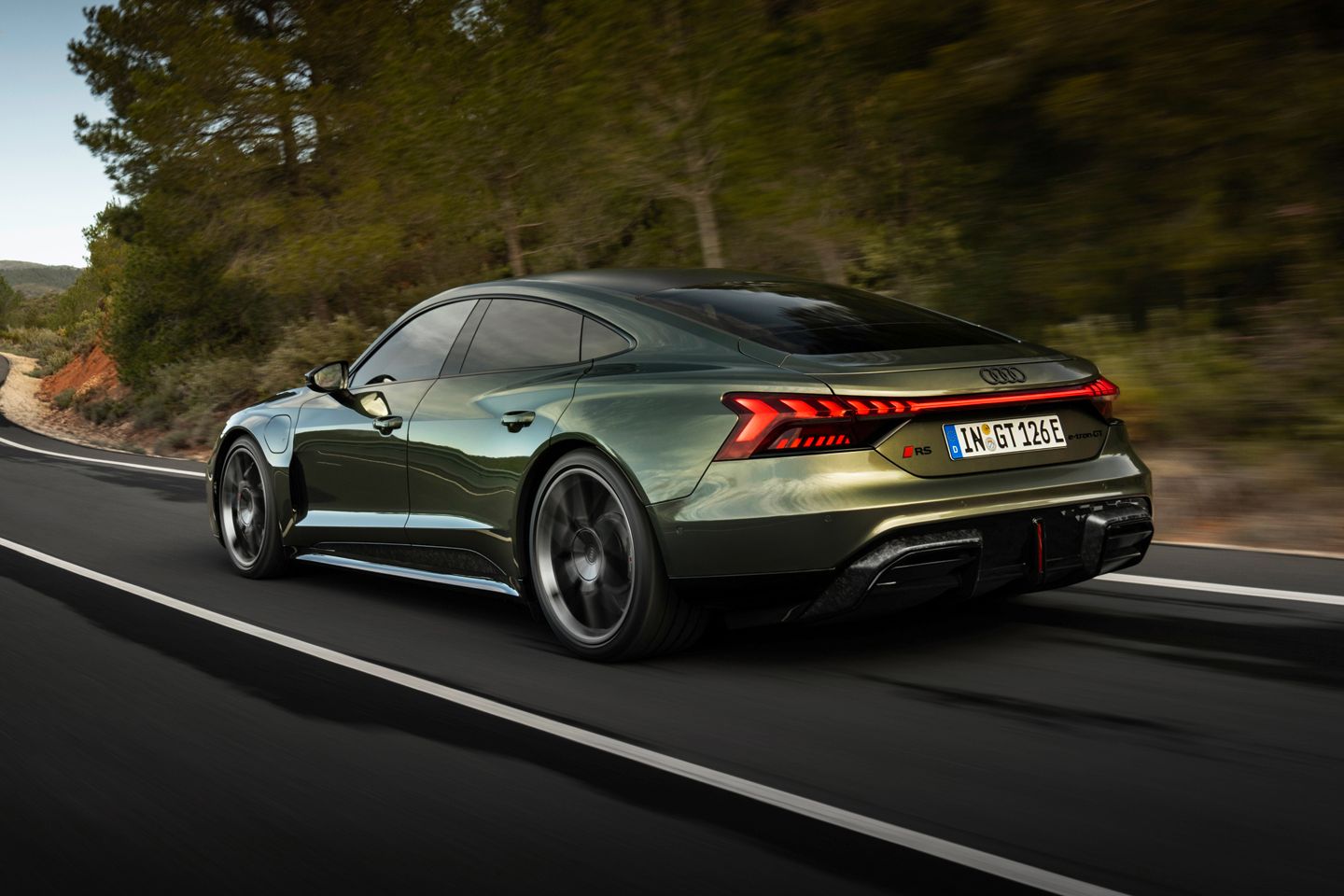
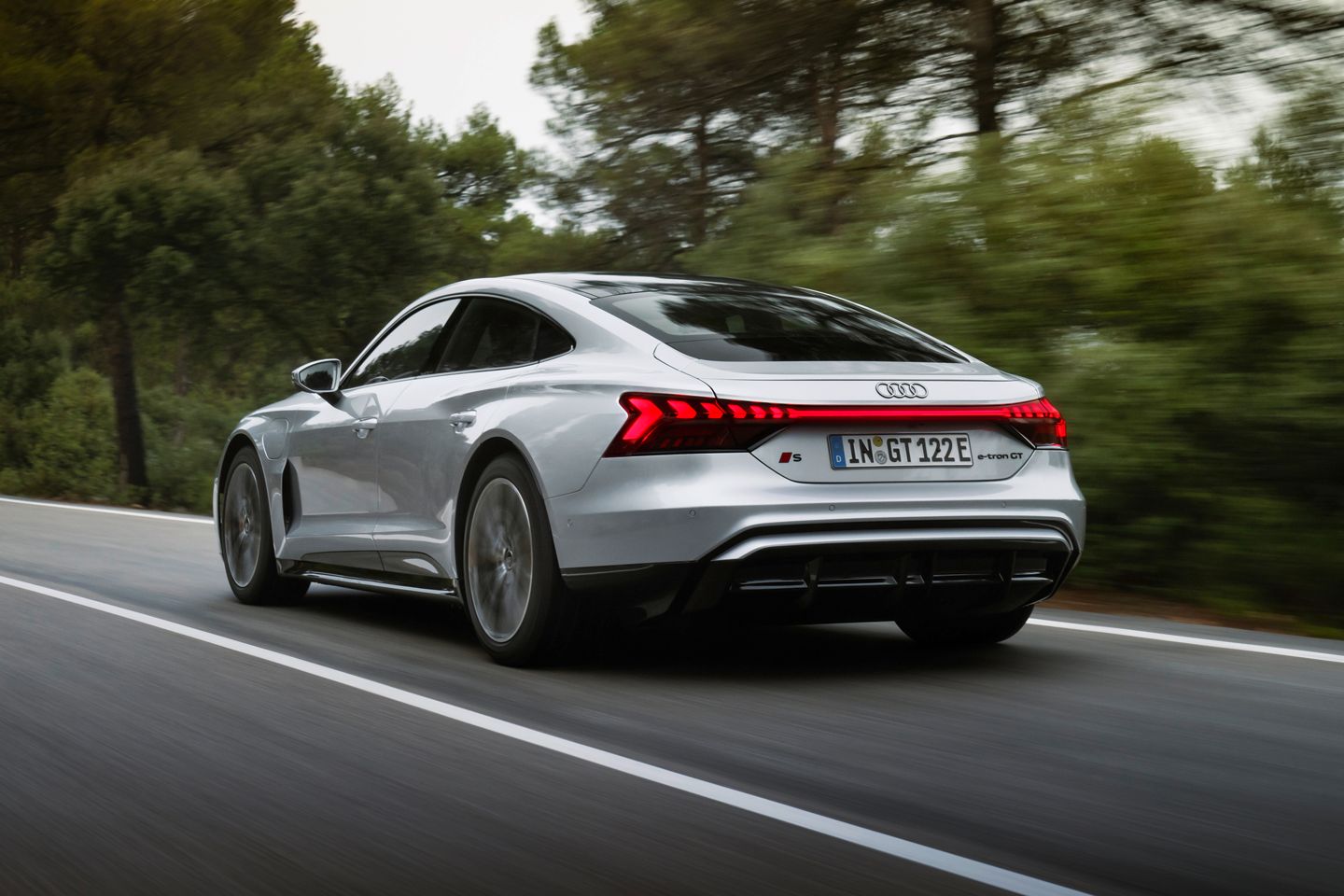
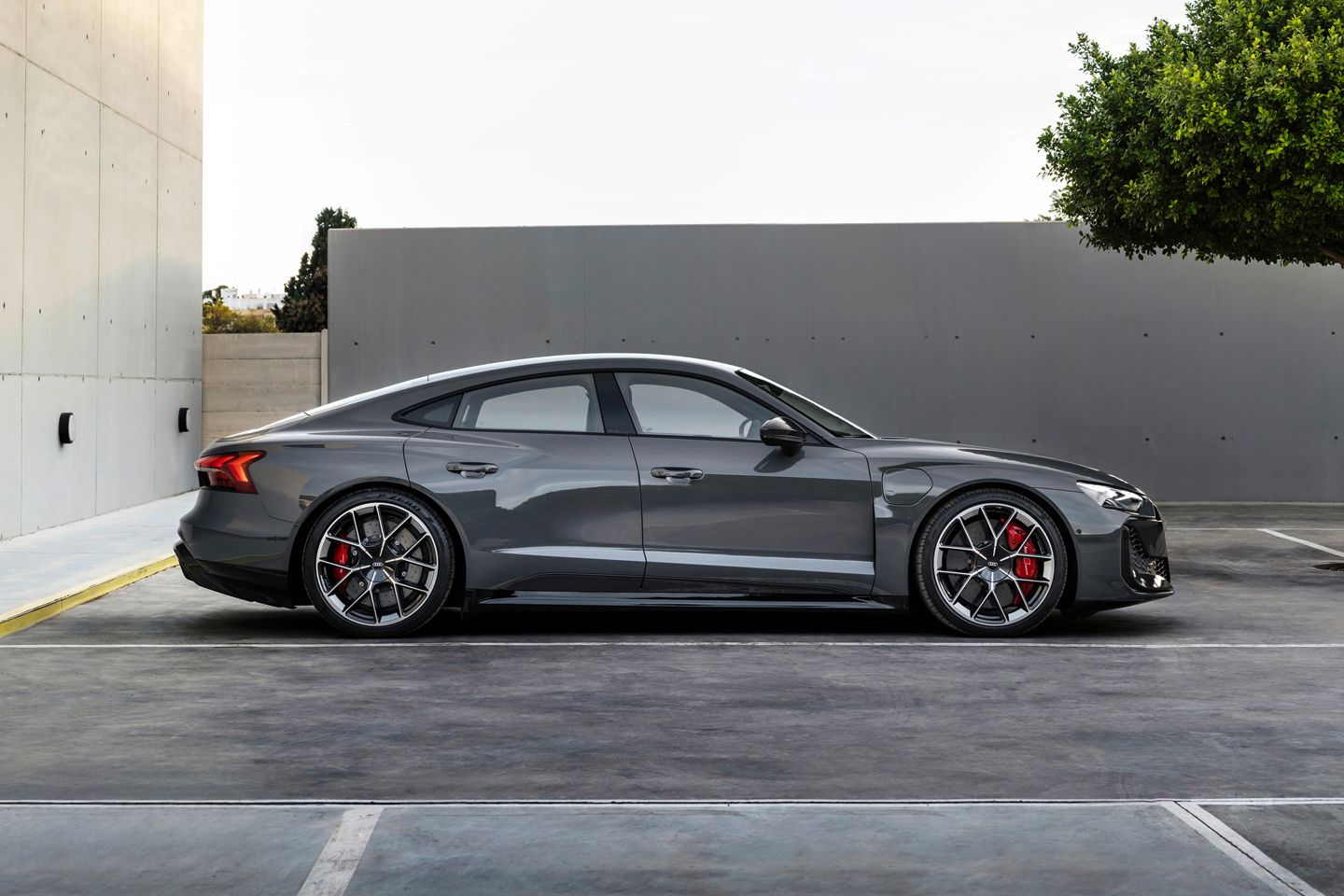
It’s probably second-bite-of-the-cherry syndrome that has Audi leaning heavily on the car’s revised styling - although, on the basis that this is still very recognisably an e-tron GT (much as the new Taycan was still recognisably a Taycan) we can probably gloss over the detailed changes made to the Singleframe grille and the shape of the rear diffuser. Suffice it to say, there will be a three-model lineup featuring the Audi S e-tron GT, the RS e-tron GT, and, finally and most significantly, a new RS e-tron GT performance.
The newcomer is worth calling out for several reasons. For one thing, it’s the first-ever fully electric RS performance variant. This means it gets a smattering of unique design tweaks (mostly a more liberal sprinkling of ‘carbon camouflage elements’) but also a ‘matte, darkened carbon roof’ which is exclusive to it. Additionally, the manufacturer has reworked the alloy wheel choice, with the S e-tron GT getting 20-inch multi-spokes, while the RS derivatives get forged and milled 21-inch wheels that are intended to recall the Avus wheel that Audi first showed in 1991.
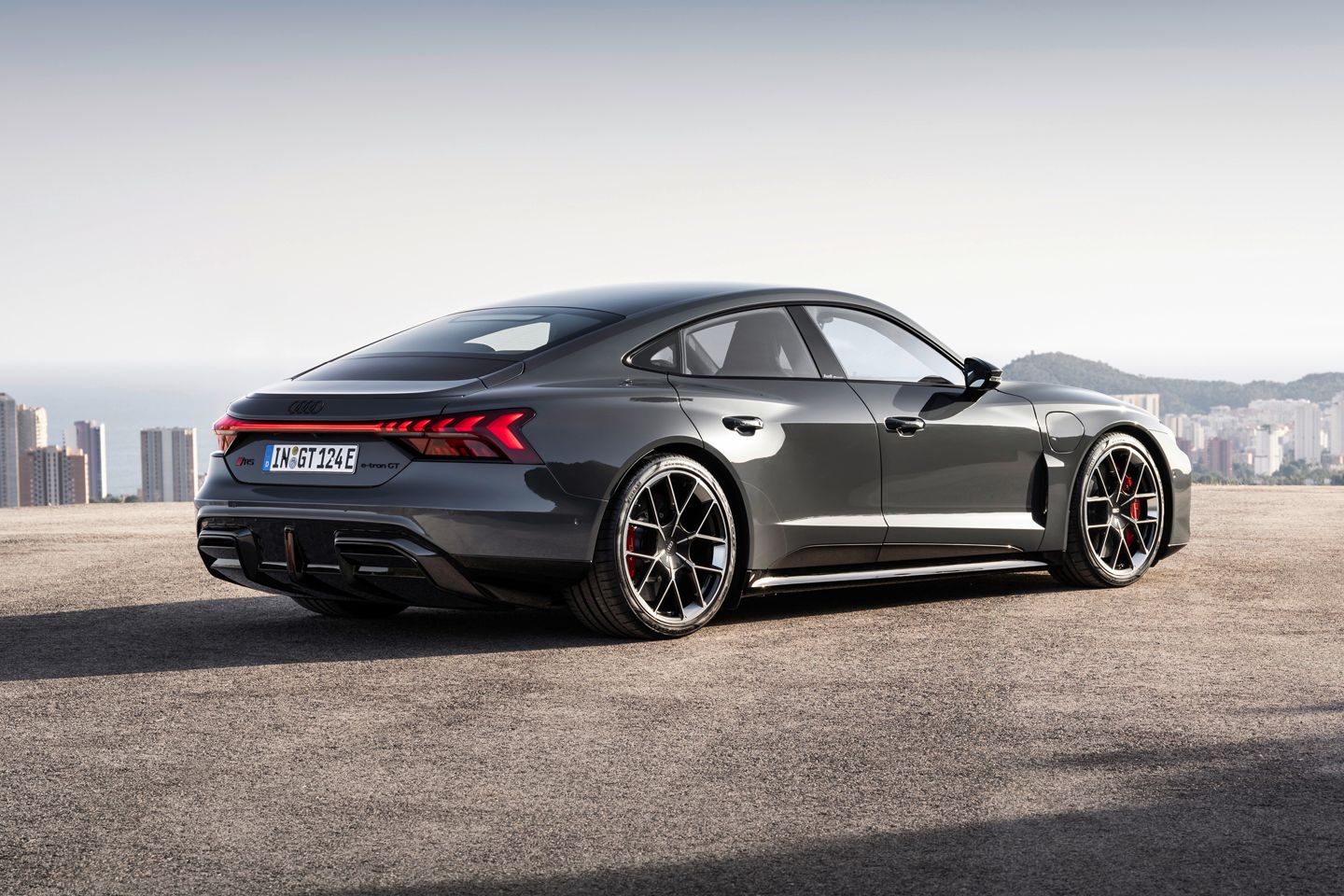
But the real work has been done underneath. As before, there is no entry-level rear-drive version of the e-tron GT, meaning the dual-motor S kicks off with a maximum total output of 680hp - which is a fairly substantial improvement on the 523hp the original came with and (for comparison) positions the car somewhere between a Taycan 4S and the Turbo. Much like the Porsche, this increase can mostly be attributed to the newly developed motor on the rear axle, which is capable of producing 564hp by itself. Accordingly, even the most affordable GT will now whisk you to 62mph in 3.4 seconds - half a second quicker than its predecessor.
Next up the chain, the RS e-tron GT, which would previously deliver 636hp in boost mode, now gets a total output of 856hp - making it only slightly inferior to the 884hp Taycan Turbo and very nearly as quick at 2.8 seconds to 62mph. Predictably, the RS e-tron GT performance, which gets a revised pulse inverter on its front axle, goes one better and slides neatly under the Turbo S with 925hp in total and a sprint time of 2.5 seconds (compared with 2.4 seconds for the Porsche). If that teeny deficit irks you, it’s worth reiterating the flagship’s output still makes it the most powerful production car that Audi has ever built.
In turn, that means it is still some way short of the 1,034hp you get in a Taycan Turbo GT - but that car was always going to be exclusive to Porsche. Regardless, nearly all the technical advances that were announced in February - the weight-saving in the new rear motor and battery, the significantly higher energy density in the latter, the push-to-pass boost function (for the RS models), the improved regenerative braking, a better-packaged and more efficient cooling system - are all carried over to the Audi.
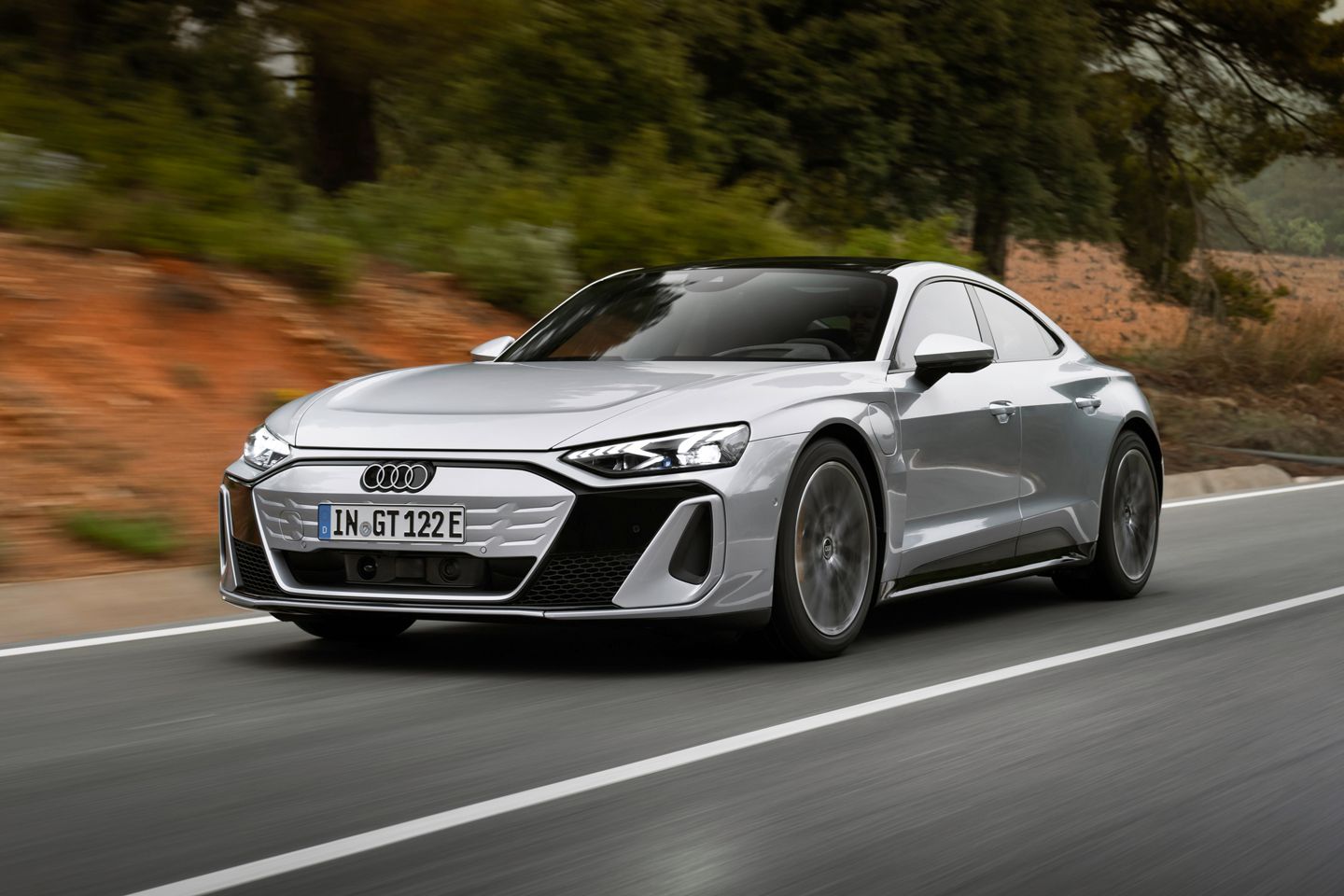
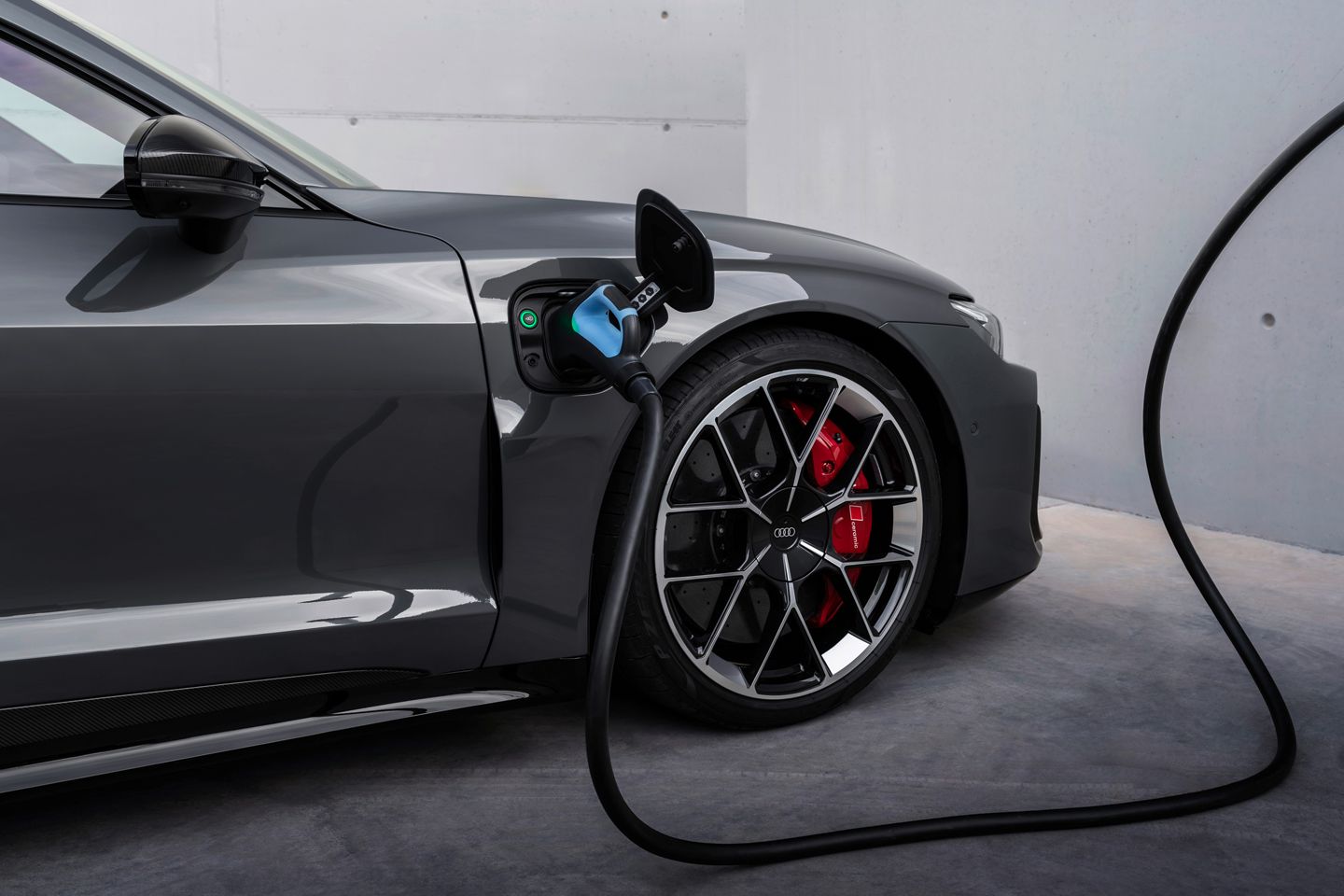
Perhaps most significantly, that also includes the larger 97kWh battery and the ability to rapidly charge up to 320kW. Audi reckons that in ideal conditions that would mean charging from 10 per cent to 80 per cent will take just 18 minutes - and just 10 minutes charge would deliver a range of up to 174 miles. The manufacturer hasn’t provided a full breakdown of precisely what ranges you can expect from which trim level, but it suggests that up to 380 miles will be available, which - surprise, surprise - roughly mirrors what Porsche quotes for its senior grade Taycans.
The e-tron GT’s new chassis is familiar, too. Alongside all-wheel steering, two-chamber, dual-valve air suspension is now standard fit - and welcome on the basis that Audi didn’t necessarily live up to the settings chosen for the Taycan - while on the RS models you get the new active system that uses hydraulic actuators in place of traditional anti-roll bars. Naturally, there will be different drive modes, including two individually configurable RS-specific settings - and for the performance version, an additional one ‘designed for an optimal setup on challenging circuits’.
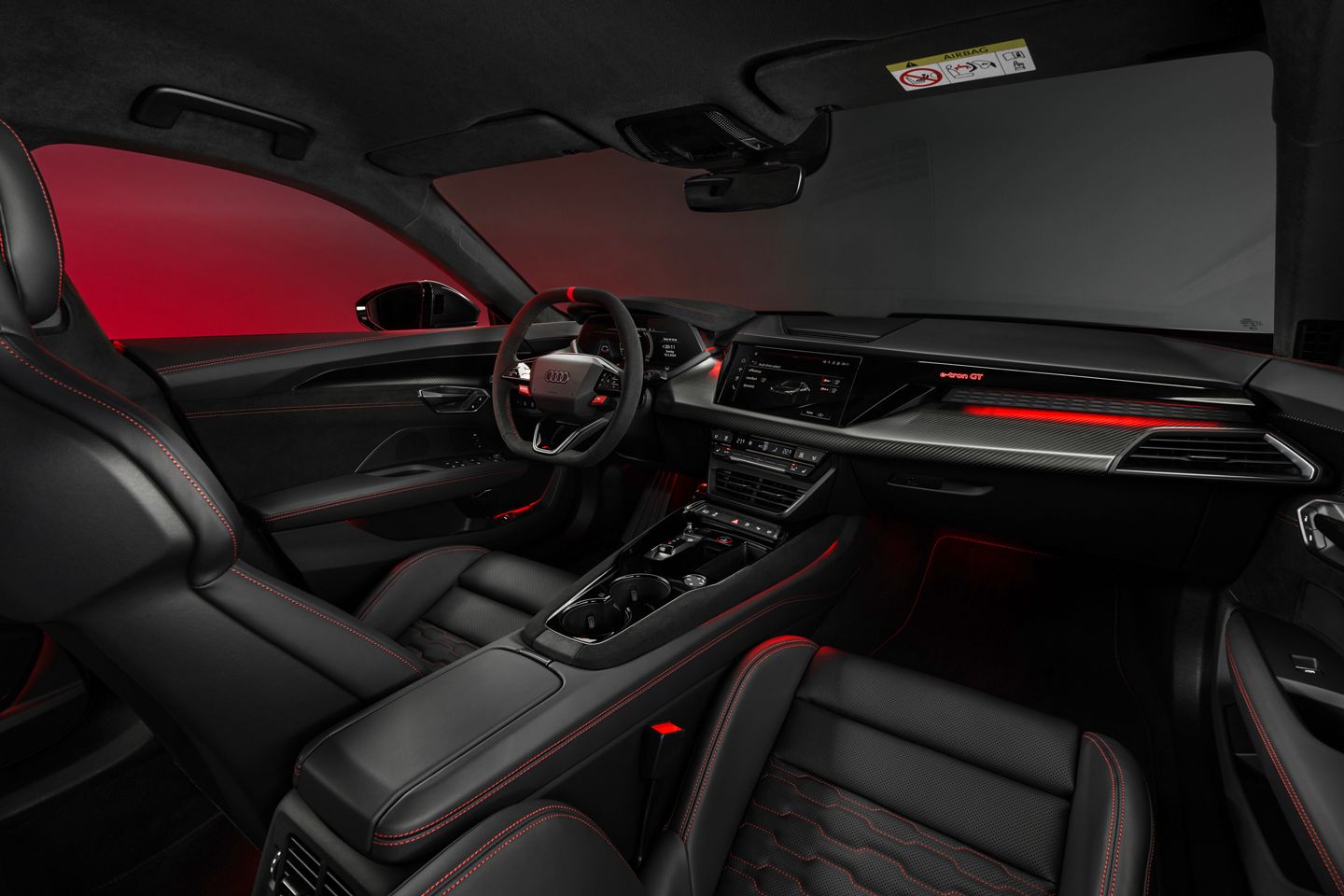
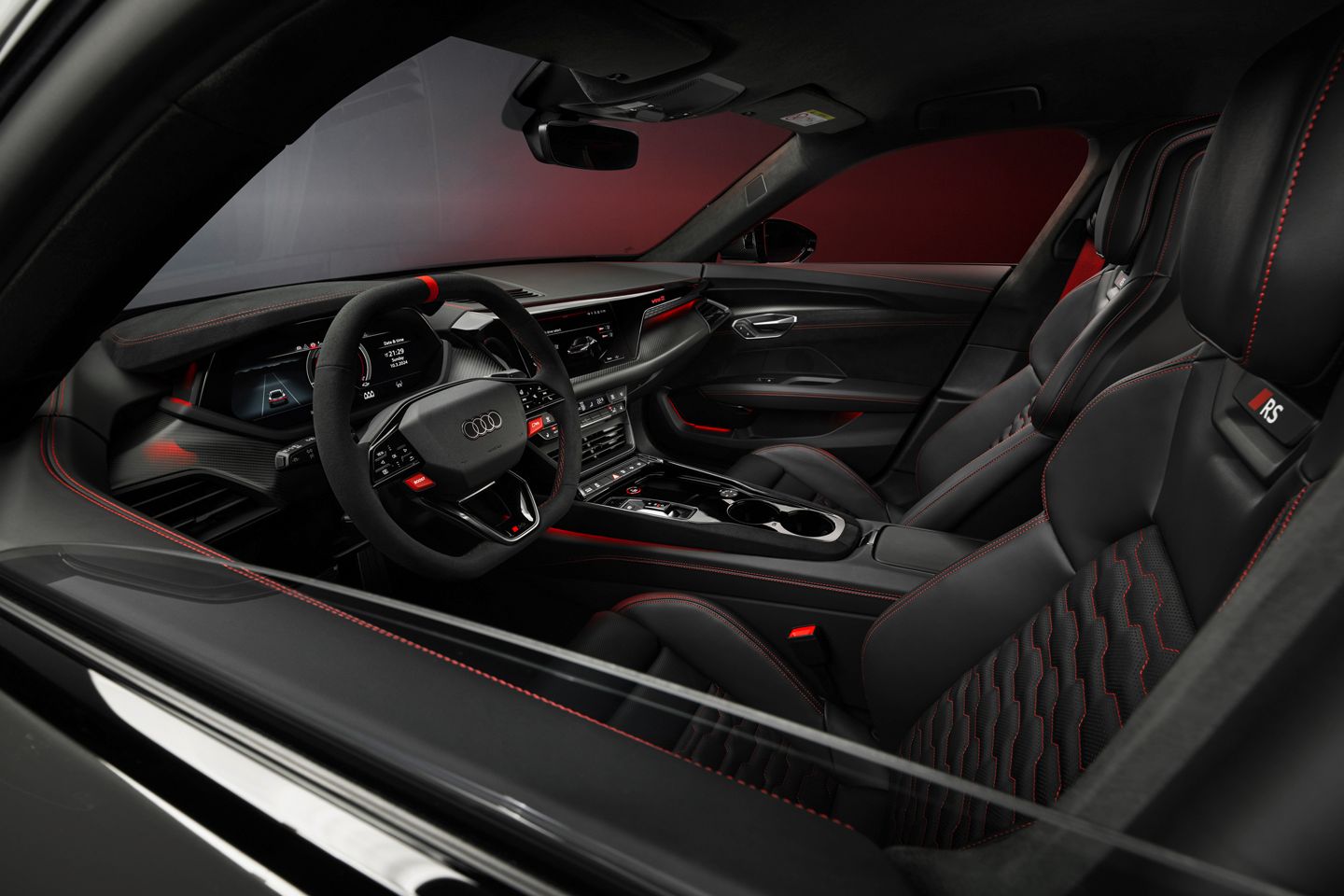
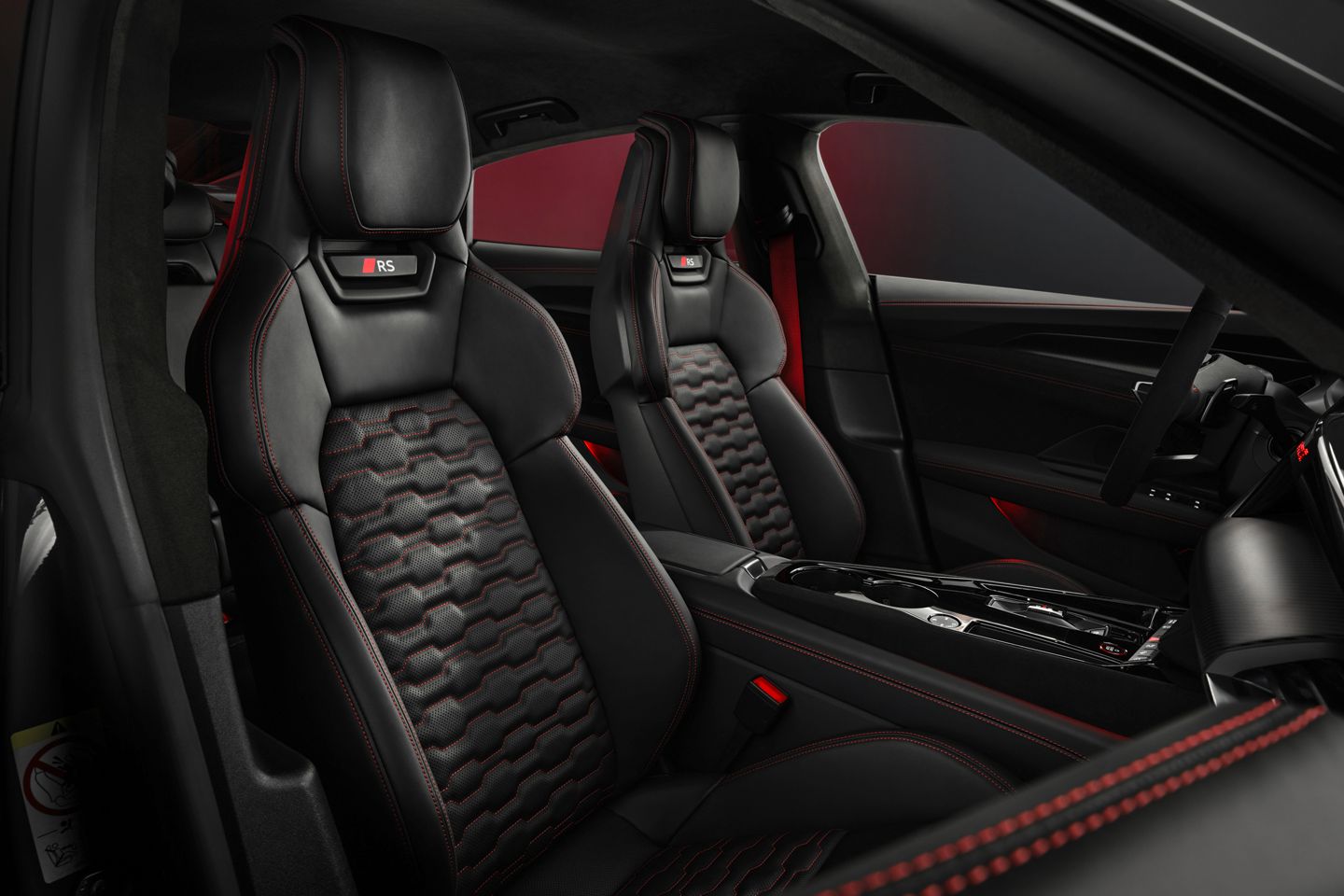
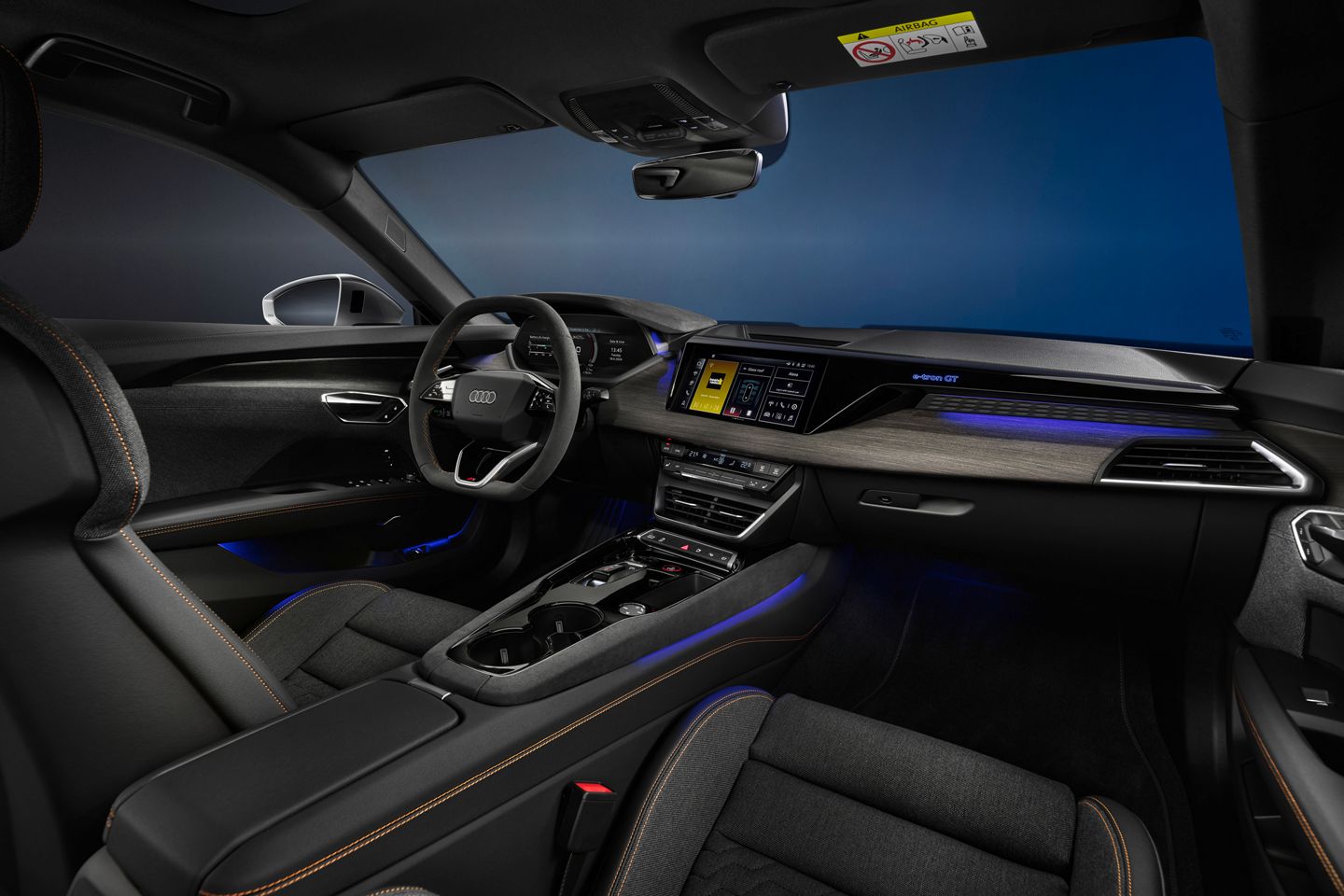
With all this going on it’s of no surprise that, much like the exterior, the interior has only been treated to a light brush up - but that’s fine because it was already very pleasant. The model is also going to remain reassuringly expensive: there are no UK prices just yet, but we're told the S e-tron GT kicks off at 126,000 euros in Germany - meaning the car is almost certainly destined to fill the conspicuously large gap between a Taycan 4S and a Turbo (i.e. somewhere in the £110k ballpark). The RS e-tron GT and the GT performance are 147,500 and 160,500 euros, respectively - so expect the latter to fit comfortably inside the £161,400 you’d pay for the new Turbo S. But we'll find out for sure come August.


The legacy automakers seem to really struggle with the software side of things. My wife’s Tesla has an update every few weeks, it clearly notifies you of any changes, often there are some nice upgrades and functionality enhancements. I won’t be replacing my car with a Tesla, but here’s to hoping the others develop a similar approach considering how important software has become.
The legacy automakers seem to really struggle with the software side of things. My wife’s Tesla has an update every few weeks, it clearly notifies you of any changes, often there are some nice upgrades and functionality enhancements. I won’t be replacing my car with a Tesla, but here’s to hoping the others develop a similar approach considering how important software has become.
On my 3rd Tesla since 2016 and even back then they’d nailed software updates, 25 mins and no drama. Latest update has a nice feature of showing your average speed in real time as you go through an average speed check camera zone, as well as how long until the zone finishes. Early build wasn’t great as well reported, but much much better now.
It always feels a bit spiteful that Porsche don’t endow the Audi equivalent with the full beans. I doubt the fact that the Porsche makes a few more bhp make a material sales difference.
Still trying to wrap my head around you can get a Porsche Taycan, on the same platform for less than the Audi? Be really interested in that real world range vs WLTP.
A recent invitation to a "Taycan Event" at my local OPC means they really are having trouble shifting them. Unless you're giving them away who wants the old model?

From when it first starts moving, or from when you press the accelerator pedal? Audi traditionally have a 1 or 2 second delay between pressing the pedal and the ecu deciding to do anything because you might have commanded full bore acceleration by accident and that would be a waste of fuel. That could make this very exciting / lethal to drive.
From when it first starts moving, or from when you press the accelerator pedal? Audi traditionally have a 1 or 2 second delay between pressing the pedal and the ecu deciding to do anything because you might have commanded full bore acceleration by accident and that would be a waste of fuel. That could make this very exciting / lethal to drive.
From when it first starts moving, or from when you press the accelerator pedal? Audi traditionally have a 1 or 2 second delay between pressing the pedal and the ecu deciding to do anything because you might have commanded full bore acceleration by accident and that would be a waste of fuel. That could make this very exciting / lethal to drive.
0.8 seconds to 60mph

From when it first starts moving, or from when you press the accelerator pedal? Audi traditionally have a 1 or 2 second delay between pressing the pedal and the ecu deciding to do anything because you might have commanded full bore acceleration by accident and that would be a waste of fuel.
In my Mercedes the delay was removed if the pedal was pressed to the floor, which curiously contradicts what you said.
Forums | General Gassing | Top of Page | What's New | My Stuff