
Worst Air Intake I've ever Seen
Discussion


Just noticed on my dads 1980 Austin Maxi 1750, that the air intake for the engine is directly above the exhaust manifold?!
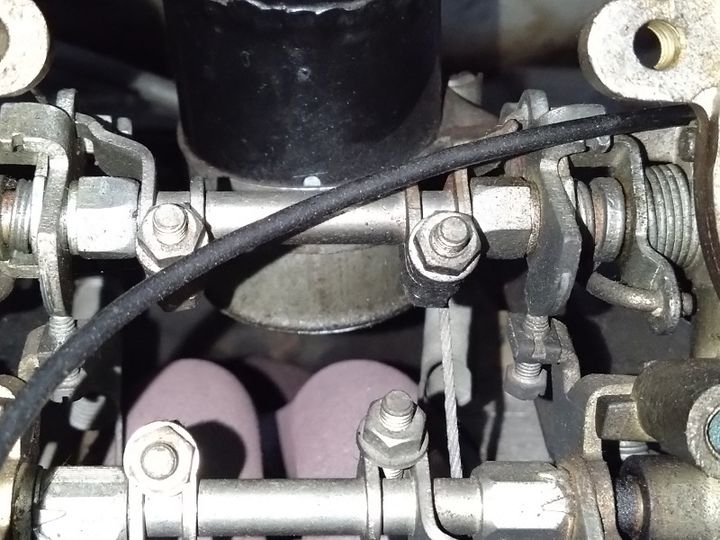
I'm assuming that this is to reduce the chance of fuel icing in very cold conditions, but what about the rest of the year? Seems contradictory to every engine design I've ever seen where the design is to induct air as cold as possible.
Was this normal for carburettor engines? What did it do to the fuel economy?
I'm assuming that this is to reduce the chance of fuel icing in very cold conditions, but what about the rest of the year? Seems contradictory to every engine design I've ever seen where the design is to induct air as cold as possible.
Was this normal for carburettor engines? What did it do to the fuel economy?

porker928 said:
Just noticed on my dads 1980 Austin Maxi 1750, that the air intake for the engine is directly above the exhaust manifold?!
I'm assuming that this is to reduce the chance of fuel icing in very cold conditions, but what about the rest of the year? Seems contradictory to every engine design I've ever seen where the design is to induct air as cold as possible.
Was this normal for carburettor engines? What did it do to the fuel economy?
Very normal for carburettor engines of the era. Carbs rarely, if ever, give full vaporisation of the fuel, and certainly not under all conditions. If the intake manifold is (relatively) cold, you get fuel vapor condensing into droplets, which don't burn well and pool in low points or areas with bad air flow in the intake tract, which makes creating a stable and consistent mixture impossible.I'm assuming that this is to reduce the chance of fuel icing in very cold conditions, but what about the rest of the year? Seems contradictory to every engine design I've ever seen where the design is to induct air as cold as possible.
Was this normal for carburettor engines? What did it do to the fuel economy?
Intake design was a balancing act between efficiency gained by cold air going into the carb and efficiency of a warm (and so thoroughly and evenly vaporised) intake charge between carb and intake valve. Remember that the vaporisation of fuel from liquid to atomised stream and the pressure drop through the venturi causes the intake temperature to drop dramatically (like rubbing alcohol evaporating off your hand). This isn't present with fuel injection and there is a real possibility of the carb and its input/output being too cold.
Hence why most reverse-flow heads have the intake above the exhaust, often with a heat shield or shroud to keep things warm. Plus other features like adjustable winter/summer flaps in the air cleaner or bimetallic valves which automatically mixed cold air (from behind the grille) and warm air (from a trunk pointed at the exhaust manifold).
Some engines (Triumph was very fond of this) had a hot water jacket around the intake manifold, plumbed into the cooling circuit.
My Citroen 2CV was designed to run at wide open throttle for hours at a time - the intake and exhaust manifolds are a single casting and there's a box below the carb throat that encloses both manifolds so the exhaust heats up the intake just where it splits to go to each cylinder. This creates a reservoir of very well vaporised and mixed fuel/air for each cylinder to draw on, assuring even fuel distribution and maximum efficiency when manifold vacuum is low/zero.
This is why fuel injection is such an all-round boon for efficiency, performance, tractability and so on - you mechanically atomise the fuel so the intake can be cold. See also diesel engines, especially turbo-diesels, which love cold air and can run very cold intake charges with a lot of charge cooling.
Bomma 996 said:
I recall a car I had many years ago had a summer / winter setting on the air filter.
One direction pointed straight at the exhaust manifold, the other was at 90 degrees to it.
Buggered if I can remember what car it was though.
Pinto OHC Ford of some sort maybe?
Similarly, I remember that. Again, no idea which car.One direction pointed straight at the exhaust manifold, the other was at 90 degrees to it.
Buggered if I can remember what car it was though.
Pinto OHC Ford of some sort maybe?
andy43 said:
I always thought the TVR design was nuts yes it got cold air to the engine but the four foot long spiral wound bathroom extractor air hose split easily and I ve seen them just collapse at full throttle. And don t get me started on changing the air filter utter PITA.

The air intake hose in my current 96 Griff lasted 24 years before it was starting to break. Carb Icing was definitely a thing for those engines. 1960s cars frequently suffered from it. Usually while cruising at constant speed you’d get a gradual loss of power, until you hit a point where your foot was flat on the floor and the car was still slowing down. Stop, wait a few minutes. Car drives fine, until it ices up again.
Some got around this, as mentioned, with a winter / summer setting on the air intake, others were more sophisticated and used manifold pressure to control a flap in the air intake - cold air at high power, warm air at low power.
It’s still a problem for carb fed aero piston engines. But they use switchable carb heat to allow clearing of ice build-up.
Some got around this, as mentioned, with a winter / summer setting on the air intake, others were more sophisticated and used manifold pressure to control a flap in the air intake - cold air at high power, warm air at low power.
It’s still a problem for carb fed aero piston engines. But they use switchable carb heat to allow clearing of ice build-up.
Had an old Fiat Panda which would regularly conk out at junctions, then start up fine and carry on. Took me ages to realise that it was carb icing. Moved the air intake around to the "winter" position and all sorted.
The CAA advise that carb icing is a risk in the UK for most of the year, so permanent warm air for a UK-focused car wasn't such a bad idea:
https://www.caa.co.uk/media/j5omfigm/ssl-14_piston...
The CAA advise that carb icing is a risk in the UK for most of the year, so permanent warm air for a UK-focused car wasn't such a bad idea:
https://www.caa.co.uk/media/j5omfigm/ssl-14_piston...
2xChevrons said:
Very normal for carburettor engines of the era. Carbs rarely, if ever, give full vaporisation of the fuel, and certainly not under all conditions. If the intake manifold is (relatively) cold, you get fuel vapor condensing into droplets, which don't burn well and pool in low points or areas with bad air flow in the intake tract, which makes creating a stable and consistent mixture impossible.
Intake design was a balancing act between efficiency gained by cold air going into the carb and efficiency of a warm (and so thoroughly and evenly vaporised) intake charge between carb and intake valve. Remember that the vaporisation of fuel from liquid to atomised stream and the pressure drop through the venturi causes the intake temperature to drop dramatically (like rubbing alcohol evaporating off your hand). This isn't present with fuel injection and there is a real possibility of the carb and its input/output being too cold.
Hence why most reverse-flow heads have the intake above the exhaust, often with a heat shield or shroud to keep things warm. Plus other features like adjustable winter/summer flaps in the air cleaner or bimetallic valves which automatically mixed cold air (from behind the grille) and warm air (from a trunk pointed at the exhaust manifold).
Some engines (Triumph was very fond of this) had a hot water jacket around the intake manifold, plumbed into the cooling circuit.
My Citroen 2CV was designed to run at wide open throttle for hours at a time - the intake and exhaust manifolds are a single casting and there's a box below the carb throat that encloses both manifolds so the exhaust heats up the intake just where it splits to go to each cylinder. This creates a reservoir of very well vaporised and mixed fuel/air for each cylinder to draw on, assuring even fuel distribution and maximum efficiency when manifold vacuum is low/zero.
This is why fuel injection is such an all-round boon for efficiency, performance, tractability and so on - you mechanically atomise the fuel so the intake can be cold. See also diesel engines, especially turbo-diesels, which love cold air and can run very cold intake charges with a lot of charge cooling.
Intake design was a balancing act between efficiency gained by cold air going into the carb and efficiency of a warm (and so thoroughly and evenly vaporised) intake charge between carb and intake valve. Remember that the vaporisation of fuel from liquid to atomised stream and the pressure drop through the venturi causes the intake temperature to drop dramatically (like rubbing alcohol evaporating off your hand). This isn't present with fuel injection and there is a real possibility of the carb and its input/output being too cold.
Hence why most reverse-flow heads have the intake above the exhaust, often with a heat shield or shroud to keep things warm. Plus other features like adjustable winter/summer flaps in the air cleaner or bimetallic valves which automatically mixed cold air (from behind the grille) and warm air (from a trunk pointed at the exhaust manifold).
Some engines (Triumph was very fond of this) had a hot water jacket around the intake manifold, plumbed into the cooling circuit.
My Citroen 2CV was designed to run at wide open throttle for hours at a time - the intake and exhaust manifolds are a single casting and there's a box below the carb throat that encloses both manifolds so the exhaust heats up the intake just where it splits to go to each cylinder. This creates a reservoir of very well vaporised and mixed fuel/air for each cylinder to draw on, assuring even fuel distribution and maximum efficiency when manifold vacuum is low/zero.
This is why fuel injection is such an all-round boon for efficiency, performance, tractability and so on - you mechanically atomise the fuel so the intake can be cold. See also diesel engines, especially turbo-diesels, which love cold air and can run very cold intake charges with a lot of charge cooling.

Forums | General Gassing | Top of Page | What's New | My Stuff