
Jaguar electric GT prototype | PH Review
So this is it - our first go behind the wheel of Jaguar's 1,000hp electric grand tourer
It won’t have just been Jaguar employees that breathed a sigh of relief when the first passenger ride verdicts for its electric GT arrived in December. Prior to that, plenty of people, right up to the actual President of the United States, had voiced less-than-optimistic opinions following the brand’s December 2024 relaunch. But being the outfit of engineering excellence that it so often is, JLR - 2025 CEO switch aside - largely kept its head down and focused on what matters: the car. And now, following Nic C’s measured praise from the passenger seat, we get to sample its new GT from the business end. It’s a pivotal moment.
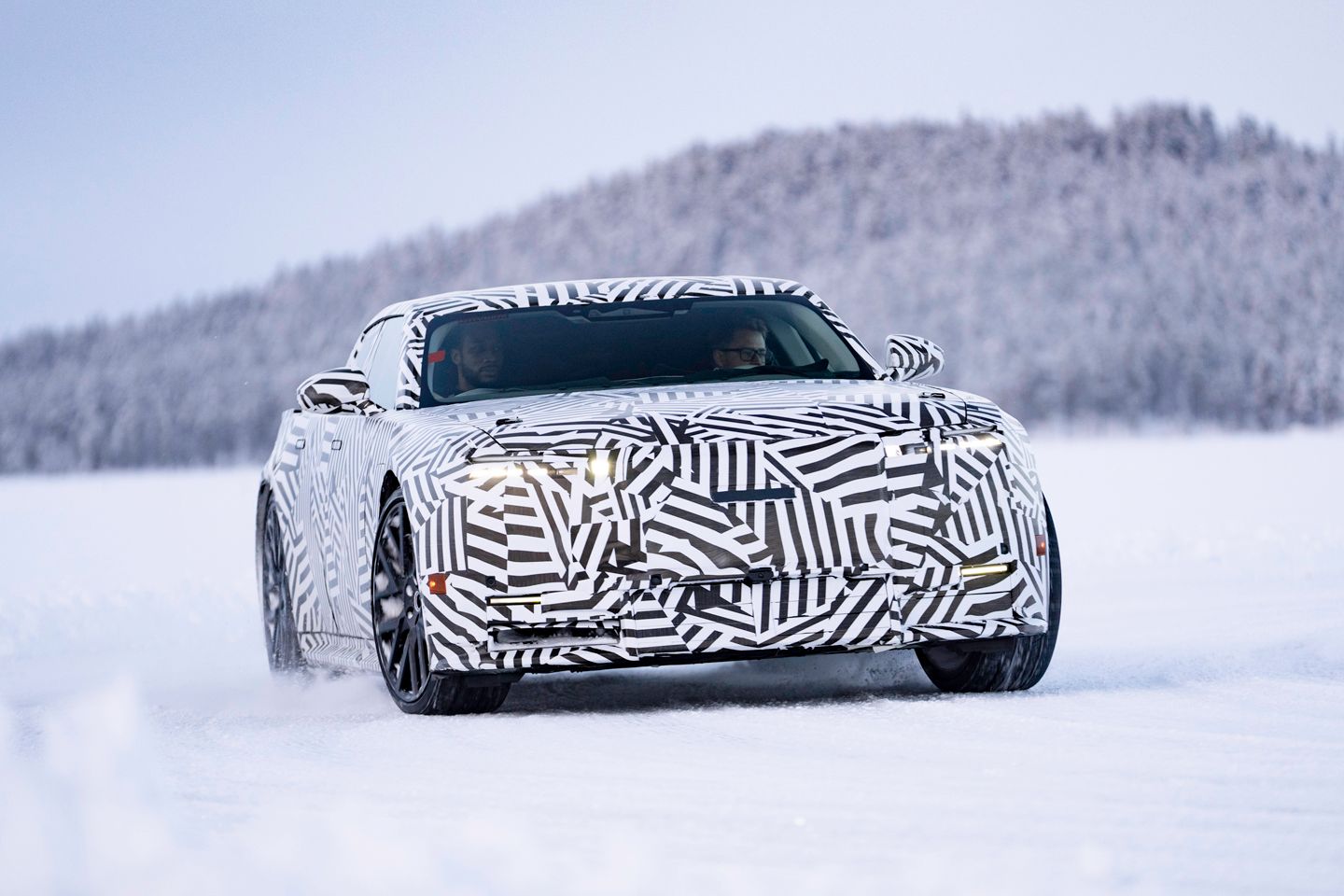
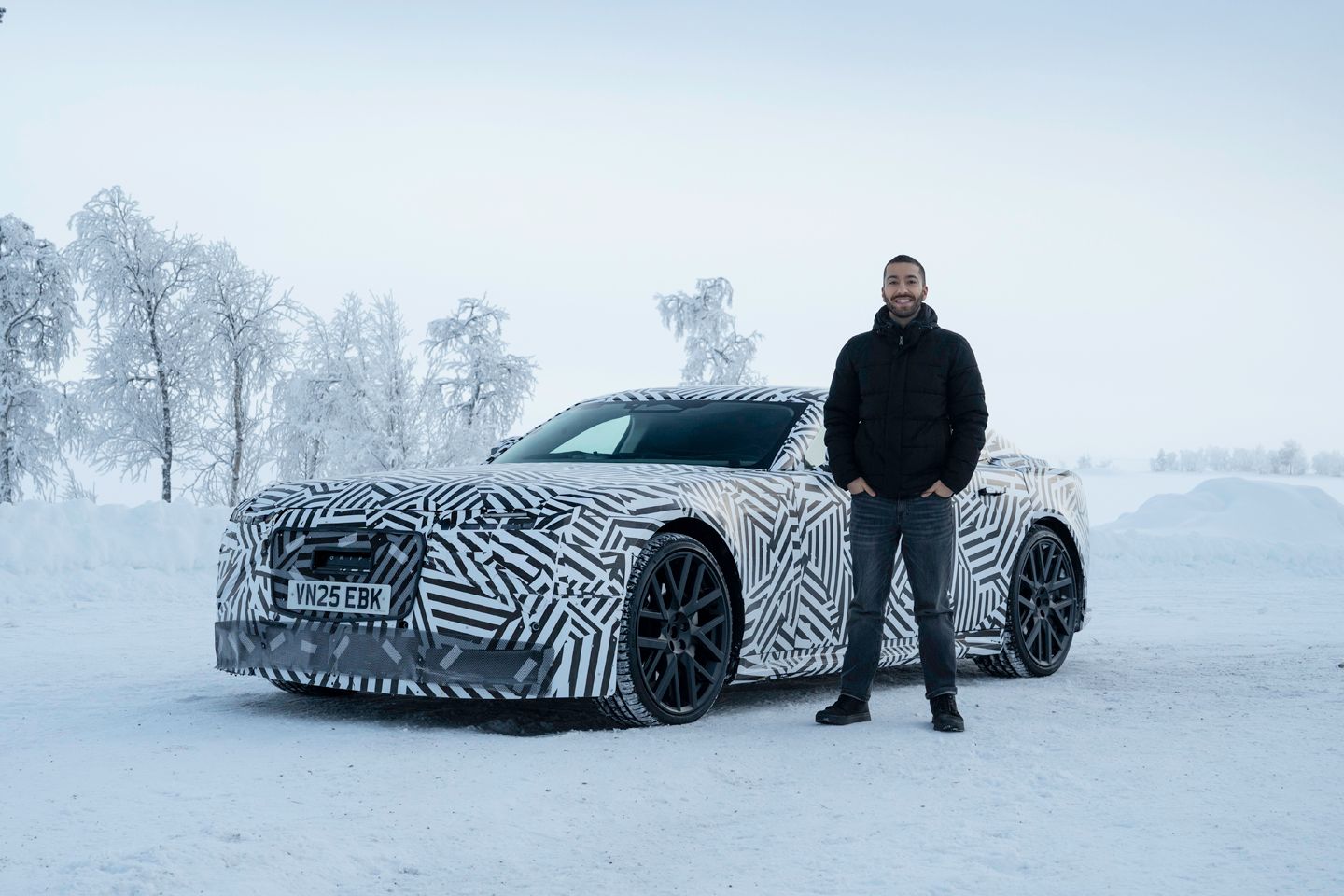
Well, sort of. This being an early drive a whole year before the production car is fully finished, we’re sampling a brace of fully-covered prototypes, in the (very, very) sub-zero conditions of Arjeplog, Sweden. Nevertheless, Jaguar’s engineers - including dynamic boss Matt Becker, who joined the marque from Aston Martin near the start of the GT project in 2022 - are keen to stress just how far along they are in both chassis and powertrain development. These cars are dressed in camouflage and cladding outside and in, but what lies beneath is considered highly representative of the real-world model to come. And it’s quite the setup. Let me elaborate.
You’ll already know that the GT - which appears to have lost none of the dramatic silhouette of the Type 00 concept - is a tri-motor electric car with just over 1,000hp. But freshly revealed numbers include a 'more than 1,300nm' torque figure (so at least 959lb ft), as well as a ‘circa’ 120kWh battery. Anticipated range is between 400 and 430 miles (dwarfing, for now, the best a Porsche Taycan Turbo S can offer), and 350kW charging speeds via the 800-volt architecture equate to 200 miles being added in ‘under’ 15 minutes, via the swifter of the two charging ports located in the front wings. These key statistics are impressive, although a 0-62mph time of “three and a bit” seconds seems restrained, given the usual sub-three-second times for equivalent configurations.
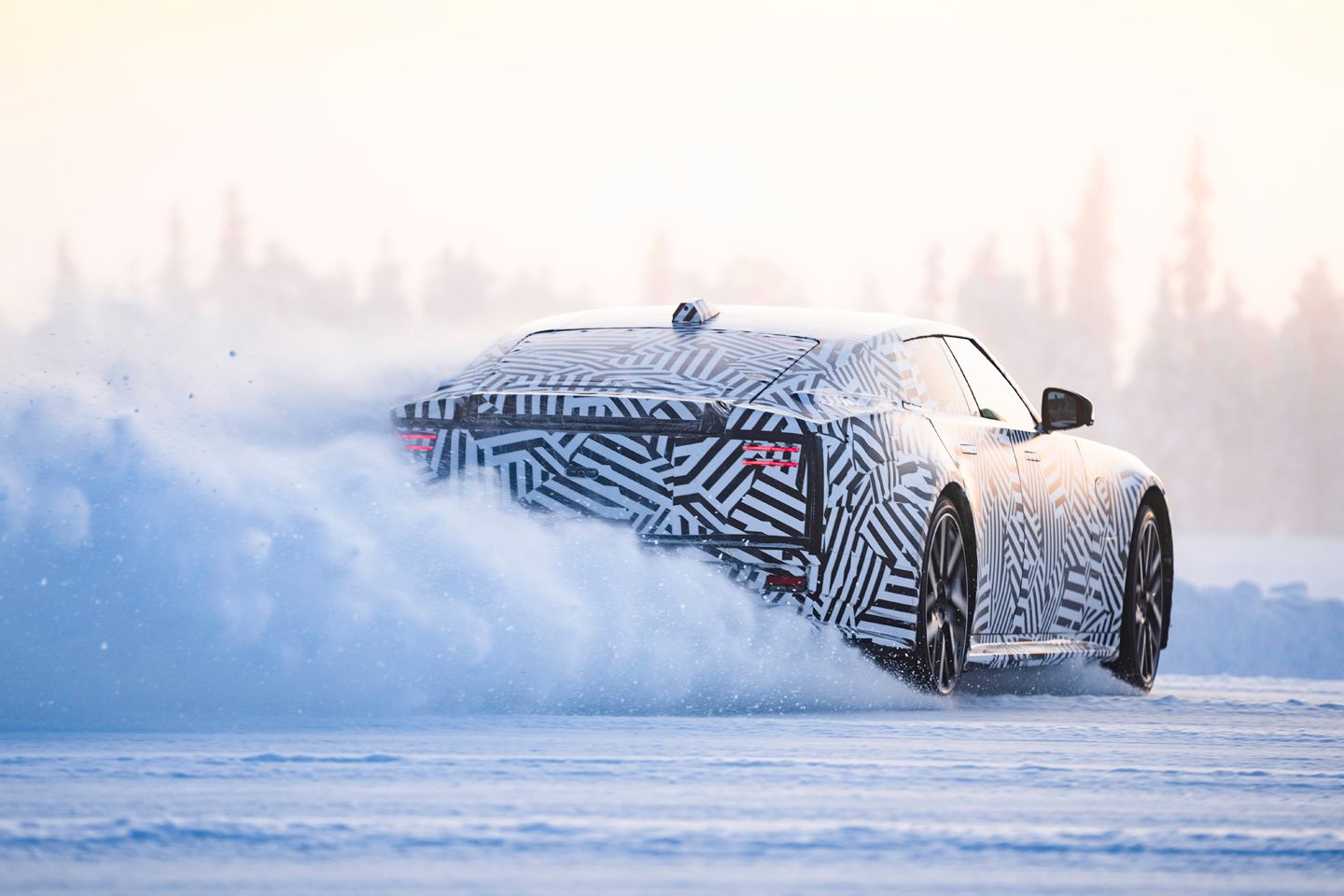

Hopefully, it is telling of where the priorities lie in this 5.2-metre-long and 1.4-metre-high four-door. Organ-shifting performance, we’re told, isn’t the focus here; rather, it’s a character that feels more authentically “Jaguar”, something the team took the time to nail down during development, having driven a suite of historic models including the E-Type. The result, they say, is a setup that ranks balance, comfort and a brisk GT reflexes over the usual EV headline stats. The on-paper figures help back that up: not least a perfect 50:50 weight distribution in this aluminium-intensive Jaguar Electric Architecture newcomer, which obviously bodes well for handling.
As does the long list of uniquely-tuned or entirely bespoke hardware aboard the GT. Take, for example, the use of two-stage air suspension that is said to be so effective at managing body control that the setup works with passive anti-roll bars, rather than the active alternative that most equivalent EVs deploy. Despite weighing as much as 2.75 tonnes (the target maximum weight), the low-set spread of four battery packs across the car, as well as the low body itself, means a hollow, 40mm-thick bar is considered plenty for the grand tourer. I was shown it from the underside too, and it looks like the sort of thing I can buy for my NC MX-5.
I was also shown (on an early prototype engineers were happy to raise up on a ramp) the solutions employed to give the car both its tight body shape, and optimum packaging. Up front, the electric ‘machine’ and single-ratio gearbox are stacked vertically to minimise space, while the front struts use a bespoke top with a hole effectively designed into it, to save having to shorten the suspension, which would hamper ride comfort. This also allows for enough space from the bonnet above to pass pedestrian safety tests. The electrically assisted steering system is mounted further forward in the nose and with three (rather than the more conventional two) mounting points for maximum feel. At the back, the suspension is designed to dissipate bump impacts rearwards rather than upwards for better comfort and control.
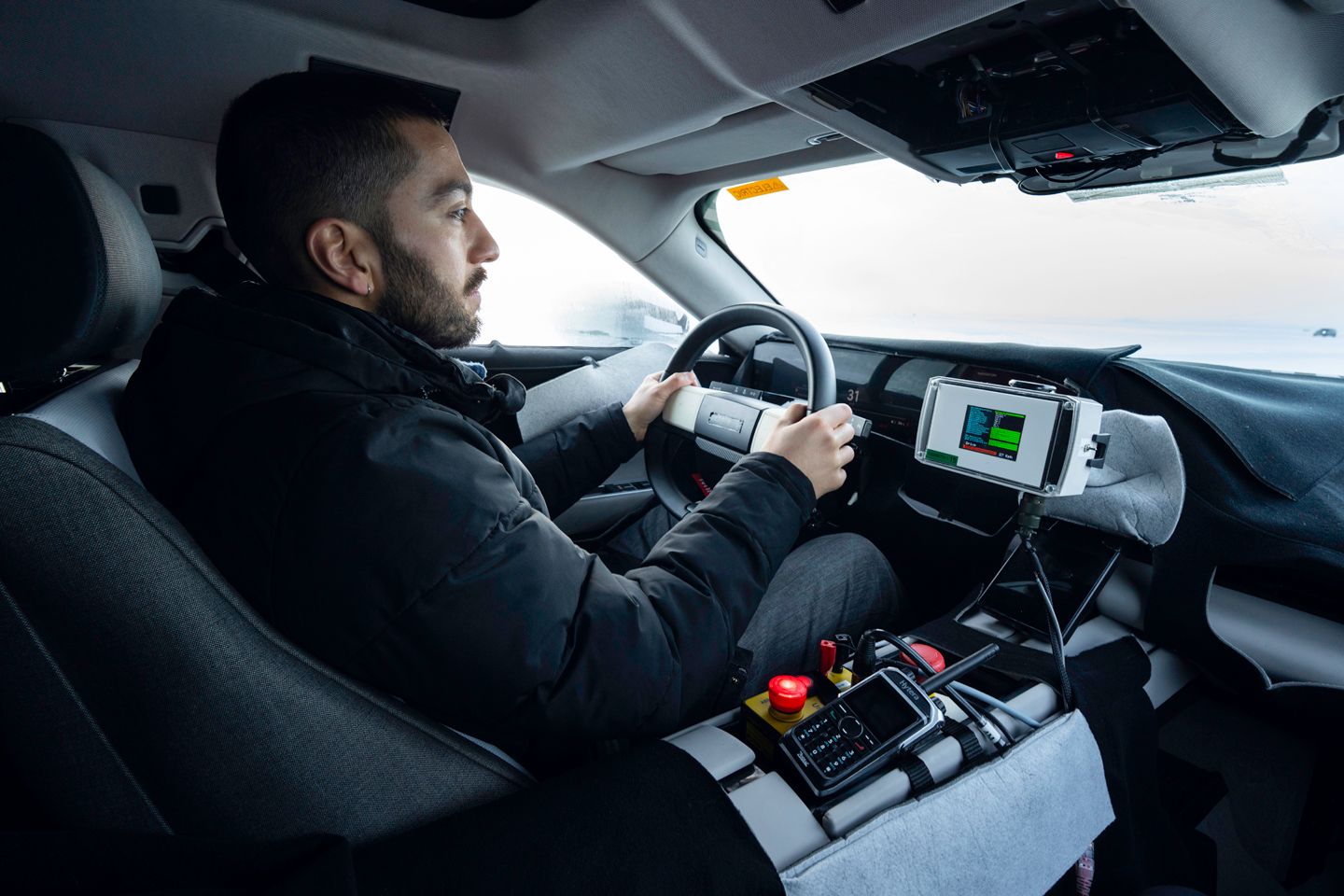
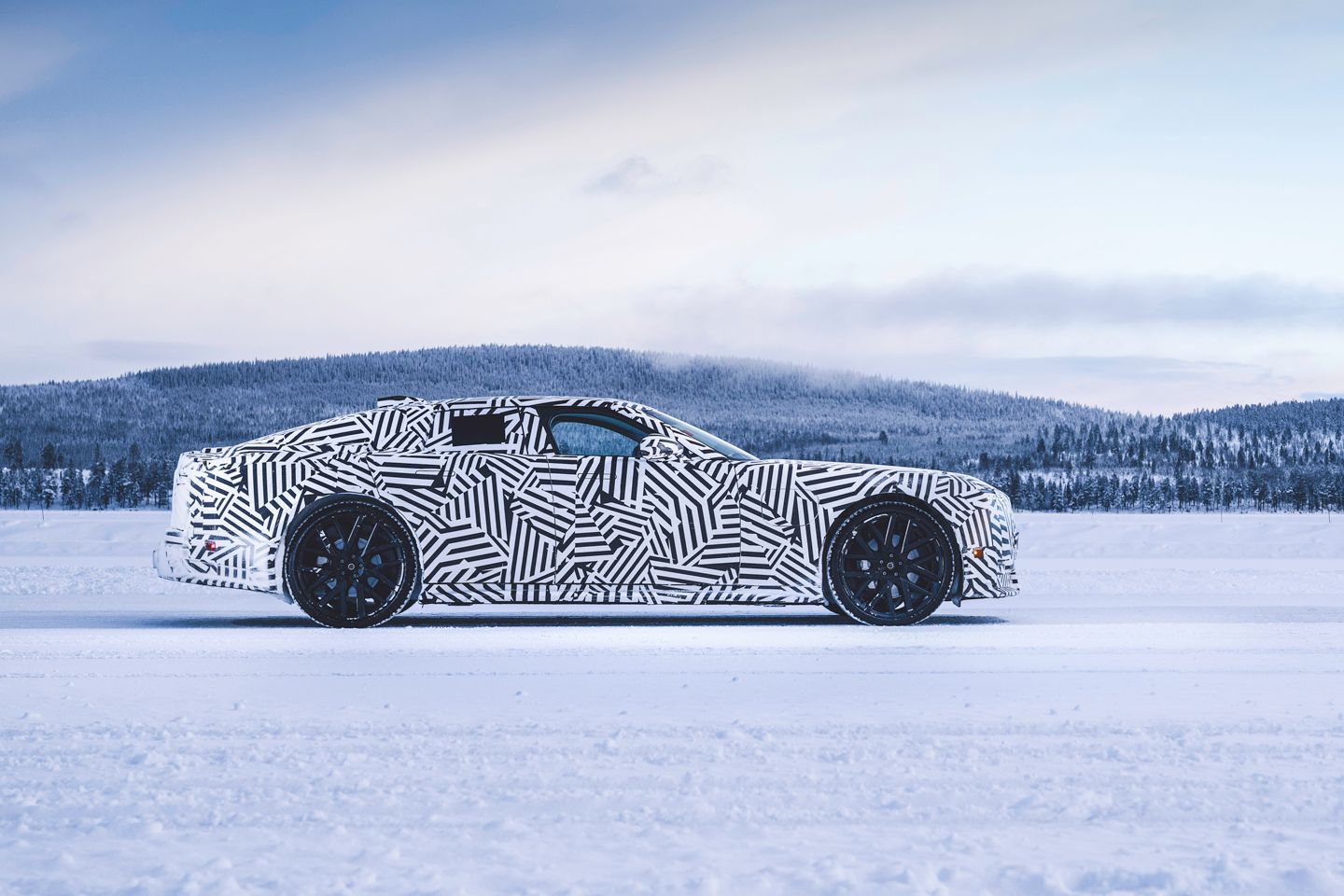
The whole structure is phenomenally stiff, with a torsional rigidity of 50 kilonewtons per degree, which, for context (because I had no idea what that means practically), beats the formerly stiffest Jag, the I-Pace, by 14 kNm, and is said to overshadow the Taycan by 8 kNm. In short, it’s seriously rigid, which doesn’t just bode well for safety, but also ride, handling and refinement. It’s not all come from the ‘skeleton’ of the car either, because the Jag’s four battery packs are integrated into the structure. If things do go wrong, crash energy dissipation routes are inspired by the spaceframes of racing cars (apparently including a bespoke Mini V8 owned by an employee), meaning that Jaguar’s GT also cushions its occupants when they run out of luck.
While the interior is fully covered in the prototypes I drove, a central spine like the one in the concept is impossible to miss, as is a digital instrument cluster that spans much of the dash, with a smaller screen to the left of this left-hand-drive car, with menus for drive modes and regenerative braking adjustments. The centre console also sports a smaller vertical screen, which is where the climate control settings can be adjusted, meaning no physical buttons (boo), though at least there’s a permanent place for the menu to remain. I’m not allowed to climb into the back, but Jaguar suggests the legroom should be better than most EVs thanks to a ‘foot well’ - effectively a space in the battery below, to let passengers sit with their legs lower. I’m also told the boot will have an especially deep section at the very back, and there will also be a front boot, albeit one that’s only deep enough for a charge cables.
This is a big car, yet it’s amazing how cocooned you feel when climbing inside. That long bonnet (which Becker said reminded him of a Caterham’s when he first sat in a design mockup), slanted windscreen and the snugness of a cabin with its low roof, not to mention a seating position inspired by that of the F-Type’s, give the car a fast grand tourer feel. While EV buyers more accustomed to airier models with big panoramic sunroofs and crossover bodyshapes may find it a little close-fitting, I like it, and last year’s furore notwithstanding, I think traditional Jag fans will too. The almost circular wheel - Becker insisted it had to be round - falls neatly into your hands and the raised centre console makes for a warm, intimate setting.
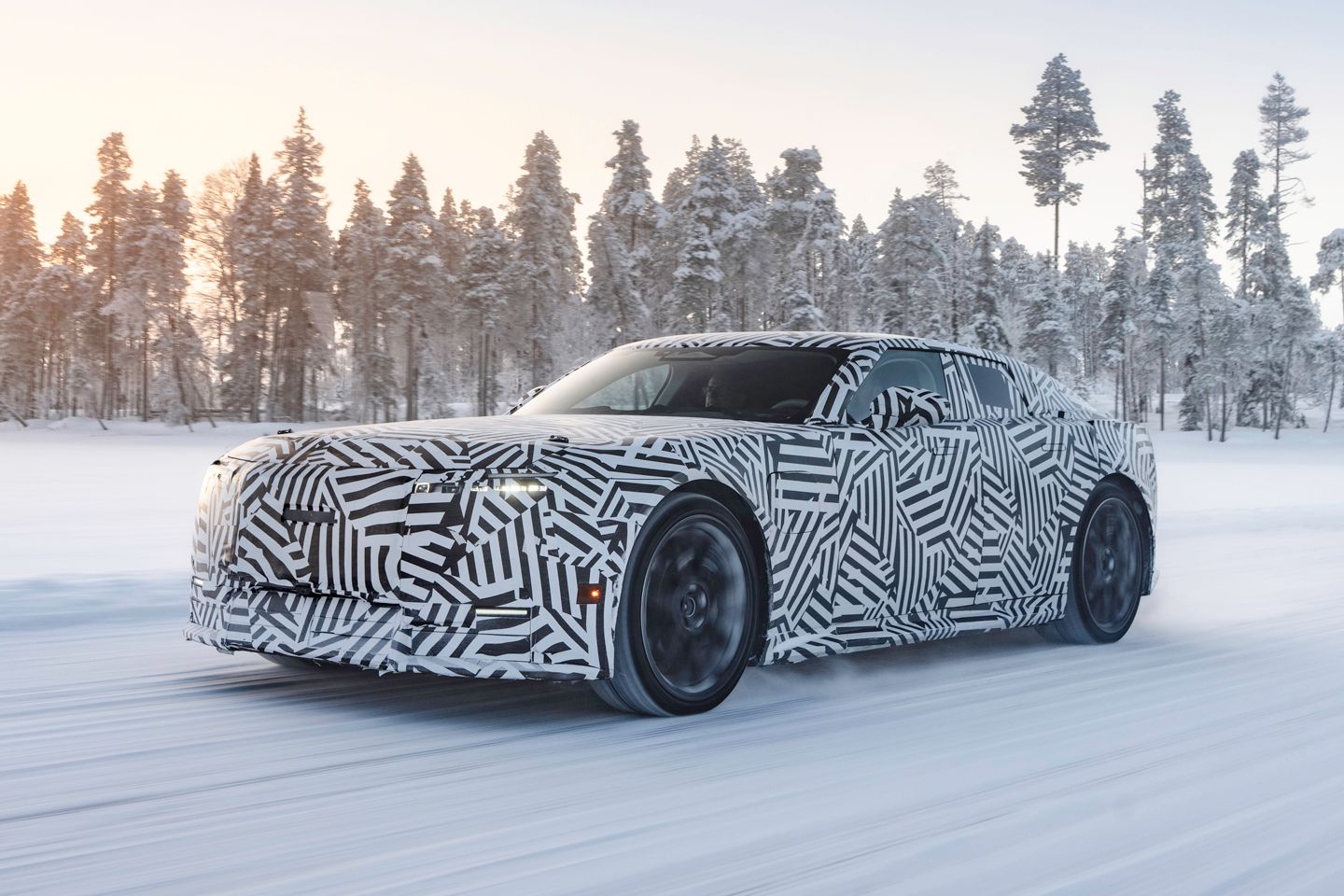

Outside, of course, it’s -21 degrees C and prototype heaters are about as effective as a baby’s breath. At least we’re on winter tyres developed specifically for the GT (the first time a Jaguar’s received factory-approved winter boots) and we are - in case you hadn't noticed - driving the GT on an actual frozen lake. But along with the aforementioned technical advantages of the JEA base, this EV has a few more tricks up its sleeve. The first is a standard-fit all-wheel steering system with up to six degrees of lock on the rear and up to 43 degrees of lock for the fronts. In town, I’d be telling you about how this helps to shorten the car’s turning circle for it to rival a Ford Focus. But out here, Becker says it’s more appropriate for something he calls “oh s*** corrective lock”.
It means, on a circular course cut into the lake’s 40cm-deep ice, a Jag GT with all of its electric systems off can, if you instruct it to, get so sideways that you’re looking backwards through the rear passenger window. Which is undeniably amusing, though as you might expect, its engineers have spent far more time developing the car to be easy to drive rather than lairy at pace. Accordingly, when I get to sample the GT with its full suite of electronic tech - which includes three-letter acronyms such as IDD for Intelligent Drive Dynamics and ITV for Intelligent Torque Vectoring at the rear - I’m in awe of just how safe it is. On snow and ice, even with me blithely requesting all of the car’s plus-1,000hp, the GT doesn’t just manage the torque smoothly and effectively, it does so in a way that keeps the nose pointing where I want it. It’s witchcraft - like playing a racing video game with steer assist on.
Meanwhile, it you’re clumsy during a straight-line standing start, the other three-letter acronym - ITM for Integrated Traction Management - means even if you fully loosen your grip on the wheel and pin the accelerator, the car learns the surface conditions so quickly that it launches and tracks completely straight. Near-1,000lb ft of torque has never felt so easy to manage. Apparently, even on a completely dry surface, the Jag will never cause the sort of launch headaches you can get in a Taycan Turbo S. It’s intended to be effortlessly quick but not scarily fast. Although an anticipated 155mph top speed (proven to NC last year at Gaydon) means this single-speed GT, the slipperiest model yet made by Jaguar, definitely has sufficiently long legs for the autobahn.

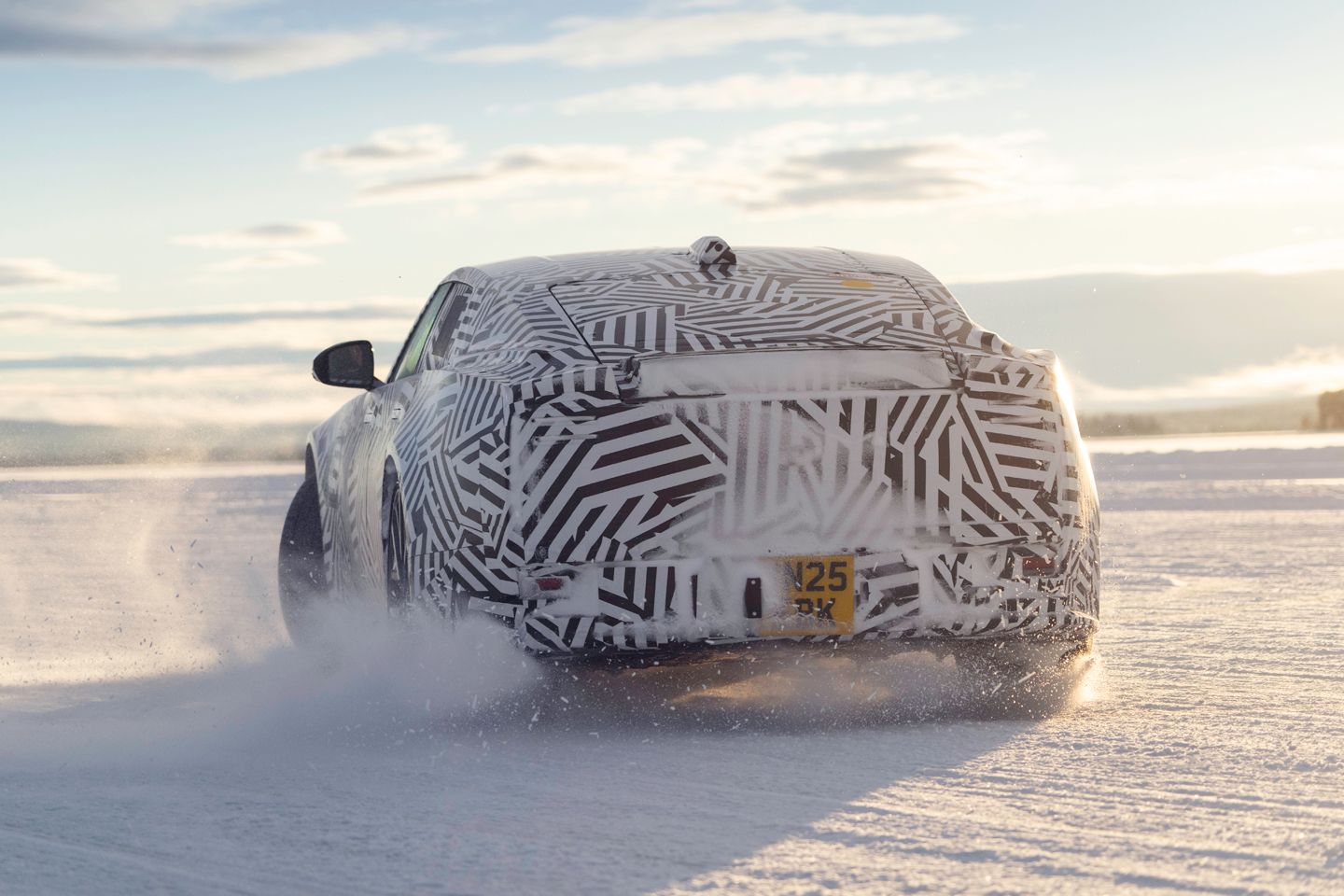
That said, this is a Jag with perfect weight distribution and torque vectoring, so where it feels most unique is in its flow and body control when I sample a circuit layout on the lake. Linking left-to-right slides is easy as the car shrinks and rotates around you - quite literally, as your seatback is in the middle of the wheelbase - and that drift-car-aping lock makes catching big angles a doddle. No sane GT driver is going to get their six-figure EV this sideways in real life, but it’s illustrative of just how balanced the car is. This management of weight is also promising for ride comfort, so while a frozen lake is clearly a world away from a UK road, I sense what NC experienced from the passenger seat: it has a weighty suppleness, and a useful amount of body roll.
That modest sense of lean is something Becker wanted to retain in hopes of better mimicking Jags of old, as well as making the car easier to read at pace. Firmer EVs aren’t just less comfortable, they’re often spikier on the limit too - don’t forget, this three-motor grand tourer has four-figure power. The two motors at the back can produce up to 87 per cent of that output in the most extreme driving modes, although in Comfort mode, the split is a more sensible (but still heavily rear-biased) 30/70. It means Jaguar's GT should be as steerable on the power as it is via its variable-ratio rack, even when the surface is hugely warmer and grippier.
If there’s an early complaint, it’s that there are no shift paddles behind the steering wheel for on-the-fly adjustments to the regenerative braking. I like that the car runs with 0.07G of regen braking as standard, as I agree with the engineers - it feels natural. However, having to use the screen on the dash to tweak regen isn’t just less convenient than paddles behind the wheel, it also feels like a lost opportunity to increase driver engagement. I’m not talking in the engine-simulation sense of a Hyundai Ioniq 5 or 6 N either, I just mean to allow you to ramp up or reduce regen strength as you go. Perhaps Jaguar believes buyers of the GT will be more laid back than that, and content to leave the car to its own devices.
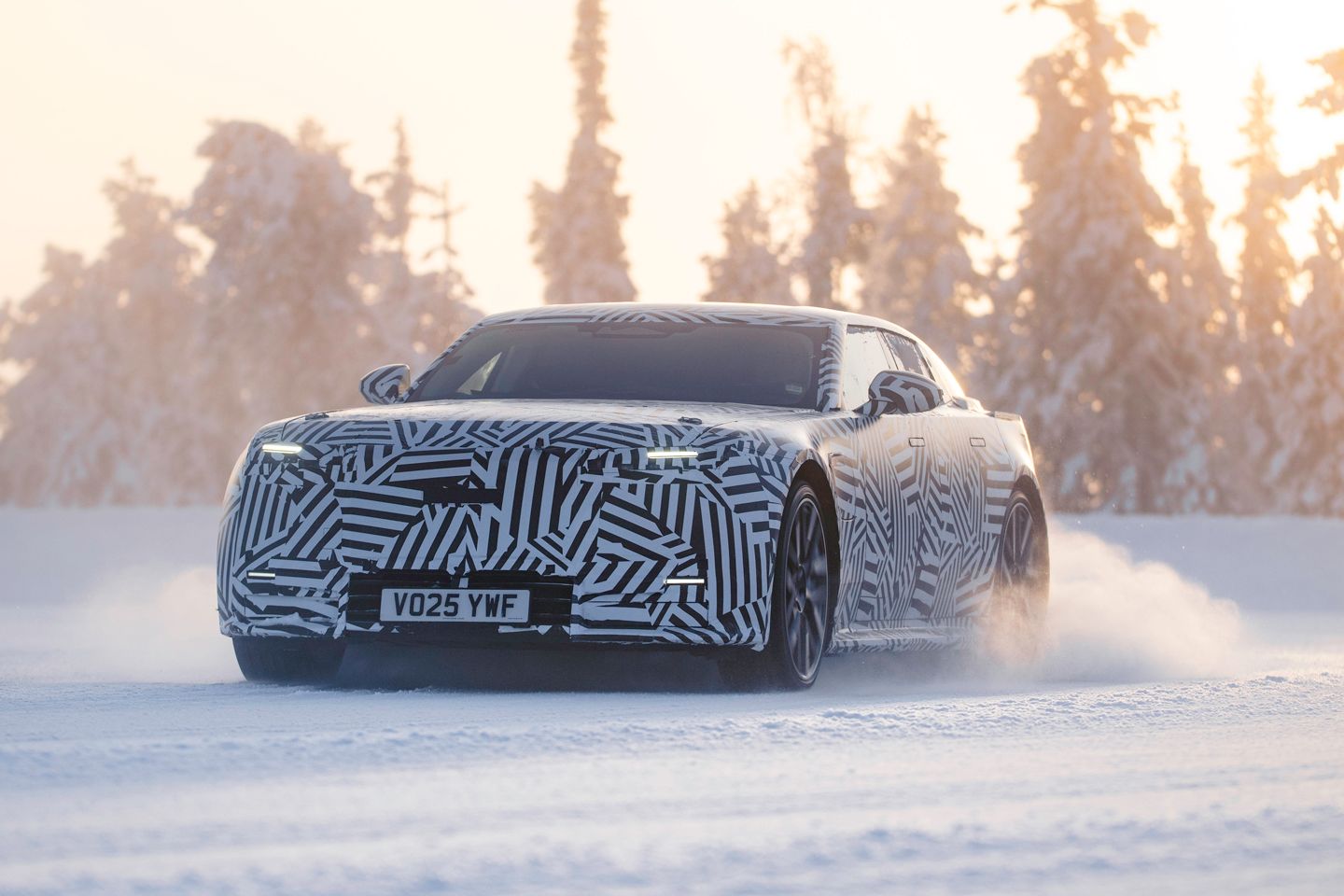
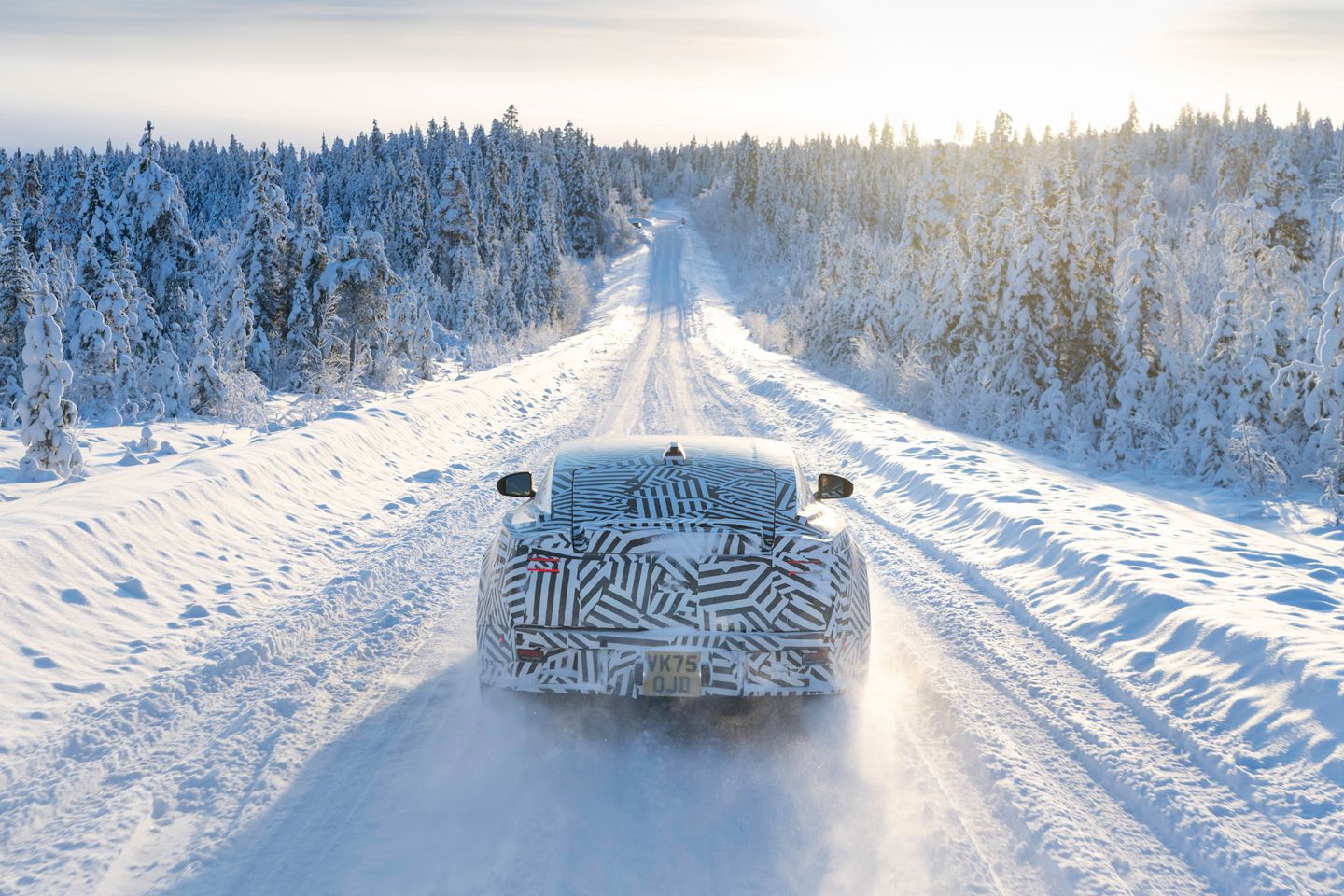
Jaguar's GT, as its maker likes to remind us, can’t really be compared to many other EVs because with an anticipated price of between £120,000 and £150,000, it’s not exactly fighting in and amongst them. That price, after all, would make it potentially cheaper than a Taycan Turbo S, and a lot less expensive than a £330k Rolls-Royce Spectre. Regardless of its asking price, there’s plenty to suggest Jaguar's luxury EV will offer something different to anything else currently on the market, battery- or ICE-powered. While I can’t say much about it, like NC I’ve seen renderings of the production car, and rest assured it’ll turn as many heads as the concept. Plus the handling, interior and even practicality - to the extent that we've experienced them so far - could make it a satisfyingly sensible family car for those with the budget. And sufficient space on the driveway.
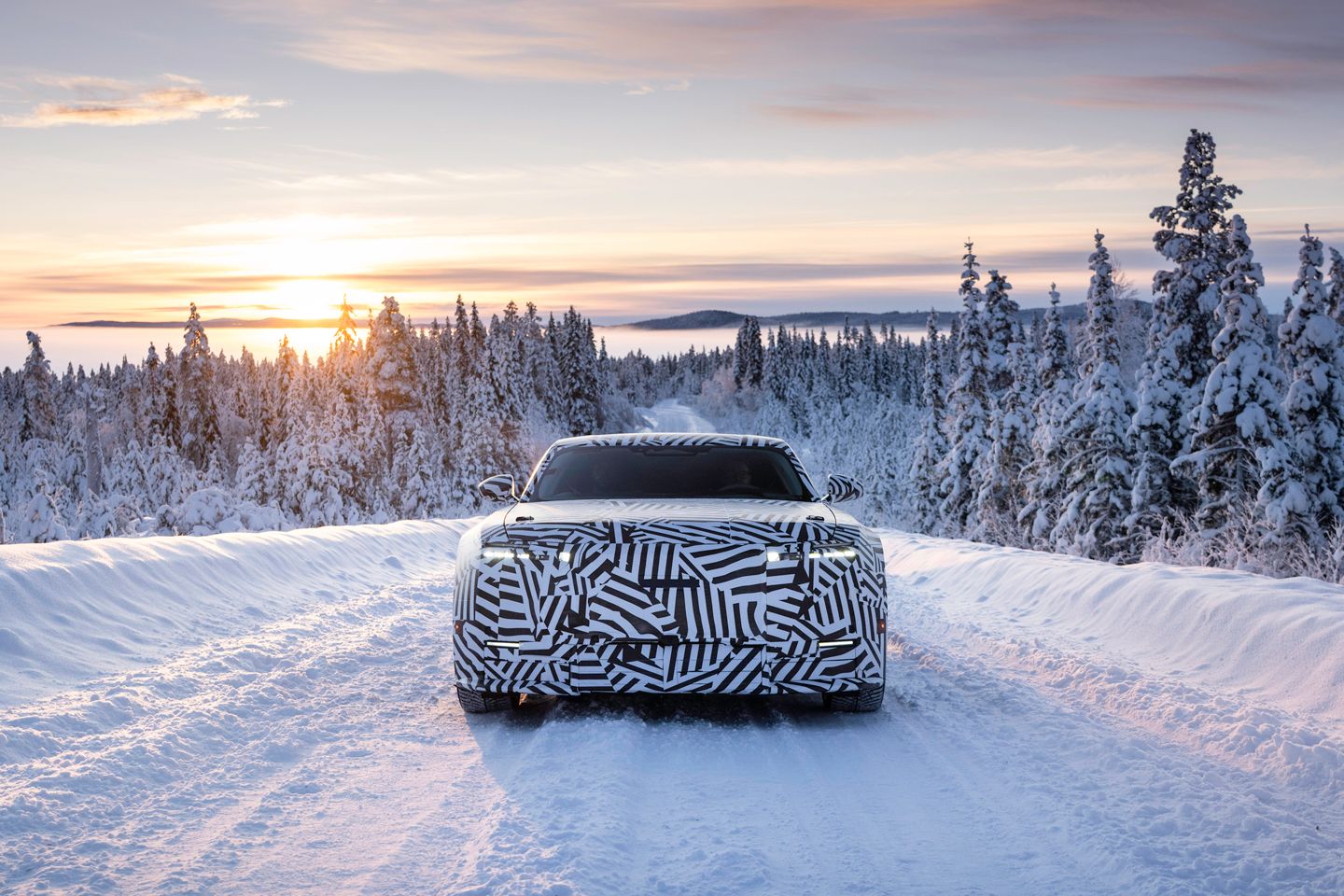
Either way, Arjeplog feels a long way from where we were a year ago. While many hurdles remain, predictions of Jaguar's demise, which circled the internet furiously in the wake of the concept's reveal, feel easier now to dismiss - not just because the first impressions of the resulting prototype are good, but because it all feels so inherently 'Jaguar' in application. With a two-door model and SUV also in the long-term strategy, the brand's relaunch ought to gather pace soon enough. And while we obviously can't really be sure of anything until the cladding has come off and the backdrop looks more familiar, being behind the wheel does at least have me rooting for Jaguar's electric GT. The launch, scheduled for late 2026, can’t come soon enough.



Also I think it's facing quite a challenge (regulation changes, customer ambivalence, entering new price point, rebranding, etc) so fingers crossed this doesnt turn out to be a British Cadillac Celestiq
One thing that does puzzle me is that everyone talks about how long it is, how much it costs, and how all that will delineate it from the old XJ. That car traditionally offered a sportier, sexier alternative to the S0class and 7-series. Instead, we are told, this is a newer, more expensive car that will fight in different markets.
Let's look at the statistics to back that up: This new Jag is supposedly massive, 5.2m long, whereas the current 7 series is 5.4m long and the S-class is 5.3m long. It will cost £120k - £150k; the current 7 series: £106k-£160k, the S63 is £188k. New jag model weight: 2750kg. BMW i7: 2770kg. The S-class doesn't have an electric version so is obviously lighter, but the EQS is comparable. Plus ca change...

If they're going for performance and handling with 50:50 weight distribution, why make it the size and weight of an oil tanker?
But if they're going for comfort and luxury, why the huge bonnet and relatively small cabin?
In fact, why the huge bonnet at all? What's in there - an E-Type?
I can only think it's going for something like the Bentley Continental GT and that seemed to sell well enough, so maybe it'll do alright, but I just can't get excited about it.
Forums | General Gassing | Top of Page | What's New | My Stuff