
New Range Rover Sport Electric arrives with 550hp
Land Rover promises a 'new era of sporting luxury' - and we've already been for a spin
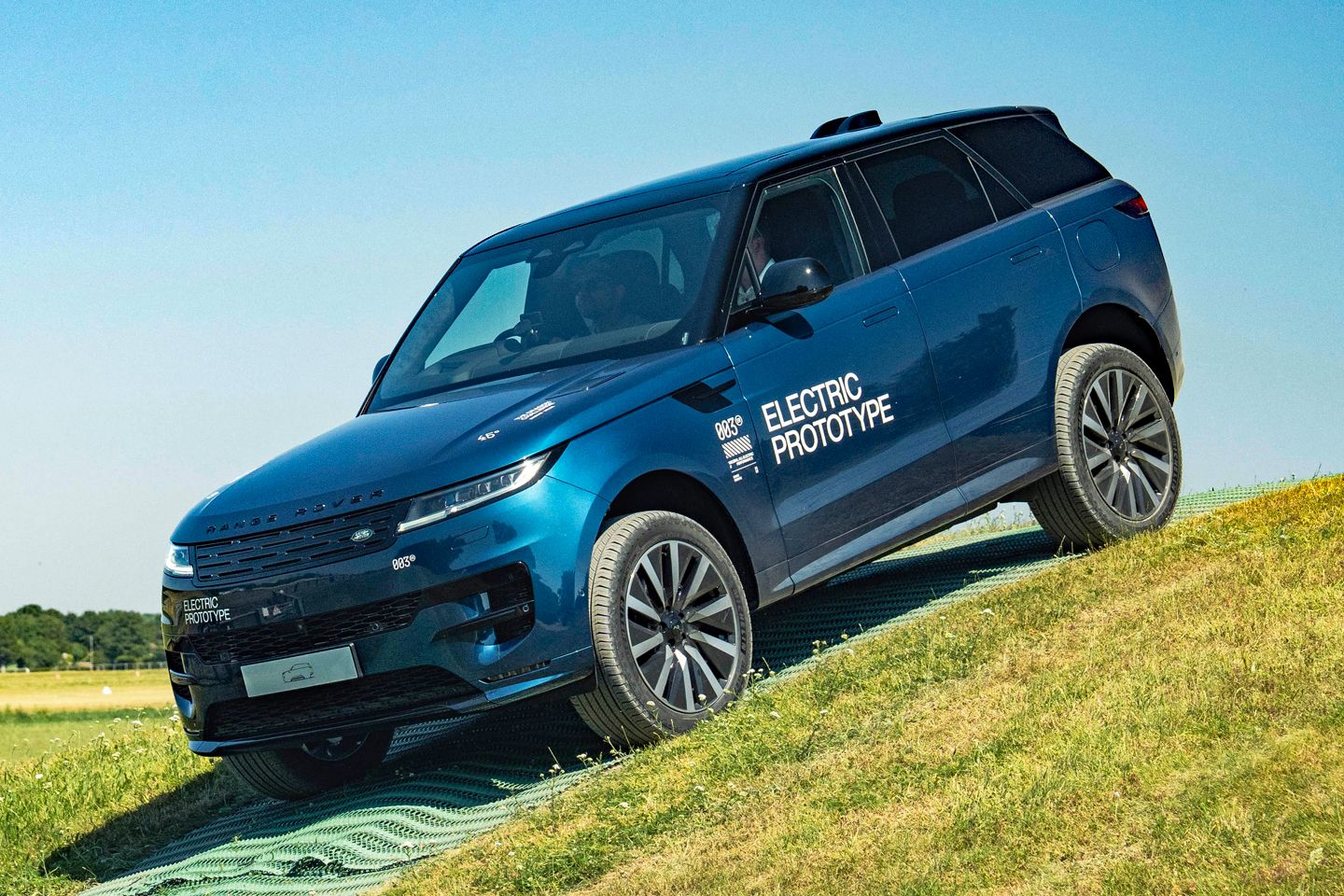
Doubtless you’re well accustomed by now to the idea of the Range Rover becoming, in what seems like slow motion, battery-powered. Not exclusively battery-powered, of course. Unlike Jaguar, Land Rover knows which way its bread is buttered: the Range Rover Electric, we’ve been repeatedly told, is all about choice. Just another powertrain. So it only makes sense, given the nature of the shared MLA platform, that the Range Rover Sport follow suit.
Quite whether the two models were originally meant to launch almost on top of each other is an open question - presumably the delays suffered by the Range Rover Electric programme have had something to do with it. PHers might recall that we drove a full-size prototype a year ago this month, when it was clearly still a work in progress - though we hardly expected to wait another year before getting behind the wheel of another one. Even less so that it would turn out to be the Sport variant.
Still, you can see why Land Rover thought it unnecessary to wait any longer: this is very much track 2 of the same concept album. Same 240kW motor per axle configuration; same roomy 118kWh battery, all of it packaged in much the same way. Land Rover isn’t discussing figures just yet, though it seems reasonable to surmise that you’ll get much the same range, and a similarly fast rate of charge via the same 800v architecture, too.
Same nonchalant approach to styling, for that matter: the Electric model is, to all intents and purposes, just another Range Rover Sport - save for its lack of tailpipes. This extends inside, where even the selectable S on the (now single-speed) transmission is now made to serve as the Single Pedal drive mode. Only the absence of paddles and the changes in instrumentation readouts key you into the change in propulsion. Much as it did with the full-size version, this all comes as a blessed relief.
There are differences, mind; mostly the same implied (and intended) differences that Land Rover already uses to differentiate between the aristocratic Range Rover and its spunkier, swifter-to-turn sibling. ‘Sporting luxury’ is the phrase its maker prefers, suggesting that the Electric will make the Range Rover Sport ‘more dynamic and faster than ever’ - even though it will ultimately be expected to play second fiddle to the SV in outright performance terms.
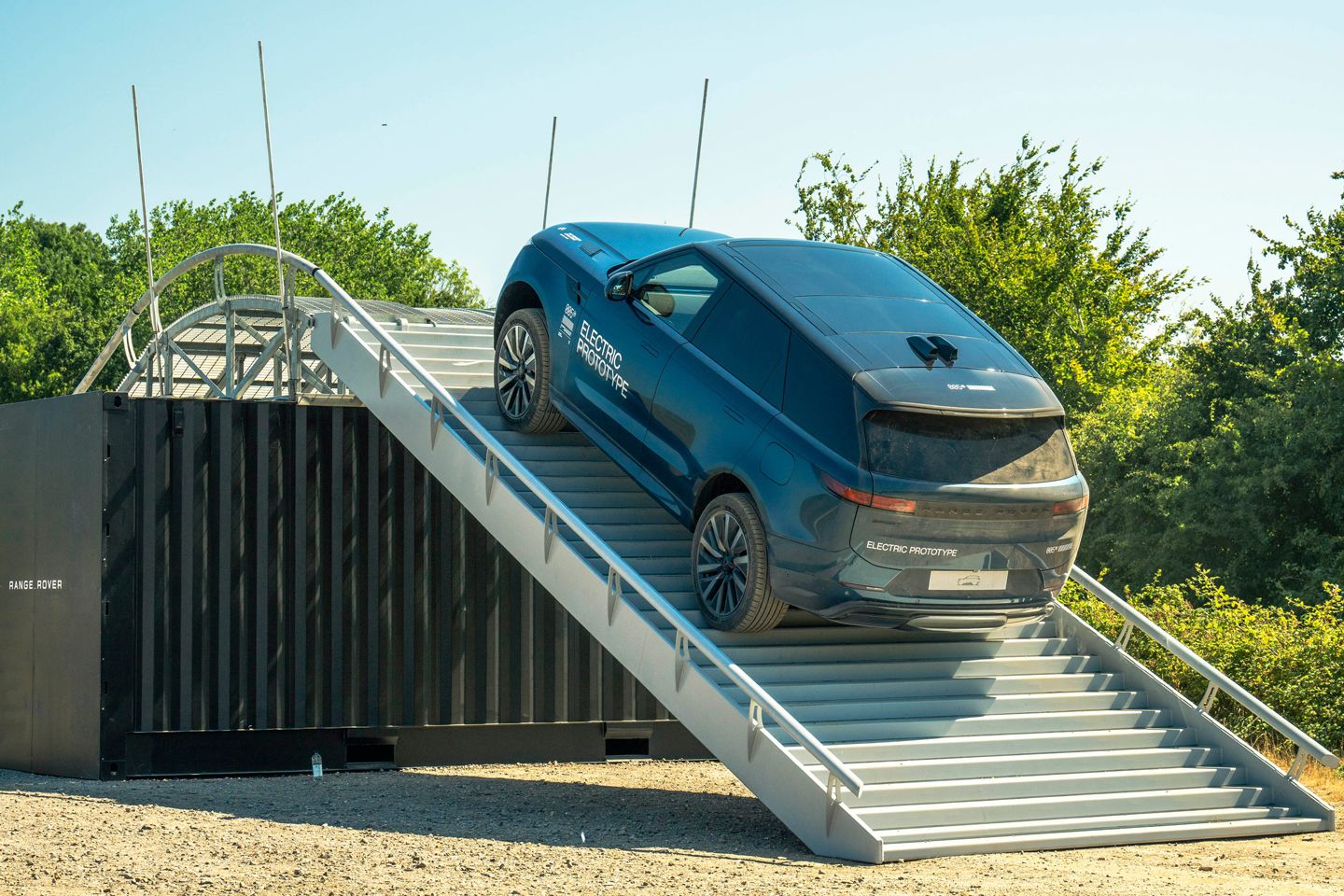
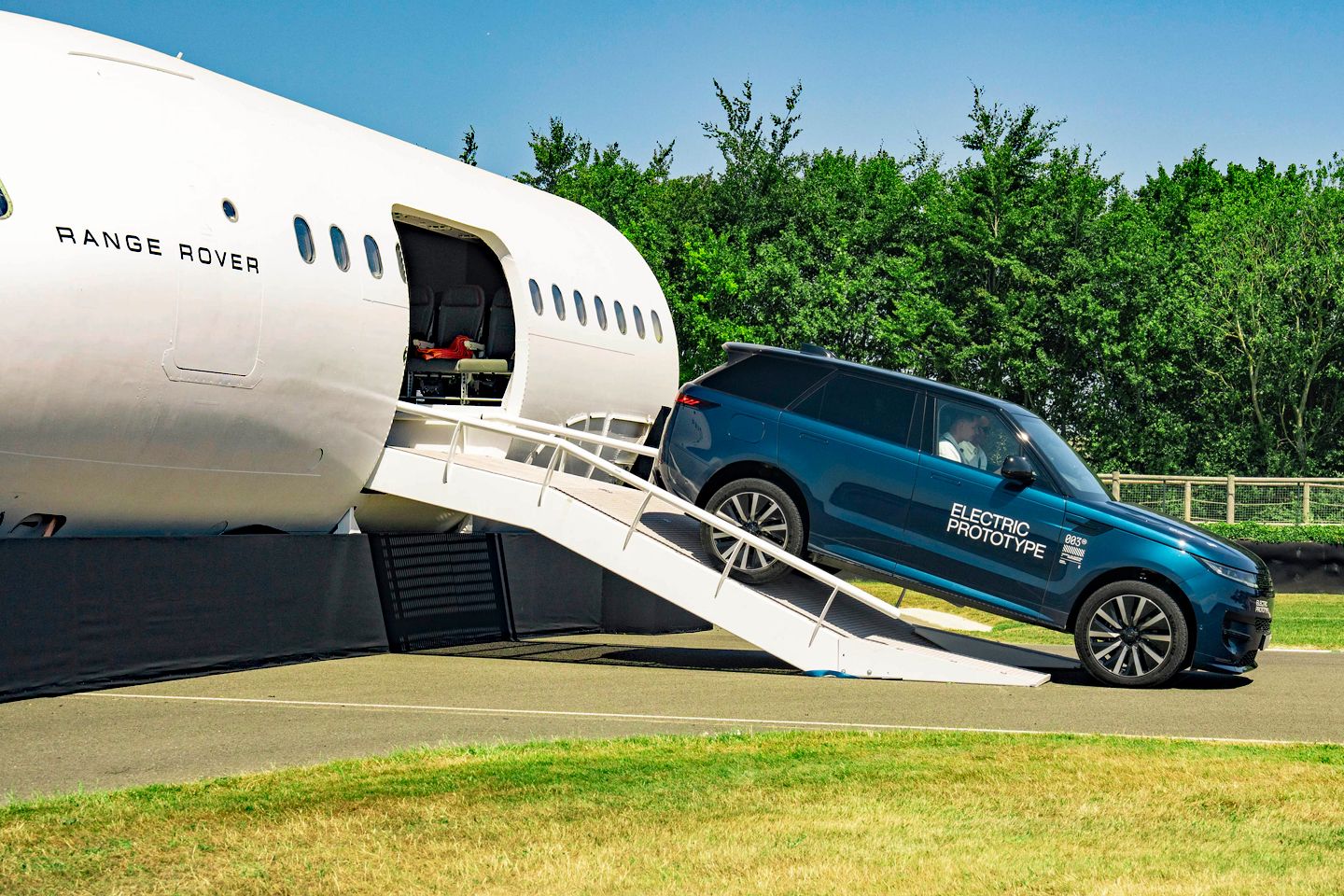
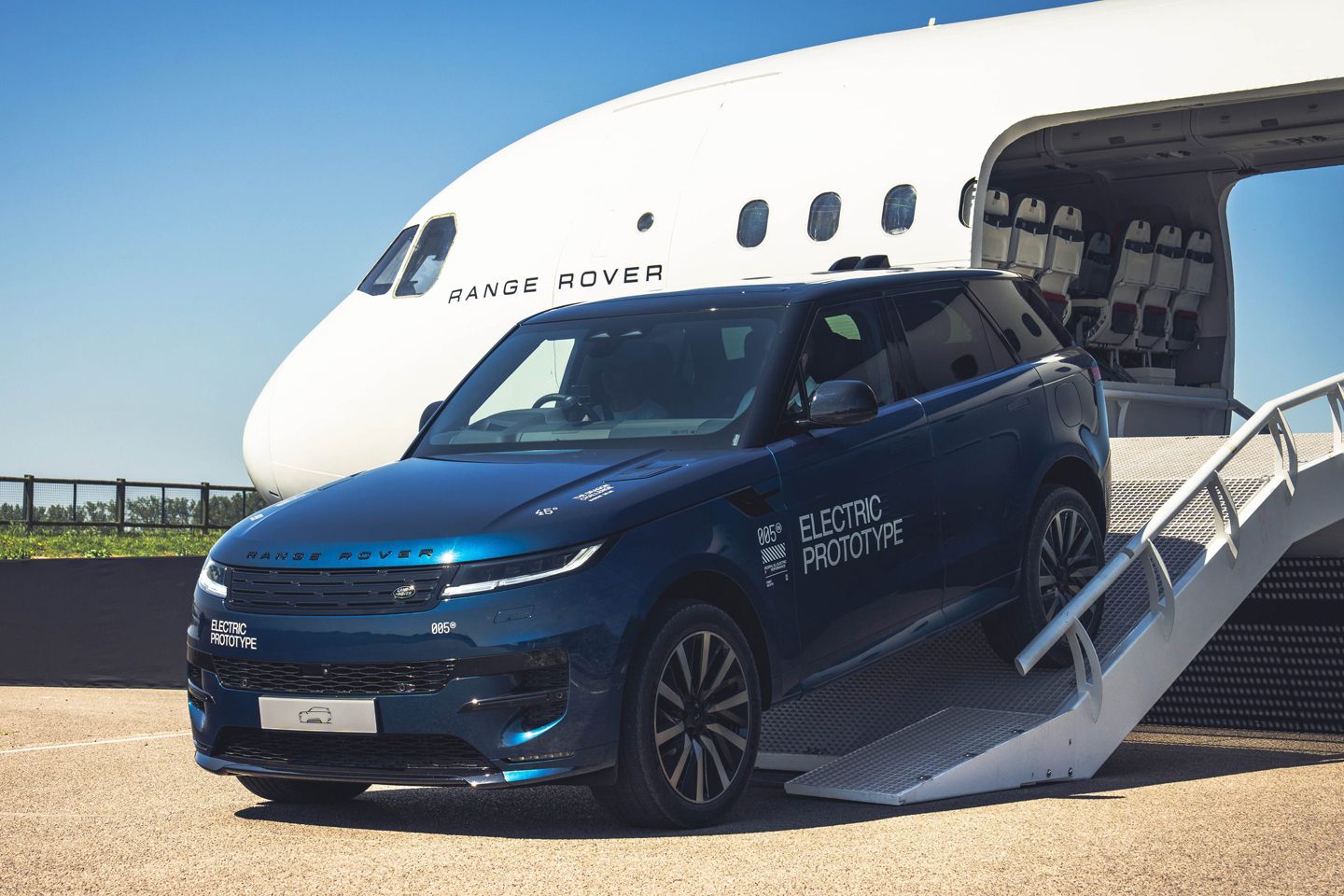
Still, the car is plenty far enough along now in development terms for its preview event to exceed the slow-speed trickle around the Eastnor Estate that amounted to the Range Rover Electric first drive. For one thing, it took place against the backdrop of the Goodwood Motor Circuit, albeit with no unfettered access to the track. Instead, it was out with the cones and the off-road obstacles and even (mostly for old time’s sake) a cut-down aircraft fuselage.
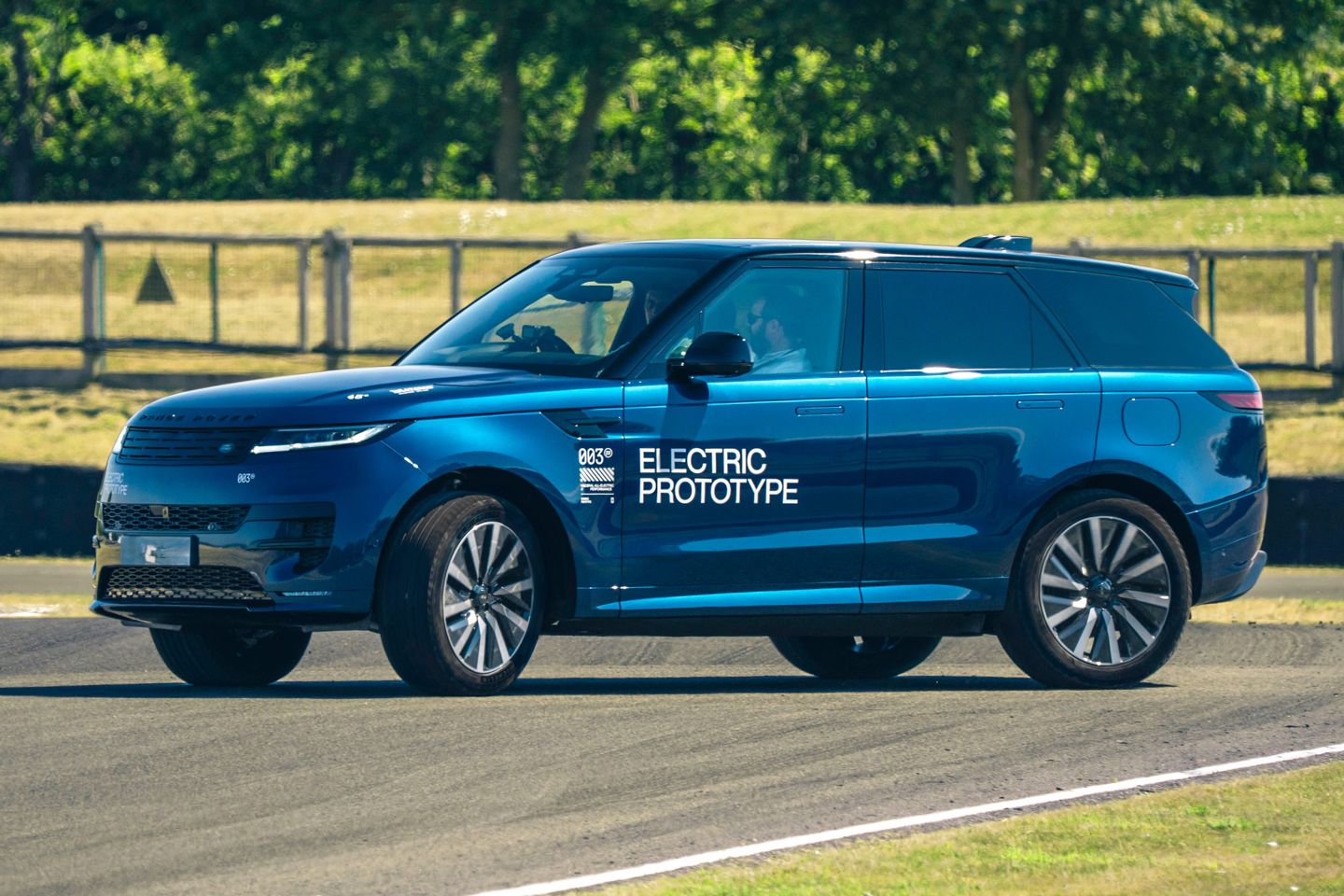
You could hardly fault Land Rover’s reasoning: dashing between cones, even those laid out in the slalom fashion, plays to the Electric’s predictable strengths: its underfloor battery, inevitably lower centre of gravity and the location of its e-motor provide the kind of equitable, well-contained balance that no front-engined Sport (save perhaps the hydraulically-interlinked SV) could rival when turning so abruptly. Suffice it to say, if you want to leave a multi-storey car park in an effortless flurry, the Electric is certain to be range-topping.
Its associated briskness, that familiar step-off satisfaction of coasting forward in a way that belies mass, was hardly ever likely to be in question - and isn’t. Land Rover talks of wanting the Sport to feel more visceral than the Range Rover, but this is likely to be more apparent in its tighter body control and slightly heftier steering than in the way it surges nonchalantly toward the horizon. The Electric gets Launch Control, and, as you might expect, experiencing it will mean never looking at a D350 in quite the same light again.
Still, battery-power is more about smoothness and linearity than point and squirt amusement; even on such an abrupt sampling, you needn’t worry about trading in the V8 for the Electric’s way of doing things. But if a large SUV is less about shock and awe for you, and more about waft and circumstance, then there is much here to appreciate. Unlike the Porsche Cayenne or the tank-like electric G-Class, Land Rover has clearly worked hard to retain the core Sport sensibilities, and the brief open stretches of tarmac we were treated to suggested that all usual strengths apply.
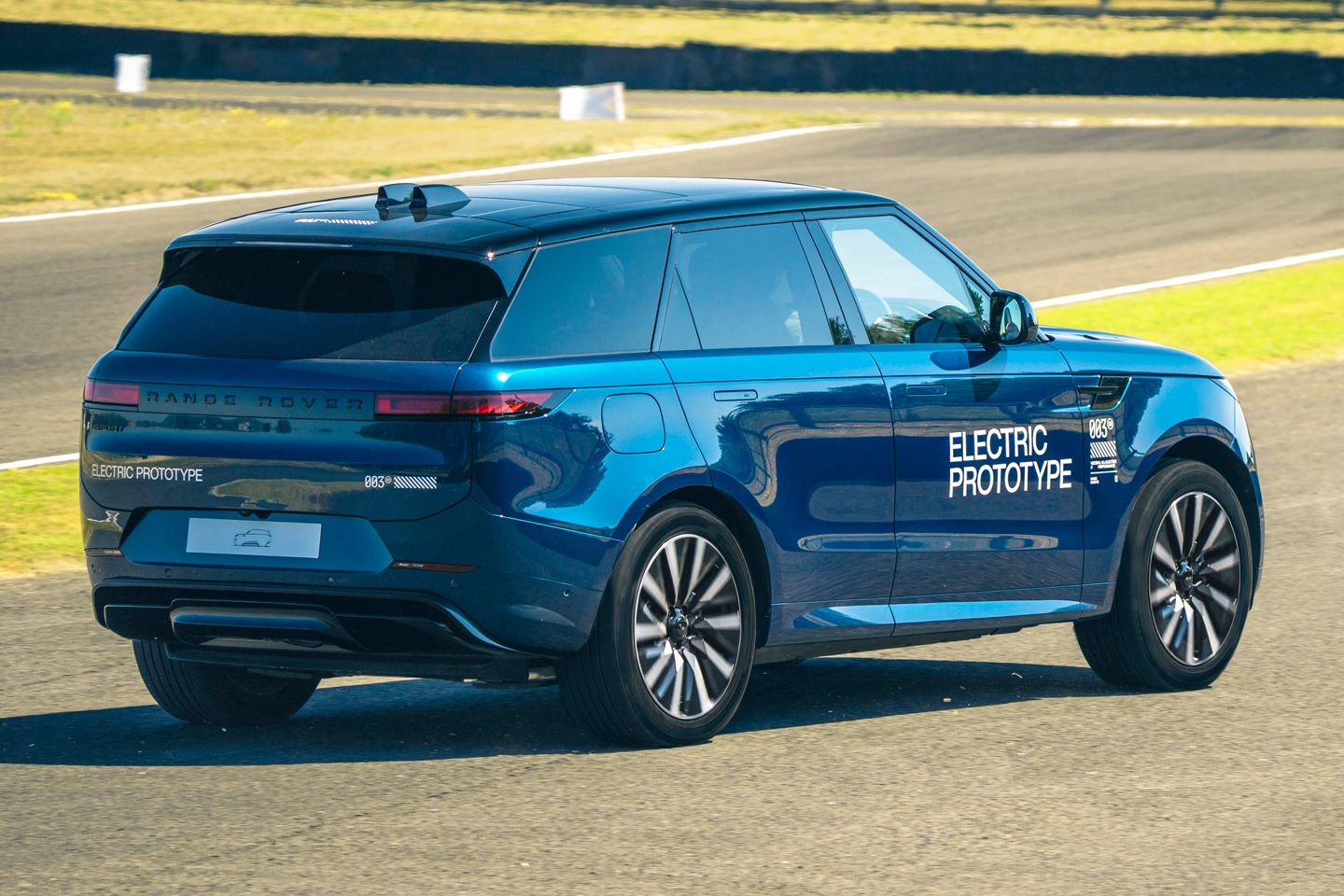
This includes the car’s air-suspended knack for riding impressively well. A very short stint on gravel suggested the Electric’s isolation of its occupants might have exceeded the combustion version. Though perhaps that impression was aided by the sky-high refinement, which is naturally where the battery-powered model excels. Much like the Range Rover variant, the new Sport hardly needs its massage seats: it is as hushed as a Buddhist temple, and probably no less good at alleviating driver stress.
Its ability off-road is likely less pertinent to its end user, though here too it is unsurprisingly adept - again, for all the same reasons the Range Rover Electric excelled, the powertrain making its Terrain Response system infinitely quicker at sniffing out traction, and sending all available torque to that exact spot. Perhaps there are times where you might miss the softer, organic feel of a D350’s throttle - but the EV version feels like it would pull you relentlessly over a mountain. Or up some steps, as here.
As first impressions go then, consider Land Rover on to a winner - much the same message, it must be said, that we relayed a year ago. Only this time, we’re approaching brass tacks at a much more concerted speed, and while the finer technical details remain tediously under wraps, expect those to be made available in due course. By then, we should have a starting price, too, and, finally, an official launch date. Let’s just hope all the many thousands of people who expressed an interest in an electric Range Rover way back when haven’t changed their minds about large, luxurious EVs in the meantime…


That aside I often see ICE RRSs covering massive distances at massive speed across France on the way to the Alps etc. It'll be interesting to see how the admittedly very good french charging infrastructure copes if thirsty things like this and the eCayenne are as successful as their makers hope
Electric power gives the exact effortless waft that a large vehicle needs but after a poor previous RR experience I wouldn't want to be one of their reliability statistics again.

Buyers in this price range have a strong preconception on the inconvenience of public charging availability and wait times. It's not like the PHEV or the D350 are exactly unrefined....
“Luxury must be comfortable, otherwise it is not luxury.” - Coco Chanel.
But instead they should cut the battery size by a third and use a petrol generator. Similar to what the Chinese are doing.
This still gives all the benefits of being an EV, without the efficiency or charging anxiety.
Message Board | General Gassing | Top of Page | What's New | My Stuff