
Red Bull RB6 Revealed
Discussion


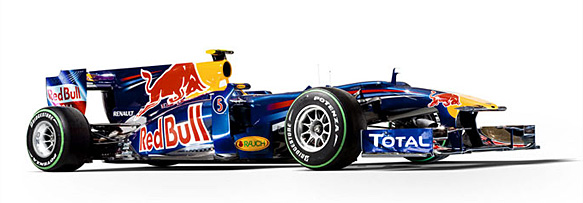

dpbird90 said:
It's a lot different...Flying Toilet said:
dpbird90 said:
It's a lot different...Flying Toilet said:
dpbird90 said:
It's a lot different...Wanta996Gotta said:
Flying Toilet said:
dpbird90 said:
It's a lot different...http://news.bbc.co.uk/sport1/hi/motorsport/formula...
Better angle, now I can see the changes much easier (didn't have glasses on before!)
Better angle, now I can see the changes much easier (didn't have glasses on before!)
zac510 said:
rev-erend said:
Most of the cars seem to be going with a really high nose .. cant help feeling that the drivers legs will be quite high and his driving position quite strange.
The driver definitely is a bother in the way of a perfect car design isn't he? 
http://www.motorauthority.com/blog/1032492_video-m...
Q&A with Adrian Newey - love his comments on Ferrari's "previous" friendliness with the governing bodies and Mclarens Diffuser
Q. It was no secret that Red Bull Racing tried for a Mercedes-Benz engine, but it didn't happen. How much did that compromise your plans for 2010?
Adrian Newey: Yes, last year Mercedes clearly had a performance advantage compared to other people. They kept developing very heavily during the frozen era, whereas Renault took the spirit of the regulations as they were originally intended and didn't develop the engine very much from the end of 2006. As a result of that, they fell behind somewhat. We then looked at other manufacturers, Mercedes-Benz principally, and it looked as if that would be the route that we would go.
So we looked at the installation of that engine, and at the same time Renault came back with a plan for how they were going to step forwards. We always had a very good relationship with Renault, and always have said that their support has been very good. If we have asked for something they have always provided it, and at no time have we felt like a customer. We have always had, as far as I am concerned, complete parity with the Enstone-works team. So we were very happy with that relationship.
[At that time we felt] if they can now reduce the performance deficit, which they have been working very hard on, then we will be very happy to stay with the Renault engine. So, on that basis, Mercedes became more and more politically difficult in terms of supply, and at the same time Renault was coming forward. So we decided to go with Renault. There was a bit of a delay as we looked at both packages, but I am not sure how much.
Q. What do you expect racing against Ross Brawn and Michael Schumacher - on track and off track it?
AN: What can I say? Obviously that combination of Schumacher, Brawn and Ferrari through the early 2000s was a very successful combination, and at times they seemed to have a little bit of friendliness, let's say, from the governing body. But times have changed. [Jean] Todt is now president, Ross and Michael have moved and it is a fresh start.
Q. Starting from scratch, how much have you been able to extract from the double diffuser concept?
AN: Certainly last year we took the decision very early on that if we were to fit a double diffuser to the RB5 we would not change the gearbox or the rear suspension, because we didn't have the time or resources to do that. This time around we have been able to design the gearbox and suspension from the outset with that mind. And like most other people, we have been able to fit a bigger and more expanded diffuser than we were able to do last year - but I am not going to give you numbers.
Q. How different is the wheelbase to the RB5, and what other modifications did that force?
AN: Like everybody else, the near double-size of the fuel tank is a straightforward packaging problem. You can either go longer, higher or wider - or a combination of all three. Like everyone else, probably, we have done a combination. One of the downsides of going wider means that you have to make the radiators smaller if you are not very careful, which can compromise cooling.
We are somewhat longer in the chassis, but I don't think it is a big effect on the rest of the car. Everyone is now in a position where they have a wheelbase of somewhere around three metres, so an extra 100 millimetres, 3 percent of that, isn't a big factor.
Q. Last year's car was very different to the others. How different do you think this year's one is?
AN: This year's car, as you can see, is an evolution of last year's car. We've tried to look at which bits we feel we can still improve, but it has been more a question of packaging the fuel tank and optimising the double diffuser than the more normal evolution.
Q. How do you design a car that has to go from 160kg of fuel to zero, but be fast all the way through a race?
AN: It is obviously about trying to produce a wide envelope, but it is one thing saying it, it is another thing doing it. It is not an easy change.
Q. With the narrower front tyres, the fans can't see much difference but there must a big aero change?
AN: Surprisingly, the aerodynamic effects of the narrow front tyre are quite small. The main difference of course is less front grip, which means a change in the weight distribution and a change in the set-up of the car. But it has not been a big effect on the aerodynamics.
Q. When you saw the other cars that had come out looked similar in concept to the RB5, was that satisfying?
AN: I suppose yes it is satisfying, that is the honest truth. But of course we have to keep moving forward to try and stay competitive.
Q. What have you made of the other cars?
AN: I think what is interesting, and I haven't had the chance to have a really good look at the other cars yet, is that despite being the second year into the new regulations, although the front end of the cars have started to converge a little bit, the back ends of the cars are still very different. There are a lot of different solutions, particularly around the diffuser area.
And it is clear that in many areas, the understanding of what is the best solution is still in its infancy. If you look at the end of 2008, when we had all had a stable set of regulations for a long time, all the cars were converging to have similar solutions, that is still not the case at the back of the car with these rules.
Q. You have worked with Mark Webber and Sebastian Vettel for quite some time now. What do you think of them now they have matured?
AN: I think they are a great driver pairing. Mark is obviously very experienced and Sebastian is a very bright young lad, and he is learning in leaps and bounds.
One of the most important things always for team-mates is that they are in the position of being able to push each other - because we all know that the first goal of any driver is to beat him team-mate. They have different strengths in terms of their testing feedback, which is great. That means we can really examine what they say and that helps us understand the car better.
Q. Have you stuck with the pull rod rear suspension this year or have you gone for a move conventional layout?
AN: We've stuck with the pull rod. Obviously with a single diffuser, I think the pull rod is a very elegant solution. But with a double diffuser it is a bit more difficult. There are far more pros and cons - but we felt overall that it was still a good solution.
To be perfectly honest, had we been push rod in the first place we probably would not have been pull rod, but having been on pull rod for a year, and trying to understand its strengths and weaknesses, we felt it was the right way to continue.
Q. There are suggestions that some of the diffuser concepts are pushing the boundaries of what is legal. What are thoughts on that?
AN: Without knowing exactly what people have done and how they have done it, it is very difficult to answer that question. Certainly in the case of the McLaren and Renault, they have got huge outlets which clearly means that they have big inlets. But until they are kind enough to hang their car from a trailer it is difficult to say anything further.
Q. The Virgin Racing car was produced without seeing a wind tunnel. Are you surprised by the result, or has it turned out as you expected?
AN: I am afraid I haven't seen too many pictures of it, so it is difficult to comment on what it looks like. I think CFD is a very powerful tool, there is no doubt about it, and it is another way of simulating the real environment. A wind tunnel is a simulation of the real world.
CFD is an electronic simulation of a real environment, but it still has pitfalls - not least that every single run in CFD for a given attitude of the car, or ride height, or whatever it might be, is a discreet run. Whereas in the wind tunnel, what we call a normal run, will have 20 or more data points in it.
In other words, that is equivalent to 20 runs in the CFD. That is a limitation of size really, so your CFD cluster has to be that much bigger to do that many runs. And there are some areas that CFD physically doesn't capture as well as a wind tunnel - like basic aerodynamic properties. So how well it turns out, we shall see.
It is a different route, and my personal belief is that you still need to combine the two at the moment. But maybe their car will go very well and I will have to revise my opinion.
Q. It was no secret that Red Bull Racing tried for a Mercedes-Benz engine, but it didn't happen. How much did that compromise your plans for 2010?
Adrian Newey: Yes, last year Mercedes clearly had a performance advantage compared to other people. They kept developing very heavily during the frozen era, whereas Renault took the spirit of the regulations as they were originally intended and didn't develop the engine very much from the end of 2006. As a result of that, they fell behind somewhat. We then looked at other manufacturers, Mercedes-Benz principally, and it looked as if that would be the route that we would go.
So we looked at the installation of that engine, and at the same time Renault came back with a plan for how they were going to step forwards. We always had a very good relationship with Renault, and always have said that their support has been very good. If we have asked for something they have always provided it, and at no time have we felt like a customer. We have always had, as far as I am concerned, complete parity with the Enstone-works team. So we were very happy with that relationship.
[At that time we felt] if they can now reduce the performance deficit, which they have been working very hard on, then we will be very happy to stay with the Renault engine. So, on that basis, Mercedes became more and more politically difficult in terms of supply, and at the same time Renault was coming forward. So we decided to go with Renault. There was a bit of a delay as we looked at both packages, but I am not sure how much.
Q. What do you expect racing against Ross Brawn and Michael Schumacher - on track and off track it?
AN: What can I say? Obviously that combination of Schumacher, Brawn and Ferrari through the early 2000s was a very successful combination, and at times they seemed to have a little bit of friendliness, let's say, from the governing body. But times have changed. [Jean] Todt is now president, Ross and Michael have moved and it is a fresh start.
Q. Starting from scratch, how much have you been able to extract from the double diffuser concept?
AN: Certainly last year we took the decision very early on that if we were to fit a double diffuser to the RB5 we would not change the gearbox or the rear suspension, because we didn't have the time or resources to do that. This time around we have been able to design the gearbox and suspension from the outset with that mind. And like most other people, we have been able to fit a bigger and more expanded diffuser than we were able to do last year - but I am not going to give you numbers.
Q. How different is the wheelbase to the RB5, and what other modifications did that force?
AN: Like everybody else, the near double-size of the fuel tank is a straightforward packaging problem. You can either go longer, higher or wider - or a combination of all three. Like everyone else, probably, we have done a combination. One of the downsides of going wider means that you have to make the radiators smaller if you are not very careful, which can compromise cooling.
We are somewhat longer in the chassis, but I don't think it is a big effect on the rest of the car. Everyone is now in a position where they have a wheelbase of somewhere around three metres, so an extra 100 millimetres, 3 percent of that, isn't a big factor.
Q. Last year's car was very different to the others. How different do you think this year's one is?
AN: This year's car, as you can see, is an evolution of last year's car. We've tried to look at which bits we feel we can still improve, but it has been more a question of packaging the fuel tank and optimising the double diffuser than the more normal evolution.
Q. How do you design a car that has to go from 160kg of fuel to zero, but be fast all the way through a race?
AN: It is obviously about trying to produce a wide envelope, but it is one thing saying it, it is another thing doing it. It is not an easy change.
Q. With the narrower front tyres, the fans can't see much difference but there must a big aero change?
AN: Surprisingly, the aerodynamic effects of the narrow front tyre are quite small. The main difference of course is less front grip, which means a change in the weight distribution and a change in the set-up of the car. But it has not been a big effect on the aerodynamics.
Q. When you saw the other cars that had come out looked similar in concept to the RB5, was that satisfying?
AN: I suppose yes it is satisfying, that is the honest truth. But of course we have to keep moving forward to try and stay competitive.
Q. What have you made of the other cars?
AN: I think what is interesting, and I haven't had the chance to have a really good look at the other cars yet, is that despite being the second year into the new regulations, although the front end of the cars have started to converge a little bit, the back ends of the cars are still very different. There are a lot of different solutions, particularly around the diffuser area.
And it is clear that in many areas, the understanding of what is the best solution is still in its infancy. If you look at the end of 2008, when we had all had a stable set of regulations for a long time, all the cars were converging to have similar solutions, that is still not the case at the back of the car with these rules.
Q. You have worked with Mark Webber and Sebastian Vettel for quite some time now. What do you think of them now they have matured?
AN: I think they are a great driver pairing. Mark is obviously very experienced and Sebastian is a very bright young lad, and he is learning in leaps and bounds.
One of the most important things always for team-mates is that they are in the position of being able to push each other - because we all know that the first goal of any driver is to beat him team-mate. They have different strengths in terms of their testing feedback, which is great. That means we can really examine what they say and that helps us understand the car better.
Q. Have you stuck with the pull rod rear suspension this year or have you gone for a move conventional layout?
AN: We've stuck with the pull rod. Obviously with a single diffuser, I think the pull rod is a very elegant solution. But with a double diffuser it is a bit more difficult. There are far more pros and cons - but we felt overall that it was still a good solution.
To be perfectly honest, had we been push rod in the first place we probably would not have been pull rod, but having been on pull rod for a year, and trying to understand its strengths and weaknesses, we felt it was the right way to continue.
Q. There are suggestions that some of the diffuser concepts are pushing the boundaries of what is legal. What are thoughts on that?
AN: Without knowing exactly what people have done and how they have done it, it is very difficult to answer that question. Certainly in the case of the McLaren and Renault, they have got huge outlets which clearly means that they have big inlets. But until they are kind enough to hang their car from a trailer it is difficult to say anything further.
Q. The Virgin Racing car was produced without seeing a wind tunnel. Are you surprised by the result, or has it turned out as you expected?
AN: I am afraid I haven't seen too many pictures of it, so it is difficult to comment on what it looks like. I think CFD is a very powerful tool, there is no doubt about it, and it is another way of simulating the real environment. A wind tunnel is a simulation of the real world.
CFD is an electronic simulation of a real environment, but it still has pitfalls - not least that every single run in CFD for a given attitude of the car, or ride height, or whatever it might be, is a discreet run. Whereas in the wind tunnel, what we call a normal run, will have 20 or more data points in it.
In other words, that is equivalent to 20 runs in the CFD. That is a limitation of size really, so your CFD cluster has to be that much bigger to do that many runs. And there are some areas that CFD physically doesn't capture as well as a wind tunnel - like basic aerodynamic properties. So how well it turns out, we shall see.
It is a different route, and my personal belief is that you still need to combine the two at the moment. But maybe their car will go very well and I will have to revise my opinion.
Edited by Wanta996Gotta on Wednesday 10th February 13:04
Q&A with Mark Webber
Q. What are your first impressions of the new car?
Mark Webber: My first impressions are it's been a long time since I've been in a Formula 1 car. It's a new journey for both of us, me and the car. It looks great, but perhaps not as good as last year because of the new regulations. I'm looking forward to seeing what the car can do in the next few weeks. Lap times are always tricky, but we'll find out in Bahrain if we've done enough.
Q. How are you feeling physically heading into this season?
MW: It was certainly amazing last year to get through those tough first few weeks. It never really affected me in the car too much, but I think it can only be a benefit to me, particularly in the first part of the championship, that I have a slightly better start to what I had last year in terms of my physio situation. So my training this year has been different obviously to last year and it's much nicer to be able to walk around normally.
Q. How do you feel about driving around on a much bigger tank of fuel?
MW: Well those early laps are going to be a bit of a slog, but it will be the same for everyone.
I'm not sure what it's going to be like in terms of the spectacle for the people at home, in terms of strategy and how the races will unfold.
If you're asking in terms of the safety aspects, I think the cars are very safe these days. We have a bigger fuel volume, but we have some very good materials to make sure that fuel volume is in good shape.
I hope there's obviously been some good research done on things like Robert Kubica's crash in Canada a few years ago - now we're carrying an extra 100kg of fuel, what the result might have been in terms of how the fuel cell would survive that impact. But I think the fuel cell will be fine.
Q. What's the main difference between the last car and this one?
MW: Everybody's had to make their cars a bit longer. We've made some small aerodynamic changes, but to be honest we finished last season with a first and a second, so we didn't want to go to great lengths to design another car on the back of that or go too crazy.
I think there are a lot of subtle, small things that will hopefully make this car more successful than last year's. On the downside, we have had to make the car longer because of the extra fuel capacity.
Q. Did you follow the testing last week and what did you make of it?
MW: I followed it at home. We had some information coming through, some data and lap times and things like that. It looked like there was obviously some different fuel loads going on - people doing fuel runs quite a lot, getting to grips with the new tyres.
Ferrari looked okay. They maybe wanted to look at Felipe more [by having Massa out for two days to Fernando Alonso's one], but having Fernando in Spain is also quite a good news story. So you never know what they're doing, but Ferrari is very much optimising their programme to get the information they need for the first race.
Apart from that it looked like a pretty normal three-day test. Valencia's not the best track in the world for characteristics. We would have liked to have been there, but I don't think we lost too much [by not going].
Q. How do you fit in this year's car?
MW: Pretty good so far. I've just done the installation lap, but once I do a bit more running we've maybe got a few tweaks to make, but generally the guys have done a sensational job. I was already sitting in this car four times before today in terms of getting everything right. The guys had the best material for me, to make sure I was comfortable. The guys at the drawing board and the factory did an awesome job to get the car into a good state so we could do all this little stuff and not lose any track time.
Q. Will Sebastian Vettel be your biggest rival this year?
MW: No. I think there's a lot of quick drivers and some pretty good teams. Seb is going to be a quick driver, no question about it. But I'm not going to bed thinking about him, I'm going to bed thinking about myself and doing the best job I can, to get the best results I can, for myself.
Q. Are you looking forward to racing Michael Schumacher again?
MW: Yeah, it's good to have him back obviously. I didn't do a huge amount of racing with him last time because there was a bit of a difference between our cars, and also he's a pretty handy driver, but I'm looking forward to being around each other a bit more often.
Q. Because you missed Valencia, how concerned are you about bad weather over the next three or four days?
MW: Not that bothered. We race in the rain as well and it's the same for everyone here. I don't think a few days of weather here are going to decide any more championships. I'm pretty relaxed about it.
Q. Do you feel like you are championship favourites heading into this season?
MW: Yeah, I think the team has some very good, high expectations. We had a great season last year and we are not looking to go backwards from that position, so we have some tough goals to meet – as do all the other teams.
To go forward from there we need everything right and that's what we've tried to do as best we can. We are very excited, we've worked hard and there's been a lot of anticipation.
It's very rewarding to see lots of people have used our concept from last year and put it into their cars this year. That was a real feather in the cap for our people, and particularly Adrian [Newey] and how clever he is. The longer the regulations stay the same, it's harder for him to show people the way, but he did a great job last year with the team we had at Red Bull. Hopefully this year's car is enough to be having a try at the front and challenging at every grand prix track we go to.
Q. Do you see it as a big advantage that your team has not had to change as much as others like Ferrari?
MW: Continuity is a very good thing, particularly drivers and their engineers and understanding what you need. It has maybe a bit less of an effect because we've had pretty big rule changes over this off season – not on the aerodynamic side so much, but in fuel and tyres.
The tyres, both front and rear, are going to take some understanding and if you are a fresh driver in a team of course you have to learn that [on top of everything else]. Obviously Seb and I can learn with the same people.
I think you have traits in engineers and drivers and it's difficult to learn the system with such limited time. You have drivers who only have a handful of days to get ready for the first race and I think it's going to be interesting when they're under pressure. On race weekends you have to make big decisions at key times and you don't want to be learning about each other too much at those times.
Our continuity in the team over the past few years I think will help us, particularly in the first part [of the season]. It's going to be a strength for us early on.
Q. What are your first impressions of the new car?
Mark Webber: My first impressions are it's been a long time since I've been in a Formula 1 car. It's a new journey for both of us, me and the car. It looks great, but perhaps not as good as last year because of the new regulations. I'm looking forward to seeing what the car can do in the next few weeks. Lap times are always tricky, but we'll find out in Bahrain if we've done enough.
Q. How are you feeling physically heading into this season?
MW: It was certainly amazing last year to get through those tough first few weeks. It never really affected me in the car too much, but I think it can only be a benefit to me, particularly in the first part of the championship, that I have a slightly better start to what I had last year in terms of my physio situation. So my training this year has been different obviously to last year and it's much nicer to be able to walk around normally.
Q. How do you feel about driving around on a much bigger tank of fuel?
MW: Well those early laps are going to be a bit of a slog, but it will be the same for everyone.
I'm not sure what it's going to be like in terms of the spectacle for the people at home, in terms of strategy and how the races will unfold.
If you're asking in terms of the safety aspects, I think the cars are very safe these days. We have a bigger fuel volume, but we have some very good materials to make sure that fuel volume is in good shape.
I hope there's obviously been some good research done on things like Robert Kubica's crash in Canada a few years ago - now we're carrying an extra 100kg of fuel, what the result might have been in terms of how the fuel cell would survive that impact. But I think the fuel cell will be fine.
Q. What's the main difference between the last car and this one?
MW: Everybody's had to make their cars a bit longer. We've made some small aerodynamic changes, but to be honest we finished last season with a first and a second, so we didn't want to go to great lengths to design another car on the back of that or go too crazy.
I think there are a lot of subtle, small things that will hopefully make this car more successful than last year's. On the downside, we have had to make the car longer because of the extra fuel capacity.
Q. Did you follow the testing last week and what did you make of it?
MW: I followed it at home. We had some information coming through, some data and lap times and things like that. It looked like there was obviously some different fuel loads going on - people doing fuel runs quite a lot, getting to grips with the new tyres.
Ferrari looked okay. They maybe wanted to look at Felipe more [by having Massa out for two days to Fernando Alonso's one], but having Fernando in Spain is also quite a good news story. So you never know what they're doing, but Ferrari is very much optimising their programme to get the information they need for the first race.
Apart from that it looked like a pretty normal three-day test. Valencia's not the best track in the world for characteristics. We would have liked to have been there, but I don't think we lost too much [by not going].
Q. How do you fit in this year's car?
MW: Pretty good so far. I've just done the installation lap, but once I do a bit more running we've maybe got a few tweaks to make, but generally the guys have done a sensational job. I was already sitting in this car four times before today in terms of getting everything right. The guys had the best material for me, to make sure I was comfortable. The guys at the drawing board and the factory did an awesome job to get the car into a good state so we could do all this little stuff and not lose any track time.
Q. Will Sebastian Vettel be your biggest rival this year?
MW: No. I think there's a lot of quick drivers and some pretty good teams. Seb is going to be a quick driver, no question about it. But I'm not going to bed thinking about him, I'm going to bed thinking about myself and doing the best job I can, to get the best results I can, for myself.
Q. Are you looking forward to racing Michael Schumacher again?
MW: Yeah, it's good to have him back obviously. I didn't do a huge amount of racing with him last time because there was a bit of a difference between our cars, and also he's a pretty handy driver, but I'm looking forward to being around each other a bit more often.
Q. Because you missed Valencia, how concerned are you about bad weather over the next three or four days?
MW: Not that bothered. We race in the rain as well and it's the same for everyone here. I don't think a few days of weather here are going to decide any more championships. I'm pretty relaxed about it.
Q. Do you feel like you are championship favourites heading into this season?
MW: Yeah, I think the team has some very good, high expectations. We had a great season last year and we are not looking to go backwards from that position, so we have some tough goals to meet – as do all the other teams.
To go forward from there we need everything right and that's what we've tried to do as best we can. We are very excited, we've worked hard and there's been a lot of anticipation.
It's very rewarding to see lots of people have used our concept from last year and put it into their cars this year. That was a real feather in the cap for our people, and particularly Adrian [Newey] and how clever he is. The longer the regulations stay the same, it's harder for him to show people the way, but he did a great job last year with the team we had at Red Bull. Hopefully this year's car is enough to be having a try at the front and challenging at every grand prix track we go to.
Q. Do you see it as a big advantage that your team has not had to change as much as others like Ferrari?
MW: Continuity is a very good thing, particularly drivers and their engineers and understanding what you need. It has maybe a bit less of an effect because we've had pretty big rule changes over this off season – not on the aerodynamic side so much, but in fuel and tyres.
The tyres, both front and rear, are going to take some understanding and if you are a fresh driver in a team of course you have to learn that [on top of everything else]. Obviously Seb and I can learn with the same people.
I think you have traits in engineers and drivers and it's difficult to learn the system with such limited time. You have drivers who only have a handful of days to get ready for the first race and I think it's going to be interesting when they're under pressure. On race weekends you have to make big decisions at key times and you don't want to be learning about each other too much at those times.
Our continuity in the team over the past few years I think will help us, particularly in the first part [of the season]. It's going to be a strength for us early on.
Here's someone I've enjoyed reading over the past few years. He used to do tech analysis for atlasf1, but is now on his own.
http://scarbsf1.wordpress.com/
He does an analysis on the RB6.
http://scarbsf1.wordpress.com/
He does an analysis on the RB6.
Edited by 35secToNuvolari on Wednesday 10th February 17:35
35secToNuvolari said:
Here's someone I've enjoyed reading over the past few years. He used to do tech analysis for atlasf1, but is now on his own.
http://scarbsf1.wordpress.com/
He does an analysis on the RB6.
I recently discovered his twitter page and find it really insightful. He suggests a rumour that Ferrari have mounted their engine at an angle to maximise the diffuser space. http://scarbsf1.wordpress.com/
He does an analysis on the RB6.
Edited by 35secToNuvolari on Wednesday 10th February 17:35
team underdog said:
35secToNuvolari said:
Here's someone I've enjoyed reading over the past few years. He used to do tech analysis for atlasf1, but is now on his own.
http://scarbsf1.wordpress.com/
He does an analysis on the RB6.
I recently discovered his twitter page and find it really insightful. He suggests a rumour that Ferrari have mounted their engine at an angle to maximise the diffuser space. http://scarbsf1.wordpress.com/
He does an analysis on the RB6.
Edited by 35secToNuvolari on Wednesday 10th February 17:35
Forums | General Motorsport | Top of Page | What's New | My Stuff