
Is it time to introduce rear protection on F1 cars
Discussion


Back in Oct 1995 on a lovely sunny Autumn afternoon in France, I watched a 19yr old Brazilian guy smack his head off a concrete wall whilst battling for 9th place on the last lap of the last race of the last F3000 championship before it became a 1 make formula. . . with the expected result.
If you google Marco Campos F3000 accident you will see why this left a very strong impression on me that day. Coincidentally perhaps, he finished 13th in the championship, posthumously.
We have had a marshalls death in Oz when Villeneuve launched off Schumi Jnr, another in Monza if I remember well, and lots of near misses.
The subject has ben discussed in Autosport mag, and no doubt extensively by the powers that be, but the shiver that ran up my spine TWICE today, 1st in the GP2 race and then when Webber decided to try flying, got me thinking that perhaps fitment of a rear nerf bar should be reconsidered.
Of course cars can always tangle wheels side by side, however, most of these accidents seem to finish like the Webber Vettel love/in in Turkey, as opposed to a Red Arrows tribute.
Todays accident repeated at certain parts of Monaco, and no doubt other circuits, doesnt bear thinking about.
Magny Cours still has concrete walls , and 2 or 3 years ago another driver very nearly had the same outcome to his accident as poor Campos, albeit at a different point on the circuit.He was merely lucky.
Performing a loop in a suitable aircraft is great fun, seeing a single seater race car do it makes me sick every time I see it.
If you google Marco Campos F3000 accident you will see why this left a very strong impression on me that day. Coincidentally perhaps, he finished 13th in the championship, posthumously.
We have had a marshalls death in Oz when Villeneuve launched off Schumi Jnr, another in Monza if I remember well, and lots of near misses.
The subject has ben discussed in Autosport mag, and no doubt extensively by the powers that be, but the shiver that ran up my spine TWICE today, 1st in the GP2 race and then when Webber decided to try flying, got me thinking that perhaps fitment of a rear nerf bar should be reconsidered.
Of course cars can always tangle wheels side by side, however, most of these accidents seem to finish like the Webber Vettel love/in in Turkey, as opposed to a Red Arrows tribute.
Todays accident repeated at certain parts of Monaco, and no doubt other circuits, doesnt bear thinking about.
Magny Cours still has concrete walls , and 2 or 3 years ago another driver very nearly had the same outcome to his accident as poor Campos, albeit at a different point on the circuit.He was merely lucky.
Performing a loop in a suitable aircraft is great fun, seeing a single seater race car do it makes me sick every time I see it.
Edited by He Skunk on Sunday 27th June 16:49

I'm often surprised that more drivers don't hit their heads on the ground or curbs to be honest when accidents like Webbers or the GP2 crash happens; belts do stretch and it's rare to see that big a distance between a diagonal drawn from the roll hoop to nose cone and the driver's heaad.
As a regular competitor in single seaters I welcome any additional safety measures, so the OP's suggestions seem to make a lot of sense to me, particularly given what he/she says about cars going into crowds.
As a regular competitor in single seaters I welcome any additional safety measures, so the OP's suggestions seem to make a lot of sense to me, particularly given what he/she says about cars going into crowds.
This suggestion pre-supposes that nerf bars would eliminate or reduce such incidences. Didn't see GP2 crash, but the closing speed of Webber was such that nerf bars wouldn't have changed much - after the initial impact lifting the nose, it was the air getting underneath the car that was as big a factor. Webbers car got the air it did because it stayed within the footprint of the circuit - there are retaining walls and catchfences (IIRC he just clips DHL ad board near the top of the fence) which would have helped contain the crash if he hadn't.
As tragic as the Campos crash was, it was 15 years ago (though that doesn't excuse the exposed retaining wall) and the fact is that safety HAS improved considerably since, both in car and track design. If we take this argument to it's logical conclusion it means banningopen wheel racing totally.
If you want to do something about it, maybe we should look at aero and reduce downforce: some of the time it might help such incidents occurring, but it would make for more overtaking opportunities ALL of the time
As tragic as the Campos crash was, it was 15 years ago (though that doesn't excuse the exposed retaining wall) and the fact is that safety HAS improved considerably since, both in car and track design. If we take this argument to it's logical conclusion it means banning
If you want to do something about it, maybe we should look at aero and reduce downforce: some of the time it might help such incidents occurring, but it would make for more overtaking opportunities ALL of the time
Whilst agreeing that it is the flat bottom design of the cars that prolong the flight (like the spate of flying Mercs and Porsches at Le Mans a few years back) it appears to be one wheel running over the other that provides the initial launch. A simple bar or indeed any form of solid structure that merely covered even half of the area behind the rear wheels would surely help.
As I said in my earlier post, the wheel to wheel accidents when the cars are alongside dont seem to result in this, but the slightly offset (as the following car attempts evasive action) rear enders seem to, much too often.
It results in a particularly nasty acccident,where the driver has zero control over his trajectory, and very often the landing vehicle is minus some wheels , so not much chance to brake effectively.
The cars could still be pretty much open/wheel, aesthetically pleasing , but safer.
As I said in my earlier post, the wheel to wheel accidents when the cars are alongside dont seem to result in this, but the slightly offset (as the following car attempts evasive action) rear enders seem to, much too often.
It results in a particularly nasty acccident,where the driver has zero control over his trajectory, and very often the landing vehicle is minus some wheels , so not much chance to brake effectively.
The cars could still be pretty much open/wheel, aesthetically pleasing , but safer.
Boring .... move on !!! its motor sport we know its dangerous they know its dangerous. very sad when we loose any driver to the sport. But its the risks we take for the love of it. If you dont like it stop watching it !
Rear protection !!! that's the engine right !! TBH its all about Risk assessment, there not enough “risk” to warrant an implementation of it.
Why don't we just ban open wheel racing and put them in reasonably priced cars.

Close this thread BOOOOOO
Rear protection !!! that's the engine right !! TBH its all about Risk assessment, there not enough “risk” to warrant an implementation of it.
Why don't we just ban open wheel racing and put them in reasonably priced cars.
Close this thread BOOOOOO
Well if you prefer to go back to the pre Jackie Stewart era where a quarter of the field suffered a fatal each season . . . . I think I prefer the hans/wheel tethers/ safety structure era.
I dont think it is nannying, just helping to avoid a very nasty accident, which can go from being a shunt to potentially a 550kg projectile at 190mph in the middle of a grandstand.
It doesn-t dilute the speed/ spectacle/ even with sympathetic design the look, of pure open wheeled racing cars,but, it might prevent a disaster along the lines of Le Mans 55.
Look at the multi car accident Mad Davey caused at Spa a few years back, footage from the grandstand was scary enough, with wheels /bits of wing etc flying around in the spray. A monocoque or two among them was a distinct possibility if they had been a little further down the hill going even faster.
If you want another horrific example which I have just remembered, how about Alan McNish, Donington , again in F3000,again wheel to wheel contact from behind , this time with a flying and disintegrating car which shed its engine on some poor blokes back.
These accidents are not pretty, and with a relatively small redesign could go from unnecessary to unlikely.
I dont think it is nannying, just helping to avoid a very nasty accident, which can go from being a shunt to potentially a 550kg projectile at 190mph in the middle of a grandstand.
It doesn-t dilute the speed/ spectacle/ even with sympathetic design the look, of pure open wheeled racing cars,but, it might prevent a disaster along the lines of Le Mans 55.
Look at the multi car accident Mad Davey caused at Spa a few years back, footage from the grandstand was scary enough, with wheels /bits of wing etc flying around in the spray. A monocoque or two among them was a distinct possibility if they had been a little further down the hill going even faster.
If you want another horrific example which I have just remembered, how about Alan McNish, Donington , again in F3000,again wheel to wheel contact from behind , this time with a flying and disintegrating car which shed its engine on some poor blokes back.
These accidents are not pretty, and with a relatively small redesign could go from unnecessary to unlikely.
Listen up lads, my favorite moments (unfortunately only as a spectator) have been Turn2 at the old Estoril, sitting on a rocky bank watching late 90s F1 cars glued to the track with no run off to speak of, and Bridge corner with bigballs Nige on a quali in the active era Wlliams. I have driven an early 90s F1 car, and been an intrepid passenger round Donington in a Porsche 962,on both occasions just for a bit of fun, but always going for it, so I am a petrolhead, like you, I am not some bloody greenie, otherwise I wouldnt be on here.
If you see someone dying, doing what they love admittedly, but avoidably nonetheless , 10 metres in front of you, it makes you, at least in my profession, make a little risk analysis.
Already,in 1995, I thought that these types of accident would be best eliminated if poss, today just reinforced that view, twice.
If you look at the original accident I mentioned, in slow motion, as I could, having recorded it at the time on French TV whilst I attended the meeting, you can see how close it came to taking the life of a few marshalls/photographers too.
We love our sport, but it really is best if we can avoid making the ultimate sacrifice if it can be avoided ,without spoiling what makes it so attractive in the first place.
Nuff said methinks.
If you see someone dying, doing what they love admittedly, but avoidably nonetheless , 10 metres in front of you, it makes you, at least in my profession, make a little risk analysis.
Already,in 1995, I thought that these types of accident would be best eliminated if poss, today just reinforced that view, twice.
If you look at the original accident I mentioned, in slow motion, as I could, having recorded it at the time on French TV whilst I attended the meeting, you can see how close it came to taking the life of a few marshalls/photographers too.
We love our sport, but it really is best if we can avoid making the ultimate sacrifice if it can be avoided ,without spoiling what makes it so attractive in the first place.
Nuff said methinks.
Edited by He Skunk on Sunday 27th June 21:43
It's all about balance.. Personally i'm glad Car structual safety has improved and that they don't burst into flames after impact. I'm also pleased that onsite medical provision has been improved.
However, it is open wheel racing with inherent risk. Proof is that, as dramatic as it looked, Webber got out the car and just looked a touch miffed so 'job done' in my book.
There will always be those who want to push the limit, drive on circuits that challenge their skill and bottle and risk their own personal safety to win. That is what F1 should be.
I would go as far as to say that track safety and focus on money has gone too far, with their carpark sized run-offs etc, hence why the drivers relished a bit of challenge from Canada.
The only way to avoid all risk is not to live in the first place!!
However, it is open wheel racing with inherent risk. Proof is that, as dramatic as it looked, Webber got out the car and just looked a touch miffed so 'job done' in my book.
There will always be those who want to push the limit, drive on circuits that challenge their skill and bottle and risk their own personal safety to win. That is what F1 should be.
I would go as far as to say that track safety and focus on money has gone too far, with their carpark sized run-offs etc, hence why the drivers relished a bit of challenge from Canada.
The only way to avoid all risk is not to live in the first place!!
davepoth said:
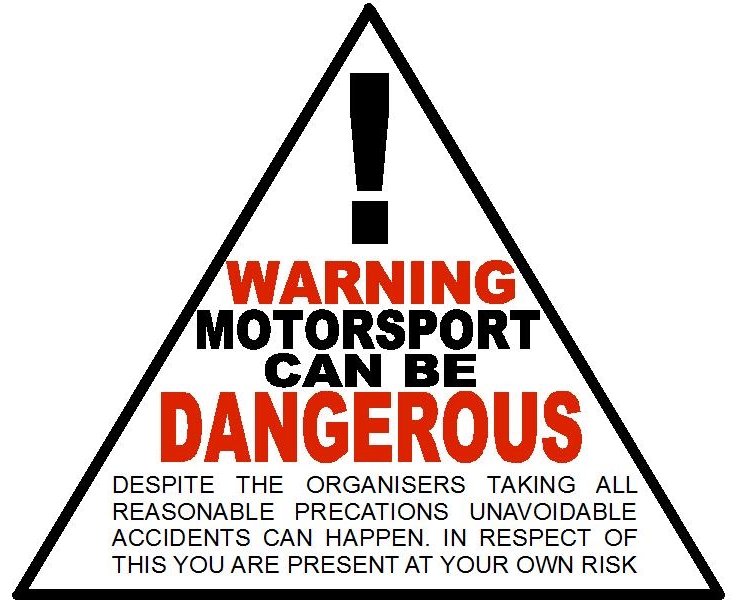
Nuff said. If there was no risk at all, it would be as exciting as watching your mate play Gran Turismo.
 If the drivers didn't wear helmets would you enjoy it more? You could see their faces, and they could feel the speed better, but it would be ridiculously dangerous and wouldn't add to the sport I don't think. I feel the same way about people that discourage safety improvements that don't impact on the driving, such as suggested by the OP.
I agree though, there's a balance in these things. I race a single seater (without one of these fancy carbon tubs I might add, or enough leg room for me to sit really low out of the way of the ground should I roll), and I'm not going to pack up and race a saloon instead because it's safer (been there, done that and I prefer the single seater). However, if something could be done to make my racing safer without impacting on the enjoyment for spectators or my enjoyment driving it, then why not? I bought a HANS device for this reason. I agree that pushing the grandstands back is not as good for spectators (and it loses the impression of speed for the drivers), and equally slowing the cars right down isn't as good for drivers and spectators (I long to have F1 V10s and V12s back
 ). However, improvements in safety such as HANS, carbon tubs, better helmets, wheel tethering etc are wholeheartedly welcome as far as I'm concerned. These things have little or no impact on the enjoyment of the sport, and it's safer too.
I also hate hearing the phrase "he knew the risks", like going racing is as calculated as popping out for a run or going for a swim. Well, personally I love motor racing and I go racing because I'm passionate about it and love it. The fact that it can hurt me is a downside to this, but I'm not going to stop, purely because I love it too much. You could say that I'm addicted to it - I simply can't stop doing it. It's not a cold hard calculation that I make every time I drive on to the circuit "this is dangerous, but I understand the risks so let's go for it", or perhaps "I'll go a bit slower round this corner because it's dangerous" it's more of a "whoopee, back in a racing car, this is where I belong" and drive as fast as I can for as long as my bum's in the seat. Plus, it's not just the drivers. Try telling Senna's girlfriend, family and friends that Senna "understood the risks".
Sorry if that sounded like a rant
RobM77 said:
Try telling Senna's girlfriend, family and friends that Senna "understood the risks".
To be honest, that may well have been the case. I don't doubt he did understand the risks and those close to him did too and accepted it. (But this is a swerve-ball from the point)Back on subject. Why change things? No-one was hurt. Also, if you add protection bars to the cars based on a dramatic looking injuryless incident, where does it end?
What happens the next time a piece of bodywork hits a drivers crash helmet? Enforced windscreens? Car spins off and side-shunts a barrier.. Less Power, slower cars??
There has to be a balance so to keep some form of purity to the sport. Regarding the physical cars, it's fine. (Other than lacking power)
Fire99 said:
RobM77 said:
Try telling Senna's girlfriend, family and friends that Senna "understood the risks".
To be honest, that may well have been the case. I don't doubt he did understand the risks and those close to him did too and accepted it. (But this is a swerve-ball from the point)As has been said, motorsport is dangerous, unfortunately the deaths that have happened in the past all make up part of the cruel beast that is motor racing.
Safety is exceptional, but sometimes a lot of situations will all happen at the same time and someone will unfortunately die as a result. You cannot protect the driver from every single situation that might happen, it will detract from the sport, the thrill, the buzz and even the way we look up to the drivers for racing a car inches from a wall, sideways whilst waving to the crowd wishing we could do it, but knowing we can't.
Safety is exceptional, but sometimes a lot of situations will all happen at the same time and someone will unfortunately die as a result. You cannot protect the driver from every single situation that might happen, it will detract from the sport, the thrill, the buzz and even the way we look up to the drivers for racing a car inches from a wall, sideways whilst waving to the crowd wishing we could do it, but knowing we can't.
I think the modern raised nose designs go a long way to assisting F1 (and other modern open wheelers) to take off as the nose rides up the back of the car in front. Racing cars have always rear ended each other. Even in past decades cars could take off in such circumastances (Pierre Levegh at Le Mans in 1955, Von Trips at Monza in 1961, Gilles Villeneuve at Zolder). However, these launches were relatively rare back then. Now they are almost inevitable.
An interesting comparison might be the accident that killed Ricardo Paletti in Canada. He rear ended a car on the grid and the low nose of his car caused him to DIVE under the rear of the car he hit, rather than take off.
An interesting comparison might be the accident that killed Ricardo Paletti in Canada. He rear ended a car on the grid and the low nose of his car caused him to DIVE under the rear of the car he hit, rather than take off.
Edited by Eric Mc on Monday 28th June 08:00
Eric Mc said:
An interesting comparison might be the accident that killed Ricardo Paletti in Canada. He rear ended a car on the grid and the low nose of his car caused him to DIVE under the rear of the car he hit, rather than take off.
I think you will find that if you replicated that accident with todays cars, you would get exactly the same resultEdited by Eric Mc on Monday 28th June 08:00
He ran square into the back of Pironis stationary car, at 'relatively' low speed for an F1 car, there was no possibility of the car taking off
Though I doubt that he would have been killed in a current car with Hans etc
freedman said:
Eric Mc said:
An interesting comparison might be the accident that killed Ricardo Paletti in Canada. He rear ended a car on the grid and the low nose of his car caused him to DIVE under the rear of the car he hit, rather than take off.
I think you will find that if you replicated that accident with todays cars, you would get exactly the same resultHe ran square into the back of Pironis stationary car, at 'relatively' low speed for an F1 car, there was no possibility of the car taking off
Though I doubt that he would have been killed in a current car with Hans etc
Eric Mc said:
I'm not so sure
It was said to be a combination of chest injuries from the impact and inhalation of smoke/fire extinguisher foam. Nevertheless, the accident was really human error because Pironi was waving his arms before the start to say that he'd stalled, and the start should have been aborted.That only goes to prove what's said above, in that motor racing will never be completely safe because of a range of complicated factors, but nevertheless I am wholly supportive of the introduction of safety measures in F1. Why not?
Forums | General Motorsport | Top of Page | What's New | My Stuff