
Hot Idle - Seems Too High
Discussion


When I start the car from cold, it idles at about 800rpm. That doesn't seem unreasonable.
After a session of enthusiastic driving, it idles much higher. The lowest I've seen (bear in mind I've had the car 2 weeks and driven it 3 times) is 1200rpm at hot idle. The highest has been 2000rpm. The 3rd drive had a hot idle of about 1600rpm. So whatever it is, isn't consistent.
Checking when cold, there is a mm or 2 of slack in the accelerator cable at the engine end (i.e. if you don't touch the throttle pedal the throttles on the engine are not being opened by the pedal) which seems pretty normal to me. I haven't been clever enough (yet) to check whether this is still the case when the engine is hot. I had the plenum off on the driver's side bank for something else, and while it was off I checked the throttles were all fully closed (they were).
Has anyone had this before? Or have any clever ideas where to start the search if a check of the engine hot produces the same results?
The car is a 1998 4.2.
After a session of enthusiastic driving, it idles much higher. The lowest I've seen (bear in mind I've had the car 2 weeks and driven it 3 times) is 1200rpm at hot idle. The highest has been 2000rpm. The 3rd drive had a hot idle of about 1600rpm. So whatever it is, isn't consistent.
Checking when cold, there is a mm or 2 of slack in the accelerator cable at the engine end (i.e. if you don't touch the throttle pedal the throttles on the engine are not being opened by the pedal) which seems pretty normal to me. I haven't been clever enough (yet) to check whether this is still the case when the engine is hot. I had the plenum off on the driver's side bank for something else, and while it was off I checked the throttles were all fully closed (they were).
Has anyone had this before? Or have any clever ideas where to start the search if a check of the engine hot produces the same results?
The car is a 1998 4.2.
Had mine for about 5 days lol. Hot idle (reversing into garage, fans on, 95 degrees) the car then seems stable at a smidge under 1000rpm iirc sat stationary in the garage.
Kits and Classics did some wizardry on the car when he mapped it. I think he balanced the throttle bodies etc as part of the mapping. Might that be the issue?
Can't recall if my throttle pedal has any play (i dont think it does). I'll report back later this week when i check it
I also bought the posh throttle pots from Motaclan (Hall Effect ones) which theoretically dont need re-adjusting at all (or not as often as standard ones). Might it be a throttle pot issue causing the odd hot idle? (Others with way more knowledge than me will be along shortly to better help you I'm sure)
Kits and Classics did some wizardry on the car when he mapped it. I think he balanced the throttle bodies etc as part of the mapping. Might that be the issue?
Can't recall if my throttle pedal has any play (i dont think it does). I'll report back later this week when i check it
I also bought the posh throttle pots from Motaclan (Hall Effect ones) which theoretically dont need re-adjusting at all (or not as often as standard ones). Might it be a throttle pot issue causing the odd hot idle? (Others with way more knowledge than me will be along shortly to better help you I'm sure)
Edited by andyvvc on Wednesday 8th April 08:07
Many things can affect idle speed, but here's a starting point. . .
TVR setup says Idle should be 950rpm. Personally - I go for about 1000/1050. That keeps the alternator charging. At 950 it won't be charging, at 800rpm - I'm surprised your engine still continues to run. Mine would bog down and stall.
Idle speeding up when hot (enthusiastic driving) would indicate a mechanical change - probably throttle pots. They can get very hot and the output changes. It doesn't take much of a change in TP value to increase the speed. That's where I'd start looking.
You can't check the butterfly's are closed without screwing out the idle screw. With the idle screw fully out and the butterfly's closed, the TP angle should be 15%. At idle they should be approx 19%.
The only sure way to find out what is going on is to download one of the available diagnostic programs and check the traces when the engine is cold/hot. If you see a change in TP values when it's hot then this will confirm dodgy throttle pots. Replace.
Good luck.
TVR setup says Idle should be 950rpm. Personally - I go for about 1000/1050. That keeps the alternator charging. At 950 it won't be charging, at 800rpm - I'm surprised your engine still continues to run. Mine would bog down and stall.
Idle speeding up when hot (enthusiastic driving) would indicate a mechanical change - probably throttle pots. They can get very hot and the output changes. It doesn't take much of a change in TP value to increase the speed. That's where I'd start looking.
You can't check the butterfly's are closed without screwing out the idle screw. With the idle screw fully out and the butterfly's closed, the TP angle should be 15%. At idle they should be approx 19%.
The only sure way to find out what is going on is to download one of the available diagnostic programs and check the traces when the engine is cold/hot. If you see a change in TP values when it's hot then this will confirm dodgy throttle pots. Replace.
Good luck.
Throttle body air leaks are often exacerbated by heat causing the idle to rise
Check that none of the throttle body bolts are loose
Also the full throttle setup procedure needs to be done with the engine warm, it is tedious to do, but there's no way round it if the idle is high when hot, and you need to get the diagnostics working to see the TPS readings
http://tvr-cerbera.co.uk/docs/Workshop%20Manual%20...
Check that none of the throttle body bolts are loose
Also the full throttle setup procedure needs to be done with the engine warm, it is tedious to do, but there's no way round it if the idle is high when hot, and you need to get the diagnostics working to see the TPS readings
http://tvr-cerbera.co.uk/docs/Workshop%20Manual%20...
Edited by ukkid35 on Thursday 9th April 10:03
Thank you guys.
I'll pay more attention to what my cold idle actually is next time I fire the car up. I thought it was about 800rpm, but I might be slightly wrong. I still find driving the car quite consuming and so haven't particularly paid attention to the cold idle but did have the impression it was noticably under 1000rpm.
As far as diagnostics go, i'm assuming my OBD2 stuff is going to be useless? Is there a guide somewhere of what to use & how to use it? I have a pretty new laptop & an android phone if either of those are of any use.
I'll pay more attention to what my cold idle actually is next time I fire the car up. I thought it was about 800rpm, but I might be slightly wrong. I still find driving the car quite consuming and so haven't particularly paid attention to the cold idle but did have the impression it was noticably under 1000rpm.
As far as diagnostics go, i'm assuming my OBD2 stuff is going to be useless? Is there a guide somewhere of what to use & how to use it? I have a pretty new laptop & an android phone if either of those are of any use.
Rotary Potato said:
Thank you guys.
I'll pay more attention to what my cold idle actually is next time I fire the car up. I thought it was about 800rpm, but I might be slightly wrong. I still find driving the car quite consuming and so haven't particularly paid attention to the cold idle but did have the impression it was noticably under 1000rpm.
...
Good news ... I'm not a complete idiot.I'll pay more attention to what my cold idle actually is next time I fire the car up. I thought it was about 800rpm, but I might be slightly wrong. I still find driving the car quite consuming and so haven't particularly paid attention to the cold idle but did have the impression it was noticably under 1000rpm.
...
Bad news ... something else to look at!
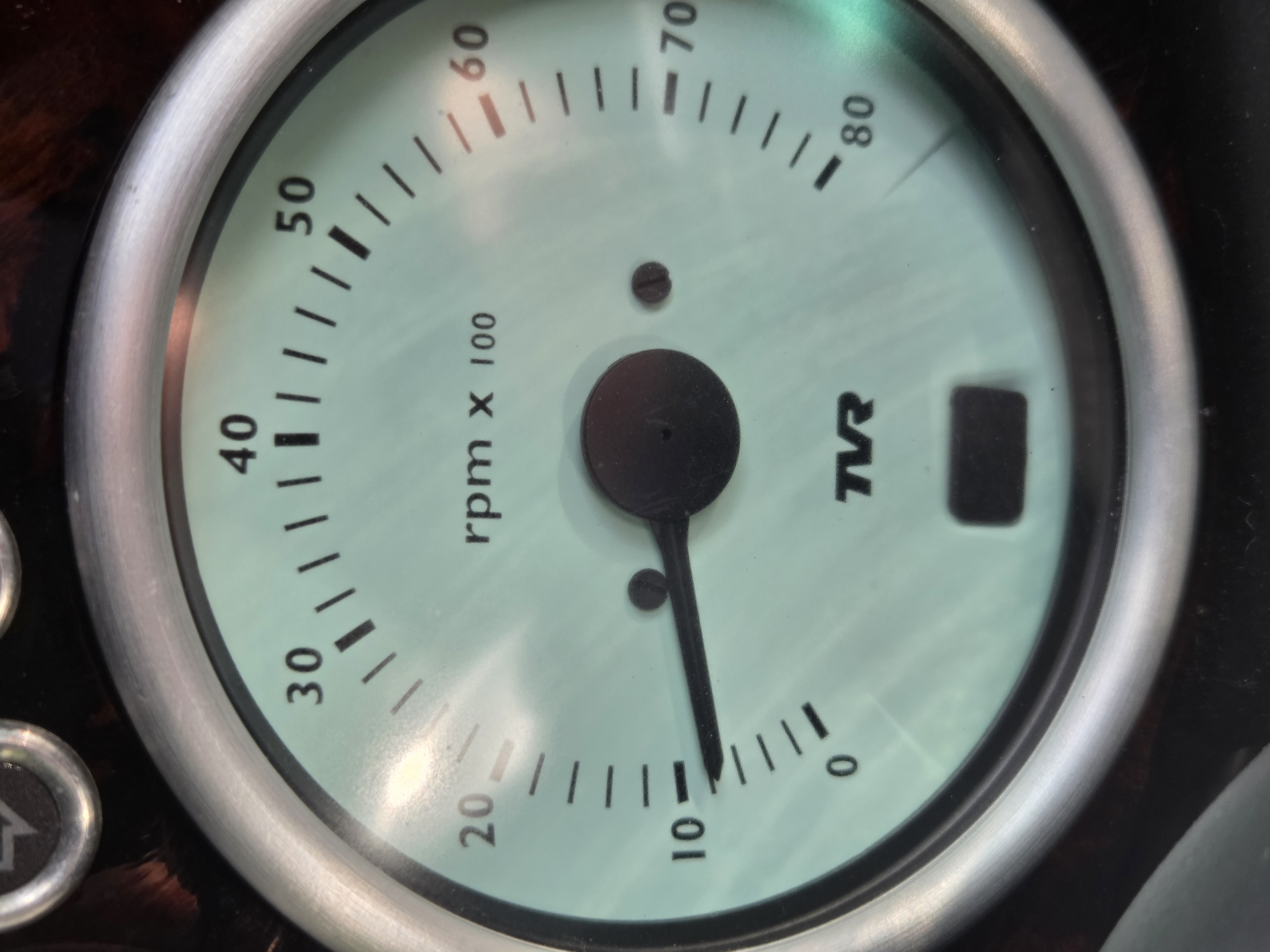
How is the idle adjusted? Is it mechanical or electrical?
Ok ... now I'm confused.  Went out to dinner - about a 25 minute drive each way.
I paid a little more attention to the idle. It starts from stone cold at around 800rpm - seems happy there. After 3-4 minutes of gentle driving with the temp guage showing about 70 degrees the idle is a hair over 1000rpm.
As we left town I was able to indulge in 10-15 minutes of more enthusiastic driving. As we pulled into the restaurant, i dipped the clutch & was rewarded with a steady 1100-1200rpm idle.
The return journey yielded identical results.
Maybe just driving it more regularly has worked out a few niggles ... or maybe I'm being wildly optimistic and tonight's journey just wasn't quite long enough for the crazyness to show itself.
Either way, I'll keep an eye on it. I think being able to dive into the ECU data would still be helpful, so my questions above about the hardware/software needed for that are still current, if anyone can point me in the right direction.
Went out to dinner - about a 25 minute drive each way. I paid a little more attention to the idle. It starts from stone cold at around 800rpm - seems happy there. After 3-4 minutes of gentle driving with the temp guage showing about 70 degrees the idle is a hair over 1000rpm.
As we left town I was able to indulge in 10-15 minutes of more enthusiastic driving. As we pulled into the restaurant, i dipped the clutch & was rewarded with a steady 1100-1200rpm idle.
The return journey yielded identical results.
Maybe just driving it more regularly has worked out a few niggles ... or maybe I'm being wildly optimistic and tonight's journey just wasn't quite long enough for the crazyness to show itself.
Either way, I'll keep an eye on it. I think being able to dive into the ECU data would still be helpful, so my questions above about the hardware/software needed for that are still current, if anyone can point me in the right direction.
Byker28i has a useful site with links to diagnostic software amongst a lot of other useful info: -
http://www.nineelmsphotography.com/cerbera/index.p...
. . . and if you go to the root of the Cerbera forum here you'll find wicki's on many things - including the 3-pin cable - which you need to connect to the ECU - if your ECU has the 3-pin connector on the outside of the box. Some ECU's have a 9-pin D connector inside the box. You need to unscrew the lid to get at it.
In both cases the cable is specific to TVR. It is configured to enable the ECU comms in a certain mode. The link to RS_AJP in the wicki gives loads of details.
http://www.nineelmsphotography.com/cerbera/index.p...
. . . and if you go to the root of the Cerbera forum here you'll find wicki's on many things - including the 3-pin cable - which you need to connect to the ECU - if your ECU has the 3-pin connector on the outside of the box. Some ECU's have a 9-pin D connector inside the box. You need to unscrew the lid to get at it.
In both cases the cable is specific to TVR. It is configured to enable the ECU comms in a certain mode. The link to RS_AJP in the wicki gives loads of details.
Another good drive today (40 mins each way) and a rock solid idle of a hair over 1k rpm when warm. I think this one has fixed itself.
I thought back through the things I moved when first checking ... and the HT leads on the drivers side were very close to the throttle mechanism. I tried to move them, but there was only a few mm of play in them. Been out to have a look, and one HT lead has the plastic worn down in exactly the arc that the bottom of the throttle mechanism takes.
Unless the car proves me otherwise, my thinking is that it was occasionally catching on the HT lead as the throttle was closing, keeping it wedged slightly open.
Obviously I forgot to take a picture until the removable scuttle panel was back on, and access was crappy ... but is this the correct path for the HT leads? There doesn't seem to be enough play for them to be anywhere else - but that isn't to say that they shouldn't all the unplugged, rerouted and plugged back in again.
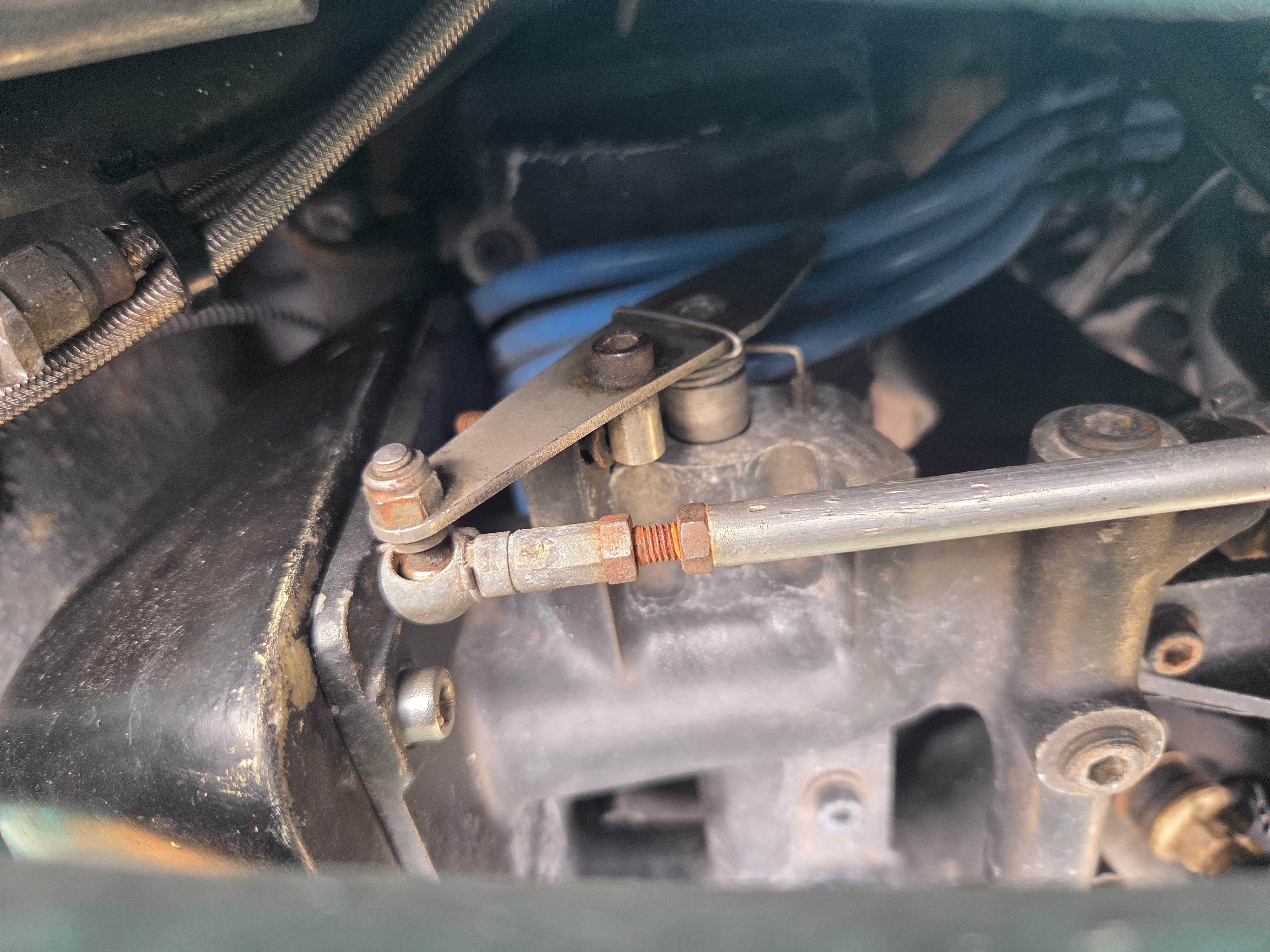
I thought back through the things I moved when first checking ... and the HT leads on the drivers side were very close to the throttle mechanism. I tried to move them, but there was only a few mm of play in them. Been out to have a look, and one HT lead has the plastic worn down in exactly the arc that the bottom of the throttle mechanism takes.
Unless the car proves me otherwise, my thinking is that it was occasionally catching on the HT lead as the throttle was closing, keeping it wedged slightly open.
Obviously I forgot to take a picture until the removable scuttle panel was back on, and access was crappy ... but is this the correct path for the HT leads? There doesn't seem to be enough play for them to be anywhere else - but that isn't to say that they shouldn't all the unplugged, rerouted and plugged back in again.
Forum | Cerbera | Top of Page | What's New | My Stuff