
Voltage Falls as Engine Speed Increases
Discussion


One for discussion 
At hot idle I'm seeing voltage around 13.50v which is a little on the low side but obviously more than sufficient to charge the battery, however I must say I would prefer to see 14.30v.
I should point out the readings were taken from various points under the dash not directly at the battery, I was however watching battery voltage simultaneously on my Bluetooth battery voltage app and the readings remained solid at 14.0v during the acceleration test. Tomorrow however I do plan to run the same tests again with my meter connected directly to the battery.
Obviously as I accelerate there is an ever greater demand in the electrical system not least from my coil packs but are my numbers within acceptable tolerance, or perhaps as I suspect a little on the low side
At hot idle I'm seeing voltage around 13.50v which is a little on the low side but obviously more than sufficient to charge the battery, however I must say I would prefer to see 14.30v.
- Now if I raise the revs to 2,000 rpm while still parked and the engine under no load I see idle voltage rise to 13.8v, nothing odd there then
- But if I'm driving its a different story, as I move away loading the engine up from idle voltage only reaches 13.7v at the same 2,000 rpm
- Press on to 2,500 rpm and voltage continues to fall to 13.65v
- Keep accelerating to 3,000 rpm I'm now at 13.50v
- Wind on further to 3,500 rpm and I've seen the voltage continue to drop to 13.48v
- By 4,000 rpm and above the reading is 13.40v and stays there
- Lift off and decelerate and I get the highest reading of all at 13.85v no matter what the engine speed is on the overrun
I should point out the readings were taken from various points under the dash not directly at the battery, I was however watching battery voltage simultaneously on my Bluetooth battery voltage app and the readings remained solid at 14.0v during the acceleration test. Tomorrow however I do plan to run the same tests again with my meter connected directly to the battery.
Obviously as I accelerate there is an ever greater demand in the electrical system not least from my coil packs but are my numbers within acceptable tolerance, or perhaps as I suspect a little on the low side
Penelope Stopit said:
Pilot error
This is the problem, incorrect testing method
Surely the pilot was only doing other checks to ascertain if his readings were accurate,,, This is the problem, incorrect testing method

But got more confused by his readings so should have gone back to the correct testing method to confirm,, infact from the pilots own words we can ascertain he’d also considered this fact,,,, better hurry and get on with it though 2000 feet and dropping,,,,,,

He’s got you there Dave

Classic Chim said:
Penelope Stopit said:
Pilot error
This is the problem, incorrect testing method
Surely the pilot was only doing other checks to ascertain if his readings were accurate This is the problem, incorrect testing method

I was taking voltage readings at the battery simultaneously as I measured the points under the dash, although I was using two different measuring instruments so tonight I will be repeating the tests using my same multimeter on the battery.
I am trying to investigate and ascertaining why am I seeing a fall of almost half a volt at various critical points under that dash as I accelerate, circuits that supply a number of important systems such as my LPG solenoids? For example, if my LPG safety solenoid circuit is not supplying sufficient current to hold open my LPG solenoids constantly open they may momentarily snap shut causing a brief restriction in fuel supply, as you may have now gathered there are reasons I've conduct these voltage tests

I suspect when I run my second set of tests tonight at the battery using my multimeter I will see the exact same falls in voltage as I accelerate, we all know demand increases as you accelerate and ask more of the ignition system so the real question is what are considered acceptable numbers.
Half a volt seems a lot to me, especially when I'm already starting from a low point
The issue could be as simple as belt slip or my numbers may be perfectly normal so there is no issue at all, this is what we are discussing ..... not pilot error thank you very much!
ChimpOnGas said:
Correct, thank you Alun you are spot on mate
I was taking voltage readings at the battery simultaneously as I measured the points under the dash, although I was using two different measuring instruments so tonight I will be repeating the tests using my same multimeter on the battery.
I am trying to investigate and ascertaining why am I seeing a fall of almost half a volt at various critical points under that dash as I accelerate, circuits that supply a number of important systems such as my LPG solenoids? For example, if my LPG safety solenoid circuit is not supplying sufficient current to hold open my LPG solenoids constantly open they may momentarily snap shut causing a brief restriction in fuel supply, as you may have now gathered there are reasons I've conduct these voltage tests
I suspect when I run my second set of tests tonight at the battery using my multimeter I will see the exact same falls in voltage as I accelerate, we all know demand increases as you accelerate and ask more of the ignition system so the real question is what are considered acceptable numbers.
Half a volt seems a lot to me, especially when I'm already starting from a low point
The issue could be as simple as belt slip or my numbers may be perfectly normal so there is no issue at all, this is what we are discussing ..... not pilot error thank you very much!
I was taking voltage readings at the battery simultaneously as I measured the points under the dash, although I was using two different measuring instruments so tonight I will be repeating the tests using my same multimeter on the battery.
I am trying to investigate and ascertaining why am I seeing a fall of almost half a volt at various critical points under that dash as I accelerate, circuits that supply a number of important systems such as my LPG solenoids? For example, if my LPG safety solenoid circuit is not supplying sufficient current to hold open my LPG solenoids constantly open they may momentarily snap shut causing a brief restriction in fuel supply, as you may have now gathered there are reasons I've conduct these voltage tests
I suspect when I run my second set of tests tonight at the battery using my multimeter I will see the exact same falls in voltage as I accelerate, we all know demand increases as you accelerate and ask more of the ignition system so the real question is what are considered acceptable numbers.
Half a volt seems a lot to me, especially when I'm already starting from a low point
The issue could be as simple as belt slip or my numbers may be perfectly normal so there is no issue at all, this is what we are discussing ..... not pilot error thank you very much!

Perfect
Very interesting,,,,,,
Coil packs do ask more of the power supply I suppose.
I’ll look forward to your debrief later

Your car has more electrical gubbins than a teenagers rucksack,,,,
Couldn’t it just be you need more charging amps or does my question deserve retribution
Edited by Classic Chim on Tuesday 4th June 12:17

Steve_D said:
If your tests show you are still seeing lower volts elsewhere than the battery then maybe you are seeing similar issues I have reported recently related to the ignition relay (R5) and corroded contacts.
Steve
Interesting Steve, are you referring to your excellent fusebox postmortem post, or is there another post from you I've missed? Steve
spitfire4v8 said:
I'm pleased I investigated the difference in voltage between the battery and dash on my Tuscan recently, one terminal on the 100amp fuse inside the car was loose and the heat from it was slowly melting the carpet over it.
Good find, do you have any comments on my falling voltage under acceleration?I'm trying to gauge where my figures sit within the scale of acceptable limits?
Any feedback, knowledge and experience you care to share in relation to the influence of voltage on engine management systems would be very welcome.
Thanks, Dave.

Dave load that alternator up  headlamps , heater fan, wipers the lot then report back measured at the batt of course at idle , fast idle , and say 3k RPM this will give you a better bench than a not doing much at all system and an alternator ready for duty rather than twiddling its thumbs
headlamps , heater fan, wipers the lot then report back measured at the batt of course at idle , fast idle , and say 3k RPM this will give you a better bench than a not doing much at all system and an alternator ready for duty rather than twiddling its thumbs ChimpOnGas said:
Classic Chim said:
Penelope Stopit said:
Pilot error
This is the problem, incorrect testing method
Surely the pilot was only doing other checks to ascertain if his readings were accurate This is the problem, incorrect testing method
I was taking voltage readings at the battery simultaneously as I measured the points under the dash, although I was using two different measuring instruments so tonight I will be repeating the tests using my same multimeter on the battery.
I am trying to investigate and ascertaining why am I seeing a fall of almost half a volt at various critical points under that dash as I accelerate, circuits that supply a number of important systems such as my LPG solenoids? For example, if my LPG safety solenoid circuit is not supplying sufficient current to hold open my LPG solenoids constantly open they may momentarily snap shut causing a brief restriction in fuel supply, as you may have now gathered there are reasons I've conduct these voltage tests
I suspect when I run my second set of tests tonight at the battery using my multimeter I will see the exact same falls in voltage as I accelerate, we all know demand increases as you accelerate and ask more of the ignition system so the real question is what are considered acceptable numbers.
Half a volt seems a lot to me, especially when I'm already starting from a low point
The issue could be as simple as belt slip or my numbers may be perfectly normal so there is no issue at all, this is what we are discussing ..... not pilot error thank you very much!
You are comparing battery voltage with ignition circuit voltage and this is a big no goer
If you were to check through your charging circuit measuring battery voltage and then tweak out any problems if there are any, you could then continue on to improving the ignition circuit
You should be measuring for volt drops in the ignition circuit while the charging circuit is operating correctly
You have not taken into consideration that as the current flows through every bad connection those connections warm up and sometimes improve yet other times worsen
All the ignition circuits need checking from cold and again later when everything has reached a higher temperature
There are fuses in the ignition circuit that create volt drops as well as any fusebox and other connectors that aren't 100%
It's all about (For Example as this is a cracker) what is the volt-drop between batt +ive and ignition coils +ive? Measure the volt-drop between battery positive and the ignition coils supply, dont expect the readings to be the same but do go through everything to get rid of the volt-drops as much as possible
You need to disconnect the negative trigger wires from the coil/coils and use a made up earth lead to earth the coil/coils for a couple of seconds while you measure for the volt-drops
And that's my lesson of the day over with and I don't expect you to show any interest in it whatsoever
Edited by Penelope Stopit on Tuesday 4th June 17:43
Classic Chim said:
phillpot said:
Possibly the main alternator cable isn't up to it 
Like it 
The above new black cable lives on the back of a 2 year old new Denso 120a alternator feeding a beefy £200 Odyssey PC1500 full sized pure lead ADM battery.
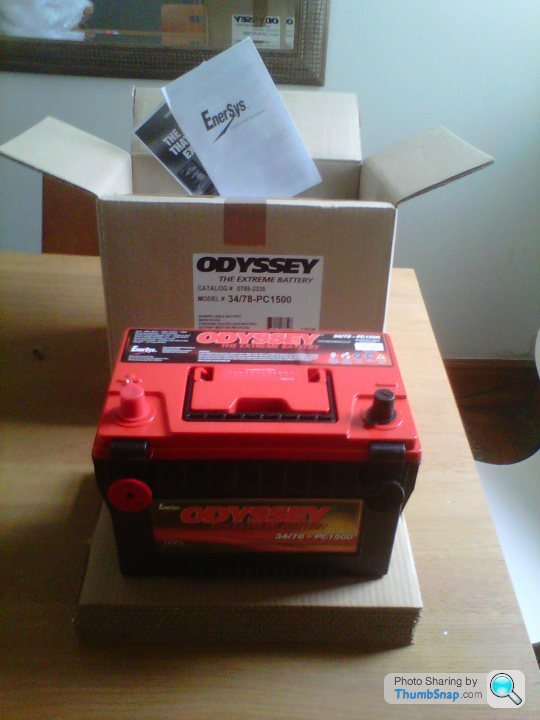
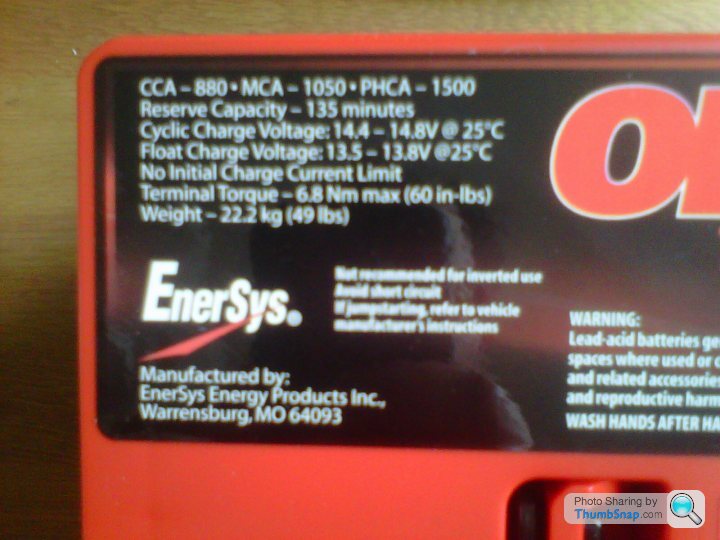
Starter cable and all earth cables upgraded too so in all these respects 'Ol Gasbag' is electrically in tip top shape.
Of course the rest of my TVR electrics and fusebox are all 23 years old now and TVR weren't renowned for the quality of their wiring work back in the 90's (ever) so all these years later it's a case of working slowly through the loom section by section.
However my money is still on belt slip, I have a JE alternator bracket and as I have yet to grow a third arm tensioning the belt is not an easy job without an able assistant

Saying that maybe my voltage readings are perfectly normal, for some reason no one seems to have commented on this key question yet
Sardonicus said:
Dave load that alternator up headlamps , heater fan, wipers the lot then report back measured at the batt of course at idle , fast idle , and say 3k RPM this will give you a better bench than a not doing much at all system and an alternator ready for duty rather than twiddling its thumbs
Thanks Simon, these are tests planned for this evening but I can already tell you I see around a 0.20v drop with my rad fans on, I can end up idling at 13.4v which seems low to me. headlamps , heater fan, wipers the lot then report back measured at the batt of course at idle , fast idle , and say 3k RPM this will give you a better bench than a not doing much at all system and an alternator ready for duty rather than twiddling its thumbs Maybe thats just how it is with a super low resistance Odyssey AGM battery?
I'd certainly be interested in your voltage numbers and behaviors when you accelerate, and what of the increase in voltage I'm seeing under deceleration which is very pronounced?
My rate of declining voltage under acceleration is greater than I'd expect, but I really need a benchmark from someone to confirm this

Why do you have systems in place that are so voltage critical? Half of a volt should have no affect on any system designed for automotive use. If you want an ultra stable supply you need a regulator between the voltage source and the item you are trying to power and this should be in the initial design- and as Penelope says- you can have lots of tiny voltage drops that add up depending on the current drawn. If you think its belt slip, then spray a bit of that nasty anti squeal spray you can get for belts as it makes it all very sticky so it wont slip any more.
blitzracing said:
Why do you have systems in place that are so voltage critical? Half of a volt should have no affect on any system designed for automotive use. If you want an ultra stable supply you need a regulator between the voltage source and the item you are trying to power and this should be in the initial design- and as Penelope says- you can have lots of tiny voltage drops that add up depending on the current drawn. If you think its belt slip, then spray a bit of that nasty anti squeal spray you can get for belts as it makes it all very sticky so it wont slip any more.
I'm sorry but engine management is very sensitive to voltage instability, and I did not say it was belt slip I said it might be belt slip and your suggestion of spraying goo my belt is not something I'll be doing as being frank its hardly an engineering solution and should not be required.What are your recorded voltage decline numbers under acceleration Mark?
Perhaps you can test it and come back to me, your results would at least answer my key first question and give me a reference point.
Forums | Chimaera | Top of Page | What's New | My Stuff