
Barely started today Battery or Alternator
Discussion


Took my 500 Chim out for a run today, first since January. It struggled to turn over but did fire and ran perfectly. Turned off and restarted and same again.
Battery is fully charged on trickle charger but now 12 years old, and alternator original at 25 years old. Assuming its one of these items I blame neither due to respective ages. Which one is it likely to be if anyone has similar experience if either?
A new battery is probably sensible anyway but never having an alternator die before I'm not sure what to expect.
Battery is fully charged on trickle charger but now 12 years old, and alternator original at 25 years old. Assuming its one of these items I blame neither due to respective ages. Which one is it likely to be if anyone has similar experience if either?
A new battery is probably sensible anyway but never having an alternator die before I'm not sure what to expect.
12 years is good going for a battery.
I own 2 cars with 25 year old alternators, although the Griff, which is only slightly older, had a new alternator 2 years ago.
But there is no need to guess. Hold a voltmeter over the battery terminals (or alternator if that is easier to access).
At 2,000 rpm ish (not critical) if you see 14 V the alternator is good. In which case, change the battery. Or, take it to any battery place or garage and ask them to load test the battery. If the alternator cannot produce 14 V then change it.
Or it could be the starter motor or a failing earth lead or even a failing power lead from the battery.
My money is on the battery, but don’t guess, do it scientifically. Actually, that said, neither the battery or the alternator have a shed load more life in them so if you want reliability then change both.
I own 2 cars with 25 year old alternators, although the Griff, which is only slightly older, had a new alternator 2 years ago.
But there is no need to guess. Hold a voltmeter over the battery terminals (or alternator if that is easier to access).
At 2,000 rpm ish (not critical) if you see 14 V the alternator is good. In which case, change the battery. Or, take it to any battery place or garage and ask them to load test the battery. If the alternator cannot produce 14 V then change it.
Or it could be the starter motor or a failing earth lead or even a failing power lead from the battery.
My money is on the battery, but don’t guess, do it scientifically. Actually, that said, neither the battery or the alternator have a shed load more life in them so if you want reliability then change both.
Alternators are rarely affected by age unless water has got at them, they are affected by work done as in number of revolutions
If the battery is faulty, should you carry out a charge voltage test there is the possibility of seeing a voltage lower than 14 Volts but higher than battery voltage
Some alternators are regulated to 14.5 Volts
If the battery is faulty, should you carry out a charge voltage test there is the possibility of seeing a voltage lower than 14 Volts but higher than battery voltage
Some alternators are regulated to 14.5 Volts
If you plan to do some multimeter testing then do it at the battery rather than the alternator. There is a fuse between the two which may have failed (note I did not say 'blown' as they tend to fracture due to vibration). Test at the battery with engine off then test again with engine running at a high idle. Provided the volts are higher with engine running then both alternator and fuse are good. 14 volts would be nice but possibly not that high.
Steve
Steve
Steve_D said:
If you plan to do some multimeter testing then do it at the battery rather than the alternator. There is a fuse between the two which may have failed (note I did not say 'blown' as they tend to fracture due to vibration). Test at the battery with engine off then test again with engine running at a high idle. Provided the volts are higher with engine running then both alternator and fuse are good. 14 volts would be nice but possibly not that high.
Steve
^^THIS^^Steve
I recommend replacing this 80a strip fuse that protects and feeds the fuse box with a Midi fuse, do the same with the 100a fuse under the car, Midi fuses are physically stronger and less prone to cracking through vibration than the weaker strip fuse type.
Make sure the terminal nuts on the fuse holder are tight, use new nylock nuts to ensure they don't come lose as its lose terminal nuts that cause bad connections and vibration failures, I replaced both my fuse holders with new that came with new nylocks too, with the stronger Midi fuses bolted down tightly reliability was greatly improved.

You're looking for 14v at the alternator and 14v at the battery, this is because the alternator on your Chimaera is designed to regulate at 14v, if you see 14v at the alternator but 13.5v at the battery (quite common on a Chimaera) you've lost 0.5v between the two, which doesn't sound like a lot but it actually is! The reason is likely to be the result of the fact the earthing arrangements on TVRs wasn't especially good from new, adequate yes, but good no! The issue is as the car gets older the earthing gets worse as corrosion sets in and creates resistance at the chassis earthing points.
Worse still TVR used a rather thin gauge starter/charge cable which also corrodes internally under the insulation, so this combined with poor engine earthing will mean even if the alternator is in rude health the rather marginal and well aged charging circuit can mean what the battery receives is severely compromised. A Chimaera alternator is rated at 100a but that's right at it's top end of it's output and over the years without question it will have lost some of its efficiency, as the alternator warms up it also loses some efficiency from the cold state, the high under bonnet temps in a Chimaera engine bay does not help here either.
An older Chimaera alternator when hot may only have a peak output of 70a, TBH this sill more than enough capacity to cope with demand, but this is when the poor earthing situation and that string thin internally corroded charge cable can push things very close or beyond demand which is where the problems start. That string thin charge cable is also your starter cable so not only will it be restricting your alternator's ability to keep up with demand meaning your battery will be in a low state of charge when you come to attempt the next start, but cranking strength will be severely compromised because that cable has a very high level resistance, if the earthing isn't great too all three elements combined will conspire to mean cranking strength will be significantly compromised.
The issue is not really one thing or another, it's the accumulative effect of a number of marginal elements all coming together to create a critical mass situation. Two of the best things you can do to improve the drivability and reliability of a Chimaera is to upgrade the main earth (engine block to battery) and that feeble thin gauge charge cable that also serves as the high amp starter cable, check your battery terminals too!
Many years ago I upgraded my positive cable from the battery to the starter motor which helped my cranking and charging a lot, as covered above the original cable from the factory is really rather weedy for such a long run and is subject to internal corrosion over the years which massively increases it's resistance. When I peeled away the insulation around my starter/charge cable it was green with copper oxide and had become crispy, by that I mean when I flexed I could literally feel the strands breaking beneath the insulation. For fear of repeating myself keep in mind not only is this cable responsible for carrying current to your starter motor its also the cable that carries your charge current from the alternator to the battery which in turn supplies the fuse box and so absolutely every electrical circuit on the car that runs through it
https://www.pistonheads.com/gassing/topic.asp?h=0&...

The health and quality this one seven foot long cable is therefore absolutely critical to ensure the car's entire electrical system operates at the correct voltage and has a stable/reliable supply. Of course upgrading this cable is pointless unless you also make sure the grounding side is good too, so in addition to the cable that grounds the battery negative terminal to the chassis I grounded my engine block directly to the battery negative battery terminal and again using larger gauge 50mm² cable.
Despite completing this cable upgrade some years ago, more recently here's what I found at my battery terminals, they must have been in this state for a long time
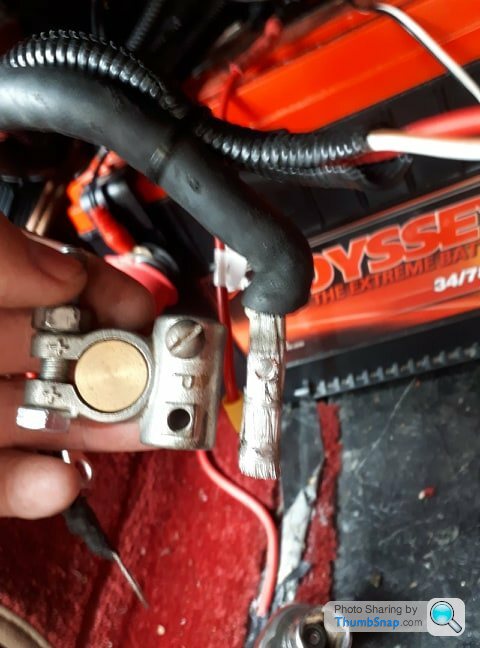
This poor connection at my positive terminal was a function of three elements:
1. The missing screw
2. The fact when I removed the one remaining screw it was clear it was the only solid contact point
3. With the one remaining screw removed the cable literally slid out of the terminal like a dick in a shirt sleeve
But that's not the end of the story, here's how I found my negative terminal:
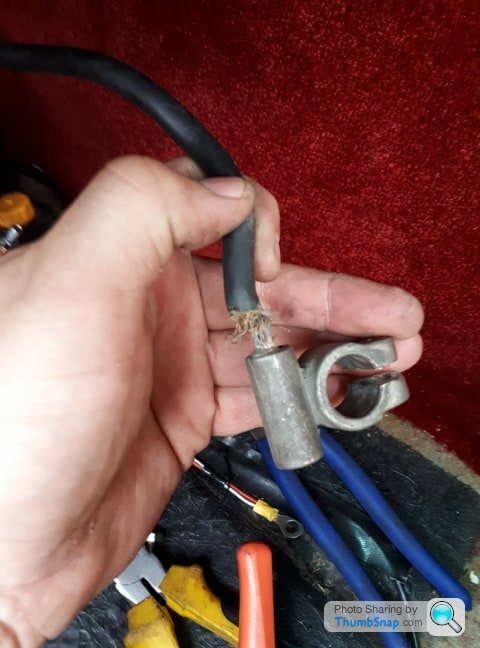
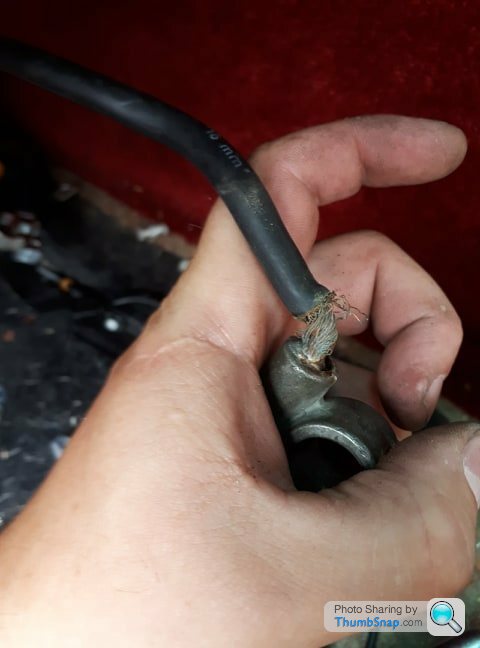
At my battery I now have two stout ground cables and the one live charge/starter cable all in far thicker 50mm² gauge high quality marine tinned cable, these are correctly crimped with my hydraulic crimping tool that applies 13 tonnes of crimping pressure to the tube type tinned copper ring terminals terminals I now use.

Here's how these tube type ring terminals look at the connection end directly compared with the small gauge cable efforts from TVR that weren't even correctly finished and protected against corrosion with glue lined heat shrink as they should have been.


My properly crimped and glue lined heat shrunk insulated ring terminals are securely bolted to my new 'Two Up' forged brass battery terminals so every cable is now a proper ring terminal to stud arrangement which is a far more secure connection, the forged brass Unilug 'Two Up' terminals themselves being in a different league of quality than anything you can buy in the UK these terminals are engineered in Australia for the four wheel drive expedition market.
[url]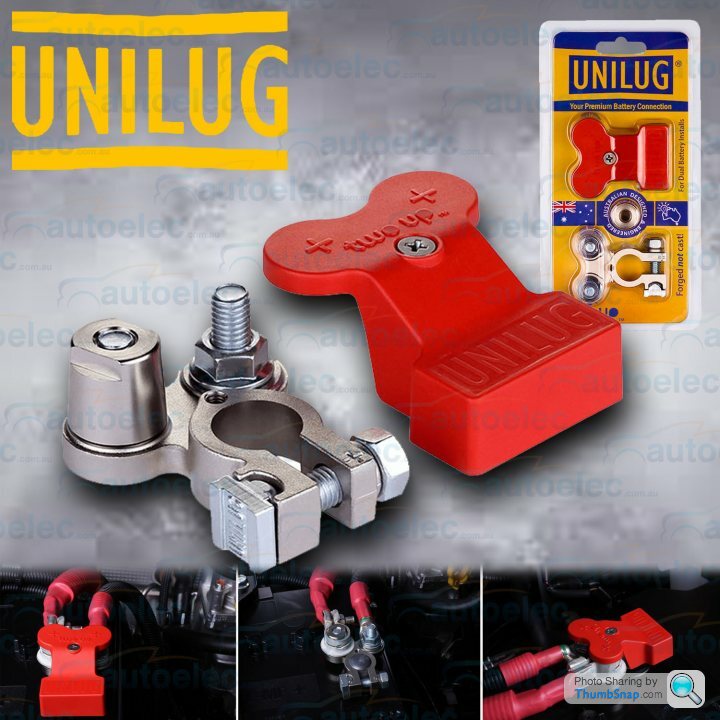 |https://thumbsnap.com/53eRsigM[/url
The excellent 'Two Up' battery terminals from Unilug give you plenty of connection flexibility, seen here in the stud configuration I use and also the post arrangement should you choose to go that way.
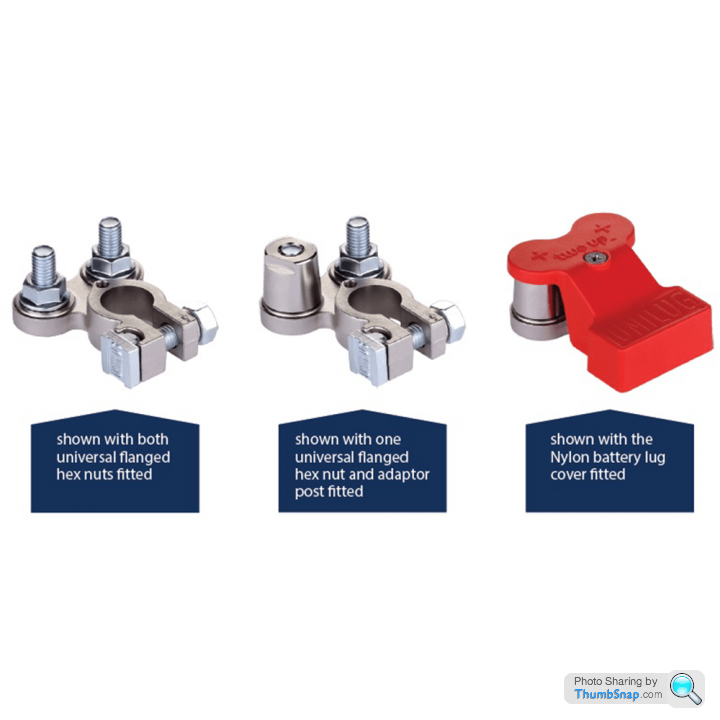
These terminals really are in a different league, they are forged brass not cast and clamp tightly and directly to my Odyssey PC1500 which itself uses proper tinned brass terminals and is a battery of the very highest quality to match the lovely 'Two Up' terminals I'm now using, obviously a good healthy battery is essential!

In addition to my engine block to battery terminal cable I uprated the one single engine earth TVR gave the Chimaera (block to chassis), again I used thicker 50mm² gauge high quality marine tinned cable.
Here is where is goes at the engine block....

And here's that chassis connection at the stud welded to the outrigger diagonal.
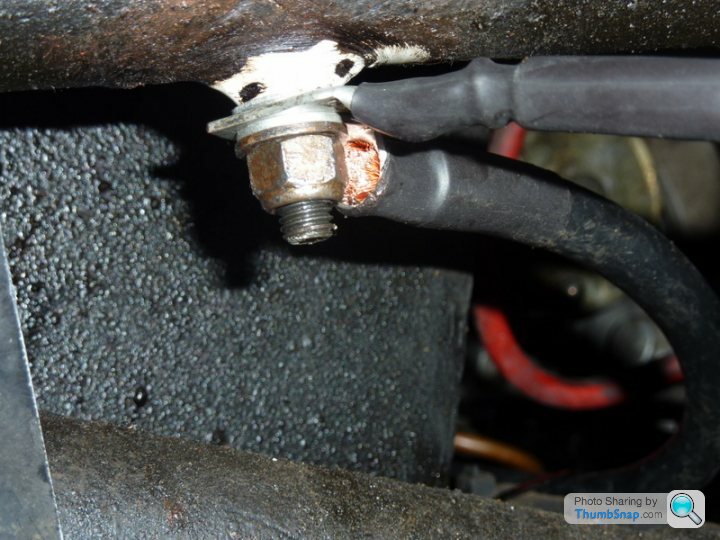
This is quite a short cable, as shown it runs from a point close the the oil pressure switch to a stud on the O/S outrigger diagonal and seems to be the one that makes the biggest improvement to achieving a good signal from the oil pressure sender and ensures reliable oil pressure readings at the OP gauge in the dash, improving this earth also ensures your ECU sees stable accurate readings from all your engine sensors so improving this earth can really help significantly if you're suffering drivability issues such as the infamous shunting condition.
The standard of TVR's wiring was very poor in my opinion and offers plenty of scope for improvement, the starter/charge cable upgrade is a great place to start as TVR used cable of a rather thin gauge and after 20 plus years it will have internal corrosion so it's resistance will be far higher than it should be. Then move onto upgrading the grounding side, grounding the engine block directly back to the battery using a good quality stout marine tinned 50mm² cable rather than trying to use the chassis at TVR did offers big improvements and completes the starter/charge cable upgrade.
What TVR gave the Chimaera was all very marginal from new, so 20 years or more later its no surprise our cars suffer issues relating to these high amp cables and earthing, the issues include (but are not limited to) poor sensor signals, weak charging current, poor engine running, dim headlights and slow labored cranking especially when the car gets hot. However, follow every step outlined above you will notice big improvements in so many areas of the car's entire electrical system, as such its my personal opinion the cable/earthing and battery terminal upgrades I'm presenting here are some of the very best things you can do to improve your TVR Chimaera.
Hope this helps?
Dave.
Worse still TVR used a rather thin gauge starter/charge cable which also corrodes internally under the insulation, so this combined with poor engine earthing will mean even if the alternator is in rude health the rather marginal and well aged charging circuit can mean what the battery receives is severely compromised. A Chimaera alternator is rated at 100a but that's right at it's top end of it's output and over the years without question it will have lost some of its efficiency, as the alternator warms up it also loses some efficiency from the cold state, the high under bonnet temps in a Chimaera engine bay does not help here either.
An older Chimaera alternator when hot may only have a peak output of 70a, TBH this sill more than enough capacity to cope with demand, but this is when the poor earthing situation and that string thin internally corroded charge cable can push things very close or beyond demand which is where the problems start. That string thin charge cable is also your starter cable so not only will it be restricting your alternator's ability to keep up with demand meaning your battery will be in a low state of charge when you come to attempt the next start, but cranking strength will be severely compromised because that cable has a very high level resistance, if the earthing isn't great too all three elements combined will conspire to mean cranking strength will be significantly compromised.
The issue is not really one thing or another, it's the accumulative effect of a number of marginal elements all coming together to create a critical mass situation. Two of the best things you can do to improve the drivability and reliability of a Chimaera is to upgrade the main earth (engine block to battery) and that feeble thin gauge charge cable that also serves as the high amp starter cable, check your battery terminals too!
Many years ago I upgraded my positive cable from the battery to the starter motor which helped my cranking and charging a lot, as covered above the original cable from the factory is really rather weedy for such a long run and is subject to internal corrosion over the years which massively increases it's resistance. When I peeled away the insulation around my starter/charge cable it was green with copper oxide and had become crispy, by that I mean when I flexed I could literally feel the strands breaking beneath the insulation. For fear of repeating myself keep in mind not only is this cable responsible for carrying current to your starter motor its also the cable that carries your charge current from the alternator to the battery which in turn supplies the fuse box and so absolutely every electrical circuit on the car that runs through it
https://www.pistonheads.com/gassing/topic.asp?h=0&...
The health and quality this one seven foot long cable is therefore absolutely critical to ensure the car's entire electrical system operates at the correct voltage and has a stable/reliable supply. Of course upgrading this cable is pointless unless you also make sure the grounding side is good too, so in addition to the cable that grounds the battery negative terminal to the chassis I grounded my engine block directly to the battery negative battery terminal and again using larger gauge 50mm² cable.
Despite completing this cable upgrade some years ago, more recently here's what I found at my battery terminals, they must have been in this state for a long time
This poor connection at my positive terminal was a function of three elements:
1. The missing screw
2. The fact when I removed the one remaining screw it was clear it was the only solid contact point
3. With the one remaining screw removed the cable literally slid out of the terminal like a dick in a shirt sleeve
But that's not the end of the story, here's how I found my negative terminal:
At my battery I now have two stout ground cables and the one live charge/starter cable all in far thicker 50mm² gauge high quality marine tinned cable, these are correctly crimped with my hydraulic crimping tool that applies 13 tonnes of crimping pressure to the tube type tinned copper ring terminals terminals I now use.
Here's how these tube type ring terminals look at the connection end directly compared with the small gauge cable efforts from TVR that weren't even correctly finished and protected against corrosion with glue lined heat shrink as they should have been.
My properly crimped and glue lined heat shrunk insulated ring terminals are securely bolted to my new 'Two Up' forged brass battery terminals so every cable is now a proper ring terminal to stud arrangement which is a far more secure connection, the forged brass Unilug 'Two Up' terminals themselves being in a different league of quality than anything you can buy in the UK these terminals are engineered in Australia for the four wheel drive expedition market.
[url]
|https://thumbsnap.com/53eRsigM[/urlThe excellent 'Two Up' battery terminals from Unilug give you plenty of connection flexibility, seen here in the stud configuration I use and also the post arrangement should you choose to go that way.
These terminals really are in a different league, they are forged brass not cast and clamp tightly and directly to my Odyssey PC1500 which itself uses proper tinned brass terminals and is a battery of the very highest quality to match the lovely 'Two Up' terminals I'm now using, obviously a good healthy battery is essential!
In addition to my engine block to battery terminal cable I uprated the one single engine earth TVR gave the Chimaera (block to chassis), again I used thicker 50mm² gauge high quality marine tinned cable.
Here is where is goes at the engine block....
And here's that chassis connection at the stud welded to the outrigger diagonal.
This is quite a short cable, as shown it runs from a point close the the oil pressure switch to a stud on the O/S outrigger diagonal and seems to be the one that makes the biggest improvement to achieving a good signal from the oil pressure sender and ensures reliable oil pressure readings at the OP gauge in the dash, improving this earth also ensures your ECU sees stable accurate readings from all your engine sensors so improving this earth can really help significantly if you're suffering drivability issues such as the infamous shunting condition.
The standard of TVR's wiring was very poor in my opinion and offers plenty of scope for improvement, the starter/charge cable upgrade is a great place to start as TVR used cable of a rather thin gauge and after 20 plus years it will have internal corrosion so it's resistance will be far higher than it should be. Then move onto upgrading the grounding side, grounding the engine block directly back to the battery using a good quality stout marine tinned 50mm² cable rather than trying to use the chassis at TVR did offers big improvements and completes the starter/charge cable upgrade.
What TVR gave the Chimaera was all very marginal from new, so 20 years or more later its no surprise our cars suffer issues relating to these high amp cables and earthing, the issues include (but are not limited to) poor sensor signals, weak charging current, poor engine running, dim headlights and slow labored cranking especially when the car gets hot. However, follow every step outlined above you will notice big improvements in so many areas of the car's entire electrical system, as such its my personal opinion the cable/earthing and battery terminal upgrades I'm presenting here are some of the very best things you can do to improve your TVR Chimaera.
Hope this helps?
Dave.
Just to reiterate what every one has said, 12 years is a really good age for a battery.
But don’t discount the leads. My land rover wouldn’t start one day. Just clicked with that flat battery sound. It wasn’t the battery at all. A jump lead from the battery negative to the chassis where it bolts to the chassis started the car. The earth lead looked fine at a glance, but was actually severely corroded internally.
Oh, and there is no substitute for a decent battery. Like Dave, I run with Odyssey PC1500’s. One in the TVR and a pair of them in the land rover. They are very pricey, but when you really want a good battery, there is no substitute for a good battery.
But don’t discount the leads. My land rover wouldn’t start one day. Just clicked with that flat battery sound. It wasn’t the battery at all. A jump lead from the battery negative to the chassis where it bolts to the chassis started the car. The earth lead looked fine at a glance, but was actually severely corroded internally.
Oh, and there is no substitute for a decent battery. Like Dave, I run with Odyssey PC1500’s. One in the TVR and a pair of them in the land rover. They are very pricey, but when you really want a good battery, there is no substitute for a good battery.
One last thing Andy!
The starter motor on a Chimaera gets quite a hard life itself, this is due to heat from the O/S exhaust manifold cooking he poor thing, removing your pre cats will help lower manifold temps considerably and so will greatly extend the service life of your starter motor. The earthing and the starter/charge cable upgrade is definitely one of the best things you can do to improve starting and charging performance on a Chimaera, but none of it will help if your starter motor is on it's last legs!
It's really a case of going through the entire starter and charging circuits and that means everything in each circuit.
For charging:
1. The alternator - Test at the alternator, make sure it's regulating at 14V, also use an clamp meter to check it's amp output under load ie with lights, rad fans, heater blower motor ect ect all on
2. Earthing of the alternator - I recommend running a heavy gauge marine tinned copper earth cable from a stout bolt on the engine block directly back to the battery negative terminal
3. The charge cable (also serves as the starter cable) - I recommend replacing the weedy TVR effort with a heavy gauge marine tinned copper cable
For starting:
1. The starter motor - Voltage drop test after upgrading the engine earthing and your starter/charge cable
2. Earthing of the starter motor - As with the charging upgrade the heavy gauge marine tinned copper earth cable run from a stout bolt on the engine block directly back to the battery negative terminal will also serve as your starter earth upgrade
3. The starter cable (also serves as the charge cable) - As with the charging upgrade advice I recommend replacing this weedy TVR effort with a heavy gauge marine tinned copper cable
Sticking with starting please be aware TVR wired the Meta immobiliser system incorrectly, there are two immobilisation circuits, both are effectively interrupter switches and Meta used relays potted inside the immobiliser for this duty. One of these relays was intended for the low amp ECU circuit so was rated as such, the second was for the starter solenoid so the relay was much beefier as it needed to take the far higher load of the starter solenoid.
Unfortunately while TVR immobilised both the ECU and the starter solenoid they wired the circuits the wrong way around so the ECU was switched by the high amp Meta relay intended for the higher load starter solenoid duty, while the starter solenoid was switched by the low amp relay that was only ever meant for the low amp load pulled by the ECU. Because of this the low amp Meta relay has a very short life, some Chimaeras just a few years old suffered an immobiliser relay failure, others are still running about today with their inevitable relay failure just waiting to happen at the most inconvenient moment.
Once you've uprated your high amp cables, run an earth cable directly from the engine block to the battery and ensured your starter motor, alternator and battery are in rude health consider turning your attentions to the mistake TVR made when they wired up the immobiliser in every Chimaera made. If you're not in a position to throw hundreds of pounds at a new correctly wired security system I recommend a simple immobiliser bypass. If you need help with a bypass I can send you my instructions which have been used by literally hundreds of TVR owners to solve what is commonly referred to as the 'Hot Start Problem', while I created these instructions years ago and I have sent them to hundreds of guys I am still being approached by Chim & Griff owners with starting issues to this day which shows the extend of the problem.
Be aware TVR did not fit a dedicated starter relay which they really should have done as its automotive wiring best practice to do so, however contrary to what some will tell you this second TVR gaff is not the reason for the 'Hot Start Problem', the purpose of a starter relay is to take some electrical load of the ignition switch contacts and so to extend it's life, strictly speaking is not there to deliver more amps to the starter solenoid, although admittedly this is a secondary benefit.
Make no mistake the 'Hot Start Kit' will not solve the hot start issue, it was created and sold sold as a cure for the problem because its creator failed to understand the true source of the issue, ie TVR's immobiliser wiring mistake. The ModWise Hot Start Kit is just a relay, sure TVR should have fitted a starter relay themselves from new, but retro fitting the hot start kit cannot and will not undo years of contact damage that has taken place because the low amp Meta relay was forced to work above its load rating.
In summary getting a Chimaera to start reliably isn't that complicated, but it does demand a full understanding of the wiring mistakes made by TVR in the first place, and it really helps to upgrade the very thin gauge high amp cabling they used and the idea of using the chassis in the earth return circuit. Bypass the immobiliser, upgrade the starter/charge cable and run a new similarly heavy gauge cable earth directly from the engine block to the battery negative terminal and you'll be making a massive improvement to how the car left the factory in the 1990's. Follow up by making sure your battery clamps are sound and tight, your battery, alternator and starter motor are all in rude health and you'll turn a car with a reputation for starting issues into one that starts super strongly first time every time!
The starter motor on a Chimaera gets quite a hard life itself, this is due to heat from the O/S exhaust manifold cooking he poor thing, removing your pre cats will help lower manifold temps considerably and so will greatly extend the service life of your starter motor. The earthing and the starter/charge cable upgrade is definitely one of the best things you can do to improve starting and charging performance on a Chimaera, but none of it will help if your starter motor is on it's last legs!
It's really a case of going through the entire starter and charging circuits and that means everything in each circuit.
For charging:
1. The alternator - Test at the alternator, make sure it's regulating at 14V, also use an clamp meter to check it's amp output under load ie with lights, rad fans, heater blower motor ect ect all on
2. Earthing of the alternator - I recommend running a heavy gauge marine tinned copper earth cable from a stout bolt on the engine block directly back to the battery negative terminal
3. The charge cable (also serves as the starter cable) - I recommend replacing the weedy TVR effort with a heavy gauge marine tinned copper cable
For starting:
1. The starter motor - Voltage drop test after upgrading the engine earthing and your starter/charge cable
2. Earthing of the starter motor - As with the charging upgrade the heavy gauge marine tinned copper earth cable run from a stout bolt on the engine block directly back to the battery negative terminal will also serve as your starter earth upgrade
3. The starter cable (also serves as the charge cable) - As with the charging upgrade advice I recommend replacing this weedy TVR effort with a heavy gauge marine tinned copper cable
Sticking with starting please be aware TVR wired the Meta immobiliser system incorrectly, there are two immobilisation circuits, both are effectively interrupter switches and Meta used relays potted inside the immobiliser for this duty. One of these relays was intended for the low amp ECU circuit so was rated as such, the second was for the starter solenoid so the relay was much beefier as it needed to take the far higher load of the starter solenoid.
Unfortunately while TVR immobilised both the ECU and the starter solenoid they wired the circuits the wrong way around so the ECU was switched by the high amp Meta relay intended for the higher load starter solenoid duty, while the starter solenoid was switched by the low amp relay that was only ever meant for the low amp load pulled by the ECU. Because of this the low amp Meta relay has a very short life, some Chimaeras just a few years old suffered an immobiliser relay failure, others are still running about today with their inevitable relay failure just waiting to happen at the most inconvenient moment.
Once you've uprated your high amp cables, run an earth cable directly from the engine block to the battery and ensured your starter motor, alternator and battery are in rude health consider turning your attentions to the mistake TVR made when they wired up the immobiliser in every Chimaera made. If you're not in a position to throw hundreds of pounds at a new correctly wired security system I recommend a simple immobiliser bypass. If you need help with a bypass I can send you my instructions which have been used by literally hundreds of TVR owners to solve what is commonly referred to as the 'Hot Start Problem', while I created these instructions years ago and I have sent them to hundreds of guys I am still being approached by Chim & Griff owners with starting issues to this day which shows the extend of the problem.
Be aware TVR did not fit a dedicated starter relay which they really should have done as its automotive wiring best practice to do so, however contrary to what some will tell you this second TVR gaff is not the reason for the 'Hot Start Problem', the purpose of a starter relay is to take some electrical load of the ignition switch contacts and so to extend it's life, strictly speaking is not there to deliver more amps to the starter solenoid, although admittedly this is a secondary benefit.
Make no mistake the 'Hot Start Kit' will not solve the hot start issue, it was created and sold sold as a cure for the problem because its creator failed to understand the true source of the issue, ie TVR's immobiliser wiring mistake. The ModWise Hot Start Kit is just a relay, sure TVR should have fitted a starter relay themselves from new, but retro fitting the hot start kit cannot and will not undo years of contact damage that has taken place because the low amp Meta relay was forced to work above its load rating.
In summary getting a Chimaera to start reliably isn't that complicated, but it does demand a full understanding of the wiring mistakes made by TVR in the first place, and it really helps to upgrade the very thin gauge high amp cabling they used and the idea of using the chassis in the earth return circuit. Bypass the immobiliser, upgrade the starter/charge cable and run a new similarly heavy gauge cable earth directly from the engine block to the battery negative terminal and you'll be making a massive improvement to how the car left the factory in the 1990's. Follow up by making sure your battery clamps are sound and tight, your battery, alternator and starter motor are all in rude health and you'll turn a car with a reputation for starting issues into one that starts super strongly first time every time!
Forums | Chimaera | Top of Page | What's New | My Stuff