
Jump Start Kit
Discussion


Well, for the second time, I've returned to the car in the evening having driven during the morning in poor light, only to find that some senile old git has left the lights on and the battery is flatter than a flat thing in a how flat can you go competition.
Which jump start kits work on a 4 litre motor?
I used to have a Machine Mart thing I carried in the old Volvo (till I blew it up with a knackered alternator) but one of those is a bit large to lug around even in the Chimaera's cavernous boot.. I bought my wife an Energiser one from Aldi but worried that it might be a bit weak for the V8.
Any genuine experience of the different options appreciated
Thanks
Which jump start kits work on a 4 litre motor?
I used to have a Machine Mart thing I carried in the old Volvo (till I blew it up with a knackered alternator) but one of those is a bit large to lug around even in the Chimaera's cavernous boot.. I bought my wife an Energiser one from Aldi but worried that it might be a bit weak for the V8.
Any genuine experience of the different options appreciated
Thanks
I've seen one of these jump packs used. Not the same make but same size and functions.
Jumped a Chim with a flat battery and spun it over faster than it had any right too.
https://www.youtube.com/watch?v=QXsWYKsXPAE
Steve
Jumped a Chim with a flat battery and spun it over faster than it had any right too.
https://www.youtube.com/watch?v=QXsWYKsXPAE
Steve
Be careful when jump starting the car as this can blow the 100amp fuse.
I found this out when I picked up my old Griff after a cam change and the battery went flat and it was started with a power pack in the garage.
I have an Anderson jump lead set up on the Chim now.
I found this out when I picked up my old Griff after a cam change and the battery went flat and it was started with a power pack in the garage.
I have an Anderson jump lead set up on the Chim now.
Edited by Tony91 on Friday 27th October 22:05
Steve_D said:
I've seen one of these jump packs used. Not the same make but same size and functions.
Jumped a Chim with a flat battery and spun it over faster than it had any right too.
https://www.youtube.com/watch?v=QXsWYKsXPAE
Steve
Love the comments below the vid....Jumped a Chim with a flat battery and spun it over faster than it had any right too.
https://www.youtube.com/watch?v=QXsWYKsXPAE
Steve
You can charge the battery on a Chimaera without disconnecting it, well I have. It's bad enough crawling in from the driver's side as it is when you're parked close to a wall. 
I know people advise against it but I've done it several times with a cheap charger. I would advise not turning on the ignition though just in case, and if you have an aftermarket alarm or immobilser, seek further advice. With the standard Meta one, I've had no issues regarding charging.
I know people advise against it but I've done it several times with a cheap charger. I would advise not turning on the ignition though just in case, and if you have an aftermarket alarm or immobilser, seek further advice. With the standard Meta one, I've had no issues regarding charging.
Skyedriver said:
Steve_D said:
I've seen one of these jump packs used. Not the same make but same size and functions.
Jumped a Chim with a flat battery and spun it over faster than it had any right too.
https://www.youtube.com/watch?v=QXsWYKsXPAE
Steve
Love the comments below the vid....Jumped a Chim with a flat battery and spun it over faster than it had any right too.
https://www.youtube.com/watch?v=QXsWYKsXPAE
Steve
I think the one we used was American. Used it to start Barrie's (LongBaz) car and it prompted much discussion as to how the hell something so small could get the job done on a well flat V8 car.
Steve
I bought this early this year for taking on a euro road-trip just in case link to LiPo jump starter on Chinese site after a little research on youtube.
A while ago after not using my car for a few weeks I had cause to test it for the first time. Today flowing another holiday and poor weather on my return I had the same issue both times It started the car with ease.
To make future starting easier I've ordered one of these to permanently fix to the battery I'll adding this connector to the CTEK I've just ordered too to prevent this issue in the future.
A while ago after not using my car for a few weeks I had cause to test it for the first time. Today flowing another holiday and poor weather on my return I had the same issue both times It started the car with ease.
To make future starting easier I've ordered one of these to permanently fix to the battery I'll adding this connector to the CTEK I've just ordered too to prevent this issue in the future.
Tony91 said:
Be careful when jump starting the car as this can blow the 100amp fuse.
With the battery pack there's a block which I understand has a bunch of beefy diodes preventing current travelling up the cable you also don't turn on the battery pack until you're all connected. I noted when connecting today that there was no sparking at all while connecting and disconnecting the crocodile clips.Skyedriver said:
Well, for the second time, I've returned to the car in the evening having driven during the morning in poor light, only to find that some senile old git has left the lights on and the battery is flatter than a flat thing in a how flat can you go competition.
Probably worth your while fitting one of these kitshttp://www.ebay.co.uk/itm/Car-Headlight-On-Buzzer-...

STOP - THINK - UNDERSTAND WHAT REALLY HAPPENS WHEN YOU JUMP START YOUR CAR!
The truth is any type of jump start (car to car, booster pack, or the new little battery packs) is a brutal way to start your car and should only really be used in an absolute emergency. The reason is not so much to do with the initial jump start itself, although this can spike your ECU with disastrous consequences, its what happens in the next 15 minutes after you've jump started the car.
Obviously you'll be jump starting the car because it's battery is flat, with the engine now running your alternator will start it's work. An alternator is a very crude charging device when compared with a properly regulated modern battery charger, following a jump start the alternator will simply try to dump as many amps into the battery as fast as it possibly can.
This is brutal on any lead acid battery, and will almost certainly end in you killing your battery once and for all, a much better option if you have the luxury of time is to use a proper mains powered regulated battery charger to slowly and gently recover your fully discharged battery. This will almost certainly recover your battery and save you the cost of buying a new one, jump starting the car will not only murder your discharged battery but will also put huge demands on the alternator itself, and could easily shorten its life too.
Jump starting is therefore for emergencies only and should be avoided at all costs unless you really are stuck, once you've committed to the jump start you really should also accept you'll very likely be committing to buying a new battery too. Get the discharged battery on a decent regulated battery charger and you'll almost certainly save yourself the £70 - £100 a new battery will cost you, you will also be giving your alternator a much easier life.
The bottom line is there are serious consequences to jump starting, it is not the risk free solution to starting you car you may think it is..... or the sellers of these jump start kits will have you believe
The truth is any type of jump start (car to car, booster pack, or the new little battery packs) is a brutal way to start your car and should only really be used in an absolute emergency. The reason is not so much to do with the initial jump start itself, although this can spike your ECU with disastrous consequences, its what happens in the next 15 minutes after you've jump started the car.
Obviously you'll be jump starting the car because it's battery is flat, with the engine now running your alternator will start it's work. An alternator is a very crude charging device when compared with a properly regulated modern battery charger, following a jump start the alternator will simply try to dump as many amps into the battery as fast as it possibly can.
This is brutal on any lead acid battery, and will almost certainly end in you killing your battery once and for all, a much better option if you have the luxury of time is to use a proper mains powered regulated battery charger to slowly and gently recover your fully discharged battery. This will almost certainly recover your battery and save you the cost of buying a new one, jump starting the car will not only murder your discharged battery but will also put huge demands on the alternator itself, and could easily shorten its life too.
Jump starting is therefore for emergencies only and should be avoided at all costs unless you really are stuck, once you've committed to the jump start you really should also accept you'll very likely be committing to buying a new battery too. Get the discharged battery on a decent regulated battery charger and you'll almost certainly save yourself the £70 - £100 a new battery will cost you, you will also be giving your alternator a much easier life.
The bottom line is there are serious consequences to jump starting, it is not the risk free solution to starting you car you may think it is..... or the sellers of these jump start kits will have you believe
Thanks for the tips CoG, I only intended to use as an emergency measure and hopefully my CTEK will be delivered today and I'll not have to do it again. I think my battery drain is due to fitting a tracker and perhaps I need to reduce the interval that it reports in while the car isn't moving too.
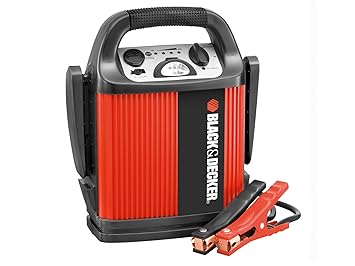
Dave, I agree regarding jump starting, so bought a Maplins jump pack some time ago, you know, one of the chunky small briefcase sized thingies with nice thick leads attached, and incorporating a light and a tyre pump.
If I do find that some idiot has left the lights on, I connect it to the battery terminals with the pack switched off (my battery is in the boot, so this is easy), then turn the pack on, which means I have a battery connected to the car, then start the car on the jump pack.
So at no time am I attaching the dead battery to a live one by jump leads, with the risk of a spark.
I agree nothing is as ideal as a properly maintained, correctly specified, battery, but have I mitigated the risks enough?
If I do find that some idiot has left the lights on, I connect it to the battery terminals with the pack switched off (my battery is in the boot, so this is easy), then turn the pack on, which means I have a battery connected to the car, then start the car on the jump pack.
So at no time am I attaching the dead battery to a live one by jump leads, with the risk of a spark.
I agree nothing is as ideal as a properly maintained, correctly specified, battery, but have I mitigated the risks enough?
QBee said:
Dave, I agree regarding jump starting, so bought a Maplins jump pack some time ago, you know, one of the chunky small briefcase sized thingies with nice thick leads attached, and incorporating a light and a tyre pump.
If I do find that some idiot has left the lights on, I connect it to the battery terminals with the pack switched off (my battery is in the boot, so this is easy), then turn the pack on, which means I have a battery connected to the car, then start the car on the jump pack.
So at no time am I attaching the dead battery to a live one by jump leads, with the risk of a spark.
I agree nothing is as ideal as a properly maintained, correctly specified, battery, but have I mitigated the risks enough?
I would say yes, if you connect up and wait a few minutes before starting, and then leave your battery pack attached for 15 mins while the engine runs and charges both the car's battery and (tops up) your battery pack. The alternator will not 'see' one flat battery and your pack separately, rather, as the two are connected in parallel, effectively a half flat one of a greater size, and charge 'it' accordingly. If I do find that some idiot has left the lights on, I connect it to the battery terminals with the pack switched off (my battery is in the boot, so this is easy), then turn the pack on, which means I have a battery connected to the car, then start the car on the jump pack.
So at no time am I attaching the dead battery to a live one by jump leads, with the risk of a spark.
I agree nothing is as ideal as a properly maintained, correctly specified, battery, but have I mitigated the risks enough?
I have for many years had a boost pack in the back of my daily/ call out wagon, connected via a specifically fitted 'split charge' socket. This is why it's lasted so long and is always ready for use! Just left unmaintained in a boot they do go flat within a couple of months, they are usually only lead-acid after all.
HOWEVER... the new type small lithium packs (which I also have and despite my initial reservations has never failed to start any vehicle that I've used it on) MUST NOT be charged via their boosting leads and MUST be disconnected IMMEDIATELY the engine fires.... but these do seem to hold their full charge for ages.
Thanks for the advice everyone
In this instance car was in a car park and it was getting dark and was 7 mile from home.
Have bought one of the SIP units as recommended on FB
One thing I have noticed now is the central locking won't...
It's always been a bit weak but now dead.
Could be coincidence and the blipper battery has died but I suspect not.
May need recommendations for an auto electrician who understands TVR near Darlington if anyone knows one.
as a postscipt, how do these lithium jump start things manage with such small diameter cable when you need a great thick cable to the starter
Regards
In this instance car was in a car park and it was getting dark and was 7 mile from home.
Have bought one of the SIP units as recommended on FB
One thing I have noticed now is the central locking won't...
It's always been a bit weak but now dead.
Could be coincidence and the blipper battery has died but I suspect not.
May need recommendations for an auto electrician who understands TVR near Darlington if anyone knows one.
as a postscipt, how do these lithium jump start things manage with such small diameter cable when you need a great thick cable to the starter
Regards
When I had my immobiliser ripped out my central locking no longer worked. Never bothered looking into it, just fitted a battery brain and I isolate the battery with the fob which means that the doors won't open anyway. It's a botch but it works and I haven't had an issue starting it despite doing about 500 miles in 2 years with out ever being connected to a trickle charger.
I struggle to see how charging a battery in a car can do harm, assuming no fault with the charger, that is after all what the alternator does as soon as the engine is running. Ditto really jump starting, where are spikes coming from.
Obviously if you connect the jump leads other than to the battery you have be aware where your connecting them, and if there fuses and diodes about ever more so.
Can you not tackle this the other way, and resolve the issue of being able to leave lights on? Headlights should be interlocked with the ignition. Sidelights shouldn't pose and issue for a few hours. I expect you can get something that will bing if you leave them in with the ignition off?
Daniel
Obviously if you connect the jump leads other than to the battery you have be aware where your connecting them, and if there fuses and diodes about ever more so.
Can you not tackle this the other way, and resolve the issue of being able to leave lights on? Headlights should be interlocked with the ignition. Sidelights shouldn't pose and issue for a few hours. I expect you can get something that will bing if you leave them in with the ignition off?
Daniel
Message Board | Chimaera | Top of Page | What's New | My Stuff