
Bottom red dash warning LED?
Discussion


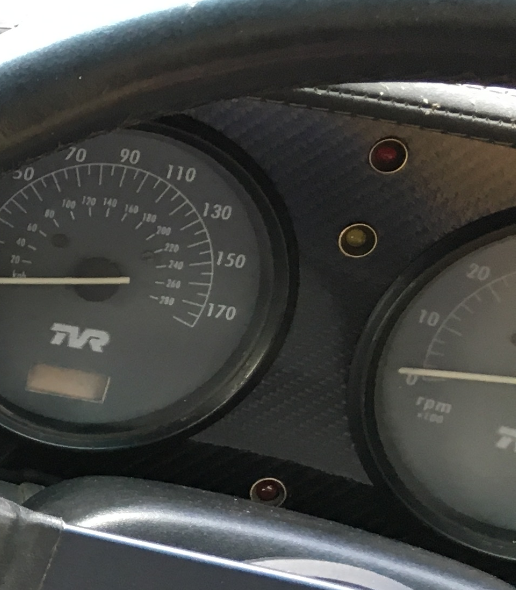
Can't work out what the bottom LED is supposed to relate to.
Top red is definitely alarm (flashes when armed).
Middle yellow I'm assuming is oil pressure, but it's only on when the car is off, so not too worried about it.
Bottom red though, randomly comes on and goes off. It's on when the engine is off. Sometimes turns off when I start the car, sometimes doesn't. Sometimes I won't see it for an entire journey, others it'll be there throughout, or just pop on / off for a few mins.
From reading historic threads, it sounds like it might usually be battery / alternator, but not sure how to check without trying to trace the wire. Also don't seem to have any obvious battery / alternator problems (yet... touch wood...).
I did try to continuity test from the black spade connector wire that goes into the back of the alternator to the dash wire, but got nothing, and the light stayed on with it disconnected. Is there a certain wire I could pull to confirm?
Any suggestions to diagnose?
Cheers
Penelope Stopit said:
Should be thin brown/yellow cable from cluster battery warning light to alternator terminal 61/D+
Disconnecting above cable and earthing it to alternator casing should illuminate the warning light
Disconnecting above cable and earthing it to alternator casing should illuminate the warning light
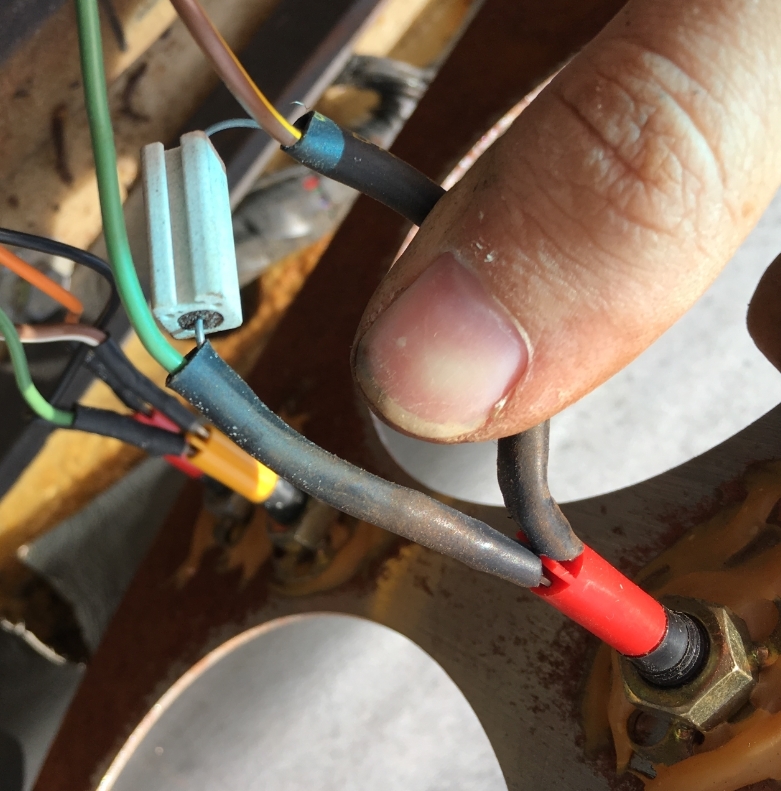
It is brown / yellow, so looks promising then.
If it's illuminating randomly does that mean alternator is dying then?
Strudul said:
Penelope Stopit said:
Should be thin brown/yellow cable from cluster battery warning light to alternator terminal 61/D+
Disconnecting above cable and earthing it to alternator casing should illuminate the warning light
Disconnecting above cable and earthing it to alternator casing should illuminate the warning light
It is brown / yellow, so looks promising then.
If it's illuminating randomly does that mean alternator is dying then?
Belle427 said:
Have you tried the brake fluid warning switch on the resevoir?
I did initially think it was the brake fluid light as it was low when I got the car, but now it's full and the light still randomly comes on. No brown / yellow wire going to that sensor either.Penelope Stopit said:
What's the brown/yellow connected to in the above image?
Can trace it to this connector, then it disappeara into the loom somewhere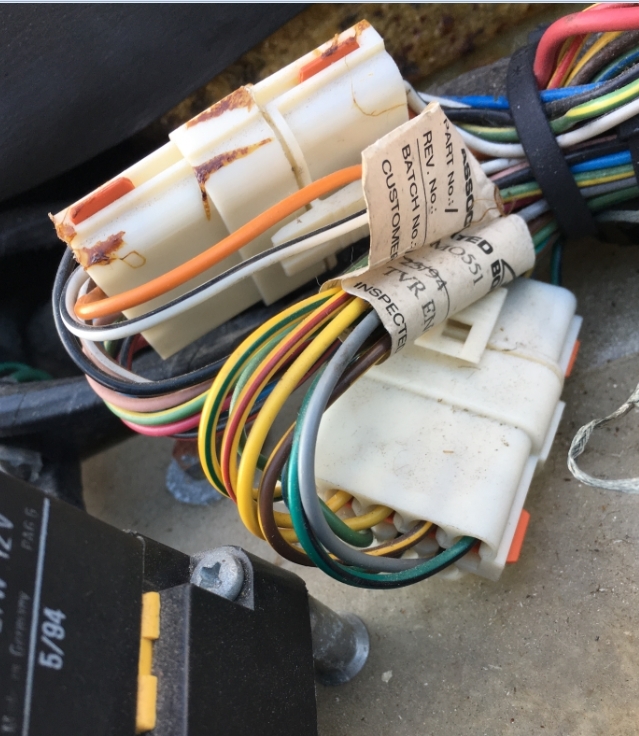
OP the alternator warning wire goes into a large white plug in the passenger footwell, it's near to the grommet that all of the engine loom comes through out of.
In my loom brown/yellow was the alternator warning light, if you can't measure continuity and the warning is coming in and out that might suggest a bad connection somewhere. Also possible the LED is a bit dodgy, my handbrake light sometimes flickers for no apparent reason.
Maybe check the system voltage with the car running to confirm the alternator is working correctly?
In my loom brown/yellow was the alternator warning light, if you can't measure continuity and the warning is coming in and out that might suggest a bad connection somewhere. Also possible the LED is a bit dodgy, my handbrake light sometimes flickers for no apparent reason.
Maybe check the system voltage with the car running to confirm the alternator is working correctly?
Strudul said:
What is the sensor that has what looks to be a Green and Brown/Yellow connected to it???????????
If that is a Green cable it will very likely be a fused ignition supply and Brown/Yellow will be the alternator warning light cable
Further to the above
There is a resistor wired between Green and Brown/Yellow, the resistor is very likely being used to excite the alternator
An LED on its own won't excite the alternator, high revs would be needed to get the alternator to cut-in and charge
What is that sensor?
It does seem to be the case that the alternator is incorrectly wired
The Brown/Yellow should be connected directly to the alternator 61/D+ terminal
LED's won't work as a battery warning light bulb, see this topic https://www.pistonheads.com/gassing/topic.asp?h=0&...
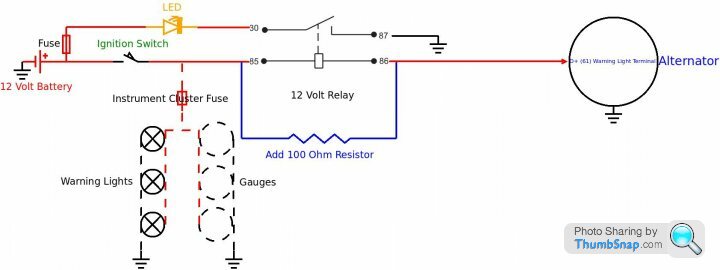
Here is a topic that shows how to wire an LED as an alternator warning light, it includes the below diagram https://www.pistonheads.com/gassing/topic.asp?h=0&...
Edited by Penelope Stopit on Saturday 19th September 14:48
Penelope Stopit said:
What I'm asking is
What is the sensor that has what looks to be a Green and Brown/Yellow connected to it???????????
If that is a Green cable it will very likely be a fused ignition supply and Brown/Yellow will be the alternator warning light cable
Further to the above
There is a resistor wired between Green and Brown/Yellow, the resistor is very likely being used to excite the alternator
An LED on its own won't excite the alternator, high revs would be needed to get the alternator to cut-in and charge
What is that sensor?
It does seem to be the case that the alternator is incorrectly wired
The Brown/Yellow should be connected directly to the alternator 61/D+ terminal
LED's won't work as a battery warning light bulb, see this topic https://www.pistonheads.com/gassing/topic.asp?h=0&...
Here is a topic that shows how to wire an LED as an alternator warning light, it includes the below diagram https://www.pistonheads.com/gassing/topic.asp?h=0&...
I'm probably being thick here, but that green and brown/yellow wire are connected to the back of the light....What is the sensor that has what looks to be a Green and Brown/Yellow connected to it???????????
If that is a Green cable it will very likely be a fused ignition supply and Brown/Yellow will be the alternator warning light cable
Further to the above
There is a resistor wired between Green and Brown/Yellow, the resistor is very likely being used to excite the alternator
An LED on its own won't excite the alternator, high revs would be needed to get the alternator to cut-in and charge
What is that sensor?
It does seem to be the case that the alternator is incorrectly wired
The Brown/Yellow should be connected directly to the alternator 61/D+ terminal
LED's won't work as a battery warning light bulb, see this topic https://www.pistonheads.com/gassing/topic.asp?h=0&...
Here is a topic that shows how to wire an LED as an alternator warning light, it includes the below diagram https://www.pistonheads.com/gassing/topic.asp?h=0&...
Edited by Penelope Stopit on Saturday 19th September 14:48
Not sure where they go on the other end, that's kinda the question, but will try check continuity of the brown / yellow to D+
[quote=Strudul]
It is brown / yellow, so looks promising then.
Your picture as the factory drawing
The green wire is ignition switched feed and the brown/yellow goes directly to the alternator...bridged across the LED is a 4W 470 Ohm resistor.

A@
It is brown / yellow, so looks promising then.
Your picture as the factory drawing
The green wire is ignition switched feed and the brown/yellow goes directly to the alternator...bridged across the LED is a 4W 470 Ohm resistor.
A@
Edited by Adrian@ on Sunday 20th September 09:17
Strudul said:
I'm probably being thick here, but that green and brown/yellow wire are connected to the back of the light....
No not at all, I'm the idiot hereI had no idea that the image you posted was showing the rear of the instrument cluster, it looked like a sensor to me
If TVR fitted and wired that LED as standard, it's as good as any manufacturer cock-ups that I have seen
The LED can't possibly work as a bulb does
That resistor shouldn't be hanging there behind the instrument cluster, it should be out of the way somewhere in the engine bay and mounting it to a heatsink would help
Suggest that you remove the LED and resistor and fit a 3 to 5 watt bulb once tou've sorted the fault out
All the information about using an LED as an alternator warning light are in the pages that are linked to in an earlier post
This is interesting, taken from one of the linked topics above
spitfire4v8 said:
Max_Torque said:
Wait, you're using the current through a 100 ohm resistor to generate a sufficient voltage to drive enough current through the coil of a massive 40 amp rated relay, in order to close some contacts to then allow a tiny amount of current to flow through an LED?
Seems a suitable complicated and un-reliable way to light an LED, TVR would approve!
TVR did approve .. they had their "alternator fudge circuit" designed to stop the charge warning LED glowing dimly when the engine was running ..Seems a suitable complicated and un-reliable way to light an LED, TVR would approve!
this is what they told the dealers to do :

Penelope Stopit said:
Strudul said:
I'm probably being thick here, but that green and brown/yellow wire are connected to the back of the light....
No not at all, I'm the idiot hereI had no idea that the image you posted was showing the rear of the instrument cluster, it looked like a sensor to me
If TVR fitted and wired that LED as standard, it's as good as any manufacturer cock-ups that I have seen
The LED can't possibly work as a bulb does
That resistor shouldn't be hanging there behind the instrument cluster, it should be out of the way somewhere in the engine bay and mounting it to a heatsink would help
Suggest that you remove the LED and resistor and fit a 3 to 5 watt bulb once tou've sorted the fault out
All the information about using an LED as an alternator warning light are in the pages that are linked to in an earlier post
This is interesting, taken from one of the linked topics above
spitfire4v8 said:
Max_Torque said:
Wait, you're using the current through a 100 ohm resistor to generate a sufficient voltage to drive enough current through the coil of a massive 40 amp rated relay, in order to close some contacts to then allow a tiny amount of current to flow through an LED?
Seems a suitable complicated and un-reliable way to light an LED, TVR would approve!
TVR did approve .. they had their "alternator fudge circuit" designed to stop the charge warning LED glowing dimly when the engine was running ..Seems a suitable complicated and un-reliable way to light an LED, TVR would approve!
this is what they told the dealers to do :
Strudul said:
I mean, I called it an LED, as I assumed it was, but maybe it's just a normal bulb?
Ok thenIf it is a normal bulb, the resistor wired between Green and Brown/Yellow has been fitted to lower the cutting in speed of the alternator, it would still be safer away from the instrument cluster area
Good luck in finding the fault
It simply looks like you have the resistor to provide some extra current as you don't have a filament light supplying current to the alternator field coils to get things going. If the LED glowed slightly it would have made far more sense to pop another diode in line with the LED to drop .7 volt or increase the LED series resistor a bit, not mess around with relays . Not that I can see such a bodge behind your dash thankfully. I would not worry about removing the resistor and swapping it with a bulb, as by its nature a bulb is a hot device due to the fact it runs white hot, unlike a stonking great resistor like that I'm sure will dissipate the required wattage (less than .5 watts if its 470 ohms) without going into melt down.
You should have two connections on the back of the alternator- one is large and has the thick high current cable(s) coming from it. The second will be much smaller, and have only one wire- this may be yellow / brown, but even if it is not it will be the wire for the alternator warning. Undo this and ground it (as stated by Penelope already) and the light should go on with the ignition, and off if you open circuit it. Any sign of it being on when open circuit means you have a short in the wiring loom somewhere. If this test works the failing is the alternator.
If you have any doubt about which wire, post a picture of the back of your alternator.
You should have two connections on the back of the alternator- one is large and has the thick high current cable(s) coming from it. The second will be much smaller, and have only one wire- this may be yellow / brown, but even if it is not it will be the wire for the alternator warning. Undo this and ground it (as stated by Penelope already) and the light should go on with the ignition, and off if you open circuit it. Any sign of it being on when open circuit means you have a short in the wiring loom somewhere. If this test works the failing is the alternator.
If you have any doubt about which wire, post a picture of the back of your alternator.
Edited by blitzracing on Sunday 20th September 20:17
Had a chance to go for a drive. All measurement are with headlights on and engine running)
Red light was on initially after starting engine and batt read 12.8V.
Light went off after a couple minutes of driving.
Checked batt voltage and got 13.6V.
EDIT:
Drove back home.
Red light never permanently on, but did flicker a bit.
Battery read 14.6V when I stopped.
Red light was on initially after starting engine and batt read 12.8V.
Light went off after a couple minutes of driving.
Checked batt voltage and got 13.6V.
EDIT:
Drove back home.
Red light never permanently on, but did flicker a bit.
Battery read 14.6V when I stopped.
Edited by Strudul on Monday 12th October 20:52
Message Board | Chimaera | Top of Page | What's New | My Stuff