
Crankcase breather question
Discussion


There are two breathers, the one you show is the system inlet the other one which is on the other bank is the outlet and as standard breaths into the inlet air flow. The idea being it sucks a small and restricted amount of air in via the inlet down one bank and out of the other via the crankcase into the induction system.
Ultimately the air drawn in through the mushroom breather ends up in the plenum. Its purpose is to sweep away unwanted gasses that are generated in the oil. Unmeasured air in the plenum is bad, causing uneven and high tickover so it's important to restrict crankcase breather air input. By design this is done by a restrictor tube under the mushroom breather. If you install an aftermarket breather be sure to add an appropriate restrictor
Edited by bobfather on Wednesday 20th February 14:22
bobfather said:
Ultimately the air drawn in through the mushroom breather ends up in the plenum. Its purpose is to sweep away unwanted gasses that are generated in the oil. Unmeasured air in the plenum is bad, causing uneven and high tickover so it's important to restrict crankcase breather air input. By design this is done by a restrictor tube under the mushroom breather. If you install an aftermarket breather be sure to add an appropriate restrictor
^^This^^The reality is the levels of vacuum within the sealed plenum are considerable at idle and under normal driving conditions, so while as correctly stated by bobfather the amount of restriction offered by the crankcase breather air input is critical, so is ensuring ultimately you have a sealed system other than that one fresh air input to the rear of the N/S rocker cover (the mushroom), and the throttle butterfly of course.
As we all know from its frequent oil leaks the Rover V8 engine is far from a sealed unit, now consider if oil can get out air can get in. The engine keeps on sucking and will soon find any gaps drawing un-metered air, ideally you would also have a constant small negative pressure within the crankcase but of course this is far from the reality in the baggy old Rover V8 and given the engine produces very different levels of vacuum under differing driving conditions.
The fact the Rover V8 was born in the late 1950's means it was never an engine designed for such aggressive crankcase gas scavenging and re-burning systems forced on it by ever stricter emissions regs that came in the late 70's and became progressively more challenging right to the point in the late 90's when it became clear the old Rover V8 was very overdue it's retirement.
Its also worth noting the only other control element offered by the system is the restrictor sleeve in the pipe that goes directly to the plenum, to say the system is crude is a huge understatement, and to expect it all to work on a leaky old Rover V8 running an airflow meter was quite an ask. To top it all off the sysem connects the throttle body at atmosphere direct to the vacuum source at the plenum, if that's not a vacuum leak I dont know what is!
Finally and again for emissions reasons, they strangled the exhaust side with catalytic converters and ran the engine on a retarded ignition timing strategy using ported vacuum. This is why I've always held the very firm opinion that the more emissions junk you can prune off the engine the better it'll run, in essence the more you return the engine to it's roots, indeed the way the designers intended it to run, the more it'll reward you.
No one is suggesting you should go back to carbs but the plenum & velocity stack inlet manifold arrangement is very early 80's fuel injection thinking, so ironically this also holds the engine back from delivering the kind of drivability you actually enjoy on a Rover V8 fueled by say a set of well set up SU's, it's crazy but true!!!
Interestingly, and very sadly in many ways, engine management and inlet/plenum design did finally catch up with the old Rover V8 but only right at the end of it's production life. I believe some have already fitted the vastly superior Motronic injection system that came with the last run of RV8 Range Rovers but for me the real drivability improvements are to be delivered by the much better Thor inlet which is why at some point I hope to fit one to my Chimaera.
steve-V8s said:
Way off the original topic but in my experience the only way to get good drivability combined with reasonable power with these engines is individual throttle bodies.
To relate this back to the OP, what happens to the breather mechanism with ITBs?Edited by Dominic TVRetto on Thursday 21st February 16:26
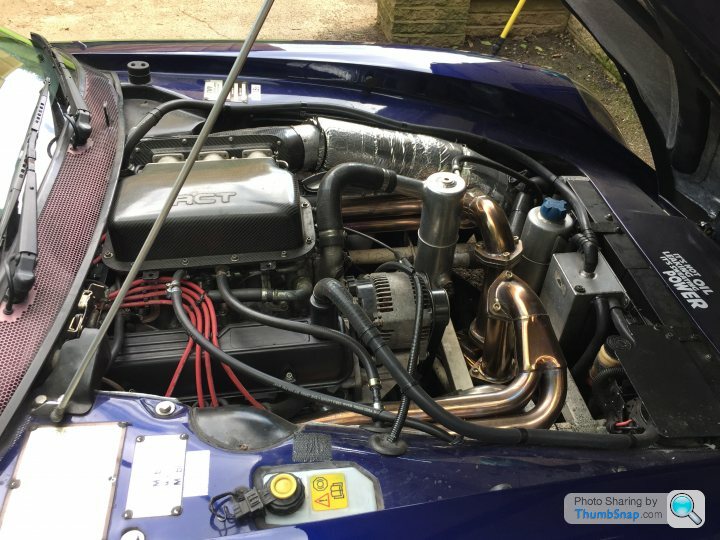

Mine goes direct to plenum without 3 way vacuum T piece and a 22mm barb on the N/S rocker cover with a small K&N style filter where the little mushroom use to live ,no fumes or smells I tried a PCV style valve but my idle and off idle vacuum signal is piss-poor awful ( low, big lumpy cam ) so didnt function as intended this current set-up works as intended and at higher throttle openings I have a little crankcase/blow-by evacuation (keeps the oil cleaner for longer periods too )  probably wont be as effective once the ring seal diminishes but then I don't plan on driving it like that its still a relatively new build with good ring seal, bit extreme this for a stock engine but just another way of doing things when running higher compression ratio's and spinning up the engine hard and often .........
  ..............
  .....
..... 
probably wont be as effective once the ring seal diminishes but then I don't plan on driving it like that its still a relatively new build with good ring seal, bit extreme this for a stock engine but just another way of doing things when running higher compression ratio's and spinning up the engine hard and often ......... .............. ..... Edited by Sardonicus on Friday 22 February 09:56
Forums | Griffith | Top of Page | What's New | My Stuff