
Smart Mway Limits
Discussion


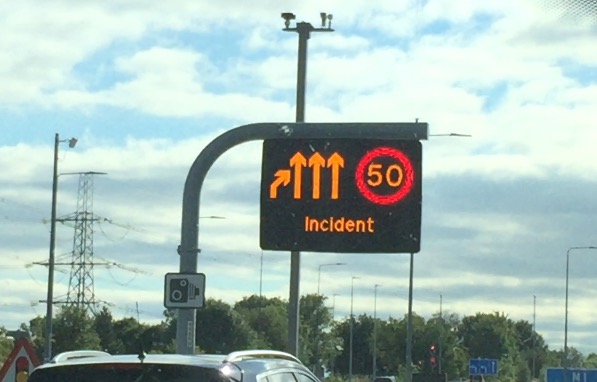
Having done my duty on Sunday and visited my Mum in Lancashire I was heading back down to the Midlands through the recently opened smart section of the M6 from 19 (Knutsford) to 16 (Stoke). I noticed that unlike the lower section of the M6 heading down to J8 there are very few gantrys to display the limit, in many places none visible at all. Even locations with a Hadecs 3 camera have no visible signage that I can see.
Does this not make it very difficult to enforce a prosecution? How can the displayed limit be proven if it is not recorded in the photo of the offending vehicle. Also, I can imagine there is sufficient distance between the signs for the limit to change and the driver being unaware for some time.
Very few camera's as well compared to other similar sections.
Are variable limits enforceable with no signage in view?
Does this not make it very difficult to enforce a prosecution? How can the displayed limit be proven if it is not recorded in the photo of the offending vehicle. Also, I can imagine there is sufficient distance between the signs for the limit to change and the driver being unaware for some time.
Very few camera's as well compared to other similar sections.
Are variable limits enforceable with no signage in view?
Rodintee said:
Are variable limits enforceable with no signage in view?
The law is the same as any limit sign. Are you sure you were not looking for gantrys, while the signs are the square ones on the side?Having come through there a few times I had no issues knowing what the limit is.
Rodintee said:
Are variable limits enforceable with no signage in view?
How are they variable unless there is signage?If there is no signage then the speed limit is 70
if there is signage then the limit can be varied, but equally they can capture the limit in force
quite a few of the newer ones seem to have a square sign to the left rather than overhead gantries...
Rodintee said:
Are variable limits enforceable with no signage in view?
Assuming a previous gantry was showing a reduced limit and you hadn't passed an NSL sign, then the variable limit would still be in force and, technically, it could be enforced.That said, the powers that be have suggested a limit below NSL would not be enforced by camera unless that gantry was showing the reduced limit.
You could be done in theory depending on the view of a court as to whether there were enough signs. In addition to showing that the speed limit was "In force", they have to show that you passed a speed limit sign as well.
Weirdly smart limits apply to vehicles rather than being an absolute. So in theory it could mean 2 cars on the exact same stretch of road are subject to different limits.
In practice, as I understand it, the Hadecs also record what speed limit is being displayed and they only proceed when it's all in order. Other enforcement methods can do whatever they think appropriate.
Weirdly smart limits apply to vehicles rather than being an absolute. So in theory it could mean 2 cars on the exact same stretch of road are subject to different limits.
In practice, as I understand it, the Hadecs also record what speed limit is being displayed and they only proceed when it's all in order. Other enforcement methods can do whatever they think appropriate.
SS2. said:
Rodintee said:
Are variable limits enforceable with no signage in view?
Assuming a previous gantry was showing a reduced limit and you hadn't passed an NSL sign, then the variable limit would still be in force and, technically, it could be enforced.That said, the powers that be have suggested a limit below NSL would not be enforced by camera unless that gantry was showing the reduced limit.
As you join from the j16 slip road, you pass a variable limit sign showing whatever variable speed limit is set, about 20 metres on they have left the old steel pre variable limit NSL sign. So effectively the NSL sign applies, but any speed enforcement devices wouldn't recognize that.
I do Midlands to warrington once a week and they do have the signs posted quite regular.
Not sure if it's because they have recently opened but have seen lots of 60 - 50 - 60 - 40 with no apparent accidents or issues.
Certainly better than its been the last 2 years as far as traffic flow ( for me anyway)
Not sure if it's because they have recently opened but have seen lots of 60 - 50 - 60 - 40 with no apparent accidents or issues.
Certainly better than its been the last 2 years as far as traffic flow ( for me anyway)
jonwm said:
I do Midlands to warrington once a week and they do have the signs posted quite regular.
Not sure if it's because they have recently opened but have seen lots of 60 - 50 - 60 - 40 with no apparent accidents or issues.
Certainly better than its been the last 2 years as far as traffic flow ( for me anyway)
If the system works you shouldn't see any apparent accidents or issues. Until the system is overwhelmed with traffic volumes. Which is a higher limit than without the system.Not sure if it's because they have recently opened but have seen lots of 60 - 50 - 60 - 40 with no apparent accidents or issues.
Certainly better than its been the last 2 years as far as traffic flow ( for me anyway)
BertBert said:
So how does that work exactly? Some way of magic-ing away the breakdowns, accidents and queues?
A queue happens when you catch up with the car in front, who's caught up with the car in front etc.What you have somewhere is a pinch point or bottleneck. Something which can only allow X cars through per minute. Say 100. If cars arrive at a greater rate than 100 per minute (say 120 a minute), they'll cause a queue. A queue is bad because as soon as a car stops rolling, it adds 2-3 seconds of delay compared to a rolling car. 120 stationary cars is suddenly a 4 minute longer queue than 120 rolling cars. And that delta is growing at 4 minutes every minute.
By slowing down traffic well before the bottleneck, then allowing it speed up at the pinch point, you reduce the arrival rate, you avoid the stationary traffic (at least for longer), and thus you remove the additional queuing time.
If it's working well you'll flow through an accident scene at NSL without remembering it...because it wasn't an issue, or it'll have been cleared by the time you get there, and the signs are showing to stop a queue forming in a dense wave caused behind the original slow point. Then you'll think it's for nothing...because it worked.
All of this is the reason speeding causes queues. If everybody is being special by going over the limit, then hitting a queue, and saying the limit didn't work, they may well have themselves to blame.
Munter said:
BertBert said:
So how does that work exactly? Some way of magic-ing away the breakdowns, accidents and queues?
A queue happens when you catch up with the car in front, who's caught up with the car in front etc.What you have somewhere is a pinch point or bottleneck. Something which can only allow X cars through per minute. Say 100. If cars arrive at a greater rate than 100 per minute (say 120 a minute), they'll cause a queue. A queue is bad because as soon as a car stops rolling, it adds 2-3 seconds of delay compared to a rolling car. 120 stationary cars is suddenly a 4 minute longer queue than 120 rolling cars. And that delta is growing at 4 minutes every minute.
By slowing down traffic well before the bottleneck, then allowing it speed up at the pinch point, you reduce the arrival rate, you avoid the stationary traffic (at least for longer), and thus you remove the additional queuing time.
If it's working well you'll flow through an accident scene at NSL without remembering it...because it wasn't an issue, or it'll have been cleared by the time you get there, and the signs are showing to stop a queue forming in a dense wave caused behind the original slow point. Then you'll think it's for nothing...because it worked.
All of this is the reason speeding causes queues. If everybody is being special by going over the limit, then hitting a queue, and saying the limit didn't work, they may well have themselves to blame.
Have you ever driven on the M25? Your variable speed limit magic seems not to work there.
I think we all understand the principle of reduced speed limits attempting to reduce queuing, reduce the wave affect and increasing net flow. But to claim that most of the time it means you don't see the cause is a little bit fanciful.
Bert
I think we all understand the principle of reduced speed limits attempting to reduce queuing, reduce the wave affect and increasing net flow. But to claim that most of the time it means you don't see the cause is a little bit fanciful.
Bert
blueg33 said:
Ironic that they then install speed cameras which cause people to brake unnecessarily. Its well proven that this then causes queues and accidents.
If they were not speeding, they wouldn't need to stomp on the brakes. These systems rely on a certain level of competence/compliance...BertBert said:
Have you ever driven on the M25? Your variable speed limit magic seems not to work there.
I think we all understand the principle of reduced speed limits attempting to reduce queuing, reduce the wave affect and increasing net flow. But to claim that most of the time it means you don't see the cause is a little bit fanciful.
Bert
I didn't say most of the time. I said if he saw limits, but no issues, it's probably working. Certainly limits & no issues does not mean system isn't required. Because limits & no issues is what should happen.I think we all understand the principle of reduced speed limits attempting to reduce queuing, reduce the wave affect and increasing net flow. But to claim that most of the time it means you don't see the cause is a little bit fanciful.
Bert
BertBert said:
Have you ever driven on the M25? Your variable speed limit magic seems not to work there.
I think we all understand the principle of reduced speed limits attempting to reduce queuing, reduce the wave affect and increasing net flow. But to claim that most of the time it means you don't see the cause is a little bit fanciful.
Bert
There is of course always the problem that, if the operator is negligent in setting a speed limit, then (And it's going to take a lot to show a causation) if that causes a loss to a road user or worse a lot of road users then the liability could be very damaging to Highways England and have ramifications for how they do things. I think we all understand the principle of reduced speed limits attempting to reduce queuing, reduce the wave affect and increasing net flow. But to claim that most of the time it means you don't see the cause is a little bit fanciful.
Bert
Munter said:
A queue happens when you catch up with the car in front, who's caught up with the car in front etc.
What you have somewhere is a pinch point or bottleneck. Something which can only allow X cars through per minute. Say 100. If cars arrive at a greater rate than 100 per minute (say 120 a minute), they'll cause a queue. A queue is bad because as soon as a car stops rolling, it adds 2-3 seconds of delay compared to a rolling car. 120 stationary cars is suddenly a 4 minute longer queue than 120 rolling cars. And that delta is growing at 4 minutes every minute.
By slowing down traffic well before the bottleneck, then allowing it speed up at the pinch point, you reduce the arrival rate, you avoid the stationary traffic (at least for longer), and thus you remove the additional queuing time.
If it's working well you'll flow through an accident scene at NSL without remembering it...because it wasn't an issue, or it'll have been cleared by the time you get there, and the signs are showing to stop a queue forming in a dense wave caused behind the original slow point. Then you'll think it's for nothing...because it worked.
All of this is the reason speeding causes queues. If everybody is being special by going over the limit, then hitting a queue, and saying the limit didn't work, they may well have themselves to blame.
Problem is, it doesn’t do that. You can watch it on a decent system like Waze which seems to have a much better handle on it (for free) than the billions we have pissed up the wall on this system. Say you’re trundling along the M25. On Waze you can see a blockage 20 miles away. That is the point where traffic should be slowed if you’re going to allow the queue to dissipate. But no, the “smart” motorway allows you to go full tilt towards the back of the queue, only slowing you a mile from it. Which causes precisely the problem they’re trying to avoid,What you have somewhere is a pinch point or bottleneck. Something which can only allow X cars through per minute. Say 100. If cars arrive at a greater rate than 100 per minute (say 120 a minute), they'll cause a queue. A queue is bad because as soon as a car stops rolling, it adds 2-3 seconds of delay compared to a rolling car. 120 stationary cars is suddenly a 4 minute longer queue than 120 rolling cars. And that delta is growing at 4 minutes every minute.
By slowing down traffic well before the bottleneck, then allowing it speed up at the pinch point, you reduce the arrival rate, you avoid the stationary traffic (at least for longer), and thus you remove the additional queuing time.
If it's working well you'll flow through an accident scene at NSL without remembering it...because it wasn't an issue, or it'll have been cleared by the time you get there, and the signs are showing to stop a queue forming in a dense wave caused behind the original slow point. Then you'll think it's for nothing...because it worked.
All of this is the reason speeding causes queues. If everybody is being special by going over the limit, then hitting a queue, and saying the limit didn't work, they may well have themselves to blame.
Gassing Station | Speed, Plod & the Law | Top of Page | What's New | My Stuff