
Colour correct welding glass/ cheap ND filter, this easy ?
Discussion


Ok so having a look at ND filters and all I can say is SERIOUSLY!!! hundred notes for a tinted piece of glass ? sillyness, I don't care how "good" they are that is just plain taking the piss. You can get tinted windows for cars cheaper.
So on to welding glass and cheap filters as I am a miser.
They give a colour cast on the image. Now looking at colour correction videos on youtube they say photograph a sheet of white paper or grey card full screen in the light (with the filter on), select that as your custom then take the shot. Hey presto near enough colour correction to be adjust later in Canons RAW processor. Benefit is you see the correct colour on the camera lcd.
Using canons software ( bloody good I have to say ) there is the option of one click color correction, you click on the area in the photo that is either grey or white and the shot is corrected ( as far as I understand one click correction ).
So I was wondering if I set up my camera, focused etc, put the filter on, they went out and stood in the shot holding a sheet of paper, then carried on shooting on Auto white balance. When I processed them when I got home could I just click on me holding the white paper to colour correct then use that recipe on the other shots ?
Or is a full screen white shot needed for that to work ? Just seem a lot easier and quicker than setting the camera up twice. Or have I missed something ?
Hope that makes sense.
Your ever grateful
Tampon
So on to welding glass and cheap filters as I am a miser.
They give a colour cast on the image. Now looking at colour correction videos on youtube they say photograph a sheet of white paper or grey card full screen in the light (with the filter on), select that as your custom then take the shot. Hey presto near enough colour correction to be adjust later in Canons RAW processor. Benefit is you see the correct colour on the camera lcd.
Using canons software ( bloody good I have to say ) there is the option of one click color correction, you click on the area in the photo that is either grey or white and the shot is corrected ( as far as I understand one click correction ).
So I was wondering if I set up my camera, focused etc, put the filter on, they went out and stood in the shot holding a sheet of paper, then carried on shooting on Auto white balance. When I processed them when I got home could I just click on me holding the white paper to colour correct then use that recipe on the other shots ?
Or is a full screen white shot needed for that to work ? Just seem a lot easier and quicker than setting the camera up twice. Or have I missed something ?
Hope that makes sense.
Your ever grateful
Tampon
Simpo Two said:
You could bypass an awful lot of that by shooting RAW and hammering it out later. But whether that will make the colours perfect I don't know as I haven't tried. Not much need for NDs in my work!
That is what I shoot in. So shoot in Raw, hold a white piece of paper in one of the shots and just one click correct afterwards in processing and job done?( that what I was getting at the first time in my convoluted way )If so then the £3 on 2 pieces I just ordered will be a good investment ( shade 11 and 14 ).
 Miser!
Tampon said:
So I was wondering if I set up my camera, focused etc, put the filter on, they went out and stood in the shot holding a sheet of paper, then carried on shooting on Auto white balance. When I processed them when I got home could I just click on me holding the white paper to colour correct then use that recipe on the other shots ?
 Sort of.
 I think the more consistent results would be if you set the WB to anything other than "Auto". The reason being that allowing Auto WB means the camera would "try" and set it on each different shot. But in principle you are correct in that you could adjust one (such as a shot with white or a grey card) and copy and paste those settings across the entire shoot.
You could also: convert to monochrome; try for a deliberate cross-processed look (yuckie, but some people like it); forget messing with your precious photons in such a brutal manner.....
HTH

Using welding glass I can get my whites looking white, no problem. The real issue arises with the other colours as the glass is actually coloured rather than of neutral density like the expensive filters.
Unless you're prepared to invest a lot of time colour correcting on a per shot basis, I suspect you'll end up with a lot of monos; or colours that never look completely right.
Unless you're prepared to invest a lot of time colour correcting on a per shot basis, I suspect you'll end up with a lot of monos; or colours that never look completely right.
It is sillyness but I guess when its mostly big companies buying equipment for their photographers 100 notes a piece probably isnt such a big deal.
But then again, actual optical quality glass/materials are expensive to produce because it is time consuming. I had a piece of optical quality quartz glass made for a project I am doing and it was about 700 quid and I only had a half section of it polished otherwise it was looking like over a grand.
But it will ensure absolutely no distortions or image quality issues.
But then again, actual optical quality glass/materials are expensive to produce because it is time consuming. I had a piece of optical quality quartz glass made for a project I am doing and it was about 700 quid and I only had a half section of it polished otherwise it was looking like over a grand.
But it will ensure absolutely no distortions or image quality issues.
Tampon said:
Ok so having a look at ND filters and all I can say is SERIOUSLY!!! hundred notes for a tinted piece of glass ? sillyness, I don't care how "good" they are that is just plain taking the piss. You can get tinted windows for cars cheaper.
Car windows don't have to be optically perfect though do they? If you get a while balance shot you can remember the colour temperature (in kelvin or K) you need to get it corrected and use that in future, whilst you'll need to tweak it for ambient light it will give you a baseline.
markmullen said:
Car windows don't have to be optically perfect though do they?
If you get a while balance shot you can remember the colour temperature (in kelvin or K) you need to get it corrected and use that in future, whilst you'll need to tweak it for ambient light it will give you a baseline.
I have to see through it pretty clearly! If you get a while balance shot you can remember the colour temperature (in kelvin or K) you need to get it corrected and use that in future, whilst you'll need to tweak it for ambient light it will give you a baseline.
 I understand what your saying but when it can be done for a few quid and a bit of post processing seems silly right now ( cheap ND filters more than welding glass)
Brilliant, so it seems it will work for a lazy cheap way to get started, I have a idea for the movement comp this month and didn't fancy chucking a ton at a idea.
If it ends up B+W that is fine as well.
AndWhyNot said:
Using welding glass I can get my whites looking white, no problem. The real issue arises with the other colours as the glass is actually coloured rather than of neutral density like the expensive filters.
Unless you're prepared to invest a lot of time colour correcting on a per shot basis, I suspect you'll end up with a lot of monos; or colours that never look completely right.
Yep, this is my experience too. All of my welding glass shots were converted to mono because they simply could not be corrected or maybe that should read 'I could not correct them'. Even the ones that looked fairly neutral ended up losing contrast and looking washed out. I'm not moaning as it cost me £5 but I ended up going for a hitech pro stopper and have now paid even more and gone for the Lee big stopper. The hitech was much better than welding glass but was still sometimes tricky to fully correct. The Lee one cost me a fortune but is actually not far off neutral straight out the camera. It's very easy to fully correct. I wouldn't call it good value but in this case, the expensive one is a lot better. Unless you're prepared to invest a lot of time colour correcting on a per shot basis, I suspect you'll end up with a lot of monos; or colours that never look completely right.
Edited by Gad-Westy on Friday 22 June 11:52
Tampon said:
I have to see through it pretty clearly! I understand what your saying but when it can be done for a few quid and a bit of post processing seems silly right now ( cheap ND filters more than welding glass)
Whilst you'll get the effect you're looking for the quality won't be up to a proper ND filter. I understand what your saying but when it can be done for a few quid and a bit of post processing seems silly right now ( cheap ND filters more than welding glass)With lenses costing over £1000 each does it make sense for me to pop a bit of £2 welding glass on the front? Yes, the Big Stopper is expensive, but having tried cheaper ND filters it really is in a different league, optically fantastic, very little colour cast (I rarely have to do anything to correct it) and predictable.
Good luck with the welding glass, I hope you get good results but in time you will understand why a proper ND filter is a good buy.
I tried the welding glass thing recently. Did the custom white balance thing to get it as close as possible but found that very variable as the light or intsensity of it seemed to change the balance quite a bit. Then tried to get the rest out in RAW but for me the colour never got close enough with the picking tool. I got better results using the RGB levels facility and moving the curve green backwards and forwards between green and a magenta cast. Not perfect but the best results I got were like that. I don't really understand curves and I'm an utter amature but maybe worth a go?
ETA. Lots of these people seems to be getting their colours pretty sorted to my eyes. Js 911 on the first page for example look totally sorted to me.
http://web20.pistonheads.com/gassing/topic.asp?h=0...
ETA. Lots of these people seems to be getting their colours pretty sorted to my eyes. Js 911 on the first page for example look totally sorted to me.
http://web20.pistonheads.com/gassing/topic.asp?h=0...
Edited by Buzz word on Friday 22 June 14:07
markmullen said:
Whilst you'll get the effect you're looking for the quality won't be up to a proper ND filter.
With lenses costing over £1000 each does it make sense for me to pop a bit of £2 welding glass on the front? Yes, the Big Stopper is expensive, but having tried cheaper ND filters it really is in a different league, optically fantastic, very little colour cast (I rarely have to do anything to correct it) and predictable.
Good luck with the welding glass, I hope you get good results but in time you will understand why a proper ND filter is a good buy.
Ahhh, but you are comparing you, Mr "Photo Experto soon to been shown in exhibition", with me, Mr "try and get the camera facing the right way".With lenses costing over £1000 each does it make sense for me to pop a bit of £2 welding glass on the front? Yes, the Big Stopper is expensive, but having tried cheaper ND filters it really is in a different league, optically fantastic, very little colour cast (I rarely have to do anything to correct it) and predictable.
Good luck with the welding glass, I hope you get good results but in time you will understand why a proper ND filter is a good buy.
£100 to "try" something just doesn't compute, still trying to get my head round the cost of lenses. £250 on a secondhand Wideangle sigma has made me swallow hard, so £100 for a small sheet of glass is another world.
As I get into it and learn the limitations of what I am doing then I will buy what I need but right now the limitation is me not my kit.
Just to give you an idea of the colour cast- on the left, the original opened from RAW with no correction. On the right, white balanced in RAW (you can see the blacks look black and the whites look white, but the other colours retain their green cast.) Adjustments will vary according to content of image - for instance, there's no green in this so I can just start by desat-ing the greens only but that wouldn't work if there was a field or tree in frame.
My warning is not about optical quality so much as the flexibility of your result. You'll get decent monos with a bit of PP but you can all but forget creating a faithful colour image with welding glass as a filter.

My warning is not about optical quality so much as the flexibility of your result. You'll get decent monos with a bit of PP but you can all but forget creating a faithful colour image with welding glass as a filter.
Another problem with welding glass that I've found with mine is that the colour may not be consistent over the entire piece of glass. As you can see in the following photo there is a very definite difference between the colour on the right-hand side as opposed to the rest of the frame.

Misty Water - Colour by dogsey, on Flickr
Mind you, it makes little difference when you convert to B&W.

Misty Water - B&W by dogsey, on Flickr
One day I'll get around to buying a proper ND110, but there are other things I want before that considering how often I'll use it.
ETA: I did find a way around the problem with mine, zoom in!

Misty Falls by dogsey, on Flickr
Misty Water - Colour by dogsey, on Flickr
Mind you, it makes little difference when you convert to B&W.
Misty Water - B&W by dogsey, on Flickr
One day I'll get around to buying a proper ND110, but there are other things I want before that considering how often I'll use it.
ETA: I did find a way around the problem with mine, zoom in!
Misty Falls by dogsey, on Flickr
Capture One Pro software has some lens correction features one of which is for colour cast correction.
The idea is that for your lens you make a test shot on a neutral consistent background, the software analyses the result and builds and adjustment file that you can then apply to future images. The usual sort of stuff.
It has some interesting attributes , sometimes, whan applied to regulat shots as well!
It would be intersting to find out it it could deal well with welding glass cast and uneven colouring. But even if it does I doubt the recovered colours would be accurate with further tweaking, though in many cases they may be accurate enough for their purpose.
If using to correct a filter the problem might be whether the filter is always in the same position and orientation. It may be necessary to take a test shot for each individual shot - not really a practical proposition for long exposure work I would guess.
The idea is that for your lens you make a test shot on a neutral consistent background, the software analyses the result and builds and adjustment file that you can then apply to future images. The usual sort of stuff.
It has some interesting attributes , sometimes, whan applied to regulat shots as well!
It would be intersting to find out it it could deal well with welding glass cast and uneven colouring. But even if it does I doubt the recovered colours would be accurate with further tweaking, though in many cases they may be accurate enough for their purpose.
If using to correct a filter the problem might be whether the filter is always in the same position and orientation. It may be necessary to take a test shot for each individual shot - not really a practical proposition for long exposure work I would guess.
If you're not too keen on spending money, I'd recommend checking out the Cokin range of ND filters. I got a set for not a huge amount of cash plus they do a holder specifically for ultra-wide angle lenses.
Slightly pink colour cast however (but I suspect this would be an issue for people with decent p'shop skills)

Slightly pink colour cast however (but I suspect this would be an issue for people with decent p'shop skills)
Had a play with a 11 and a 14 dark piece of welding glass. I see what you guys ment about the colour, but brillant for a total cost of £3.

DPP_clock0002 by bennyboy80, on Flickr
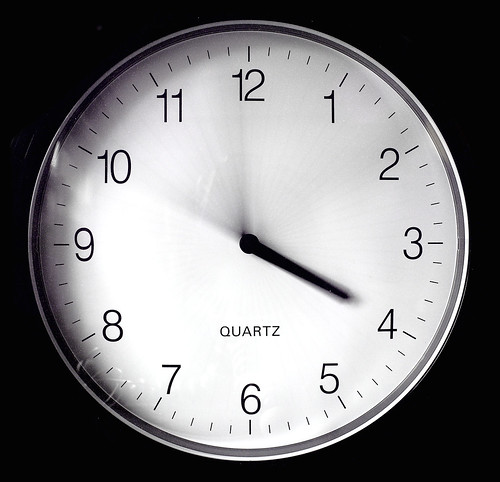
DPP_clock0001 by bennyboy80, on Flickr
DPP_clock0002 by bennyboy80, on Flickr
DPP_clock0001 by bennyboy80, on Flickr

Gassing Station | Photography & Video | Top of Page | What's New | My Stuff