
Depth of field
Discussion


This has been bugging me a bit for some time, but as yet haven't had time to really sit down and do some definitive experimenting.
Ok so firstly I understand the basic concept of depth of field, but I don't quite understand the AF points. I have a 7d btw.
A lot of places suggest when photographing a person to focus on their eyes, so I use centre-point focus and recompose. What is the best way to quickly judge the aperture to use though? If I keep it at f/1.4 on my 50mm then the nose will likely be out of focus if close-up, so reducing the aperture combats this but I find it take a good few shots and analysing each before I get the right setting!
Also, from Canon's AF point, where is the depth of field? Is Canon's AF point slap bang in the middle of the effective DOF? Or is it at the start of the DOF? As I've seen the DOF calculators around and that may be able to give me more insight into things. (I know I could just take a pic of a ruler and work it out but haven't got my camera with me right now)
Ok so firstly I understand the basic concept of depth of field, but I don't quite understand the AF points. I have a 7d btw.
A lot of places suggest when photographing a person to focus on their eyes, so I use centre-point focus and recompose. What is the best way to quickly judge the aperture to use though? If I keep it at f/1.4 on my 50mm then the nose will likely be out of focus if close-up, so reducing the aperture combats this but I find it take a good few shots and analysing each before I get the right setting!
Also, from Canon's AF point, where is the depth of field? Is Canon's AF point slap bang in the middle of the effective DOF? Or is it at the start of the DOF? As I've seen the DOF calculators around and that may be able to give me more insight into things. (I know I could just take a pic of a ruler and work it out but haven't got my camera with me right now)
AF points are simply the point where the camera uses to autofocus. (Camera not important)
Focussing on the eyes would usually be the best approach in my opinion.
The closer you are the shallower the area in focus will be (This is far more pronounced at wide open).
DOF is simply the area closest point in focus to furthest point away in focus. (Smaller aperture and further away the focal point is will increase the DOF, the inverse is also true).
There are some DOF calculators out there, some interactive which will give you a much better idea than what I've said.
As a side note there is a little button below the lens on the left which will close the aperture down to your currently selected setting. This will give you an idea of what will be in focus. By default AF and what you see are wide open.
Focussing on the eyes would usually be the best approach in my opinion.
The closer you are the shallower the area in focus will be (This is far more pronounced at wide open).
DOF is simply the area closest point in focus to furthest point away in focus. (Smaller aperture and further away the focal point is will increase the DOF, the inverse is also true).
There are some DOF calculators out there, some interactive which will give you a much better idea than what I've said.
As a side note there is a little button below the lens on the left which will close the aperture down to your currently selected setting. This will give you an idea of what will be in focus. By default AF and what you see are wide open.
Seany88 said:
What is the best way to quickly judge the aperture to use though? If I keep it at f/1.4 on my 50mm then the nose will likely be out of focus if close-up, so reducing the aperture combats this but I find it take a good few shots and analysing each before I get the right setting!
There's no hard and fast way of doing this. You just have to guess. As you take more and more photographs, you get better at guessing the aperture to give you the depth-of-field that you want.Seany88 said:
Also, from Canon's AF point, where is the depth of field? Is Canon's AF point slap bang in the middle of the effective DOF?
Yes it's in the middle, the same with all makes (system tolerances and broken equipment notwithstanding).
Gemm said:
...I always manually select the AF point on the subject's eyes...
Doesn't that limit your composition at all? Or are there enough AF points to always get what you want?SamHH said:
Seany88 said:
What is the best way to quickly judge the aperture to use though? If I keep it at f/1.4 on my 50mm then the nose will likely be out of focus if close-up, so reducing the aperture combats this but I find it take a good few shots and analysing each before I get the right setting!
There's no hard and fast way of doing this. You just have to guess..... But it does make the view a lot darker at small apertures so it's not always possible to use it.
tim-b said:
Gemm said:
...I always manually select the AF point on the subject's eyes...
Doesn't that limit your composition at all? Or are there enough AF points to always get what you want?SamHH said:
Seany88 said:
What is the best way to quickly judge the aperture to use though? If I keep it at f/1.4 on my 50mm then the nose will likely be out of focus if close-up, so reducing the aperture combats this but I find it take a good few shots and analysing each before I get the right setting!
There's no hard and fast way of doing this. You just have to guess..... But it does make the view a lot darker at small apertures so it's not always possible to use it.Also, do many zoom into the picture when reviewing the pics to check that you're happy that all the right bits are in focus? (This may seem like a stupid question)
Seany88 said:
A lot of places suggest when photographing a person to focus on their eyes, so I use centre-point focus and recompose. What is the best way to quickly judge the aperture to use though? If I keep it at f/1.4 on my 50mm then the nose will likely be out of focus if close-up, so reducing the aperture combats this but I find it take a good few shots and analysing each before I get the right setting!
Also, from Canon's AF point, where is the depth of field? Is Canon's AF point slap bang in the middle of the effective DOF? Or is it at the start of the DOF? As I've seen the DOF calculators around and that may be able to give me more insight into things. (I know I could just take a pic of a ruler and work it out but haven't got my camera with me right now)
Depth of field is a fore and aft thing, not a left/right/up/down thing. The focus points in the viewfinder just tell you which part of the scene the camera will focus on; it has nothing to do with DOF. However I think you mean 'which part of the scene should I focus on?'.Also, from Canon's AF point, where is the depth of field? Is Canon's AF point slap bang in the middle of the effective DOF? Or is it at the start of the DOF? As I've seen the DOF calculators around and that may be able to give me more insight into things. (I know I could just take a pic of a ruler and work it out but haven't got my camera with me right now)
As for which aperture to use for which DOF, it's really a practice/experience thing. After a while you will be able to look at the scene, decide how much DOF you want and then set an aperture which will do it.
Seany88 said:
Also, do many zoom into the picture when reviewing the pics to check that you're happy that all the right bits are in focus?
Always. AF systems don't always get it right, especially in low light.Simpo Two said:
Seany88 said:
A lot of places suggest when photographing a person to focus on their eyes, so I use centre-point focus and recompose. What is the best way to quickly judge the aperture to use though? If I keep it at f/1.4 on my 50mm then the nose will likely be out of focus if close-up, so reducing the aperture combats this but I find it take a good few shots and analysing each before I get the right setting!
Also, from Canon's AF point, where is the depth of field? Is Canon's AF point slap bang in the middle of the effective DOF? Or is it at the start of the DOF? As I've seen the DOF calculators around and that may be able to give me more insight into things. (I know I could just take a pic of a ruler and work it out but haven't got my camera with me right now)
Depth of field is a fore and aft thing, not a left/right/up/down thing. The focus points in the viewfinder just tell you which part of the scene the camera will focus on; it has nothing to do with DOF. However I think you mean 'which part of the scene should I focus on?'.Also, from Canon's AF point, where is the depth of field? Is Canon's AF point slap bang in the middle of the effective DOF? Or is it at the start of the DOF? As I've seen the DOF calculators around and that may be able to give me more insight into things. (I know I could just take a pic of a ruler and work it out but haven't got my camera with me right now)
markmullen said:
I set the focus point on the eyes rather than focus recompose, with longer focal lengths and wide apertures focus recompose can see you miss focus, my 135mm f2 is very sensitive to that.
Ok but if the eyes aren't in the range of AF points, then what? What's the next best solution?Seany88 said:
I meant in terms of distance, as if focused on the eye - then if the DOF is 20mm is that 10mm either side of the eye its focused on, or 20mm behind etc. SamHH is saying its in the middle if I'm reading that right?
In theory it's about 2/3 behind, 1/3 in front (see 'hyperfocal distance') but with large apertures, subjects that move and trusting in electronics it's not a perfect science unless in a controlled situation. DOF at, say, f1.4 can be so shallow that you or the subject only has to move a fraction after focus lock and it's out.Seany88 said:
Ok but if the eyes aren't in the range of AF points, then what? What's the next best solution?
Use the closest you can.Seany88 said:
A lot of places suggest when photographing a person to focus on their eyes, so I use centre-point focus and recompose. What is the best way to quickly judge the aperture to use though? If I keep it at f/1.4 on my 50mm then the nose will likely be out of focus if close-up, so reducing the aperture combats this but I find it take a good few shots and analysing each before I get the right setting!
How far are you from the subject when you take these shots. Are they in low light?If you consider, say, a studio situation shooting head and shoulders with lighting most people will be looking to use the sweet spot of their chosen lens, typically around f8 to f11 for a dslr type camera, to fill the frame, allow suitable lighting controls and ensure that the full face depth (focus on the eyes but expect nose right through to ears and allowing for the subject to be posing at an angle) is acceptably sharp.
If you are trying a frame filling head and shoulders shot at f1.4 things are going to be a little more challenging.
To get a rough feel for it get a DoF table or one or two of the calculators off the web, punch in some settings and see what you get. That will quickly give you some sort of feel for what to expect. If you want something more than that then use the calculators or tables as part of your photo creation process if you wish, although I think many people come to rely on experience rather than tables.
So, assuming you are doing a head shot and are close enough to be able to put a focus point on an eye with a 7D and 50mm lens at f1.4 i guess you will be about 2 mtrs away max. So at best that would give you a DoF of about 8.6cm with the near limit at about 195.8cm and the far limit at 204.4cm (approx). Quite challenging for a 'normal' sort of head shot.
LongQ said:
If you consider, say, a studio situation shooting head and shoulders with lighting most people will be looking to use the sweet spot of their chosen lens, typically around f8 to f11 for a dslr type camera, to fill the frame, allow suitable lighting controls and ensure that the full face depth (focus on the eyes but expect nose right through to ears and allowing for the subject to be posing at an angle) is acceptably sharp.
Mm, not sure - this was a 50mm lens at f3.2 and seems to work: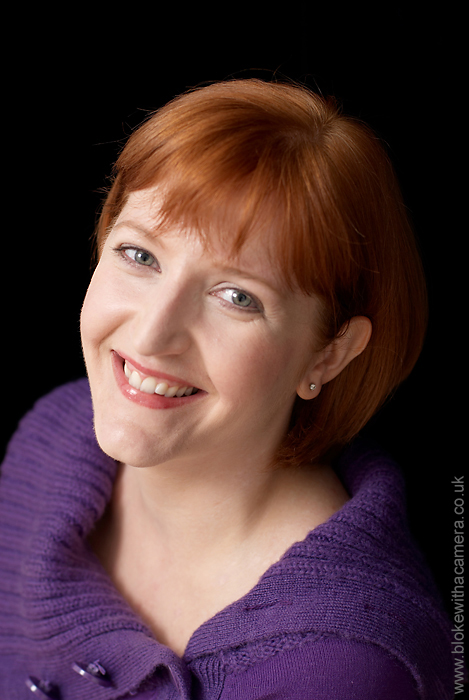
How does f8-11 fill the frame and allow suitable lighting controls?
Just as an example of your "eyes in focus but nose isnt" ...This was taken at f1.4 but physically quite close up.

From what I understand, had I moved away a little then more of the cats face would be in focus. So.. Would it be better to move further away, or to change to a smaller aperture? What kind of differences would I see in the results of each?
From what I understand, had I moved away a little then more of the cats face would be in focus. So.. Would it be better to move further away, or to change to a smaller aperture? What kind of differences would I see in the results of each?
MrChips said:
Just as an example of your "eyes in focus but nose isnt" ...This was taken at f1.4 but physically quite close up.
From what I understand, had I moved away a little then more of the cats face would be in focus. So.. Would it be better to move further away, or to change to a smaller aperture? What kind of differences would I see in the results of each?
f1.4 give a very shallow DOF, as you can see. In fact even the eyes aren't quite in focus, as the sharp area is just in front of the ears. So, if you consider, by looking carefully for a moment, that the acceptable depth of field is about 1cm, then moving back and forth a bit simply moves that 1cm band back and forth. If the band isn't wide enough to cover all the bits you want to be sharp, then select a smaller aperture.From what I understand, had I moved away a little then more of the cats face would be in focus. So.. Would it be better to move further away, or to change to a smaller aperture? What kind of differences would I see in the results of each?
I've read that the typical sweet spot (where the lens is at its sharpest) is normally 4-5 stops from wide open, is that not correct?
In a typical studio set up (with flashes etc) what aperture would be used? As my brain is saying it wouldn't matter much because the flash should provide plenty of light and if the background is a screen then the only thing the aperture is changing is the sharpness of the shot, or am I missing something?
In a typical studio set up (with flashes etc) what aperture would be used? As my brain is saying it wouldn't matter much because the flash should provide plenty of light and if the background is a screen then the only thing the aperture is changing is the sharpness of the shot, or am I missing something?
Seany88 said:
I've read that the typical sweet spot (where the lens is at its sharpest) is normally 4-5 stops from wide open, is that not correct?
True, usually around f8 they say. And the more expensive the lens, the greater the 'good' range will be, both in terms of aperture and position in frame (eg centre/edge/corner). But don't get too obsessed with lens charts and 'measurebaters' or you'll never get anywhere.Seany88 said:
In a typical studio set up (with flashes etc) what aperture would be used? As my brain is saying it wouldn't matter much because the flash should provide plenty of light and if the background is a screen then the only thing the aperture is changing is the sharpness of the shot, or am I missing something?
The aperture is used to control the DOF you want. Sometimes you want everything sharp from front to back, sometimes you don't. So for studio work I'd normally set the shutter speed at 1/200th, choose the aperture that gives the effect I want, keep the ISO low and then adjust the flash power to make the exposure.Outdoors of ccourse the various factors need to be juggled differently as the light is fixed so you set the other three parameters (aperture, shutter speed, ISO) as required. So you need to assess each case on its merits, decide what result you want and then figure out how to achieve it.
SamHH said:
tim-b said:
Except for the DoF button preview mentioned by Wyvern971... But it does make the view a lot darker at small apertures so it's not always possible to use it.
Beware that you won't see a difference (through the viewfinder) at apertures wider than about f2.8 though. But it does make the view a lot darker at small apertures so it's not always possible to use it.
Does a wider than 2.8 aperture make the viewfinder too bright, or some other reason?
Gassing Station | Photography & Video | Top of Page | What's New | My Stuff