
Astrophotography for an amature
Discussion


Hi all,
After seeing some of the amazing photographs of the stars and galaxies taken by you guys on here, I quite fancy giving it a go, however have no idea where to start!
Can anyone give some tips/hints on what makes a good location, any specific gear required over standard photography or even anyone in the North West who is willing to teach?
After seeing some of the amazing photographs of the stars and galaxies taken by you guys on here, I quite fancy giving it a go, however have no idea where to start!
Can anyone give some tips/hints on what makes a good location, any specific gear required over standard photography or even anyone in the North West who is willing to teach?
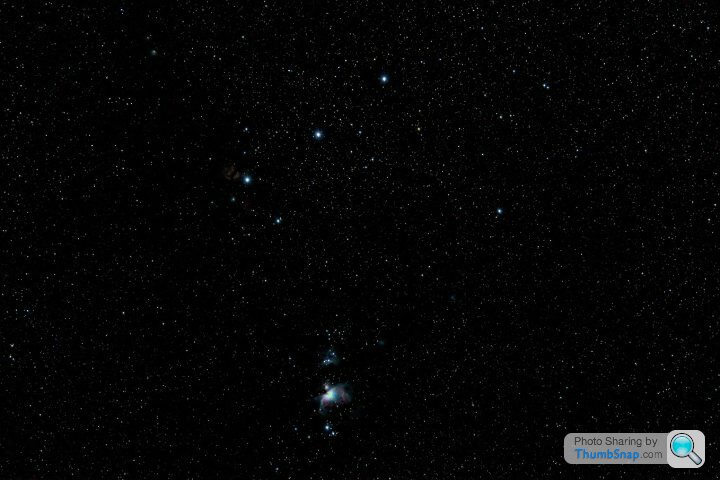
You can start doing astro photography from most locations with a basic DSLR and a tripod. I am in the north west - not far from the Stanlow Oil refinery (so light pollution can be an issue) and all of the shots below were taken from my back garden.
Shortish exposures with a wide angle lens at high ISO stacked can get you decent shots of some of the constellations without trailing the stars.
Do a long exposure at lower ISO and you can take star trail pictures.
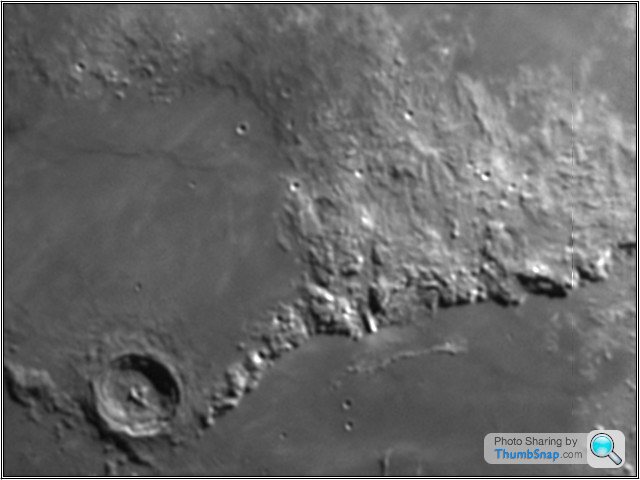
If you have a decent zoom lens (200-400mm) - you can get shots of the moon by just pointing and shooting.
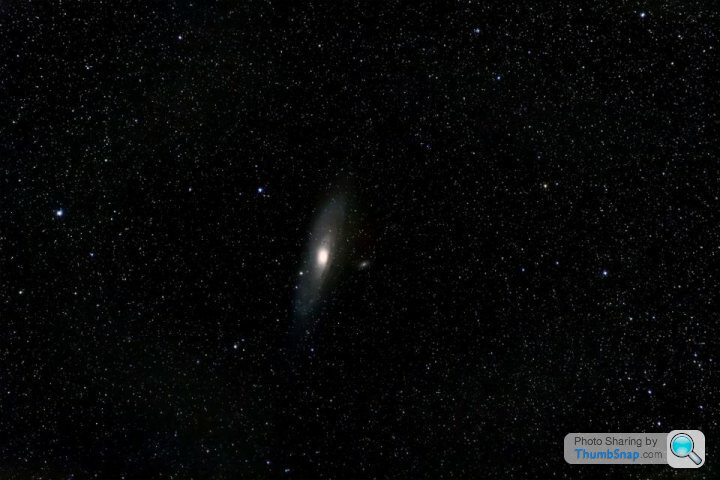
If you have a telescope with a tracking mount and can piggy back your camera - then you can get into more serious astro photography (the shot of Andromeda below was taken using a normal camera lens - but the camera was piggy backed on my scope allowing me to track the shot for longer)
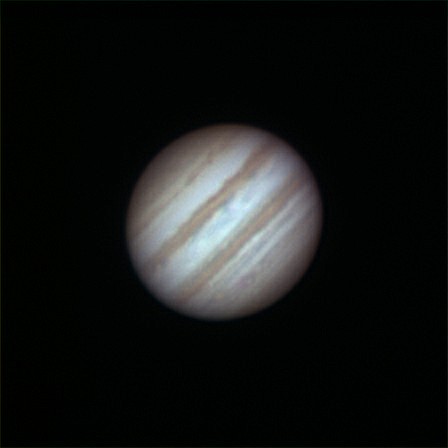
The addition of a webcam means you can do some lunar and planetary work through the telescope.
Shortish exposures with a wide angle lens at high ISO stacked can get you decent shots of some of the constellations without trailing the stars.
Do a long exposure at lower ISO and you can take star trail pictures.
If you have a decent zoom lens (200-400mm) - you can get shots of the moon by just pointing and shooting.
If you have a telescope with a tracking mount and can piggy back your camera - then you can get into more serious astro photography (the shot of Andromeda below was taken using a normal camera lens - but the camera was piggy backed on my scope allowing me to track the shot for longer)
The addition of a webcam means you can do some lunar and planetary work through the telescope.
Edited by Moonhawk on Tuesday 24th March 13:58
There's a great guide done by Rob Dickinson who's on here, it gives an excellent idea of how to start off and whats required. Here's a link.
Well I have a Nikon D5100, 18-105mm and 70-300mm lens' and a Giotto tripod, would these be good enough to start off with? I had a read through the guide, one thing which puzzles me is when webcams are mentioned, I presume these are not a generic logitech usb item, but i would presume are some big bits of kit like a telescope?
SlowStig said:
Well I have a Nikon D5100, 18-105mm and 70-300mm lens' and a Giotto tripod, would these be good enough to start off with? I had a read through the guide, one thing which puzzles me is when webcams are mentioned, I presume these are not a generic logitech usb item, but i would presume are some big bits of kit like a telescope?
Yep - your D5100 should be more than capable. As for webcams - yep they can be anything from a generic logitech USB - to dedicated planetary cameras. The main critical element is that you need to be able to couple it to the telescope - which often requires that the webcam has a detachable front lens (many don't). The Philips Toucam or SPC900NC are popular cameras for starting out.Back to your DSLR. First thing you could try is some wide field shots on the tripod. Orion is a good target at the moment.
- Use your 18-105 lens - zooming in to frame the constellation (20-30mm will probably do it).
- Focus the lens to infinity. If the moon is around - focus on that. Alternatively use a very distant light source (bright star, planet or streetlights a few miles away etc). Then immediately switch the lens to manual focus. Don't touch focus after you have done this.
- Open up the aperture to it's maximum (e.g. f4)
- Set your camera to manual mode and boost the iso up high (minimum 1600). Go as high was you can without the nose becoming overbearing - but don't worry too much as some of this noise will be averaged out later.
- Set your exposure time to around 5-10 seconds (depending where in the sky you are pointing - you may be able to push for longer - but eventually you'll start to see the stars trailing)
- If you can - set the camera to do a timer exposure (i.e. countdown 10 seconds after you have pressed the button). This will help eliminate camera shake.
- If your camera has a mirror lock function - activate this as well.
Once you are happy - take several identical "light frame" shots (5-15 is normally a good number). Once you have finished these - put the lens cap on the lens and take the same number of shots using the same exposure time (these are called "dark frames") and will help eliminate some of the noise cause by the high iso and hot pixels.
You can also take "flat field" and "bias" shots if you want. These will help eliminate vignetting etc - but I find that these aren't always necessary (none of my shots above have them). A flat frame is a shot taken of an evenly illuminated surface (piece of card etc) - you need to adjust the iso and exposure time to make sure its not overexposed. A bias frame is similar to a dark frame in that it's done with the lens cap on - but it is taken at the fastest shutter speed your camera will allow. If you do want to take such shots - there is loads of information to be found via google.
Once you have your lights and dark frames - download a piece of software called "deep sky stacker"
http://deepskystacker.free.fr/english/index.html
Load your light and dark frames into it following the instructions. The software will automatically register and stack the images to produce a final image that should be relatively noise free. You will probably have to load the shot into photoshop or GIMP to do final balancing and tweaks - especially if you have a lot of light pollution.
http://timtrott.co.uk/reduce-light-pollution-photo...
When you are done - you should have a nice shot of Orion and should be able to make out the orion nebula (like my first shot above).
Edited by Moonhawk on Thursday 26th March 09:42
jmorgan said:
Not forgetting shutter lock up and a remote release. On mine the shutter lock up is in an extra menu option, turn it on or off. Remote release takes away and shake from you touching it and introducing shake.
Already mentioned mirror lock. I suggested timed shutter release rather than remote cable release as not everyone has the relevant hardware. Of course if the OP does have a cable release - use that.edit: Googling - it looks like the D5100 doesn't have a dedicated mirror lock function per-se. It does however have a function called 'Exposure Delay' (Custom Setting d4). This opens the shutter 1 second after the mirror.
Edited by Moonhawk on Wednesday 25th March 11:38
Thanks for that guide Moonhawk, I downloaded DSS a week or two back but haven't tried it yet. So far I've been restricting myself to doing long exposure ISS fly-pasts which work reasonably well, except I usually have the camera pointing in the wrong direction to catch both start and end. Still, will try again next month.

Looks like I am going to be having a bit of experimentation later tonight, thanks Moonhawk!
I have got a remote for my camera, just forgot to mention it earlier. In regards to finding somewhere with small amounts of light polloution, I live in Southport so I suspect that the beach would be a good place to start off?
It is a lot to learn about, however I suspect that after a bit of practise it will be something I can do when I start wild camping this year.
I have got a remote for my camera, just forgot to mention it earlier. In regards to finding somewhere with small amounts of light polloution, I live in Southport so I suspect that the beach would be a good place to start off?
It is a lot to learn about, however I suspect that after a bit of practise it will be something I can do when I start wild camping this year.

I tried to do this last week. The individual photos taken with my D7100 have hundreds of stars visible and they actually look pretty good straight out of the camera, but when I stack them on the default settings it only recognises 24 stars, and if I turn the sensitivity down it still only recognises about 200 stars and the resulting images are worse than the individual ones I started with.
What am I doing wrong?
What am I doing wrong?
Hard to say without seeing an example of what you think might be wrong.
On the same subject I was pointed to this the other day: http://digital-photography-school.com/photographin...
On the same subject I was pointed to this the other day: http://digital-photography-school.com/photographin...


Not a bad first attempt. Nice shot of the Hyades and Pleiades in your bottom one.
I can't see any star trailing in your images - so you could push for a slightly longer exposure.
Upping the ISO will help too - you don't seem to have much of a problem with noise yet.
If ISO noise does become an issue - try stacking using DSS. Of course you'll probably not want any foreground detail if you do this - so it would only be suitable for the first shot.
I can't see any star trailing in your images - so you could push for a slightly longer exposure.
Upping the ISO will help too - you don't seem to have much of a problem with noise yet.
If ISO noise does become an issue - try stacking using DSS. Of course you'll probably not want any foreground detail if you do this - so it would only be suitable for the first shot.
AWG said:
The planets would be amazing to photograph.
Can I use my Canon 550D and buy a telescope or would I need a webcam?
I bought a kit/adapter for my nikon to connect to my celestron telescope which might be an option and presumably better quality than a webcam. That said, I've not been very successful at taking pictures of anything with it not that I've tried that much. Can I use my Canon 550D and buy a telescope or would I need a webcam?
Edited by AWG on Tuesday 14th April 17:27
Gassing Station | Photography & Video | Top of Page | What's New | My Stuff