
Panning Cars Practice
Discussion


Wanting to improve my panning/tracking skills as the last set I took weren't all that brilliant. I don't have many car shows until the end of July but want to get some practice in before then to make the most of it.
Has anybody got any tips on panning/tracking as well where I could go & learn, I did think about by the road side but I don't really want to attract any unnecessary attention from the blues & twos
Has anybody got any tips on panning/tracking as well where I could go & learn, I did think about by the road side but I don't really want to attract any unnecessary attention from the blues & twos
Find a bike race? Lots of 'togs there and they generally go pretty quick
One here last weekend:
http://www.stevecarter.com/celt16/2.html
One here last weekend:
http://www.stevecarter.com/celt16/2.html
Edited by GetCarter on Thursday 30th June 14:56
Do you have any examples of what you're getting and what you want to change about it?
I found starting on a higher shutter speed and then working my way down was a good way to improve. Depending on distance between me and car I'm now nailing 1/150 every time and still working my way down the speeds.
I found starting on a higher shutter speed and then working my way down was a good way to improve. Depending on distance between me and car I'm now nailing 1/150 every time and still working my way down the speeds.
Here's a tip or two for panning:
Get a pencil and a length of string about 2m long. Tie the string around the pencil. Tie the other end in a loop around your lens.
Adjust the length so that the string is tight when you stand on the pencil and lift the camera to your eye.
Keep the string tensioned while you take your panning shots. It helps remove vertical blur.
There are some variations of this, some using a screw into the tripod hole on the bottom of the camera instead of a loop, and using a heavy washer to stand on instead of a pencil. Doesn't matter, you get the idea.
Also check if your lens has image stabilisation of any sort. Turn it off, or if it's a fancy L-series, turn it to vertical stabalisation only.
The "correct" shutter speed is the one which makes the wheel spokes completely blurred. Anything faster looks bad. Anything slower just adds difficulty. Ususally 1/125 isn't far off.
Get a pencil and a length of string about 2m long. Tie the string around the pencil. Tie the other end in a loop around your lens.
Adjust the length so that the string is tight when you stand on the pencil and lift the camera to your eye.
Keep the string tensioned while you take your panning shots. It helps remove vertical blur.
There are some variations of this, some using a screw into the tripod hole on the bottom of the camera instead of a loop, and using a heavy washer to stand on instead of a pencil. Doesn't matter, you get the idea.
Also check if your lens has image stabilisation of any sort. Turn it off, or if it's a fancy L-series, turn it to vertical stabalisation only.
The "correct" shutter speed is the one which makes the wheel spokes completely blurred. Anything faster looks bad. Anything slower just adds difficulty. Ususally 1/125 isn't far off.
Edited by TartanPaint on Thursday 30th June 15:34
You haven't mentioned what gear you have. I use an Olympus OMD EM5 with kit lenses, which are a bit slow and the camera itself doesn't have blazing fast continuous auto-focus. So I overcome that by using the zone focussing method, which involves the following:
- Switch to manual focus
- Set the camera to high speed burst
- Focus on a section of the track - I usually aim for the middle
- Set the lens to f8 or higher, as this will result in a decent depth of field and account for cars/bikes across the track to be in focus
- Set the ISO according to what shutter speed you would like (I usually shoot in Aperture Priority)
And then pan & shoot. As you're in high-speed burst, with a bit of practice, you will get at least one shot in focus as your panning matches the speed of the car/bike. And because your camera isn't trying to focus (you're in manual focus remember), it seems to cope with the high speed burst better then auto-focussing.
The panning shots in the following album were all done with this method and, while not that fantastic, they're still OK for my camera set-up and limited capabilities!...
https://www.flickr.com/photos/28703702@N08/albums/...
- Switch to manual focus
- Set the camera to high speed burst
- Focus on a section of the track - I usually aim for the middle
- Set the lens to f8 or higher, as this will result in a decent depth of field and account for cars/bikes across the track to be in focus
- Set the ISO according to what shutter speed you would like (I usually shoot in Aperture Priority)
And then pan & shoot. As you're in high-speed burst, with a bit of practice, you will get at least one shot in focus as your panning matches the speed of the car/bike. And because your camera isn't trying to focus (you're in manual focus remember), it seems to cope with the high speed burst better then auto-focussing.
The panning shots in the following album were all done with this method and, while not that fantastic, they're still OK for my camera set-up and limited capabilities!...
https://www.flickr.com/photos/28703702@N08/albums/...
This might help:
http://www.fujifun.net/motorsport-guide/
I wrote it based on Fuji kit, but the basics apply to anything (particularly as the Fuji gear is probably the least suitable going for motorsport!)
http://www.fujifun.net/motorsport-guide/
I wrote it based on Fuji kit, but the basics apply to anything (particularly as the Fuji gear is probably the least suitable going for motorsport!)
My method when I remember:
Choose the piece of track I want the car to be at when I take the photo. Use autofocus to lock on that point, turn autofocus off. Stand with my body pointing square on to that point and practice a few 'swings' of the camera through the arc that the cars will pass through. Make sure the aperture is set to around f/4 to f/8, adjust shutter to whatever I choose, adjust iso to suit. Image stab off.
I don't machine gun the car with shots, as that is pointless in manual focus, I just want that one shot.
Keep practicing.
If you've auto-iso, great! But obviously keep settings within decent limits.
Brands Hatch, 1986, Thundersports after the Grand Prix. No autofocus, no image stab, Olympus OM40:
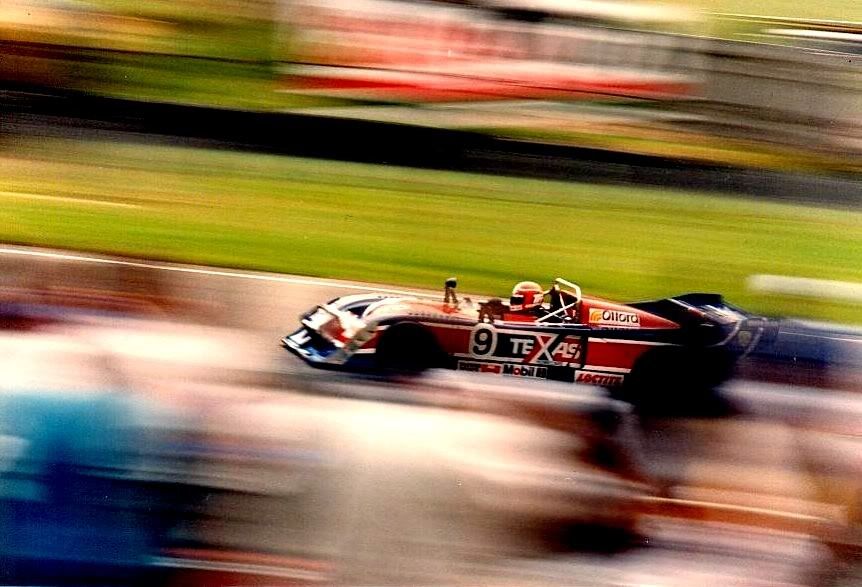
And yes, that's Tiff driving.
Choose the piece of track I want the car to be at when I take the photo. Use autofocus to lock on that point, turn autofocus off. Stand with my body pointing square on to that point and practice a few 'swings' of the camera through the arc that the cars will pass through. Make sure the aperture is set to around f/4 to f/8, adjust shutter to whatever I choose, adjust iso to suit. Image stab off.
I don't machine gun the car with shots, as that is pointless in manual focus, I just want that one shot.
Keep practicing.
If you've auto-iso, great! But obviously keep settings within decent limits.
Brands Hatch, 1986, Thundersports after the Grand Prix. No autofocus, no image stab, Olympus OM40:

Edited by Tony1963 on Thursday 30th June 20:38
And yes, that's Tiff driving.
Edited by Tony1963 on Thursday 30th June 20:49
Bobski
Tips: Use continuous shooting at the highest frame rate your camera will allow, use the centre autofocus points as this is often the most sensitive, set the autofocus to servo. Shoot loads of photos, you will have lots of "misses" but with practice you will get a few hits too.
Are you anywhere in the south-east? I can throughly recommend Goodwood as a place to go and practice. If there is a normal track day/sprint/test day happening you can usually turn up and spectate/photograph for free. Its a nice place to take photo's too!
Tips: Use continuous shooting at the highest frame rate your camera will allow, use the centre autofocus points as this is often the most sensitive, set the autofocus to servo. Shoot loads of photos, you will have lots of "misses" but with practice you will get a few hits too.
Are you anywhere in the south-east? I can throughly recommend Goodwood as a place to go and practice. If there is a normal track day/sprint/test day happening you can usually turn up and spectate/photograph for free. Its a nice place to take photo's too!
The trouble with machine gunning the shots is that you learn very little. Ok, if just getting the shot is of great importance then do that. But if you want to learn how to get them properly, how to stand, where to put your feet etc, take one shot each time and then study that one shot. That's easier than looking at ten shots or more for each car's pass and not being able to work out what you did wrong as each shot is different. Also, at most viewing points, the car is only properly side on to you at one point, so the maximum pan effect is best there. Not one second before or after, just there.
By the way, my shot just above was at around 1/60 sec. I was in a large crowd so couldn't take the pic at my favoured timing. Still ok though.
By the way, my shot just above was at around 1/60 sec. I was in a large crowd so couldn't take the pic at my favoured timing. Still ok though.
To be fair, if you only take one shot each time, your are going to get very frustrated with missed shots. Also i'm not sure on how important your feeting position is when taking photo's, so long as you are comfortable.
Each to their own i suppose, but surely this is exactly what continuous shooting was designed for. There is a reason that pro sports 'togs use cameras with the fastest frame rates!
Each to their own i suppose, but surely this is exactly what continuous shooting was designed for. There is a reason that pro sports 'togs use cameras with the fastest frame rates!
The pros don't just machine gun it, I've been in the dug-outs with them. They know where the money shots are, and might rattle off a few shots in half a second or so, but that's it.
The positioning of feet is very important. Your lack of acknowledgement shows you've little understanding.
The positioning of feet is very important. Your lack of acknowledgement shows you've little understanding.
Machine gunning is no way to learn, you'll never get a feel for what works and what doesn't if you're spraying away. I can shoot pretty well down to 1/10 but never when in continuous drive.
Body and feet positioning is pretty crucial in my opinion, you're basically needing to do everything you can to reduce vertical movement as that's the enemy of panning.
Body and feet positioning is pretty crucial in my opinion, you're basically needing to do everything you can to reduce vertical movement as that's the enemy of panning.
ukaskew said:
Machine gunning is no way to learn, you'll never get a feel for what works and what doesn't if you're spraying away. I can shoot pretty well down to 1/10 but never when in continuous drive.
Body and feet positioning is pretty crucial in my opinion, you're basically needing to do everything you can to reduce vertical movement as that's the enemy of panning.
what he said. sort out feet positioning, get them level and parallel to each other, swing from the hips and keep the camera stable and level.Body and feet positioning is pretty crucial in my opinion, you're basically needing to do everything you can to reduce vertical movement as that's the enemy of panning.
You can burst shoot, but if you know the framing and how you want the shot to look 1 is more than enough... 1 shot i'd say is best to learn with... start with getting the car on the central focus point and maybe pan a few cars initially with out shooting, keep the car central to get the pan motion right... then when you've nailed that start to fire the shutter...
I love panning shots. Took this Mustang today.
Walking back from a car show in Reading, taking shots of passing cars. Depth of field tends to be very narrow, so if the car is approaching or departing, some of the car will be out of focus, which may or may not be what you want.
If you get it side on though...
 Ford Mustang by Jim Pritchard, on Flickr
Walking back from a car show in Reading, taking shots of passing cars. Depth of field tends to be very narrow, so if the car is approaching or departing, some of the car will be out of focus, which may or may not be what you want.
If you get it side on though...
Ford Mustang by Jim Pritchard, on FlickrEdited by Trevatanus on Monday 4th July 08:53
It's VERY important to know that with creative pursuits such as photography there isn't really a right or wrong, you simply do what works for you. if you want to fight and argue over who's technique is better then forget it as it doesn't work like that. Sorry....
Anyway, I'm a professional photographer. I get paid to take photos and it's my full time job so I guess that makes me a little bit qualified to give a little bit of guidance. This works for me personally, but motorsport isn't my thing and I'm still perfecting my technique.
Feet at almost shoulder width apart - you want to give yourself a solid base to work with, swing from left to right on your hips whilst breathing out. Keep arms in to your sides so they're almost balancing on your hips.
AI Servo on centre focus point - DO NOT MANUAL FOCUS. Focus on the car as it comes into frame.
~F4.
I then start at the left and as the car comes into view I then half press to focus, then hold to shoot. I shoot on burst and usually walk away with 3 sharp photos from each pass. One slightly left, one dead centre and one slightly right of centre. Holding down and spraying is a waste of time as it takes no skill, plus there's more images to sort through.
Shutter speed depends on the speed of the subject. For motorsport / Goodwood I found 1/160 to be the sweet spot but with some slower stuff you have to be on 1/40. With enough motion from you and the car the background will blur out nicely, if you really need to so long as you have a sharp car, you can mask it out in photoshop and motion blur the background but that's cheating!!
I shot the below photo on a Canon 5DIII with 24-70 F2.8L II. Settings were ISO125, F5.6 1/250.

And at 100%. It's a little grainy as I added grain in post but you get the idea. There's no doubt it's 100% in focus and sharp.

I am a total sucker for tack sharp images so even the below is not acceptable.

Because at 100% it's not sharp.

I find that the longer the lens the harder it is to get spot on. I tend to use a 70-200 F2.8 L II but the images above at Goodwood I used the 24-70 as I didn't want to carry lots of gear.
The other thing you can do is just shoot at F8 or 9, fast shutter and high ISO and then fake it. The image below started as a slightly blurred pan photo but I exaggerated the movement using motion blur. If you do this, don't forget to work on the wheels. There's nothing worse than a car with static wheels on a blurred background. (also make sure your cutting out is better than mine)

Anyway, I'm a professional photographer. I get paid to take photos and it's my full time job so I guess that makes me a little bit qualified to give a little bit of guidance. This works for me personally, but motorsport isn't my thing and I'm still perfecting my technique.
Feet at almost shoulder width apart - you want to give yourself a solid base to work with, swing from left to right on your hips whilst breathing out. Keep arms in to your sides so they're almost balancing on your hips.
AI Servo on centre focus point - DO NOT MANUAL FOCUS. Focus on the car as it comes into frame.
~F4.
I then start at the left and as the car comes into view I then half press to focus, then hold to shoot. I shoot on burst and usually walk away with 3 sharp photos from each pass. One slightly left, one dead centre and one slightly right of centre. Holding down and spraying is a waste of time as it takes no skill, plus there's more images to sort through.
Shutter speed depends on the speed of the subject. For motorsport / Goodwood I found 1/160 to be the sweet spot but with some slower stuff you have to be on 1/40. With enough motion from you and the car the background will blur out nicely, if you really need to so long as you have a sharp car, you can mask it out in photoshop and motion blur the background but that's cheating!!
I shot the below photo on a Canon 5DIII with 24-70 F2.8L II. Settings were ISO125, F5.6 1/250.
And at 100%. It's a little grainy as I added grain in post but you get the idea. There's no doubt it's 100% in focus and sharp.
I am a total sucker for tack sharp images so even the below is not acceptable.
Because at 100% it's not sharp.
I find that the longer the lens the harder it is to get spot on. I tend to use a 70-200 F2.8 L II but the images above at Goodwood I used the 24-70 as I didn't want to carry lots of gear.
The other thing you can do is just shoot at F8 or 9, fast shutter and high ISO and then fake it. The image below started as a slightly blurred pan photo but I exaggerated the movement using motion blur. If you do this, don't forget to work on the wheels. There's nothing worse than a car with static wheels on a blurred background. (also make sure your cutting out is better than mine)
There's no right or wrong shutter speed as it depends on the speed of the subject, distance etc. Higher for more documentary style, lower for more artistic.
Average car on a track you need to be getting down below 1/100th to get the sense of speed they feel like.
Tack sharp isn't important if the image is impressive, catches the eye, tells a story, has a bit of interest/drama etc to it.
Average car on a track you need to be getting down below 1/100th to get the sense of speed they feel like.
Tack sharp isn't important if the image is impressive, catches the eye, tells a story, has a bit of interest/drama etc to it.
Speed of the vehicle and distance from it makes a huge huge difference to the sense of movement, so there is no 'right' answer with shutter speed...
1/100th but not short of movement:
 Sebastien Bourdais - Toro Rosso by Chris Harrison, on Flickr
1/10th, much slower car off a corner:
 One Tenth by Chris Harrison, on Flickr
It's always worth considering the plane of focus as well as this confuses a lot of people. If a car is largely travelling parallel to you as in the above examples the whole car can be sharp from front to back if you nail it. However if there is any movement towards or back from you things get very blurry very quickly...
1/15th, even though it's nearly parallel it's not quite, which is enough to throw a huge amount of the car into a blur, technically it's bang on (the front is pin sharp) but there is always a trade-off between sense of movement and sharpness once you move away from parallel movement:
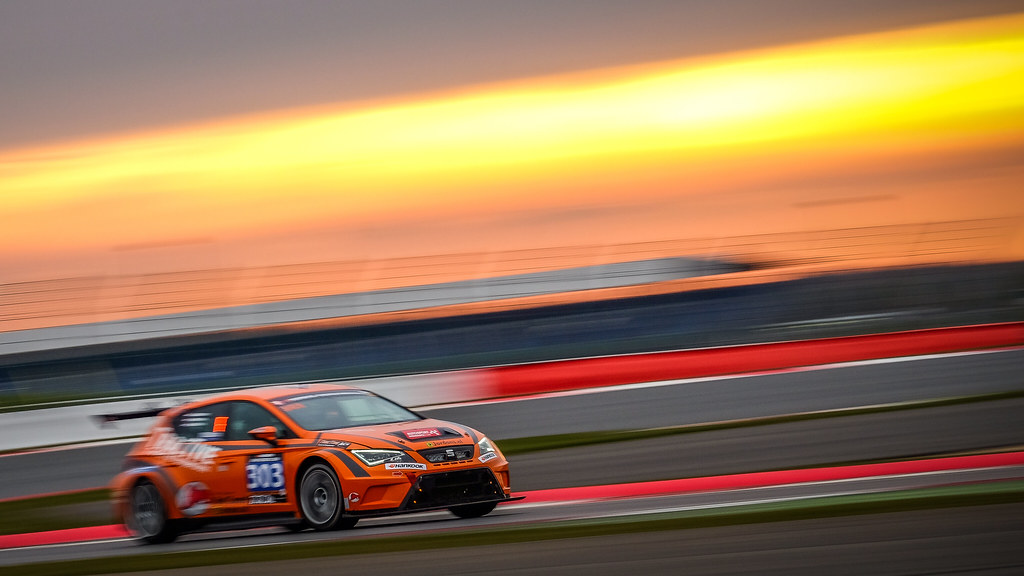 Silverstone 24hr by Chris Harrison, on Flickr
In those cases, upping the shutter speed helps but it's very much trial and error, and you might like the effect it gives anyhow (I do)
1/15th:
 Britcar Seat Leon Cupra by Chris Harrison, on Flickr
1/60th:
 Japfest 2015 by Chris Harrison, on Flickr
1/100th but not short of movement:
Sebastien Bourdais - Toro Rosso by Chris Harrison, on Flickr1/10th, much slower car off a corner:
One Tenth by Chris Harrison, on FlickrIt's always worth considering the plane of focus as well as this confuses a lot of people. If a car is largely travelling parallel to you as in the above examples the whole car can be sharp from front to back if you nail it. However if there is any movement towards or back from you things get very blurry very quickly...
1/15th, even though it's nearly parallel it's not quite, which is enough to throw a huge amount of the car into a blur, technically it's bang on (the front is pin sharp) but there is always a trade-off between sense of movement and sharpness once you move away from parallel movement:
Silverstone 24hr by Chris Harrison, on FlickrIn those cases, upping the shutter speed helps but it's very much trial and error, and you might like the effect it gives anyhow (I do)
1/15th:
Britcar Seat Leon Cupra by Chris Harrison, on Flickr1/60th:
Japfest 2015 by Chris Harrison, on FlickrEdited by ukaskew on Monday 4th July 08:35
Edited by ukaskew on Monday 4th July 08:38
get yourself down to some 'club' meetings at local circuits as they are a 'low cost' way of getting plenty of practice. I only started with a DSLR and some decent lenses around 18 months ago and whenever there is some interesting action at Brands Hatch then i'm off to practice...
 Mini Cooper S by jon bawden, on Flickr
 IMGP3497PS by jon bawden, on Flickr
 Lola T70 by jon bawden, on Flickr
 Mini at speed by jon bawden, on Flickr
 Nissan Skyline GT-R GT3 by jon bawden, on Flickr
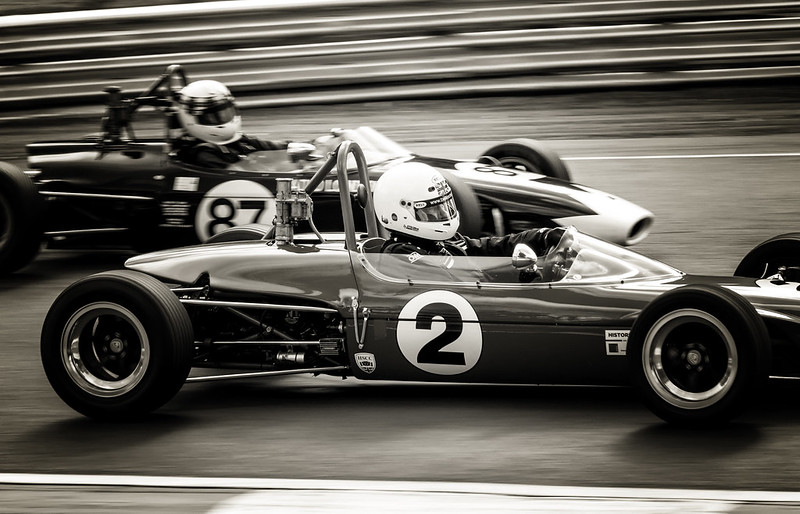 going for the overtake.. by jon bawden, on Flickr
other basic tips are make sure you 'pan' smoothly with no vertical movement and if possible use back button focus so you can be smooth with the shutter action. I tend to use a combination of either continuous auto focus or manually set my focus and depth of field on a space on the track. most of my motorsport panning shots are with a 70-200mm f2.8 lens, but technique is more important than your gear...
regards - Tb
Mini Cooper S by jon bawden, on FlickrIMGP3497PS by jon bawden, on FlickrLola T70 by jon bawden, on FlickrMini at speed by jon bawden, on FlickrNissan Skyline GT-R GT3 by jon bawden, on Flickrgoing for the overtake.. by jon bawden, on Flickrother basic tips are make sure you 'pan' smoothly with no vertical movement and if possible use back button focus so you can be smooth with the shutter action. I tend to use a combination of either continuous auto focus or manually set my focus and depth of field on a space on the track. most of my motorsport panning shots are with a 70-200mm f2.8 lens, but technique is more important than your gear...
regards - Tb
Tony1963 said:
Ashleyman,
Erm, those shots aren't really what most would call panned. I'd have expected a pro to have shown some really good examples, but they're pretty bland with almost no sense of movement.
I'm a complete amateur.
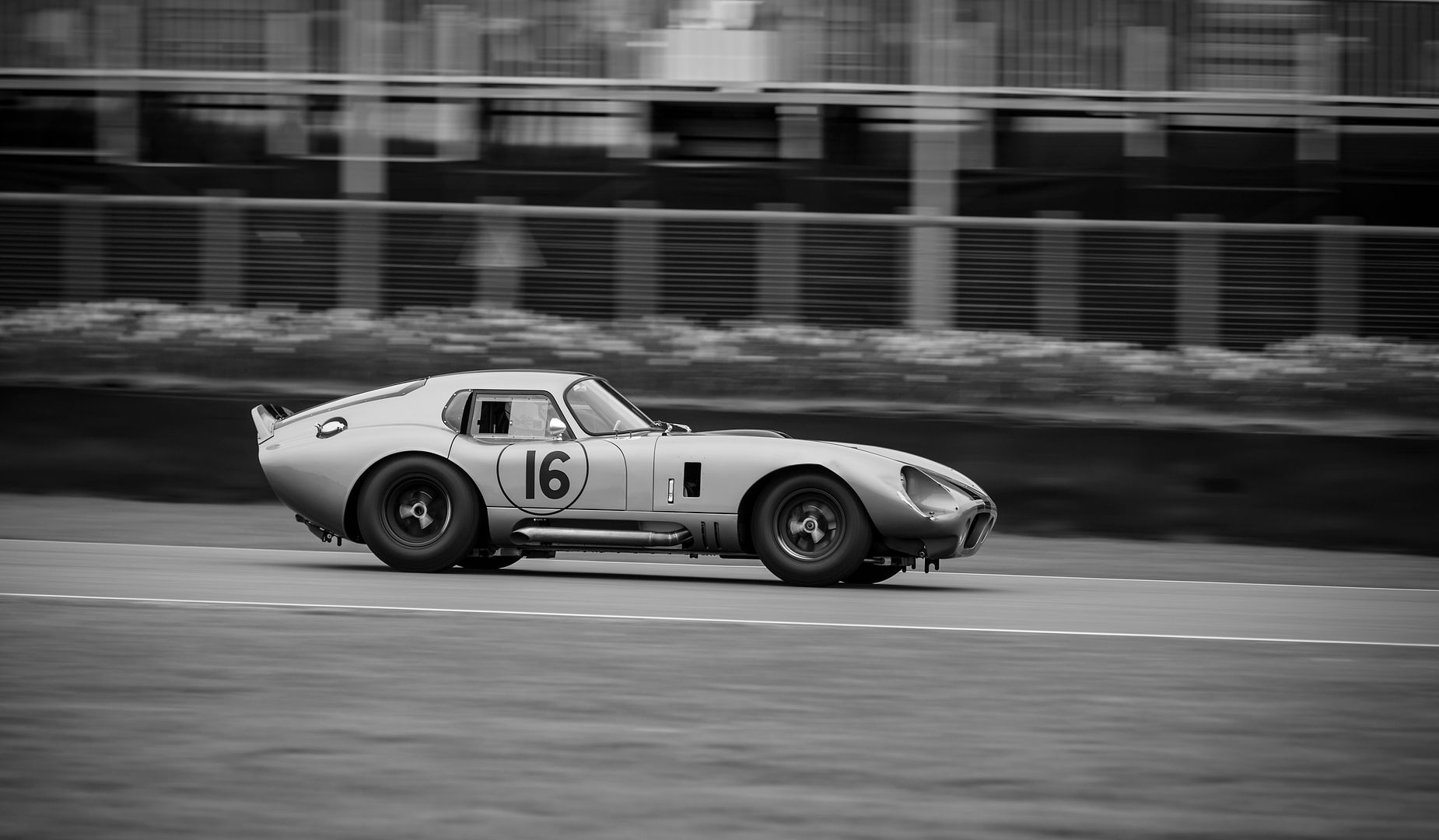
Well, when I posted last night I didn't expect my images to be called bland. I wanted to show the OP what I did and what it looks like. I should probably have clarified in my post that I didn't want to show results that were totally unrealistic to the average learner/amateur. The OP hasn't posted any photos of his own or mentioned gear so we can't judge where he's at. Erm, those shots aren't really what most would call panned. I'd have expected a pro to have shown some really good examples, but they're pretty bland with almost no sense of movement.
I'm a complete amateur.

What would be the point in me posting up images shot at F3 on a 400mm F2.8 lens at 1/60th in full manual mode? It's unrealistic to copy.
There's a huge difference between lenses/distance too. Your image was shot at 200mm at 1/160 and F5 - technically settings-wise the only difference between yours and mine is focal length. Focal length is what's giving your image more motion blur, the throw of the lens you'll be covering more ground as the car moves = more motion blur.
Edited by ashleyman on Monday 4th July 09:18
Gassing Station | Photography & Video | Top of Page | What's New | My Stuff