
Discussion


Can I just ask for any tips people have for taking pics of the stars?
Santa has brought me a tripod and I had a play last night, but am not entirely sure how to set the camera up for night shots.
It's a Nikon D40x and I've only got 2 lenses - an 18-55mm Kit lens and a 55-200 lens. Both Nikon AF-S VRii Lens.
I took the following last night at 18mm on I think 3.5 or 4 for 30 seconds. (sorry it's a bit small)

Now apart from trying to be somewhere with as little artificial light as possible, I seemed to struggle because the camera was trying to focus on something and not being able to. I simply focused on something and then held it whilst getting it roughly in the right position and then finally setting it in motion. This seems a bit of a crap way of doing it!
Any pointers would be great.
Santa has brought me a tripod and I had a play last night, but am not entirely sure how to set the camera up for night shots.
It's a Nikon D40x and I've only got 2 lenses - an 18-55mm Kit lens and a 55-200 lens. Both Nikon AF-S VRii Lens.
I took the following last night at 18mm on I think 3.5 or 4 for 30 seconds. (sorry it's a bit small)
Now apart from trying to be somewhere with as little artificial light as possible, I seemed to struggle because the camera was trying to focus on something and not being able to. I simply focused on something and then held it whilst getting it roughly in the right position and then finally setting it in motion. This seems a bit of a crap way of doing it!
Any pointers would be great.
Edited by Cheeky Jim on Saturday 27th December 22:17
Focusing is basically a nightmare. Either focus on infinity during the the day and tape the lens at the focused position ready for the night. Better to try refining focus using MF and repeatative shots to refine the focus position, or google "hartmann mask" to save a lot of time. Also google "haig (or scotch) mount" while you're at it! For reference, my 127mm F9 (ie 1200mm focal length) scope doesn't have enough depth of field to get the moon and stars in focus together. I'm not convinced there's enough DOF to get the spherical surface of the moon in focus...

Exposure: 9.3 sec (93/10)
Aperture: f/1.4
Focal Length: 50 mm
ISO Speed: 1000

Exposure: 4.6 sec (23/5)
Aperture: f/1.4
Focal Length: 50 mm
ISO Speed: 1000
Any more than about 10 seconds and you need a tracker otherwise the movement of the stars (well, our movement really) starts to blur them.
if you haven't got a telescope with tracking then my best advice is to:-
using the 18-55mm kit lense zoom right out to 55 and manually focus on the brightest star you see then zoom back to 18 and take the shot.
you might want to try different shots with differnt ISOs start at 100 and work up, theres probably no point in trying anything more than 30 sec exposure as you'll get star trail.
i've got a decent scope and a tracking mount (HEQ5) where i can take shots through the eyepiece but then i'm into astronomy the same as VXduncan and we both know of the expense of it so be warned it ain't cheap.
you can go cheap but it's often not worth it because you buy cheap and reaslise you really love the hobby and the next month spend even more.
checkout my pics here
http://s6.photobucket.com/albums/y231/paulj1969/te...
the first 3 are ISS (international space station)shots are tripod mounted using my canon 300D and the 18-55mm lense
next a comet
the next 4 are where i mounted my camera on the telecopes while it was tracking and took long exposures of about 5mins each, these are crap compared to what the pros can take.
some of the rest of the shots are where i attached the camera to scope instead of the eyepiece and after that i think are webcam shots where the eye piece would normally be.
Paul
using the 18-55mm kit lense zoom right out to 55 and manually focus on the brightest star you see then zoom back to 18 and take the shot.
you might want to try different shots with differnt ISOs start at 100 and work up, theres probably no point in trying anything more than 30 sec exposure as you'll get star trail.
i've got a decent scope and a tracking mount (HEQ5) where i can take shots through the eyepiece but then i'm into astronomy the same as VXduncan and we both know of the expense of it so be warned it ain't cheap.
you can go cheap but it's often not worth it because you buy cheap and reaslise you really love the hobby and the next month spend even more.
checkout my pics here
http://s6.photobucket.com/albums/y231/paulj1969/te...
the first 3 are ISS (international space station)shots are tripod mounted using my canon 300D and the 18-55mm lense
next a comet
the next 4 are where i mounted my camera on the telecopes while it was tracking and took long exposures of about 5mins each, these are crap compared to what the pros can take.
some of the rest of the shots are where i attached the camera to scope instead of the eyepiece and after that i think are webcam shots where the eye piece would normally be.
Paul
Jim, a relatively straightforward option available to anyone with just a normal camera lens and a tripod is a star trail image.
This just involves framing the area of sky you want to image and taking long exposures.
If you have photo editing software that allows you to merge images, you will probably get better results if you can merge several exposures of 30s - 1 min or so, rather than trying to take a single exposure of 15 - 30 mins. The reason for this is that light pollution from nearby towns will be much more noticeable in a single long exposure, turning the sky a funny colour, usually reddy/yellowy brown.
This image is the equivalent of a 30 minute exposure, but is actually made up of 60x30secs exposures, stitched together in Photoshop.

I only started taking night sky photos about 5 or 6 weeks ago, and I know that it's quite a learning curve, but it's also a lot of fun.
This just involves framing the area of sky you want to image and taking long exposures.
If you have photo editing software that allows you to merge images, you will probably get better results if you can merge several exposures of 30s - 1 min or so, rather than trying to take a single exposure of 15 - 30 mins. The reason for this is that light pollution from nearby towns will be much more noticeable in a single long exposure, turning the sky a funny colour, usually reddy/yellowy brown.
This image is the equivalent of a 30 minute exposure, but is actually made up of 60x30secs exposures, stitched together in Photoshop.
I only started taking night sky photos about 5 or 6 weeks ago, and I know that it's quite a learning curve, but it's also a lot of fun.
Edited by DIW35 on Sunday 28th December 01:11
I didn't realise that the earth moved quite so quickly! I was going to go for 2 or 3 minute exposures...am sort of relieved you can achieve more without standing around like a plum!
As for editing software, yep, got the lot - Master Collection and Lightroom! (Staff benefits!).
Thanks for tips. Really helpful and will give it another bash tonight (wrapping up warm!)
edited to add:
1)Fantastic shots Graham and 2) I assume you want the widest aperture you can - I note Graham's were at 1.4.
As for editing software, yep, got the lot - Master Collection and Lightroom! (Staff benefits!).
Thanks for tips. Really helpful and will give it another bash tonight (wrapping up warm!)
edited to add:
1)Fantastic shots Graham and 2) I assume you want the widest aperture you can - I note Graham's were at 1.4.
Edited by Cheeky Jim on Sunday 28th December 07:38
Ta. It's not so much the aperture for aperture's sake (as f/1.4 gives a very shallow depth of field, so anything in the foreground would be blurred - those mountains were some distance away) but more that you want to make use of every available option to limit the shutter speed due to the earth's rotation.
Hence also using a very high ISO.
Oh, and those are a little bit of a cheat in that they were taken in Chile in an area reknowned for having clear skies (there's loads of observatories in the region)
Hence also using a very high ISO.
Oh, and those are a little bit of a cheat in that they were taken in Chile in an area reknowned for having clear skies (there's loads of observatories in the region)
slartibartfast said:
if you haven't got a telescope with tracking then my best advice is to:-
using the 18-55mm kit lense zoom right out to 55 and manually focus on the brightest star you see then zoom back to 18 and take the shot.
you might want to try different shots with differnt ISOs start at 100 and work up, theres probably no point in trying anything more than 30 sec exposure as you'll get star trail.
i've got a decent scope and a tracking mount (HEQ5) where i can take shots through the eyepiece but then i'm into astronomy the same as VXduncan and we both know of the expense of it so be warned it ain't cheap.
you can go cheap but it's often not worth it because you buy cheap and reaslise you really love the hobby and the next month spend even more.
checkout my pics here
http://s6.photobucket.com/albums/y231/paulj1969/te...
the first 3 are ISS (international space station)shots are tripod mounted using my canon 300D and the 18-55mm lense
next a comet
the next 4 are where i mounted my camera on the telecopes while it was tracking and took long exposures of about 5mins each, these are crap compared to what the pros can take.
some of the rest of the shots are where i attached the camera to scope instead of the eyepiece and after that i think are webcam shots where the eye piece would normally be.
Paul
What scope did you use to get an image of Jupiter like that?using the 18-55mm kit lense zoom right out to 55 and manually focus on the brightest star you see then zoom back to 18 and take the shot.
you might want to try different shots with differnt ISOs start at 100 and work up, theres probably no point in trying anything more than 30 sec exposure as you'll get star trail.
i've got a decent scope and a tracking mount (HEQ5) where i can take shots through the eyepiece but then i'm into astronomy the same as VXduncan and we both know of the expense of it so be warned it ain't cheap.
you can go cheap but it's often not worth it because you buy cheap and reaslise you really love the hobby and the next month spend even more.
checkout my pics here
http://s6.photobucket.com/albums/y231/paulj1969/te...
the first 3 are ISS (international space station)shots are tripod mounted using my canon 300D and the 18-55mm lense
next a comet
the next 4 are where i mounted my camera on the telecopes while it was tracking and took long exposures of about 5mins each, these are crap compared to what the pros can take.
some of the rest of the shots are where i attached the camera to scope instead of the eyepiece and after that i think are webcam shots where the eye piece would normally be.
Paul
I am really interested in getting a scope, especially now my kids are getting old enough to have an interest too.
I have heard an awful lot about Meade and the like (and like the idea of the automatically controlled ones), but have no idea where to start in terms of size of scope... Would hate to invest only to find that for a but more could have got something so much better...
thanks for the comments cheekyjim
Beejay, i have a:-
skywatcher 200MM (8inch newtonion reflector, the 8inch/200mm is the diameter of the mirror) this is the telescope part.
the tripod mount is a HEQ5 with 'goto', the HEQ5 mount is a very sturdy mount which can take the weight of an 8inch mirror scope or more.
the 'goto' part of the mount is the computerised part which once setup and aligned to 3 stars will allow me to choose an object and the mount slews the scope to that object automatically and will (if you've set it up correctly) track that object all night long. all that cost £900 although they are much cheaper second hand, my advice is to go for something like this so you'd need to ask for:-
200mm with HEQ5 and goto, also ask if it's got a polarscope.
a polarscope aligns the mount with the northern star polaris, the polarscope sits inside the tripod mount.
now that i'm used to my setup i can get out there and start viewing in about 15mins.
5mins taking it outside and assembling it.
5mins aligning it with polaris
5mins setting up the hand controller with time, date and aligning with 3 stars.
if any of you are near lincoln i'd gladly show you the setup one evening when it's clear.
there are some things that you see which are just amazing, the first time i saw saturn with my eyes i couldn't believe what i saw, you can see and count it's moons, jupiter is just as good, the moon is unreal, the andromeda galazy is a fuzzy blob but you know it's there and theres tons and tons more to look at, M42 orion nebula is just mind blowing especially if i use the 10mm eyepiece i can see the 4 stars of the trapsium so clearly and even the fisheye, i've yet to find the horsehead nebula and it's one of my goals for the next month.
the pics i made of saturn, the moon (close up pics) and jupiter we're taken using a webcam, i have a philips toucam 720k, i remove the webcams lense and screw in an adapter the same outside diameter as an eyepiece, then get the scope onto a planet or moon, take off the eyepiece and slide the webcam with adapter inplace, i can then adjust the settings on my laptop to show the planet or moon and then take a AVI movie clip of the object, this AVI movie is then used with some stacking software to make a single image from all the frames of the AVI movie, a quick mess around in photoshop and hey presto one image of a planet or the moon.
the other photos of stars, the whole moon, M42 orion nebula etc we're taken using my Canon 300D, i have a T-adapter on the eyepiece part so once i've found an object i unscrew the eyepiece of the telescope, remove the lense off the camera and lock it on asthough attaching the camera body to a lense, then focus on the object (easier said than done) and take the shot.
something like M42 orion nebula was a 30 second exposure
sorry to make this such a lengthy reply but there isn't a short answer to astroimaging.
Paul
Beejay, i have a:-
skywatcher 200MM (8inch newtonion reflector, the 8inch/200mm is the diameter of the mirror) this is the telescope part.
the tripod mount is a HEQ5 with 'goto', the HEQ5 mount is a very sturdy mount which can take the weight of an 8inch mirror scope or more.
the 'goto' part of the mount is the computerised part which once setup and aligned to 3 stars will allow me to choose an object and the mount slews the scope to that object automatically and will (if you've set it up correctly) track that object all night long. all that cost £900 although they are much cheaper second hand, my advice is to go for something like this so you'd need to ask for:-
200mm with HEQ5 and goto, also ask if it's got a polarscope.
a polarscope aligns the mount with the northern star polaris, the polarscope sits inside the tripod mount.
now that i'm used to my setup i can get out there and start viewing in about 15mins.
5mins taking it outside and assembling it.
5mins aligning it with polaris
5mins setting up the hand controller with time, date and aligning with 3 stars.
if any of you are near lincoln i'd gladly show you the setup one evening when it's clear.
there are some things that you see which are just amazing, the first time i saw saturn with my eyes i couldn't believe what i saw, you can see and count it's moons, jupiter is just as good, the moon is unreal, the andromeda galazy is a fuzzy blob but you know it's there and theres tons and tons more to look at, M42 orion nebula is just mind blowing especially if i use the 10mm eyepiece i can see the 4 stars of the trapsium so clearly and even the fisheye, i've yet to find the horsehead nebula and it's one of my goals for the next month.
the pics i made of saturn, the moon (close up pics) and jupiter we're taken using a webcam, i have a philips toucam 720k, i remove the webcams lense and screw in an adapter the same outside diameter as an eyepiece, then get the scope onto a planet or moon, take off the eyepiece and slide the webcam with adapter inplace, i can then adjust the settings on my laptop to show the planet or moon and then take a AVI movie clip of the object, this AVI movie is then used with some stacking software to make a single image from all the frames of the AVI movie, a quick mess around in photoshop and hey presto one image of a planet or the moon.
the other photos of stars, the whole moon, M42 orion nebula etc we're taken using my Canon 300D, i have a T-adapter on the eyepiece part so once i've found an object i unscrew the eyepiece of the telescope, remove the lense off the camera and lock it on asthough attaching the camera body to a lense, then focus on the object (easier said than done) and take the shot.
something like M42 orion nebula was a 30 second exposure
sorry to make this such a lengthy reply but there isn't a short answer to astroimaging.
Paul

Bee_Jay said:
Paul - thanks for the intro, and taking the time to type it.
Do you know of any good websites or forums for this that are OK with beginners?
ukastroimaging is one of the best forums in the uk. Very helpful too, with a good beginners section. But don't join unless you can aford to spend a very large proportion of your income. I'd estimate the average imaging set up is around the 1k mark (all in inc. bits and bobs), the least you can get away with is probably £300 (basic reflector, motorised mount and webcam+adapter), while at the top end the yanks are upto £20k or £30k. Seriously expensive hobby. And damned frustrating, far harder than any other form of photography that I can think of.Do you know of any good websites or forums for this that are OK with beginners?
That said, must ge tthe scope out with the D300 sometime.
agree with Ducan, ukastroimaging is probably the best site although you'll soon get fed up once you started as some of the astro images members of that website are creating are quite literally out of this world.
great place to start though, plus they arrange star parties one of which i went to and had a fabulous time staying up all night using my scope and looking through some very expensive ones.
my advice do NOT to go cheap with say a 115 or 130mm mirror but try and get the best you can, there are often some cheapish second hand setups on ebay, try and start at a 200mm with a goto mount if you get bored you can always sell it on, the difference between a 115mm and a 200mm is incredible especially when viewing the moon and saturn.
great place to start though, plus they arrange star parties one of which i went to and had a fabulous time staying up all night using my scope and looking through some very expensive ones.
my advice do NOT to go cheap with say a 115 or 130mm mirror but try and get the best you can, there are often some cheapish second hand setups on ebay, try and start at a 200mm with a goto mount if you get bored you can always sell it on, the difference between a 115mm and a 200mm is incredible especially when viewing the moon and saturn.
slartibartfast said:
agree with Ducan, ukastroimaging is probably the best site although you'll soon get fed up once you started as some of the astro images members of that website are creating are quite literally out of this world.
great place to start though, plus they arrange star parties one of which i went to and had a fabulous time staying up all night using my scope and looking through some very expensive ones.
my advice do NOT to go cheap with say a 115 or 130mm mirror but try and get the best you can, there are often some cheapish second hand setups on ebay, try and start at a 200mm with a goto mount if you get bored you can always sell it on, the difference between a 115mm and a 200mm is incredible especially when viewing the moon and saturn.
That's excellent, and exactly the kind of info I was looking for - I'll check out the forum - thanks guys!!!great place to start though, plus they arrange star parties one of which i went to and had a fabulous time staying up all night using my scope and looking through some very expensive ones.
my advice do NOT to go cheap with say a 115 or 130mm mirror but try and get the best you can, there are often some cheapish second hand setups on ebay, try and start at a 200mm with a goto mount if you get bored you can always sell it on, the difference between a 115mm and a 200mm is incredible especially when viewing the moon and saturn.
After reading and seeing some of the images on ukastroimaging forum, I'm somewhat reticent of posting anything, but here goes: (clicky for big pics) - taken tonight. mostly 10 or 15 second exposures at 3.5/4 aperture. Am pleased with my first efforts, but big learning curve!


Edited by Cheeky Jim on Monday 29th December 22:59
Jim, it's quite a steep learning curve for astro photography, but there's lots of information out there to help you along the way. You're off to a great start, and I see you are already experiencing the effects of the dreaded light pollution. It's surprising how long exposures at night highlights the problem!
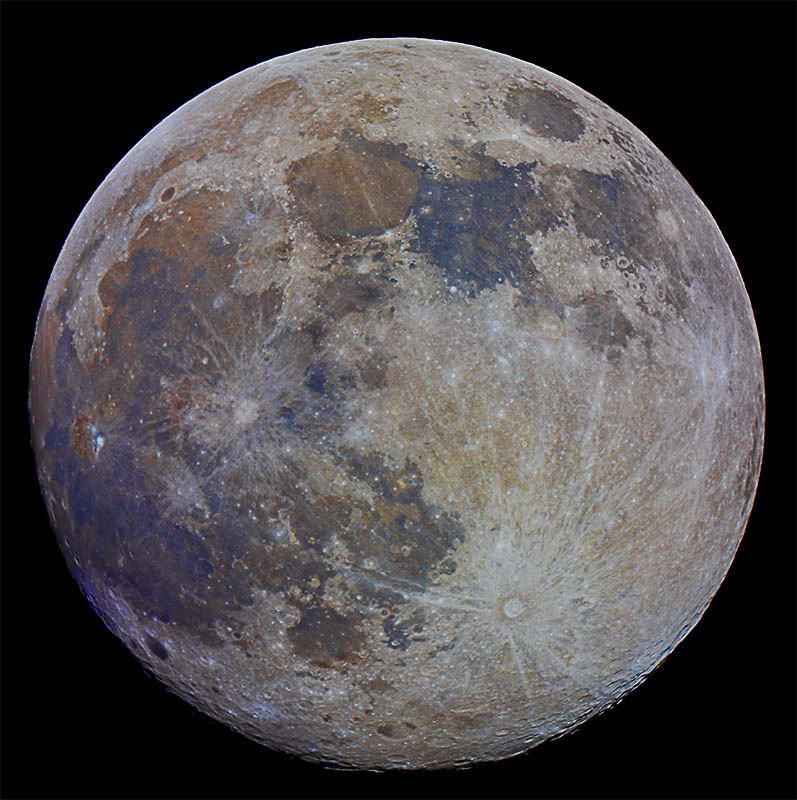
One of the first things I tried to photograph, as I suspect many people starting out do, was the moon. It's easy to find, and you don't need an expensive telescope to get decent images. It wasn't long before I was trying to enhance the natural colours that are present on the moon as I had seen others do, and finally managed this image, taken earlier this month.
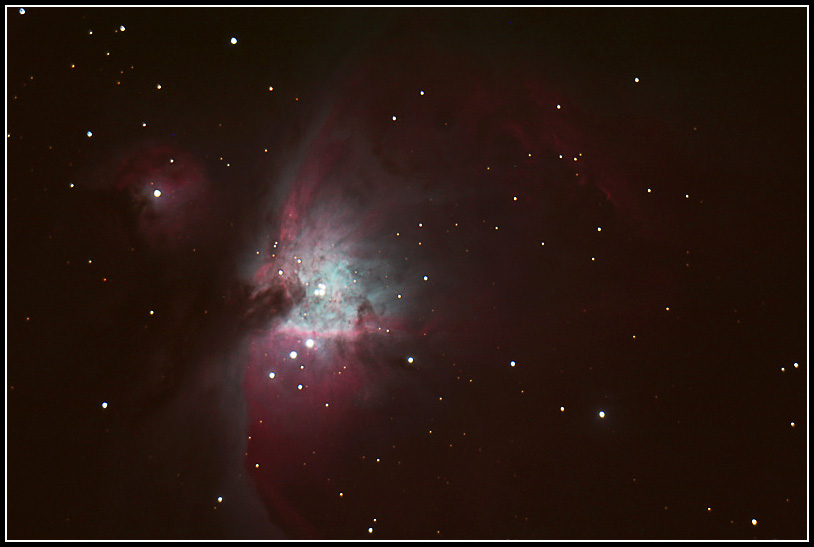
I now have a half decent telescope to play with, and have just started trying to take photos of some of the fainter objects in the sky. Again, I have started with a relatively easy one - the M42 nebula. I say easy in that as far as nebula go, it is fairly bright and it is also relatively easy to find, if you know where Orion is. In fact, lookign at your photo of Orion, you can see a hint of the M42 nebula in his sword.
I've only been using the scope for about 6 weeks now, and this is my second attempt at M42, but I wouldn't have got this far without asking questions on dedicated astronomy forums. Most people on them are extremely helpful and forthcoming with advice and tips on how to photograph such objects.
I've still got a long way to go before I even come close to matching the efforts of some guys out there, but it's a lot of fun trying to improve on my own efforts.
One of the first things I tried to photograph, as I suspect many people starting out do, was the moon. It's easy to find, and you don't need an expensive telescope to get decent images. It wasn't long before I was trying to enhance the natural colours that are present on the moon as I had seen others do, and finally managed this image, taken earlier this month.
I now have a half decent telescope to play with, and have just started trying to take photos of some of the fainter objects in the sky. Again, I have started with a relatively easy one - the M42 nebula. I say easy in that as far as nebula go, it is fairly bright and it is also relatively easy to find, if you know where Orion is. In fact, lookign at your photo of Orion, you can see a hint of the M42 nebula in his sword.
I've only been using the scope for about 6 weeks now, and this is my second attempt at M42, but I wouldn't have got this far without asking questions on dedicated astronomy forums. Most people on them are extremely helpful and forthcoming with advice and tips on how to photograph such objects.
I've still got a long way to go before I even come close to matching the efforts of some guys out there, but it's a lot of fun trying to improve on my own efforts.
Edited by DIW35 on Tuesday 30th December 00:07
cracking images there DIW.
any idea of an easy way to find the horsehead nebuala? my skyscan on the HEQ5 doesn't have it in it's listing as horsehead unless it's under another name.
i know it's in orion and thought i had it one night but it turned out to be something else but still can't find it.
i cleaned the mirror on mine for the first time in 4 years tonight as there was quite a lot of dust and some dew had run bringing the dust into a streak on it, i wasn't too sure if i did the right thing but remember reading isopropl and i just happened to have a can in the car, i gave it a good spray but didn't wipe it and let it drain down then did it again, left in the airing cupboard for an hour and hey presto it's dust free again and looks great again like new.
i've just put it back and collimated it using my laser collimator all ready for when the skies are clear again and my hunt for horsehead.
Paul
any idea of an easy way to find the horsehead nebuala? my skyscan on the HEQ5 doesn't have it in it's listing as horsehead unless it's under another name.
i know it's in orion and thought i had it one night but it turned out to be something else but still can't find it.
i cleaned the mirror on mine for the first time in 4 years tonight as there was quite a lot of dust and some dew had run bringing the dust into a streak on it, i wasn't too sure if i did the right thing but remember reading isopropl and i just happened to have a can in the car, i gave it a good spray but didn't wipe it and let it drain down then did it again, left in the airing cupboard for an hour and hey presto it's dust free again and looks great again like new.
i've just put it back and collimated it using my laser collimator all ready for when the skies are clear again and my hunt for horsehead.
Paul
Gassing Station | Photography & Video | Top of Page | What's New | My Stuff