
Why are filters so bloody expensive?
Discussion


I'm looking for a 3 or 4 stop 77mm ND filter. Why are they all so bloody expensive? 
Most of the names I recognise (Hoya, B&W, Tiffen...) seem to be in the £80-100 range for this size and darkness. I realise they have to be more than just a bit of darkened glass to avoid distortion, refraction, CA and all that gubbins, but how do they justify charging as much as that?
My 50mm f/1.8 only cost me £80, and that's got various moving parts and electronics in it on top of taking pretty decent, undistorted pics.
Most of the names I recognise (Hoya, B&W, Tiffen...) seem to be in the £80-100 range for this size and darkness. I realise they have to be more than just a bit of darkened glass to avoid distortion, refraction, CA and all that gubbins, but how do they justify charging as much as that?
My 50mm f/1.8 only cost me £80, and that's got various moving parts and electronics in it on top of taking pretty decent, undistorted pics.
Perhaps because people will pay the money for a brand name? I find some stuff in photography a bit like high end audio. People will pay for the brand, but put them in a blind test against a cheaper option and 99% of people can't tell the difference.
On a slightly OT note, I just found where I work have some old, brand new Hoya skylight filters in various sizes. They'll be going on ebay cheap if anyone is interested (though having a look on ebay, you can get the skylights for around a tenner from a few places)
On a slightly OT note, I just found where I work have some old, brand new Hoya skylight filters in various sizes. They'll be going on ebay cheap if anyone is interested (though having a look on ebay, you can get the skylights for around a tenner from a few places)
Edited by jon- on Tuesday 7th July 11:49
jon- said:
Perhaps because people will pay the money for a brand name? I find some stuff in photography a bit like high end audio. People will pay for the brand, but put them in a blind test against a cheaper option and 99% of people can't tell the difference.
You are probably right! Has anyone tried one of the £10 specials off Ebay?Kermit power said:
Has anyone tried one of the £10 specials off Ebay?
Yep. I've had one completely unbranded ND that added a nasty cast, but all the others I've bought - all of them branded but cheap - do their job so well I'm not even curious to know if the alternatives from more respected names could improve upon their results.Whether a cheapo heavy ND would be any good, though, I'm not so sure. Perhaps that would be asking too much?


plg101 said:
paul911 said:
Well I said I wasn’t going to do it but I have and stumped up £72 for a B&W 110ND (10 stops). Cant wait to give it a try but that’s a lot of money for a filter. 
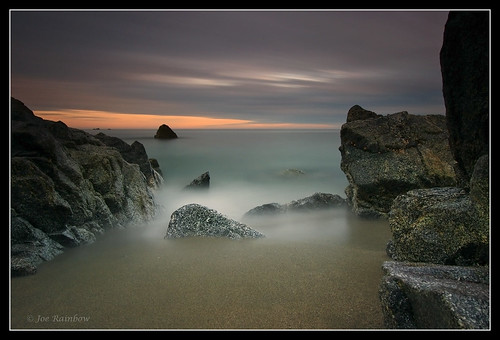
Out of interest - what are you using a 10 stop reduction for?NOT my pic, creator is http://www.flickr.com/photos/24562498@N03/
Edited by paul911 on Tuesday 7th July 20:34
paul911 said:
plg101 said:
paul911 said:
Well I said I wasn’t going to do it but I have and stumped up £72 for a B&W 110ND (10 stops). Cant wait to give it a try but that’s a lot of money for a filter.
Out of interest - what are you using a 10 stop reduction for?NOT my pic, creator is http://www.flickr.com/photos/24562498@N03/
Edited by paul911 on Tuesday 7th July 20:34
paul911 said:
Well I said I wasn’t going to do it but I have and stumped up £72 for a B&W 110ND (10 stops). Cant wait to give it a try but that’s a lot of money for a filter.
Where did you find that? The only place I've seen them for sale at all is on Warehouse Express, and they seem to have had them on back order since the dawn of time.Kermit power said:
paul911 said:
Well I said I wasn’t going to do it but I have and stumped up £72 for a B&W 110ND (10 stops). Cant wait to give it a try but that’s a lot of money for a filter.
Where did you find that? The only place I've seen them for sale at all is on Warehouse Express, and they seem to have had them on back order since the dawn of time.Simpo Two said:
You'd think that with all the electronic trickery that goes on in DSLRs, it would be easy enough artifically to reduce the sensitivity of the sensor to give ISO 10 or whatever.
Some Canons can down to ISO 50, maybe some Nikons too, but apparently because this is an 'artificial' setting, i.e. the sensor is actually doing the same job as it was at ISO 100, you lose some dynamic range and some other problems can occur too. I'm not sure why they can't make a sensor that can do a 'real' ISO 50, 25 or 10; maybe the technology doesn't exist to allow them to go that low and still reach 3200 or higher.Kermit power said:
Where did you find that? The only place I've seen them for sale at all is on Warehouse Express, and they seem to have had them on back order since the dawn of time.
This company do a 10 stop ND in 100x100:http://www.formatt.co.uk/default.aspx
I've not used them but I've read that they are good. I think it would fit in the Cokin P holder which is cheaper than their own one.
SamHH said:
Some Canons can down to ISO 50, maybe some Nikons too, but apparently because this is an 'artificial' setting, i.e. the sensor is actually doing the same job as it was at ISO 100, you lose some dynamic range and some other problems can occur too. I'm not sure why they can't make a sensor that can do a 'real' ISO 50, 25 or 10; maybe the technology doesn't exist to allow them to go that low and still reach 3200 or higher.
The D200 does a genuine ISO 100, but the D300 and D700 only go down to ISO 200 - as you say, lower ISOs are fudges. I suspect that sensors can only span a certain range, and the higher the top end, the higher the lower end too. It's odd, you'd think that if there was too much information/light, some of it could be removed with no ill effect.Gassing Station | Photography & Video | Top of Page | What's New | My Stuff