
Discussion


Hey guys,
As some of you may know I am a bit of a noobie to photography. I bought a 350D recently and managed to borrow a lens from a work mate who has politely asked for it back. I mainly take pictures of landscape, night shots (well I will when the remote and tripod arrives), people and/or animals etc. Nothing specifically. I am going skiing in Feb and want to take some decent pictures on that holiday too.
So I need a lens with not too bad a range that is decent for a beginner and isn't going to cost the earth just before Christmas. Any suggestions?
Much love
As some of you may know I am a bit of a noobie to photography. I bought a 350D recently and managed to borrow a lens from a work mate who has politely asked for it back. I mainly take pictures of landscape, night shots (well I will when the remote and tripod arrives), people and/or animals etc. Nothing specifically. I am going skiing in Feb and want to take some decent pictures on that holiday too.
So I need a lens with not too bad a range that is decent for a beginner and isn't going to cost the earth just before Christmas. Any suggestions?
Much love

Being something of a newcomer to the game myself, take my opinions with a suitably large pinch of salt;
I got a 1000d recently, and before I invest in some specific glass, I wanted something more 'all-round', for the likes of holidays/default lens that generally stays on the mount. The kit that came witht it was an 18-55mm, and I picked up a Sigma 18-200mm f3.5 for $200, down from $400. Haven't noticed any difference in behaviour between that and the Canon kit. People said it can be slow to AF in low light etc, but I'm having a great time with it, and the focal rage/f number make it a very versatile lens for the price.
It isn't stabilised, so that halves the cost. It would be nice, but I'm getting by just fine without. I suspect for landscape shots, you'll be using a tripod a lot of the time.
If I start going down a particular route with regard to subject matter, I'll start looking into a more focused (no pun intended) lens for that type of shooting.
Hope this helps.
I got a 1000d recently, and before I invest in some specific glass, I wanted something more 'all-round', for the likes of holidays/default lens that generally stays on the mount. The kit that came witht it was an 18-55mm, and I picked up a Sigma 18-200mm f3.5 for $200, down from $400. Haven't noticed any difference in behaviour between that and the Canon kit. People said it can be slow to AF in low light etc, but I'm having a great time with it, and the focal rage/f number make it a very versatile lens for the price.
It isn't stabilised, so that halves the cost. It would be nice, but I'm getting by just fine without. I suspect for landscape shots, you'll be using a tripod a lot of the time.
If I start going down a particular route with regard to subject matter, I'll start looking into a more focused (no pun intended) lens for that type of shooting.
Hope this helps.
http://www.camerapricebuster.co.uk/prod83.html
Or just type "Canon EF 50mm f1.8 II" into the ebay search bar.
Balls - beaten to it.
Or just type "Canon EF 50mm f1.8 II" into the ebay search bar.
Balls - beaten to it.
Edited by BenjC on Monday 7th December 16:31
Have a look at Kerso on eBay for the 50mm - http://stores.shop.ebay.co.uk/FLASH-CAMERA__W0QQ_a...
RobbieB said:
Just what I needed, thanks for that. Right I'll try and get one of these on the cheap. They are a little more than I wanted to spend. So 50mm will be ok for landscape and maybe some minor action shots whilst skiing?
I would just go with a kit lens - like RobDickinson suggested The 50mm is good but too long for landscapes and too long for general use IMHO.
Sigma 10-20mm is fantastic but possibly not ideal for a beginner as your only lens,
RobbieB said:
Just what I needed, thanks for that. Right I'll try and get one of these on the cheap. They are a little more than I wanted to spend. So 50mm will be ok for landscape and maybe some minor action shots whilst skiing?
Frankly I'd say neither - the key is angle of view. If you only get one lens, I'd get a zoom and ignore the nifty fifty brigade for now. You don't need a big aperture for either task IMHO.Sorry to add confusion; welcome to phtography

Edited by Simpo Two on Tuesday 8th December 09:58
Simpo Two said:
RobbieB said:
Just what I needed, thanks for that. Right I'll try and get one of these on the cheap. They are a little more than I wanted to spend. So 50mm will be ok for landscape and maybe some minor action shots whilst skiing?
Frankly I'd say neither - the key is angle of view. If you only get one lens, I'd get a zoom and ignore the nifty fifty brigade for now. You don't need a big aperture for either task IMHO.Sorry to add confusion; welcome to phtography
Edited by Simpo Two on Tuesday 8th December 09:58
I like the confusion. If it isn't complicated, it won't be rewarding!
RobbieB said:
I like the confusion. If it isn't complicated, it won't be rewarding!
The difficulties stem from the fact that people buy according to their own needs, which of course are often different from yours. Hence there is often no 'right' answer - you have to identify which part of your kit is holding you back (and that includes the loose nut behind the viewfinder!)The great thing about an SLR system is that you can add on/upgrade bits as needs dictate and money allows. For amateur everyday use I'd suggest:
1) 18-70mm (or possibly 18-135mm)
2) 70-300mm
You can see that the 18-70/135mm covers the 50mm length, the biggest difference between that and a prime 50mm lens being maximum aperture ('speed'). If you NEED f1.8, eg for working in low light or for shallow depth of field, then it's certainly the lens to have, but I would consider it too long for general purpose use.
Don't forget it's very bright up on a snow covered mountain. You'll never be able to open the aperture right up on the 50mm without a big ND filter on the front so I wouldn't rely on it as an only lens. That 50mm lens is good, but not for this.
I would have thought Rob's suggestion of a Sigma 10-20mm and the kit lens would have you covered.
Edited to add I read the original post too quickly. The 50mm lens is a good addition but don't expect to be able to use it for shallow depth of field pictures when you are up the mountain.
I would have thought Rob's suggestion of a Sigma 10-20mm and the kit lens would have you covered.
Edited to add I read the original post too quickly. The 50mm lens is a good addition but don't expect to be able to use it for shallow depth of field pictures when you are up the mountain.
Edited by gingerpaul on Tuesday 8th December 14:04
Simpo Two said:
... too long for general purpose use.
Depends upon your general.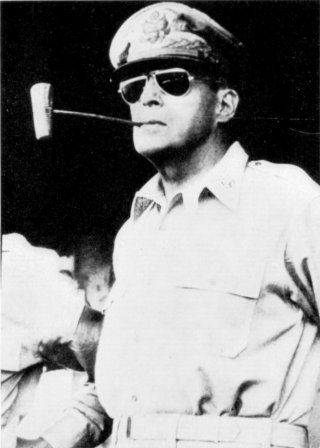 Here is General Porpoise!
I wonder if you should just get on taking some shots, and some more shots, and then some more shots, with whatever you've got. 50mm f/1.8 seems a wonderful place to start - you can add a close-up filter, or extension tubes easily for macro stuff, a speedlight, a tripod and you can do an awful lot of learning.
If you have legs, you can also replicate some of the benefits of a zoom lens - and then you can learn what your "useful" focal lengths might be for the next lens. After all you DID buy an SLR in order that you could collect a gazzillion lenses, or at least three or four, I guess?

That's MacArthur, and your lenses date from the same period Beano!
In the old days (that's a long time ago but after Beano's lenses were made) 50mm was the 'standard' ie general porpoise lens - but the crop sensor of most DSLRs means they have less field of view. If you want one prime lens then 35mm is a closer match.
In the old days (that's a long time ago but after Beano's lenses were made) 50mm was the 'standard' ie general porpoise lens - but the crop sensor of most DSLRs means they have less field of view. If you want one prime lens then 35mm is a closer match.

Simpo Two said:
....but the crop sensor of most DSLRs means they have less field of view.
Quite nice for a short portrait lens though - if you haven't got a 1969-design 45mm that is. In fact I took just the 45mm (with the big doorstop, of course) to Gran Canaria last month and did a nice panorama of about 6-7 shots across Las Palmas that would otherwise need a 10.5mm. Don't let the equipment set you back. General Porpoise rules!
Oh christ ok confusing is rewarding, but I'm struggling to Google things as fast as you are posting them!
Ok so this 50mm lens i have just bought can have filters attached and I knew this. I bought a polarising filter on recommendations from a friend who does wedding photography etc.
I've seen from the macro thread that macro basically means extremely close up. The problem with this 50mm lens is it's lack of range, which I understand. So am I right in thinking I can get a filter for close ups and then I should invest in a lens with more range in the future? For my second lens?
Ok so this 50mm lens i have just bought can have filters attached and I knew this. I bought a polarising filter on recommendations from a friend who does wedding photography etc.
I've seen from the macro thread that macro basically means extremely close up. The problem with this 50mm lens is it's lack of range, which I understand. So am I right in thinking I can get a filter for close ups and then I should invest in a lens with more range in the future? For my second lens?
You are confusing depth of field and range.
The 50mm lens will be ok at taking a picture of a mountain but you would get more of the mountain and surrounding landscape in with a wider lens (ie a smaller number of mm).
People recommend the 50mm lens as it is a cheap way to get into shallow depth of fields (and night photography too, but I'll ignore that for now). To do this it effectively opens its pupil more than most lenses do. The problem with this in the bright is the same as when you walk from a dark room to bright sunlight. You immediately squint to limit the amount of light coming in so you can see where you're going.
Your eye adjusts to this whereas the camera lens will stay open leaving you with an overexposed image unless you tell it otherwise. This completely defeats the point of having that lens for taking pictures in the when it is bright and you're surrounded by snow, unless you use ND filters to limit the amount of light instead. This is the same as putting your sunglasses on as you walk out of the dark room and into the sunlight.
Circular polarisers cut down reflections. I've only got one recently and found it very useful. Apparantly they increase contrast and colour saturation too but I haven't experimented enough with mine to see if it offers any advantage over a bit of photoshopping when you put them on a computer.
The 50mm lens will be ok at taking a picture of a mountain but you would get more of the mountain and surrounding landscape in with a wider lens (ie a smaller number of mm).
People recommend the 50mm lens as it is a cheap way to get into shallow depth of fields (and night photography too, but I'll ignore that for now). To do this it effectively opens its pupil more than most lenses do. The problem with this in the bright is the same as when you walk from a dark room to bright sunlight. You immediately squint to limit the amount of light coming in so you can see where you're going.
Your eye adjusts to this whereas the camera lens will stay open leaving you with an overexposed image unless you tell it otherwise. This completely defeats the point of having that lens for taking pictures in the when it is bright and you're surrounded by snow, unless you use ND filters to limit the amount of light instead. This is the same as putting your sunglasses on as you walk out of the dark room and into the sunlight.
Circular polarisers cut down reflections. I've only got one recently and found it very useful. Apparantly they increase contrast and colour saturation too but I haven't experimented enough with mine to see if it offers any advantage over a bit of photoshopping when you put them on a computer.
Gassing Station | Photography & Video | Top of Page | What's New | My Stuff