
Over/Under exposure on landscapes
Discussion


So I went out for a walk today, first time with my 35mm f2.0 which is a lovely light lens, beautiful results. The light, at around mid afternoon was horrendous. When I first went out the sky was clearing and some blue sky showing, but quickly became overcast again. Not to be outdone by the weather I was determined to learn the lens a little better and just kept snapping away.
Compared to my first outing the other day with my wideangle lens I was getting really frustrated with the over and underexposure of different parts of the picture every time I decided to include any reasonable portion of sky. Honestly, is there any way to compensate for this other than an ND grad filter or is that really the way to go to avoid this. A few examples from todays outing;


Compared to my first outing the other day with my wideangle lens I was getting really frustrated with the over and underexposure of different parts of the picture every time I decided to include any reasonable portion of sky. Honestly, is there any way to compensate for this other than an ND grad filter or is that really the way to go to avoid this. A few examples from todays outing;
It's best to either use an ND grad or use a tripod and take two exposures and merge them on the computer.
The final option is to take a photo exposed for the sky, or at least exposed not to blow the sky, then increase the brightness of the land on the computer. I've never found this to be satisfactory though, because you usually have to quite heavily underexpose the land and you end up with quite a lot of noise in the process of bringing it back up to the correct brightness.
Having said that, there doesn't appear to be much wrong exposure-wise with the photos you've posted.
The final option is to take a photo exposed for the sky, or at least exposed not to blow the sky, then increase the brightness of the land on the computer. I've never found this to be satisfactory though, because you usually have to quite heavily underexpose the land and you end up with quite a lot of noise in the process of bringing it back up to the correct brightness.
Having said that, there doesn't appear to be much wrong exposure-wise with the photos you've posted.
Edited by SamHH on Monday 15th February 17:58
Well they don't look too bad, but (assuming you're taking RAW) you should have quite a lot of latitude for developing more than one result and blending them.
Apart from when I just need "snaps" I find that some work, on a scale right from a bit of Lightroom Adjustment Brush through to full blown HDR, is pretty much a must to get a Landscape into shape.
Apart from when I just need "snaps" I find that some work, on a scale right from a bit of Lightroom Adjustment Brush through to full blown HDR, is pretty much a must to get a Landscape into shape.
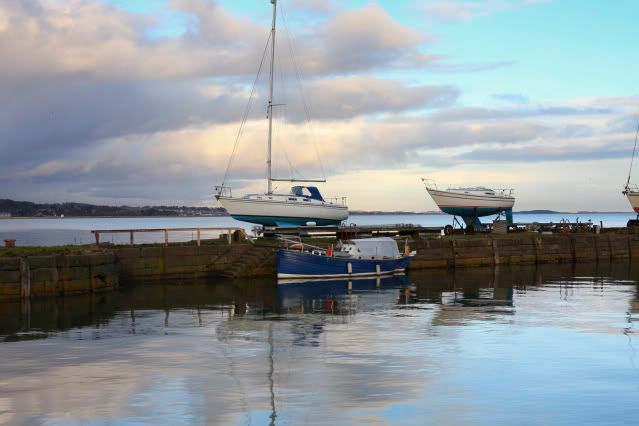
I'm very purposfully shooting in highest detail JPG rather than RAW. I also try to avoid any post processing, firstly due to not having access to either a decent enough PC at the moment and also believe in trying to get as near perfection in the original shot as you can get. I'm living by the Ken Rockwell book of philosophy/photography as much as I can at the moment. A lot of his advice and methodology about photography really ticks a lot of boxes.
Also, I thought it was almost impossible to pull detail out of overblown highlights but more realistic to be able to pull detail from underexposed areas rather than the other way around?
edit: also, the ones I've put up, out of the 150 or so taken on a 45 minute walk were the best out of all, what I'm not showing is the 5-6 shots I take each time to even get close to something I'm happy with. Of course at which point the 'moment' could be gone. Or is this just part of the learning process and something that will definately come with time.
Also, I thought it was almost impossible to pull detail out of overblown highlights but more realistic to be able to pull detail from underexposed areas rather than the other way around?
edit: also, the ones I've put up, out of the 150 or so taken on a 45 minute walk were the best out of all, what I'm not showing is the 5-6 shots I take each time to even get close to something I'm happy with. Of course at which point the 'moment' could be gone. Or is this just part of the learning process and something that will definately come with time.
Edited by RichTbiscuit on Monday 15th February 18:17
I think the mind just copes better with black black in a picture rather than white white! Mine does anyway. Your goal of no post processing is admirable, I aspire to it but don't achieve it.
I seem to be able to pull at least 1 stop of detail from a RAW shot that looks blown out but actually isn't. The same applies pulling detail out of the black, although the inevitable noise seems more obvious that way around.
I seem to be able to pull at least 1 stop of detail from a RAW shot that looks blown out but actually isn't. The same applies pulling detail out of the black, although the inevitable noise seems more obvious that way around.
Things i've learned and tried to take to heart over the past few weeks. Mostly taken from Ken Rockwell's site.
1: When I go out take one lens and one lens only else you spend more time worrying about what will do the best job rather than looking for what will make the best photograph.
2: Get it right as much as possible the first time and avoid wasting time post-processing
3: Magic times are sunrise and sunset. Especially where the ambient light meets the level of the artificial light and you can create balance.
4: When using wide angle lenses the closer to your subject the better. The beauty is in the detail.
5: Put the camera on as much automatic settings as possible, the less feckin about the better. Tweak exposure compensation and white balance to get the results you want.
And oh god so many more things I've forgotten.
1: When I go out take one lens and one lens only else you spend more time worrying about what will do the best job rather than looking for what will make the best photograph.
2: Get it right as much as possible the first time and avoid wasting time post-processing
3: Magic times are sunrise and sunset. Especially where the ambient light meets the level of the artificial light and you can create balance.
4: When using wide angle lenses the closer to your subject the better. The beauty is in the detail.
5: Put the camera on as much automatic settings as possible, the less feckin about the better. Tweak exposure compensation and white balance to get the results you want.
And oh god so many more things I've forgotten.
RichTbiscuit said:
also believe in trying to get as near perfection in the original shot as you can get.
A sound plan, BUT it doesn't mean you won't need PP for best visual results. Cameras aren't as good as eyeballs, unfortunately.RichTbiscuit said:
Also, I thought it was almost impossible to pull detail out of overblown highlights but more realistic to be able to pull detail from underexposed areas rather than the other way around?
Yep. That's why you generally expose for the highlights (just in the histogram) and pull up the shadows in PP - but it's not always the case, for example if you want a white b/g or have specular highlights (eg sun sparkling on water or glassware). RAW is better than JPG for tweaking exposure after the event, but you can still get decent results on a JPG within limits. Lightening midtones can work wonders, but boosting shadows too much can give noise so be careful.RichTbiscuit said:
what I'm not showing is the 5-6 shots I take each time to even get close to something I'm happy with. Of course at which point the 'moment' could be gone. Or is this just part of the learning process and something that will definately come with time.
You have to learn the characteristics of the camera, anticipate the likely issues and be ready to correct if required. It's a bit like getting to know a car, and eventually you get to know what kind of shot will work and which won't. A friend of mine will sometimes point to something and say 'That's a good shot! Take that!' I say 'No, wrong light' or similar because I envisage the scene as the finished image and judge whether it's worth taking before I take it. It's not magic, just down to flying hours, practice and experiment. '1: When I go out take one lens and one lens only else you spend more time worrying about what will do the best job rather than looking for what will make the best photograph.'
Disagree. It takes about 0.5 sec to decide which lens to use.
2: Get it right as much as possible the first time and avoid wasting time post-processing
Agree.
'3: Magic times are sunrise and sunset. Especially where the ambient light meets the level of the artificial light and you can create balance.'
I don't specialise in landscapes but it sounds sensible.
'4: When using wide angle lenses the closer to your subject the better. The beauty is in the detail.'
How would you get close to a landscape? Get close to people with a w/a and they distort. If you have to get that close maybe you should have brought the other lenses you left behind in step (1)!
'5: Put the camera on as much automatic settings as possible, the less feckin about the better. Tweak exposure compensation and white balance to get the results you want.'
Well this comes down to preference, and it's generally better to learn your own favourite way of doing things that just copying what suits someone else. I use SOME automatic settings (eg Auto WB), but never others (eg Auto ISO).
Keep practicing, keep learning. Remember what doesn't work and avoid it; remember what does work and do more of it. But don't run shy of PP; IMHO it's an essential part of digital photography.
RichTbiscuit said:
believe in trying to get as near perfection in the original shot as you can get. I'm living by the Ken Rockwell book of philosophy/photography as much as I can at the moment
Must be another Ken Rockwell then.http://www.kenrockwell.com/hawaii.htm
Simpo Two said:
'1: When I go out take one lens and one lens only else you spend more time worrying about what will do the best job rather than looking for what will make the best photograph.'
Disagree. It takes about 0.5 sec to decide which lens to use.
I think RichT is right to take a lens at a time. Personally, I find it a great discipline to explore somewhere with some restrictions and have often gone out with the 35mm f/2 only (nice lens, btw) or a 50mm or a 105mm (yes for landscapes). Disagree. It takes about 0.5 sec to decide which lens to use.
Instead of choosing the lens to use, you tend to use your eyes and feet to pick the viewpoint and perspective that is right.
However, I would grab back control over aperture, at least, and not let the camera run off with its own importance....
GetCarter said:
 Tch - what is this?
Ken Rockwell doesn't travel for photography, God moves Hawaii closer for him!
GetCarter said:
RichTbiscuit said:
believe in trying to get as near perfection in the original shot as you can get. I'm living by the Ken Rockwell book of philosophy/photography as much as I can at the moment
Must be another Ken Rockwell then.http://www.kenrockwell.com/hawaii.htm
Simpo, as always, cheers for the advice.
(the wide angle lens comment wasn't necessarily for landscapes in general although I know that's what the topic is about)
RichTbiscuit said:
Ken... doesn't do any post processing or the like.
Sorry - just had a coffee/keyboard moment. Ken Rockwell doesn't do any PP? 
er.... I really don't know what to say. Apart from the fact that he drones on and on about how he does post processing (teaching lesser mortals how to do it), and how he takes such great landscapes, and how he feels sorry for any photographer that takes photos in RAW, preferring to adjust the colour of JPG (which is why they mostly look so dreadful)... oh, and about another 100 things that I can't be arsed to comment upon.
There are half a dozen landscape photographers who frequent this forum that take MUCH better shots than dearest Ken... some of them even do less post processing

ETA... The guy is a gem... I thought I might have made that stuff up about RAW... but just found it in one of his Photoshop tutorials. I quote "skilled photographers feel sorry for people who toil away with RAW files just so they can correct exposure and white balance later. You can do it all to any JPG image"
Class.
PS... sorry for the thread hijack. Grad ND, manual digital blending or HDR will sort your problem

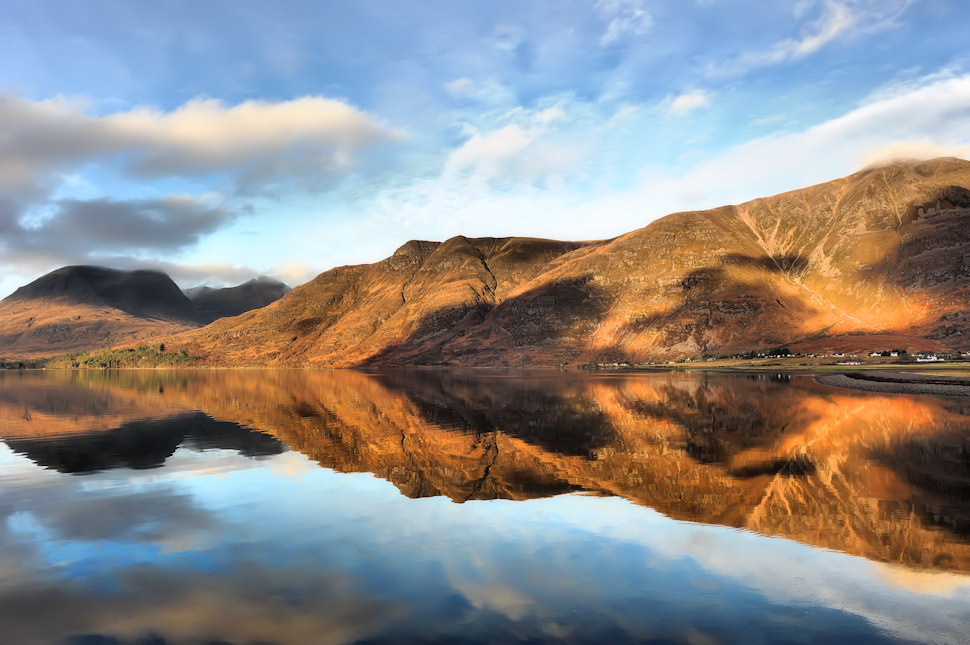
Below - my preferred method. a Lee .9 ND Grad
Edited by GetCarter on Monday 15th February 19:56
Perhaps we need to define what we mean by 'post-processing' - it could be (a) processing a RAW file, but also (b) tweaking a JPG in PS etc.
As I understand it Ken shoots JPG with the in-camera saturation and vividity turned up to 'Chinese Takeaway TV' setting - hence they have that zinging look without further work.
The technical stuff on his website can be useful but much of the rest is opinion, and if you agree that's fine, and if you disagree, well that's fine too
As I understand it Ken shoots JPG with the in-camera saturation and vividity turned up to 'Chinese Takeaway TV' setting - hence they have that zinging look without further work.
The technical stuff on his website can be useful but much of the rest is opinion, and if you agree that's fine, and if you disagree, well that's fine too
Edited by Simpo Two on Monday 15th February 19:57
He does seem to skip around in his methodology, there's definately a different tone and opinion in differing articles. The wee list I posted above are the things I've taken from some that I've read on his site that I feel are worthwhile taking. Others I've ignored completely.
He deals in colour, vivid, vibrant colour. It's not to everyones taste, hell, photography is art, and if you yourself don't love the art you're making then why bother. Some of his stuff I love, some of it is over the top. He's probably quite marmite for some people. Some of the things he preaches I do resonate with, his love of simplicity, cutting down on PP time, his love of light conditions and colour on different landscapes. I spend most of my time walking about looking for little details of colour in the dear-god-isn't-it-drab of a little scottish village.
So I'm going to take advice from more experienced photographers, find what works for me in the locations and situations that I get to work in. Some stuff will appeal to me (only taking one lens on a walkabout) and some stuff won't, but through that hopefully I will find my own style that appeals to me and makes me happy.
Also, that landscape is B-E-A-Utiful.
He deals in colour, vivid, vibrant colour. It's not to everyones taste, hell, photography is art, and if you yourself don't love the art you're making then why bother. Some of his stuff I love, some of it is over the top. He's probably quite marmite for some people. Some of the things he preaches I do resonate with, his love of simplicity, cutting down on PP time, his love of light conditions and colour on different landscapes. I spend most of my time walking about looking for little details of colour in the dear-god-isn't-it-drab of a little scottish village.
So I'm going to take advice from more experienced photographers, find what works for me in the locations and situations that I get to work in. Some stuff will appeal to me (only taking one lens on a walkabout) and some stuff won't, but through that hopefully I will find my own style that appeals to me and makes me happy.
Also, that landscape is B-E-A-Utiful.

Gassing Station | Photography & Video | Top of Page | What's New | My Stuff