
Do you still use a film camera?
Discussion


Depends on budget.
The Hasy Xpan is brilliant, but not cheap.
I'd go wild somewhere like:
http://www.mifsuds.com/usedpriceindex.htm
https://secure.ffordes.com/shop/Store/index.htm
Look at fully manual - Canon F1 - opens up being able to buy FD lenses with fast glass.
Olympus OM?
Leica R4S?
or Automatic - canon EOS 1 for £199..
The Hasy Xpan is brilliant, but not cheap.
I'd go wild somewhere like:
http://www.mifsuds.com/usedpriceindex.htm
https://secure.ffordes.com/shop/Store/index.htm
Look at fully manual - Canon F1 - opens up being able to buy FD lenses with fast glass.
Olympus OM?
Leica R4S?
or Automatic - canon EOS 1 for £199..
In addition to the D200, I have:
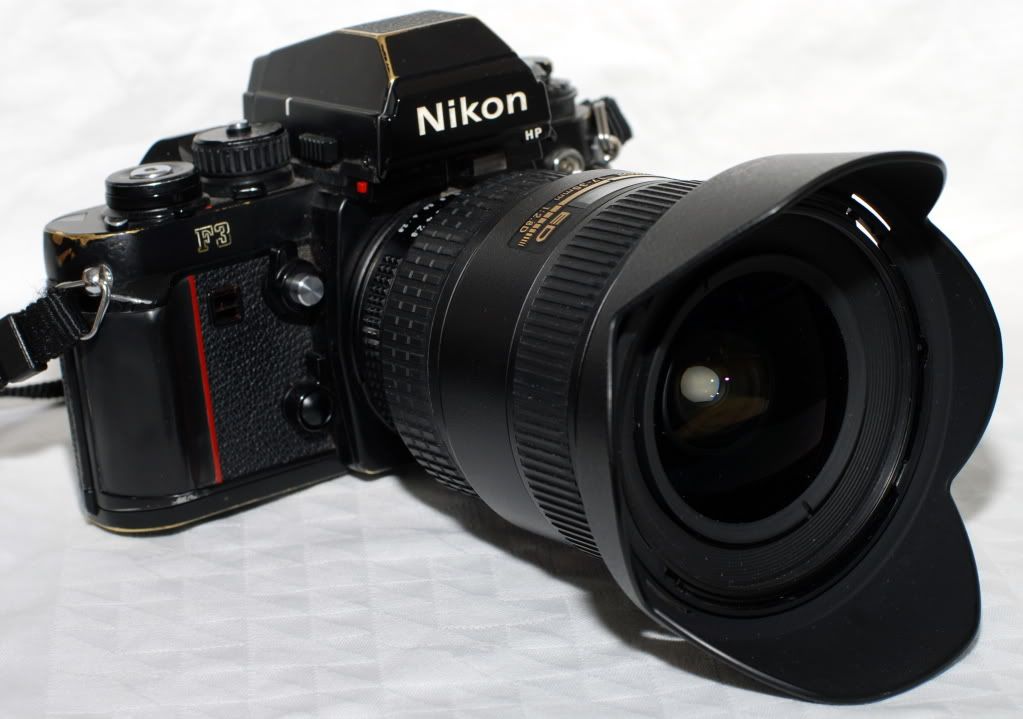
Nikon F90X (second-hand - £75, a bargain)
Hasselblad 500C/M (magnificent camera)
Yashica 635 TLR
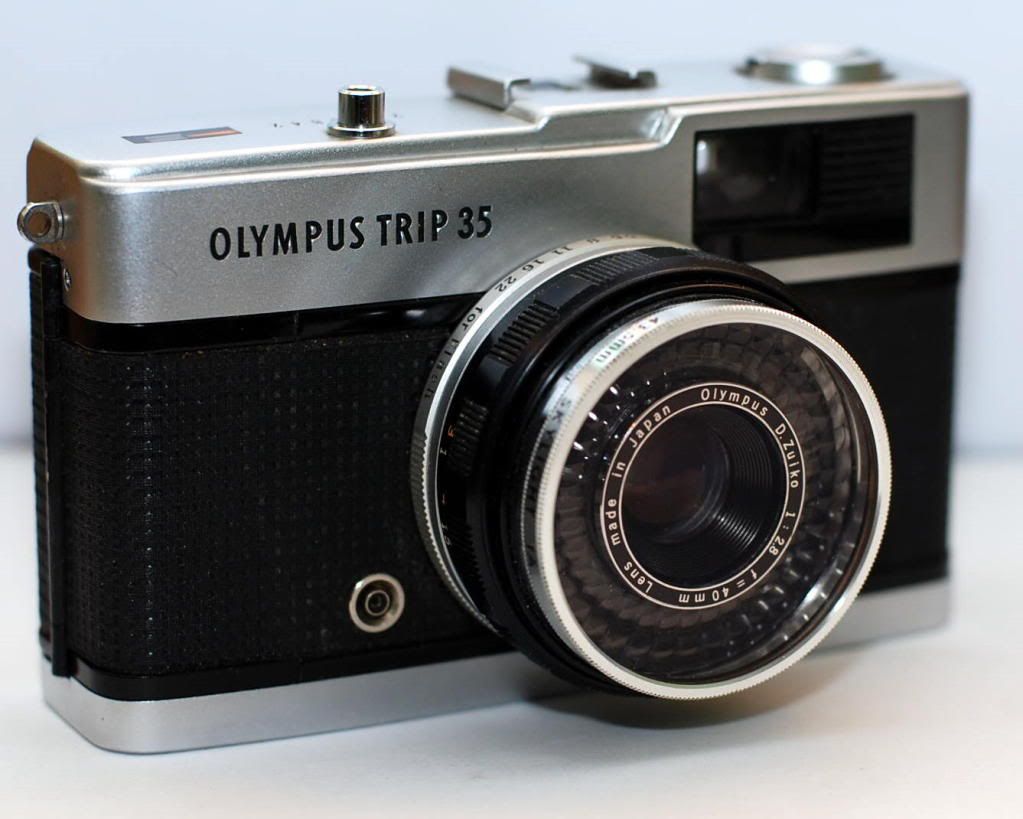
Olympus Trip
I must say that, if you want to get into bare-bones film shooting, go for a Trip. Shouldn't set you back more than about £30 and it's a cracking little camera.
I love the convenience of digital, but there's something so tactile about film.
Nikon F90X (second-hand - £75, a bargain)
Hasselblad 500C/M (magnificent camera)
Yashica 635 TLR
Olympus Trip
I must say that, if you want to get into bare-bones film shooting, go for a Trip. Shouldn't set you back more than about £30 and it's a cracking little camera.
I love the convenience of digital, but there's something so tactile about film.
I use a Yashica TLR occasionally, usually when i feel my digital photography has become too much of a scattergun approach. Having just 12 shots on a roll and each roll costing around £20 (inc. buying it and getting it developed and scanned to reasonable quality) really makes you slow down and think about each shot. Having used it I usually find that I come back to digital and take half the number of shots but double the number of keepers. Yashicas can be bought on the evilbay for about £80 usually if you fancy a cheap introduction to medium format.

Yashica 44 is a smaller version, it takes 127 film (4x4) rather than the 120 (6x6) of the version I have, http://www.camerapedia.org/wiki/Yashica-44 should give you plenty of good info on it.
Don't use them nearly as much as I'd like to, but I have:
Canon EOS 50e - use this with my M42 lenses when I want sharp full-frame pics.

Canonet G-III QL17 - nice to handle but falling apart

Zenit E - Nice and solid. My dad's old camera.

Zeiss Ikon Nettar 518/16 - So much fun to use! Love this camera

And the Holga. Unfortunately ( ) I got a decent one - no light leaks and a reasonably sharp lens

Canon EOS 50e - use this with my M42 lenses when I want sharp full-frame pics.
Canonet G-III QL17 - nice to handle but falling apart
Zenit E - Nice and solid. My dad's old camera.
Zeiss Ikon Nettar 518/16 - So much fun to use! Love this camera
And the Holga. Unfortunately (
) I got a decent one - no light leaks and a reasonably sharp lens Amazing! I was thinking about starting a thread like this! Last night I did a studio shoot using my old OM2n and Zuiko 85mm f2 and 50mm f1.4 lenses. Great fun and there was a £1 forfeit everytime we looked at the non existent LCD on the camera back. Now I've got to wait for the prints....
Now I'm looking at Nikon F5's and Mamiya 645's on eBay
Now I'm looking at Nikon F5's and Mamiya 645's on eBay
Edited by ian in lancs on Tuesday 2nd March 21:14
ian in lancs said:
Amazing! I was thinking about starting a thread like this! Last night I did a studio shoot using my old OM2n and Zuiko 85mm f2 and 50mm f1.4 lenses. Great fun and there was a £1 forfeit everytime we looked at the non existent LCD on the camera back. Now I've got to wait for the prints....
Now I'm looking at Nikon F5's and Mamiya 645's on eBay
Mmmm..Now I'm looking at Nikon F5's and Mamiya 645's on eBay
Edited by ian in lancs on Tuesday 2nd March 21:14
F5's cost too much is the F100 any good?
I have three film cameras but they're kept for sentimental reasons (Ricoh XR7, Olympus XA2) or antique interest (Mentor with Compur shutter and Schneider-Kreuznach lens with brass bellows jobbie constructed by my late father). For everything else there's digital... see why below
From: http://www.xs4all.nl/~lommen9/mentor/index.html
From: http://www.xs4all.nl/~lommen9/mentor/index.html
site said:
The mechanism to set the focal plane shutter.
Where A is the mechanism to set the width between the 2 roller blinds. It works clockwise and anti clockwise. B disk shows the slit opening. C is the winding mechanism to cock the shutter and moving the roller blinds in the upper position. G= release. D= Set the spring tension by turning it anti clockwise to improve it and clockwise to lower the tension. E Displays the tension figures. F= sets “I” for Instant or “T” for Time exposures
"M"=Moment Shutter time.
"B"=Beliebig (German) = appropriate
"Z"=Zeit (German) = Time = push the release knob to open shutter. To close the shutter again, press shutter release knob once again.
So, if the switch is set in it's "T" position, it lifts up the mirror, holds it in that position and, at the same time, sets a ratchet in a position to prohibit the immediate following of the second blind when firing the shutter. In fact the shutter-movement is split into two movements.
To make a Time exposure;
1) Set the switch in "T" position.
2) Pull the winding/select knob and turn the time-select disc on "T".
It has become a select knob. This sets the opening of the slit.
Because of the "T" position, the slit is opened to its maximum = equal to the image size.
3) Push the knob back. It's a winding-knob now and turn it clockwise. By turning it, the upper blind is wind up on the upper shaft. At the same time the lower blind is drawn up by the two straps connected to the 2nd upper shaft, which is turning simultaneously with the first upper shaft.
The upper blind is brought in its position followed by the lower blind and within between the both blinds,.. the adjusted slit.
4) When firing the shutter, first of all the lower blind, drawn by the spring tension of the lower shaft, rolls to its position on the shaft,
It is stopped by the straps, now on maximum length, attached to the upper blind and the upper shaft, which is still blocked. Now the slit is open. By firing the shutter again, the upper blind comes down by releasing the blockade and drawn down by the spring of the lower blind.
The exposure is done.
The tension of the shutter-spring (the lower shaft-spring) should be enough to draw the upper blind completely down in the "T" position as described above, with the select-disc on "1".
After exposing the shutter is down. There should be enough tension to hold the shutter plane tight. You can study how the upper blind is connected to the 1st upper blind. By turning the winding knob, the upper blind goes up. When it reaches the upper side of the image-sized back, stop it. The slit is open to its maximum. Now you can see the two straps connected to the 2nd shaft. By turning further, the upper 1st. shaft roles the upper blind and the upper 2nd shaft rolls the straps, just until the lower blind reaches the upper side of the mirror box. The lower blind cannot go further. End of lower-blind.
Where A is the mechanism to set the width between the 2 roller blinds. It works clockwise and anti clockwise. B disk shows the slit opening. C is the winding mechanism to cock the shutter and moving the roller blinds in the upper position. G= release. D= Set the spring tension by turning it anti clockwise to improve it and clockwise to lower the tension. E Displays the tension figures. F= sets “I” for Instant or “T” for Time exposures
"M"=Moment Shutter time.
"B"=Beliebig (German) = appropriate
"Z"=Zeit (German) = Time = push the release knob to open shutter. To close the shutter again, press shutter release knob once again.
So, if the switch is set in it's "T" position, it lifts up the mirror, holds it in that position and, at the same time, sets a ratchet in a position to prohibit the immediate following of the second blind when firing the shutter. In fact the shutter-movement is split into two movements.
To make a Time exposure;
1) Set the switch in "T" position.
2) Pull the winding/select knob and turn the time-select disc on "T".
It has become a select knob. This sets the opening of the slit.
Because of the "T" position, the slit is opened to its maximum = equal to the image size.
3) Push the knob back. It's a winding-knob now and turn it clockwise. By turning it, the upper blind is wind up on the upper shaft. At the same time the lower blind is drawn up by the two straps connected to the 2nd upper shaft, which is turning simultaneously with the first upper shaft.
The upper blind is brought in its position followed by the lower blind and within between the both blinds,.. the adjusted slit.
4) When firing the shutter, first of all the lower blind, drawn by the spring tension of the lower shaft, rolls to its position on the shaft,
It is stopped by the straps, now on maximum length, attached to the upper blind and the upper shaft, which is still blocked. Now the slit is open. By firing the shutter again, the upper blind comes down by releasing the blockade and drawn down by the spring of the lower blind.
The exposure is done.
The tension of the shutter-spring (the lower shaft-spring) should be enough to draw the upper blind completely down in the "T" position as described above, with the select-disc on "1".
After exposing the shutter is down. There should be enough tension to hold the shutter plane tight. You can study how the upper blind is connected to the 1st upper blind. By turning the winding knob, the upper blind goes up. When it reaches the upper side of the image-sized back, stop it. The slit is open to its maximum. Now you can see the two straps connected to the 2nd shaft. By turning further, the upper 1st. shaft roles the upper blind and the upper 2nd shaft rolls the straps, just until the lower blind reaches the upper side of the mirror box. The lower blind cannot go further. End of lower-blind.
Edited by Simpo Two on Tuesday 2nd March 21:38
rasputin said:
And the Holga. Unfortunately () I got a decent one - no light leaks and a reasonably sharp lens
My Holga had no light leaks until I took out the 6x6 mask, now it leaks like a bugger! Mine is pretty sharp though, but I don't mind that at all.) I got a decent one - no light leaks and a reasonably sharp lens Also running some rolls of film through a Nikon F80 at the moment - planning to develop at home next.

Bloody tiny next to my D200 though!
DESPERATELY want a Leica M6. Just can't really justify the cost...
Edited by _dobbo_ on Tuesday 2nd March 21:37
ian in lancs said:
Amazing! I was thinking about starting a thread like this! Last night I did a studio shoot using my old OM2n and Zuiko 85mm f2 and 50mm f1.4 lenses. Great fun and there was a £1 forfeit everytime we looked at the non existent LCD on the camera back. Now I've got to wait for the prints....
Now I'm looking at Nikon F5's and Mamiya 645's on eBay
So how many £'s were you down by the end? Now I'm looking at Nikon F5's and Mamiya 645's on eBay
Edited by ian in lancs on Tuesday 2nd March 21:14

Gassing Station | Photography & Video | Top of Page | What's New | My Stuff