
I don't understand ISO
Discussion


Only been messing around with my DSLR for a few months. Getting the hang of manual shooting a bit now to the point where I'm achieving some pleasing results that I wouldn't have got with manual settings. I don't come from a film background, this is all new to me but I'm trying to learn fast!
There is just one part of the 'exposure triangle' I'm not getting my head around and that is ISO. I've read a little about ISO, but most books etc focus (no pun intended) mainly on aperture and shutter speed and dwell very little on ISO. Generally speaking, I've been shooting on a default of 200 and normally this seems to work well for me. Can somebody briefly summarise when I should be using higher ISO (or lower for that matter, the camera will go lower)? I'm also wondering at what stage you would choose your ISO setting. I assume before you set your aperture and shutter?
There is just one part of the 'exposure triangle' I'm not getting my head around and that is ISO. I've read a little about ISO, but most books etc focus (no pun intended) mainly on aperture and shutter speed and dwell very little on ISO. Generally speaking, I've been shooting on a default of 200 and normally this seems to work well for me. Can somebody briefly summarise when I should be using higher ISO (or lower for that matter, the camera will go lower)? I'm also wondering at what stage you would choose your ISO setting. I assume before you set your aperture and shutter?
Using a higher ISO setting allows you to take photos in lower light without having to decrease shutter speed. Imagine you want to take a photo of a street dancer at night in low light. Your auto setting tells you you can take it at an aperture of F/2.8 at a shutter speed of 1/6th of a second. But that won't capture the dancer crisply. You will get motion blur. So you set the camera's ISO to a higher setting and find the shutter speed has increased, thus allowing you to capture your shot.
The downside is that the higher ISO will result in a more grainy image.
The downside is that the higher ISO will result in a more grainy image.
See: http://www.tomhole.com/ISO%20Comparison.htm
The first set of shots are what you're after. It's basically a shutter speed / image quality tradeoff.
The first set of shots are what you're after. It's basically a shutter speed / image quality tradeoff.
ISO is the rate at which the sensor collects light (for a lack of better ways to describe it). with a higher ISO your sensor will be more sensative to light, therefor producing a brighter picture (under the same aperture and shutter speed) than a lower ISO. The downside to a higher ISO is the sensor picks up a lot of noise and produces a grainy picture.
generally I will set my ISO at the lowest setting, and move it up only if i need a higher setting to achieve the shot i want. Its best to avoid higher ISOs (1600+) to prevent having too much noise (did that make sense).
Another thing to consider is slower shutter speeds also produce noise, so if your using a slow shutter speed it would be smart to lower your ISO as much as possible.
generally I will set my ISO at the lowest setting, and move it up only if i need a higher setting to achieve the shot i want. Its best to avoid higher ISOs (1600+) to prevent having too much noise (did that make sense).
Another thing to consider is slower shutter speeds also produce noise, so if your using a slow shutter speed it would be smart to lower your ISO as much as possible.
Basically what others have said. ISO is the last thing you want to change. Sometimes you have to to allow more light into your shots.
ISO is basically how sensitive the sensor becomes to light, the higher the ISO the more sensitive. Adjusting the ISO to get more light in your photos might seem like an easy way, but again as others have said it increases noise- When you review the pictures you will see little red dots, this is called noise, The red dots are basically the light burning the image, hence the red dots.
ISO is basically how sensitive the sensor becomes to light, the higher the ISO the more sensitive. Adjusting the ISO to get more light in your photos might seem like an easy way, but again as others have said it increases noise- When you review the pictures you will see little red dots, this is called noise, The red dots are basically the light burning the image, hence the red dots.
Ayez beera said:
Basically what others have said. ISO is the last thing you want to change. Sometimes you have to to allow more light into your shots.
I don't know exactly what you mean by it being the last thing you want to change, but I think it would be better to say that (with a digital camera) it's one of the three setting that you can change to get the exposure you want. If your current setting don't give you the exposure you want, the ISO setting might be the first thing you change.SamHH said:
Ayez beera said:
Basically what others have said. ISO is the last thing you want to change. Sometimes you have to to allow more light into your shots.
I don't know exactly what you mean by it being the last thing you want to change, but I think it would be better to say that (with a digital camera) it's one of the three setting that you can change to get the exposure you want. If your current setting don't give you the exposure you want, the ISO setting might be the first thing you change.---
For example an old Ferrari stuck in a barn, the light is low. You can play around with the aperture and shutter speed to see if you can get your desired shot before changing the ISO any higher to reduce the chance of noise.
The situation- The Ferrari is stationary, it will not be moved and you have enough interest and time to play around to get the right shot.
---
Where as if the same Ferrari was waiting to exit and underground car park, you only have a small amount of time so it would maybe easier to change the ISO for a rapid change in exposure.
I have re read that and it makes sense to me. I am no expert just some basic understanding that's all. I hope this helps a little.
Interesting the first/last thing.
Moving to the D3 has completely changed my 'workflow'. I can (and often do) leave the camera on 800 ISO these days as there is zero noise. The ability to shoot at 5000 ISO with very little noise has meant my flash has stayed in the drawer ever since I got the Camera!
below: 3200/4000 ISO at a mates wedding (and yes.... I'm hopeless at weddings - fill in flash would have helped with the pose, but you see what I mean about the lack of noise)
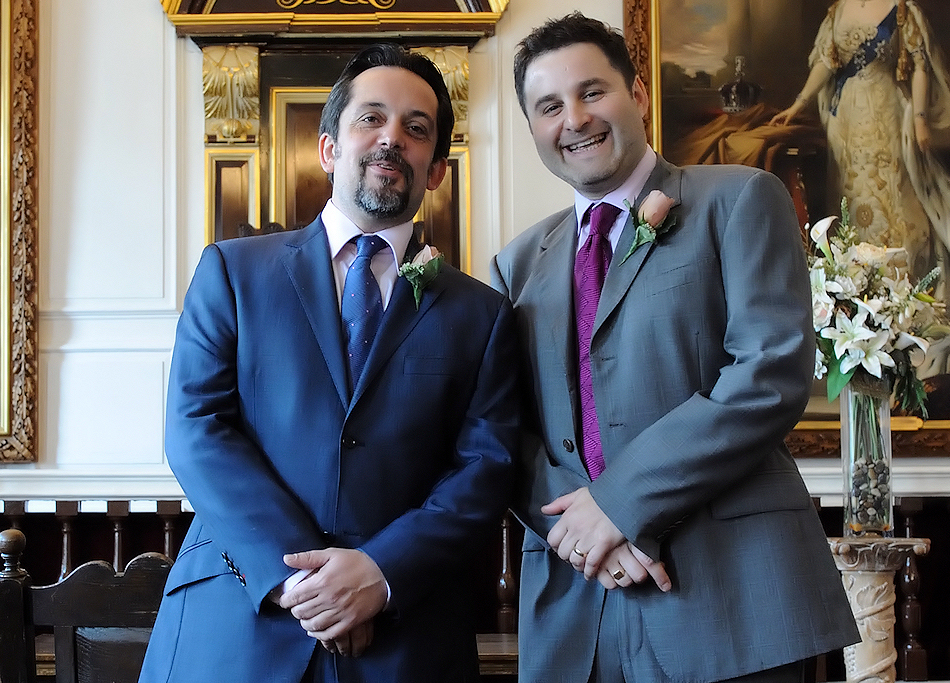
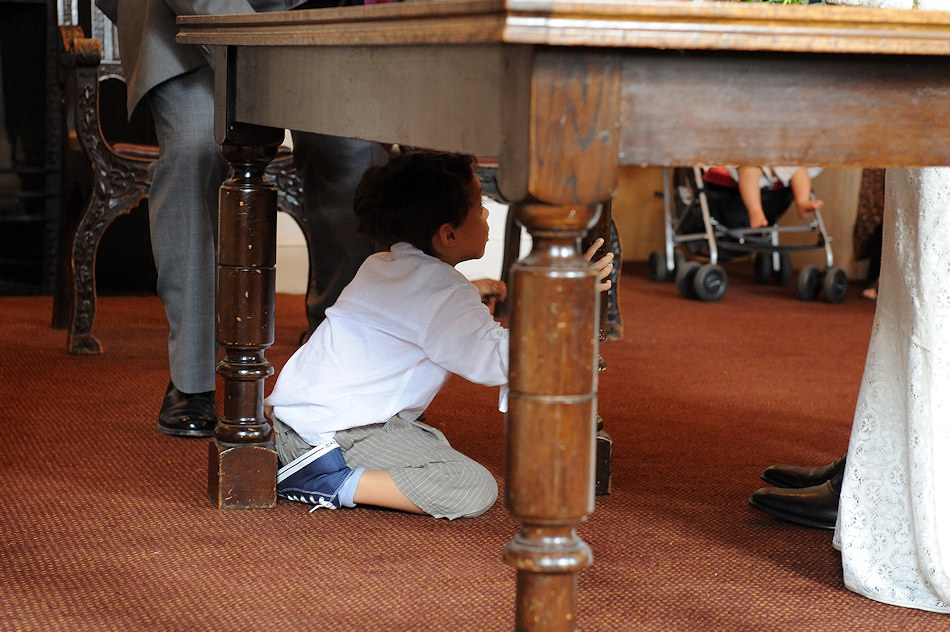
Moving to the D3 has completely changed my 'workflow'. I can (and often do) leave the camera on 800 ISO these days as there is zero noise. The ability to shoot at 5000 ISO with very little noise has meant my flash has stayed in the drawer ever since I got the Camera!
below: 3200/4000 ISO at a mates wedding (and yes.... I'm hopeless at weddings - fill in flash would have helped with the pose, but you see what I mean about the lack of noise)
Edited by GetCarter on Friday 10th December 12:29
dblack1 said:
Another thing to consider is slower shutter speeds also produce noise, so if your using a slow shutter speed it would be smart to lower your ISO as much as possible.
That's just confusing. If you reduce the ISO, you will need an even slower shutter speed to get the right exposure (assuming the aperture is already wide open.)Probably been explained already but thought I would add my own explanation.
ISO (from the days of film) is a way of mesuring how sensetive the film is to light. The lower the number (ie. 100), the lower the sensitivity. The higher the number (ie. 1600), the higher the sensitivity. This has still been carried over to digital to represent how the processor interprets the light.
Each iso rating also represents a Stop. So a photo exposed at 1/30th f/5.6 100iso would give the same exposure as 1/60th f/5.6 200iso. Again you would get the same exposure at 1/120th f/5.6 400iso and so on.
The only disadvantage of higher ISO settings are that they produce more noise. So a 100iso photo will have less noise (and therefore, more detail) than a 200iso shot. The difference between the two will be pretty insignificant though. However, the difference between a 100iso shot and a 1600iso shot will be massive. Try it!
ISO (from the days of film) is a way of mesuring how sensetive the film is to light. The lower the number (ie. 100), the lower the sensitivity. The higher the number (ie. 1600), the higher the sensitivity. This has still been carried over to digital to represent how the processor interprets the light.
Each iso rating also represents a Stop. So a photo exposed at 1/30th f/5.6 100iso would give the same exposure as 1/60th f/5.6 200iso. Again you would get the same exposure at 1/120th f/5.6 400iso and so on.
The only disadvantage of higher ISO settings are that they produce more noise. So a 100iso photo will have less noise (and therefore, more detail) than a 200iso shot. The difference between the two will be pretty insignificant though. However, the difference between a 100iso shot and a 1600iso shot will be massive. Try it!
Edited by Deluded on Friday 10th December 13:18
Can't remember exactly where I read a similar analogy first but this might help:
The water bucket is a good analogy. Amount of light/exposure is like filling up a bucket full of water. It doesn't matter how quickly you fill it or how much water is flowing out of your hose, in the end you get a bucket full of water. Obviously there are different ways to fill the bucket and speaking of photography that comes down to creativity (i.e. shallow DOF? Freeze motion? Blur motion? etc).
-Now how much water is coming out of your hose is kind of like your aperture.
-Now long you leave the hose in the bucket is kind of like your shutter speed.
-ISO is like increasing/decreasing number of hose available to fill your bucket.
The water bucket is a good analogy. Amount of light/exposure is like filling up a bucket full of water. It doesn't matter how quickly you fill it or how much water is flowing out of your hose, in the end you get a bucket full of water. Obviously there are different ways to fill the bucket and speaking of photography that comes down to creativity (i.e. shallow DOF? Freeze motion? Blur motion? etc).
-Now how much water is coming out of your hose is kind of like your aperture.
-Now long you leave the hose in the bucket is kind of like your shutter speed.
-ISO is like increasing/decreasing number of hose available to fill your bucket.
This thread has been absolutely golden. I think I'm now fully up to speed. I wish some of the exposure books dwelled on this a little more. It seems equally important as aperture and shutter speed in the scheme of correct exposure.
I think I'm right in saying then that generally you would use high ISO to bring down shutter time? I guess that could be because you're hand holding in poor light, reduce DofE? Or maybe to freeze a fast moving subject? But generally speaking a lower ISO should give a sharper result where you can get away with it. So generally, like most things it's a balancing act.
All of your help massively appreciated. Think I'll have a play around in some crap light later.
I think I'm right in saying then that generally you would use high ISO to bring down shutter time? I guess that could be because you're hand holding in poor light, reduce DofE? Or maybe to freeze a fast moving subject? But generally speaking a lower ISO should give a sharper result where you can get away with it. So generally, like most things it's a balancing act.
All of your help massively appreciated. Think I'll have a play around in some crap light later.
Gad-Westy said:
I think I'm right in saying then that generally you would use high ISO to bring down shutter time?
Using high ISO gives you the freedom to set apature or speed (to suit your requirements) much more than low ISO. I can walk into a living room and take a photo at high ISO without a flash, and keep the shutter speed sensible (say 125th sec). Equally, I can set the camera to take a landscape with huge depth of field (foreground and distance both in focus) in much poorer light than at low ISO.If your camera can deal with the noise issue high ISO is a godsend. Most DSLRs do not (yet) cope with high ISO without the problem of noise.
GetCarter said:
Gad-Westy said:
I think I'm right in saying then that generally you would use high ISO to bring down shutter time?
Using high ISO gives you the freedom to set apature or speed (to suit your requirements) much more than low ISO. I can walk into a living room and take a photo at high ISO without a flash, and keep the shutter speed sensible (say 125th sec). Equally, I can set the camera to take a landscape with huge depth of field (foreground and distance both in focus) in much poorer light than at low ISO.If your camera can deal with the noise issue high ISO is a godsend. Most DSLRs do not (yet) cope with high ISO without the problem of noise.
Gad-Westy said:
low ISO would allow you to use longer shutter speeds for effect, where doing so at higher ISO would lead to over exposure? Or have I missed something fundamental.
He gots it 
- edit - but ISO doesnt do this on it's own, aperture comes into play as well
Edited by andy-xr on Friday 10th December 14:27
rottie102 said:
I don't know where does all this fear of upping the ISO comes from. I'd much rather have a noisy picture than a blurred one  Plus there's always PP...
Indeed, but I can't sell enlargements with loads of noise - once they get big they look rubbish, even with PP (I have 7 prints going into the Royal Marsden Hospital CCU next month, some of which are at 60" x 40", and noise will be very noticeable, as people will be too damn close!). Plus there's always PP...Plus, I'm rubbish at PP

ETA... Royal Marsden were given by me free and a PH is doing a really good deal on printing.
Edited by GetCarter on Friday 10th December 14:39
Gassing Station | Photography & Video | Top of Page | What's New | My Stuff