
Plenum removal/lift question..........
Discussion


Hi all i need some advice on the above.
I'm refurbing the rocker covers on my 450 and the offside one is easy enough, however......
Clearly there are some space/clearance issues when it comes to removing the nearside rocker cover so.............
Can i get away with lifting the plenum slightly or does it need to be removed completely? If it wasn't for the dipstick tube i reckon i could slide the rocker cover out!!
Is it simply a case of removing the 6 bolts from the top of the plenum to lift it a little or is there more to it?
Cheers
Jimbo

I'd take the air hose off and disconnect the throttle pot as a start then see what else fouls when you try to lift the plenum.
If you remove the throttle body heater (if it's still fitted), link the hoses and blank off the holes under the throttle, you can usually get the rocker cover off without even slackening the plenum bolts. It's not as though a Wedge needs the throttle body heater...
If you remove the throttle body heater (if it's still fitted), link the hoses and blank off the holes under the throttle, you can usually get the rocker cover off without even slackening the plenum bolts. It's not as though a Wedge needs the throttle body heater...
NaCl said:
The bracket at the top of the dipstick unscrews from the side of the rocker cover and the dipstick can then be pulled out of the block - it's only held in with a rubber grommet. Maybe that will give you enough to pull the cover out without disturbing the plenium.
I like this! I had a look and thought it was a nut that screwed the tube into the block.Goin out now to 'ave another go...............................
Jimbo
JMF894 said:
or is there more to it?
Perhaps an opportunity to score with twenty-one practical things to do: 1 Strip/clean innards of plenum chamber
2 Throttle plate
3 Throttle spindle
4 Pools of black goo between trumpets
5 Idle speed control gallery
6 Breather gallery
7 Inspect mating faces for blemishes and old/hard sealant
8 Inspect air rail rubber tubes for poor fit/splits/signs of future perish
9 Fettle throttle pot position, shaft and bearing for smooth operation
10 Centralize throttle plate inside tunnel and fettle linkages for friction free rotation to avoid "idle speed hang-up" syndrome
11 Ensure throttle linkages, right back to the pedal (and the carpet below that), do not inhibit 90 deg rotation of throttle plate
12 Replace hard/damaged throttle shaft seal(s) with new to prevent vacuum leakage along spindle
13 If fitted, clean overrun valve innards, set valve tension nut to original setting - 5/6 turns out
14 Inspect main air intake hose for hidden splits and de-lamination.
15 Inspect connector/housing security to injectors, TT switch, CTS, CSI and EAV (inaccessible when the plenum in situ)
16 Inspect/repair any otherwise invisible wiring/insulation problems
17 Extend the refurbish exercise to newly exposed metal parts below the plenum
18 Inspect fuel rail rubber/metal joins for signs of fuel weeping
19 Check for loose trumpets and refit as needed
20 Going this far offers opportunity to lift the trumpet housing for cleaning inside and out
21 Remove and clean "Hot Spot" parts - decide if you want to keep it active before refitting
"Look after your plenum and your plenum will look after you!"

honestjohntoo said:
erhaps an opportunity to score with twenty-one practical things to do:
1 Strip/clean innards of plenum chamber
2 Throttle plate
3 Throttle spindle
4 Pools of black goo between trumpets
5 Idle speed control gallery
6 Breather gallery
7 Inspect mating faces for blemishes and old/hard sealant
8 Inspect air rail rubber tubes for poor fit/splits/signs of future perish
9 Fettle throttle pot position, shaft and bearing for smooth operation
10 Centralize throttle plate inside tunnel and fettle linkages for friction free rotation to avoid "idle speed hang-up" syndrome
11 Ensure throttle linkages, right back to the pedal (and the carpet below that), do not inhibit 90 deg rotation of throttle plate
12 Replace hard/damaged throttle shaft seal(s) with new to prevent vacuum leakage along spindle
13 If fitted, clean overrun valve innards, set valve tension nut to original setting - 5/6 turns out
14 Inspect main air intake hose for hidden splits and de-lamination.
15 Inspect connector/housing security to injectors, TT switch, CTS, CSI and EAV (inaccessible when the plenum in situ)
16 Inspect/repair any otherwise invisible wiring/insulation problems
17 Extend the refurbish exercise to newly exposed metal parts below the plenum
18 Inspect fuel rail rubber/metal joins for signs of fuel weeping
19 Check for loose trumpets and refit as needed
20 Going this far offers opportunity to lift the trumpet housing for cleaning inside and out
21 Remove and clean "Hot Spot" parts - decide if you want to keep it active before refitting
"Look after your plenum and your plenum will look after you!"
That too... 1 Strip/clean innards of plenum chamber
2 Throttle plate
3 Throttle spindle
4 Pools of black goo between trumpets
5 Idle speed control gallery
6 Breather gallery
7 Inspect mating faces for blemishes and old/hard sealant
8 Inspect air rail rubber tubes for poor fit/splits/signs of future perish
9 Fettle throttle pot position, shaft and bearing for smooth operation
10 Centralize throttle plate inside tunnel and fettle linkages for friction free rotation to avoid "idle speed hang-up" syndrome
11 Ensure throttle linkages, right back to the pedal (and the carpet below that), do not inhibit 90 deg rotation of throttle plate
12 Replace hard/damaged throttle shaft seal(s) with new to prevent vacuum leakage along spindle
13 If fitted, clean overrun valve innards, set valve tension nut to original setting - 5/6 turns out
14 Inspect main air intake hose for hidden splits and de-lamination.
15 Inspect connector/housing security to injectors, TT switch, CTS, CSI and EAV (inaccessible when the plenum in situ)
16 Inspect/repair any otherwise invisible wiring/insulation problems
17 Extend the refurbish exercise to newly exposed metal parts below the plenum
18 Inspect fuel rail rubber/metal joins for signs of fuel weeping
19 Check for loose trumpets and refit as needed
20 Going this far offers opportunity to lift the trumpet housing for cleaning inside and out
21 Remove and clean "Hot Spot" parts - decide if you want to keep it active before refitting
"Look after your plenum and your plenum will look after you!"

Seriously, there could ba a fair bit of 'crud' in there. Discovered this when I did the head gaskets on the old 350/450i .......
Before

After

Gasket!!!
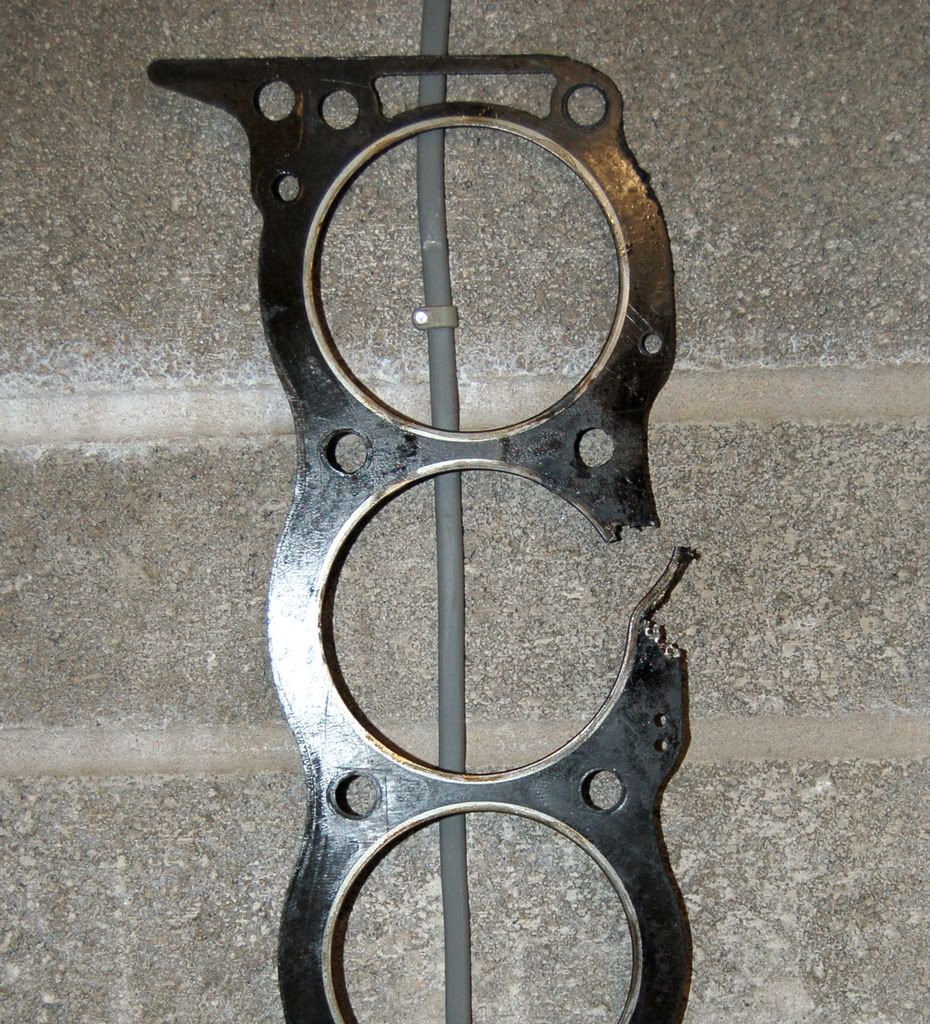
Once again thanks honestjohn!
I have managed to remove the nearside rocker cover this evening. I lifted the plenum in the end.
All trumpets are solidly mounted and it looks very clean in there.....no goo.
Should the trumpets be at different heights? They are not level. Being a 450 what should the outside diameter be for the trumpets? I measured them at 50mm.
I have cleaned all the old sealant off the mating faces ready for refitting.
I will have another inspection over the next few days prior to refittong everything.
Cheers
Jimbo


JMF894 said:
Being a 450 what should the outside diameter be for the trumpets? I measured them at 50mm.
Jimbo
It's the internal diameter that's important - standard would be 38mm (ignore the flare) on pretty much all RV8s except Griff 500. You can get 45mm versions in there (I have) which will need notched bell mouths to fit together, but unless you open out the throttle body and inlet manifold (and of course the trumpet base) there's not much point.Jimbo
pwd95 said:
That too...
Seriously, there could ba a fair bit of 'crud' in there. Discovered this when I did the head gaskets on the old 350/450i .......
Before
After
Gasket!!!
I see your trumpets are nice and silver even before cleaning. I thought mine were clean and meant to be this colour....................Seriously, there could ba a fair bit of 'crud' in there. Discovered this when I did the head gaskets on the old 350/450i .......
Before
After
Gasket!!!

Do i have a problem?
Jimbo
Don't think you have a problem. Mine (std 350i) looked sort of like that after 175000km... and is running fine.
Probably a bit black due to carter ventilation fumes (with oil mist in it) getting back to the inlet leaving this colour. Would check the wire wool in the carter ventilation and clean with a bit of petrol.
More than normal oil/fuel content back to the inlet could be a sign that the piston rings have a bit more blow by (a bit worn for example), but again nothing to worry about (really). To check you can do a compression test to see it all is ok/normal.
Only thing I would worry about would be if the engine is backfiring a lot, the trumpets wouldn't be looking clean either.
Rob
JMF894 said:
The car runs sweet but probably a bit rich since i got it last May. Uses a bit of oil but not too much
Those innards look OK, clean oil, not carbonny black goo. My trumpets were that colour from new - I believe. Removing plenum even exposed clean metal below the chamber, so someone has been keeping it clean, methinks.
While the plenum is off, do check out the other suggestions I made, particularly the breather gallery - even partially blocked - it can cause a small increase in richness because the engine gets a constant un-metered component of (foul) air via that source and if its reduced - bingo! That also means checking the 0.040" hole at the rear of the LH rocker cover is not blocked.
If it is, then inlet suction just gobbles up anything it can, including unwanted oil mist - could explain oil usage?
Not saying it is, just that it's worth checking - given the opportunity.
Never had to do it myself but I believe one can measure air/fuel ratio, dunno how tho'.
Edited by honestjohntoo on Saturday 31st December 22:11
"While the plenum is off, do check out the other suggestions I made, particularly the breather gallery - even partially blocked - it can cause a small increase in richness because the engine gets a constant un-metered component of (foul) air via that source and if its reduced - bingo! That also means checking the 0.040" hole at the rear of the LH rocker cover is not blocked."
Do you mean the one with the small filter that sits over what looks like a round metal disc that sits proud of the rocker cover? It has a small tube underneath inside the rocker cover? If so then the hole in this is blocked on mine. The blockage seems solid however........
Jimbo
Do you mean the one with the small filter that sits over what looks like a round metal disc that sits proud of the rocker cover? It has a small tube underneath inside the rocker cover? If so then the hole in this is blocked on mine. The blockage seems solid however........
Jimbo

Probably just carbon/dust compacted into the hole, so no hole means the breather system can never equalize it internal crankcase pressure, the inlet manifold depression and the local venturi effect works its magical suckability on any piston ring blow-by it can get its hands on and not to put too fine a point on it, the breather system aint working proper.

Edited by honestjohntoo on Sunday 1st January 12:41
Gassing Station | Wedges | Top of Page | What's New | My Stuff