
Advice needed to repair slight corrosion on alloy wheels.
Discussion


Hi,
These four pictures show the front two alloy wheels on my Mom’s Aygo.
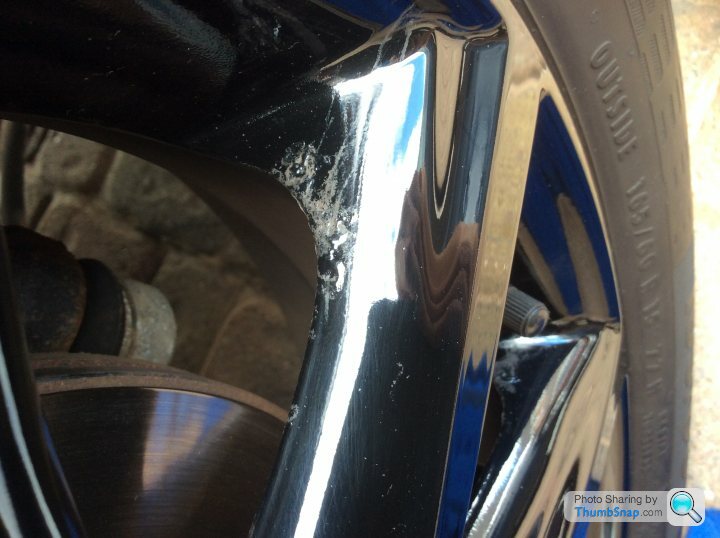
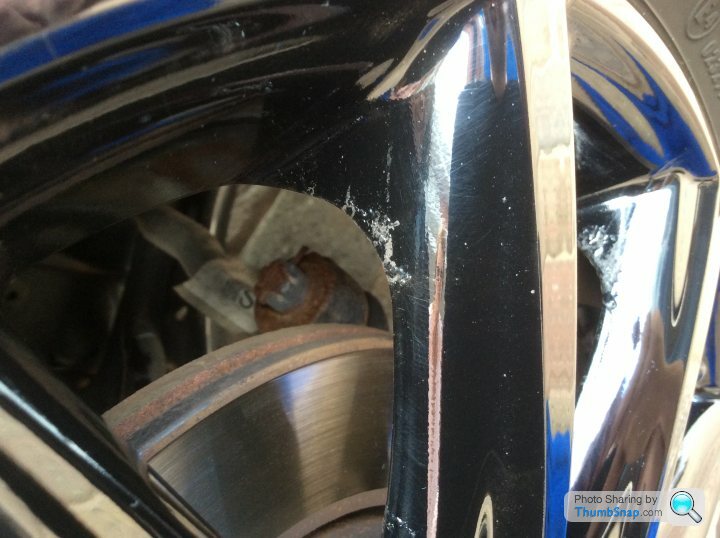
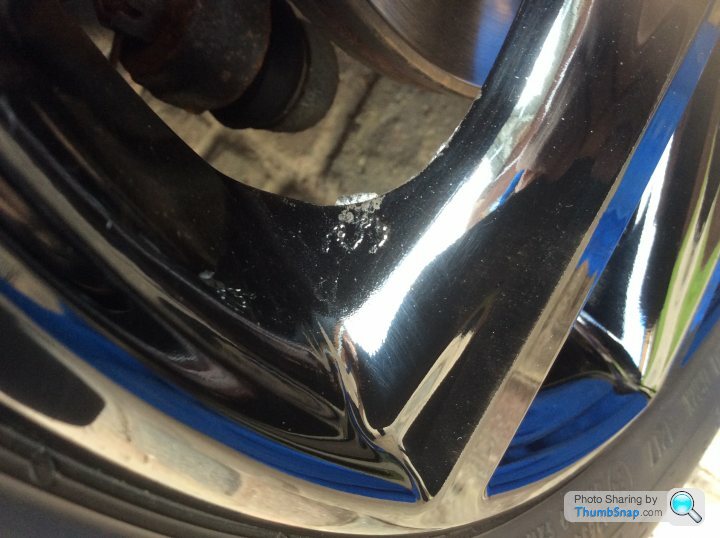
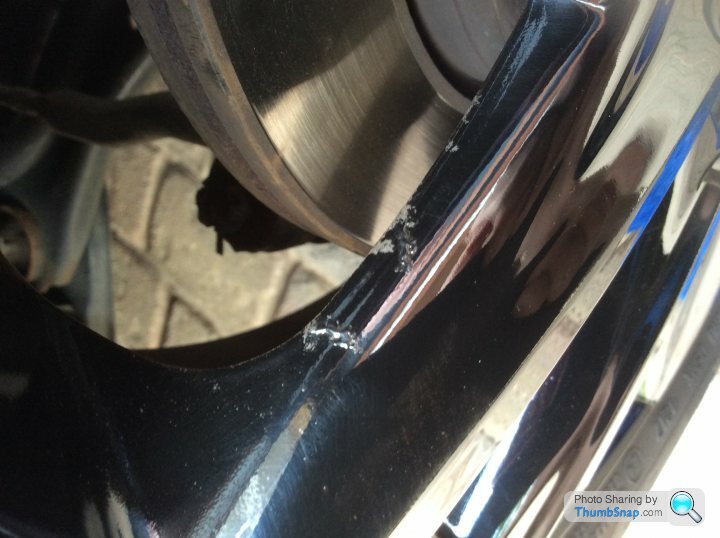
As you can see there is a small amount of corrosion appearing on them, the back wheels are fine, just the front two.
Tried with Toyota arguing that a 4 yr old car with just over 6000 mile on it should not suffer from corrosion but no joy.
What is best way to tart the wheels up so either the corrosion is nigh on invisible or at very least wont get any worse please.
Any advice?
Thanks.
These four pictures show the front two alloy wheels on my Mom’s Aygo.
As you can see there is a small amount of corrosion appearing on them, the back wheels are fine, just the front two.
Tried with Toyota arguing that a 4 yr old car with just over 6000 mile on it should not suffer from corrosion but no joy.
What is best way to tart the wheels up so either the corrosion is nigh on invisible or at very least wont get any worse please.
Any advice?
Thanks.
opm said:
Hi,
These four pictures show the front two alloy wheels on my Mom’s Aygo.
As you can see there is a small amount of corrosion appearing on them, the back wheels are fine, just the front two.
Tried with Toyota arguing that a 4 yr old car with just over 6000 mile on it should not suffer from corrosion but no joy.
What is best way to tart the wheels up so either the corrosion is nigh on invisible or at very least wont get any worse please.
Any advice?
Thanks.
The car is 4 years it Allmost certainly eil have surface rust in placesThese four pictures show the front two alloy wheels on my Mom’s Aygo.
As you can see there is a small amount of corrosion appearing on them, the back wheels are fine, just the front two.
Tried with Toyota arguing that a 4 yr old car with just over 6000 mile on it should not suffer from corrosion but no joy.
What is best way to tart the wheels up so either the corrosion is nigh on invisible or at very least wont get any worse please.
Any advice?
Thanks.
Especially somewhere like the wheels that pick up stone chips
Chris32345 said:
opm said:
Hi,
These four pictures show the front two alloy wheels on my Mom’s Aygo.
As you can see there is a small amount of corrosion appearing on them, the back wheels are fine, just the front two.
Tried with Toyota arguing that a 4 yr old car with just over 6000 mile on it should not suffer from corrosion but no joy.
What is best way to tart the wheels up so either the corrosion is nigh on invisible or at very least wont get any worse please.
Any advice?
Thanks.
The car is 4 years it Allmost certainly eil have surface rust in placesThese four pictures show the front two alloy wheels on my Mom’s Aygo.
As you can see there is a small amount of corrosion appearing on them, the back wheels are fine, just the front two.
Tried with Toyota arguing that a 4 yr old car with just over 6000 mile on it should not suffer from corrosion but no joy.
What is best way to tart the wheels up so either the corrosion is nigh on invisible or at very least wont get any worse please.
Any advice?
Thanks.
Especially somewhere like the wheels that pick up stone chips
If you're serious then you do realise the wheels are made of Aluminium alloy that most definitely does not rust.
Similar but different,
Aluminium oxidises. The oxide is protective, which is a good thing.
Iron oxidises (rusts). The oxide is not protective, which is a bad thing.
"Aluminium oxide is responsible for the resistance of metallic aluminium to weathering. Metallic aluminium is very reactive with atmospheric oxygen, and a thin passivation layer of aluminium oxide (4 nm thickness) forms quickly on any exposed aluminium surface. This layer protects the metal from further oxidation."
"Rust is an iron oxide, a usually reddish-brown oxide formed by the reaction of iron and oxygen in the catalytic presence of water or air moisture. Rust is typically associated with the corrosion of refined iron. Given sufficient time, any iron mass, in the presence of water and oxygen, could eventually convert entirely to rust. Surface rust is commonly flaky and friable, and provides no protection to the underlying iron."
Aluminium oxidises. The oxide is protective, which is a good thing.
Iron oxidises (rusts). The oxide is not protective, which is a bad thing.
"Aluminium oxide is responsible for the resistance of metallic aluminium to weathering. Metallic aluminium is very reactive with atmospheric oxygen, and a thin passivation layer of aluminium oxide (4 nm thickness) forms quickly on any exposed aluminium surface. This layer protects the metal from further oxidation."
"Rust is an iron oxide, a usually reddish-brown oxide formed by the reaction of iron and oxygen in the catalytic presence of water or air moisture. Rust is typically associated with the corrosion of refined iron. Given sufficient time, any iron mass, in the presence of water and oxygen, could eventually convert entirely to rust. Surface rust is commonly flaky and friable, and provides no protection to the underlying iron."
For comparison so you can see condition of complete wheel

So as you can see, no stop chips, no kerbing and for a car with just over 6000 miles on it, garaged every night, and knowing my Mother probably never driven in bad weather.
So I personally wouldn't expect it even at 4 year old, but hey ho anyway.
Was just hoping there would be a relatively simple way to make it look better and prevent it getting any worse, but seems not without a full refurb.
So as you can see, no stop chips, no kerbing and for a car with just over 6000 miles on it, garaged every night, and knowing my Mother probably never driven in bad weather.
So I personally wouldn't expect it even at 4 year old, but hey ho anyway.
Was just hoping there would be a relatively simple way to make it look better and prevent it getting any worse, but seems not without a full refurb.
Gassing Station | Bodywork & Detailing | Top of Page | What's New | My Stuff