
Austin Healey door fit
Discussion


Fitting original panels to restoration project BN7 the door fit is awful, front of door touches rear of front Winfrey and rear of door overlaps rear wing by approx 1/4". Engine and box are in the car and running.
Can adjustment make a difference or are we talking angle grinder ( not joking) - very p*ssed off at moment
Dave C
Can adjustment make a difference or are we talking angle grinder ( not joking) - very p*ssed off at moment
Dave C
The door fits were never perfect originally - most restorations are better than when the left the factory - and replacement panels are famous for not being prefect fits. Either they aren't made accurately or they are copied from one panel and the original panels varied over the production period.
Probably if you took 2 cars off the production line and swopped panels round the fits would have been different!
The only solution is to cut, remove, add, until the fit is right.
EG slice a strip off the front or rear edge of the skin and move it until the fit is right then weld a strip in to fill the gap.
Probably if you took 2 cars off the production line and swopped panels round the fits would have been different!
The only solution is to cut, remove, add, until the fit is right.
EG slice a strip off the front or rear edge of the skin and move it until the fit is right then weld a strip in to fill the gap.
obviously check your chassis is as good as it gets before chopping doors and panels about - I remember an owner telling me about doors flying open on bends and turns being not uncommon to do with the state/alignment of the chassis/rails
as has been said even with things as they should be fitment can take quite a time and when they're not much longer
as has been said even with things as they should be fitment can take quite a time and when they're not much longer
SV8Predator said:
Healey body is coachbuilt and requires true skill to get it right. If you do not have these skills, then get your chequebook out.
there's a chap in Northampton that does just this for Healeys I don't image his labour rates are that high by the number of hours required to do bodywork could mount up, the more so the poorer the quality of the car and/or panels to be fittedHi
I have restored, repaired and welded quite a few big healeys. The chassis tends to distort around the front outrigger, thereby leaving the front door hinges attached to the front of the car, and the rear end of the car effectively higher as it gradually rotates forward around the distortion. if the front wing fit is good, and the front door gap is aligned parralell with the front wing, sadly it may well indicate how much further down and back the rear door gap was when the car left the factory.
I have restored, repaired and welded quite a few big healeys. The chassis tends to distort around the front outrigger, thereby leaving the front door hinges attached to the front of the car, and the rear end of the car effectively higher as it gradually rotates forward around the distortion. if the front wing fit is good, and the front door gap is aligned parralell with the front wing, sadly it may well indicate how much further down and back the rear door gap was when the car left the factory.
Not limited to handbuilt cars, either - I'm restoring a seventies Vauxhall which is by no means an example of accurate build techniques, and have similar problems. That said I was talking to an ex-Vauxhall person who worked in the body rectification shop when my car was built and he talked of chasing 1/2" inaccuracies around the car in production.
One theory with genuine panels is that the ones available now as "new old stock" are the ones rejected by the factory or the bodyshop back in the day as being poor examples that don't fit properly. They get shoved off to one side while a replacement is ordered up and fitted, then sold off years later when everyone has forgotten why they weren't used. Then we pay a lot for a genuine panel rather than a pattern, and find it needs about 5mm cutting out before it will line up, which in a major restoration inevitably gives the impression that something else isn't right.
One theory with genuine panels is that the ones available now as "new old stock" are the ones rejected by the factory or the bodyshop back in the day as being poor examples that don't fit properly. They get shoved off to one side while a replacement is ordered up and fitted, then sold off years later when everyone has forgotten why they weren't used. Then we pay a lot for a genuine panel rather than a pattern, and find it needs about 5mm cutting out before it will line up, which in a major restoration inevitably gives the impression that something else isn't right.
Only just on topic but I remember a visit to Abingdon back in the early 70s and on the production line (if you can call it that) guys were using a length of 4 x 2 between the doors and the jamb and then slamming the door on it until the alignment at the rear of the door was correct, top and bottom 


droopsnoot said:
Not limited to handbuilt cars, either - I'm restoring a seventies Vauxhall which is by no means an example of accurate build techniques, and have similar problems. That said I was talking to an ex-Vauxhall person who worked in the body rectification shop when my car was built and he talked of chasing 1/2" inaccuracies around the car in production.
One theory with genuine panels is that the ones available now as "new old stock" are the ones rejected by the factory or the bodyshop back in the day as being poor examples that don't fit properly. They get shoved off to one side while a replacement is ordered up and fitted, then sold off years later when everyone has forgotten why they weren't used. Then we pay a lot for a genuine panel rather than a pattern, and find it needs about 5mm cutting out before it will line up, which in a major restoration inevitably gives the impression that something else isn't right.
that makes a lot of sense to me, only put yesterday with a MG that if measurements where within 1/2" then it'd possibly be nearer than when new let alone a aged and worn carOne theory with genuine panels is that the ones available now as "new old stock" are the ones rejected by the factory or the bodyshop back in the day as being poor examples that don't fit properly. They get shoved off to one side while a replacement is ordered up and fitted, then sold off years later when everyone has forgotten why they weren't used. Then we pay a lot for a genuine panel rather than a pattern, and find it needs about 5mm cutting out before it will line up, which in a major restoration inevitably gives the impression that something else isn't right.
LordBretSinclair said:
Only just on topic but I remember a visit to Abingdon back in the early 70s and on the production line (if you can call it that) guys were using a length of 4 x 2 between the doors and the jamb and then slamming the door on it until the alignment at the rear of the door was correct, top and bottom
my neighbour told me that the dealership 'bodyshop' for Minis at start and onward would realign doors by manual exertion alone 
Thanks for sharing the advice and experiances. Aplogies for the delay in posting have just come out of hibernation following the winter and thoughts are turning back to working on the project.
A "guy who does this sort of thing in Northampton" was mentioned previously does anyone have any contact details. Funds are low at the moment but it would be good to have the details for future reference,
A "guy who does this sort of thing in Northampton" was mentioned previously does anyone have any contact details. Funds are low at the moment but it would be good to have the details for future reference,
you've left it a bit too long for my short memory but I've looked back at a relevant thread and this is as much info as I can give you
I can't remember the chap's name but he's in the (Ross Rd., Northampton) unit next to the unit shared by (Frank) INOV8 and inka audio
these units are tucked up from the units at the bottom of Ross Road (Edgar Mobbs Way end) I could email you a Google Map pin location
bear in mind that even if the hourly rate is very reasonable these things never work out that cheap and that craftsmen are not normally desperate for work or in a hurry to complete it but you don't know if you don't ask
I can't remember the chap's name but he's in the (Ross Rd., Northampton) unit next to the unit shared by (Frank) INOV8 and inka audio
these units are tucked up from the units at the bottom of Ross Road (Edgar Mobbs Way end) I could email you a Google Map pin location
bear in mind that even if the hourly rate is very reasonable these things never work out that cheap and that craftsmen are not normally desperate for work or in a hurry to complete it but you don't know if you don't ask
Edited by nta16 on Thursday 16th May 14:48
Presumably you're in the A-H club, so that's where you'll get the best advice and recommendations from.
http://healey.hyperboards.com/
http://healey.hyperboards.com/
Regretfully the Austin -Healey while being in the top echelon of British classics is not without it’s unfair share of problems, some emanating from the initial assembly and many from accidental damage sustained during it’s long life and then covered up. Over the years I have restored a number these cars seldom without an inordinate degree of frustration and head scratching, it only takes a slight impact to throw the complete chassis alignment out resulting in problems with door and bonnet fitments plus the replacement panels hardly ever seem to fit no matter from whom they are purchased they always seem to fit “ like a shirt on a pig ! “ and call for skilled fettling during installation. On a previous post AJAX50 was so right , the swages lines are of paramount importance when setting up the panel fit, when the paints on it is too late and you will be so embarrassed at the first important auto show when some idiot anorak staggers over with extended finger (shaking with delight) to point out to all his daft mates your dereliction of detail on the otherwise immaculate restoration. It is not unusual to require movement of all three units ie: front wing (fender) ,door and rear wing to achieve a good starting point on panel gaps and then proceed to grind, weld and lead load to complete the operation to an acceptable standard (it ain’t easy !) If that does not float your boat, then it will probably mean opening your wallet to seek the aid of a “Techie” with a tad more skill and all that special equipment the average hobbyist does not have access too.
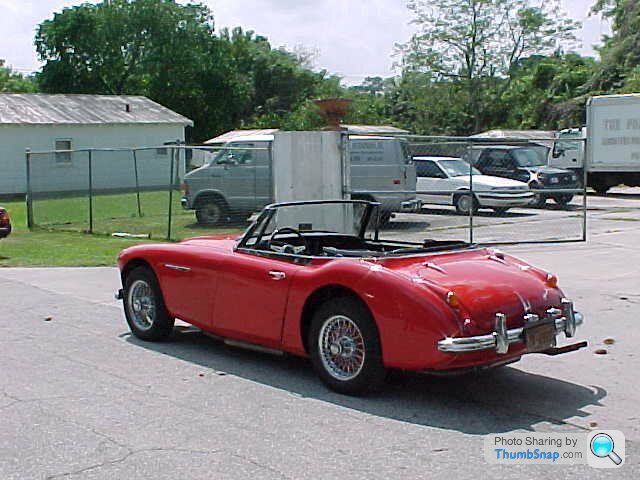
Photo :- my last A-H preject spent 20 years in a horse barn with rats.
Photo :- my last A-H preject spent 20 years in a horse barn with rats.
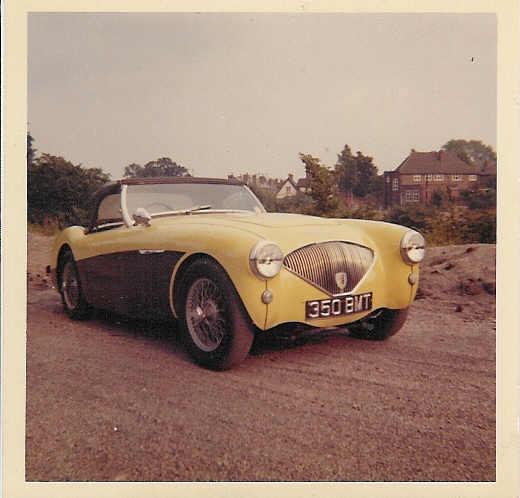
My first involvement with Austin- Healey back in 1962 (approx) when responding to the crash recovery of this Healey from the site where it was wrapped round a tree and had developed a shape similar to a Banana. We dragged it back to the shop with little enthusiasm because it was just another bent car. However when the insurance assessor came by and told us that the owner would be paid out for the car as it was considered irreparable and valueless an idea started to form in my mind. What about a free victim car to test our newly acquired “portapower” body straightening kit on. If I screwed up it would not matter because it could be parted out for spares to get our expenses back and if I succeeded it would be a fun car to own and could be sold for a bonus. As it turned out the repair took a while with numerous problems but when finished I enjoyed driving it so much that It was only sold a couple of years later in order to finance the purchase of a new “Sun” rolling road. Only a 4 cyl model but that car could really haul axx.
Gassing Station | Classic Cars and Yesterday's Heroes | Top of Page | What's New | My Stuff